Castell de Lillet: A Medieval Castle in Spain
Site at a Glance
- Rating
- 4.4
- Popularity
- Very Low
- Country
- Spain
- Primary era
- Medieval
- External website
- Open
- Eras represented
- Medieval
- Civilizations
- Crown of Aragon
- Site type
- Military
- Remains
- Castle
On this page6 sections
History
Castell de Lillet is a medieval castle in Spain, located near La Pobla de Lillet in Barcelona. It formed part of the historical landscape of Lillet by at least the ninth century and later became associated with the feudal family of Lillet and the lords of Mataplana.
Early references to Lillet
The consecration document of Santa Maria, dated 833, provides an early reference to the surrounding historical landscape. During the following century, Emma, abbess of Sant Joan de les Abadesses and daughter of Wifred the Hairy, held the lands around Lillet. Wifred was an early medieval Catalan count. Lillet appears in a sale recorded in 919, while a document from 921 places the Valley of Lillet within the County of Cerdanya, a medieval Catalan county centered in the eastern Pyrenees.
From the twelfth century, the Lillet lineage appears as a feudal family under the authority of the lords of Mataplana. The Mataplana family controlled land, settlements, and defensive policies in the area. Records from 1144 and 1154 explicitly connect the locative surname Lillet with the castle.
Mataplana rule and the rise of New Lillet
In 1297, Ramon d’Urtx and his son Hug de Mataplana granted the inhabitants of La Pobla de Lillet a charter of franchises and liberties. The measure encouraged settlement away from the old castle, following a Mataplana policy that combined repopulation with defense.
Guillem de Pujol served as the castle’s bailiff in 1342. A bailiff was an official who administered local affairs for a feudal lord. During the fourteenth century, the castle of La Pobla was strengthened, the settlement called New Lillet developed, and the lordly residence moved there. In 1374, the Barony of Mataplana, a feudal territorial lordship with its associated rights and possessions, including Castell de Lillet, was sold to Pere Galceran de Pinós.
Abandonment and later status
By 1430, Castell de Lillet was known as Old Lillet and was largely ruined. In 1439, the inhabitants of the valleys of Lillet, Santa Cecilia de Riutort, and Vallfogona sought permission from Bernat II Galceran de Pinós to rebuild it at their own expense under specified conditions. They considered the castle a refuge during emergencies, but the parties apparently reached no agreement.
References to the castle became increasingly scarce from the fifteenth century onward, as its partial ruin reduced its former importance. The Mataplana decision to establish a settlement and a new fortress where the old road crossed the Valley of Lillet led to the abandonment of Castell de Lillet. Its name survived in the place-name Lillet Vell, while the newer fortress became known as the castle of La Pobla.
Castell de Lillet was designated a Cultural Asset of National Interest and a historical monument on 8 November 1988. It is identified in the Spanish heritage register as RI-51-0005594 and in the Catalan registers as BCIN 1276-MH and IPAC 1440.
Remains
Rocky outcrop and surviving wall
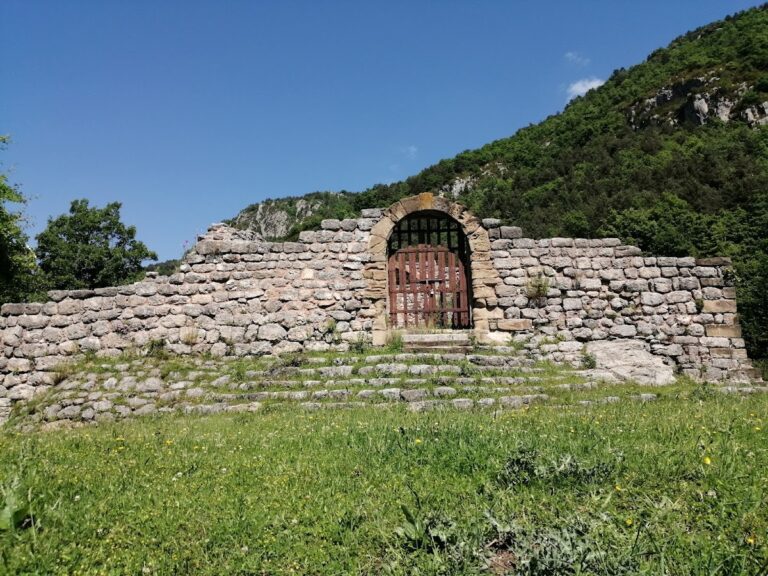
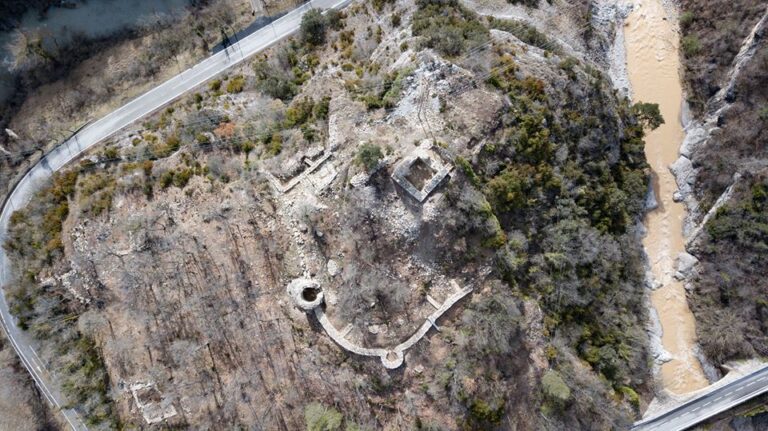
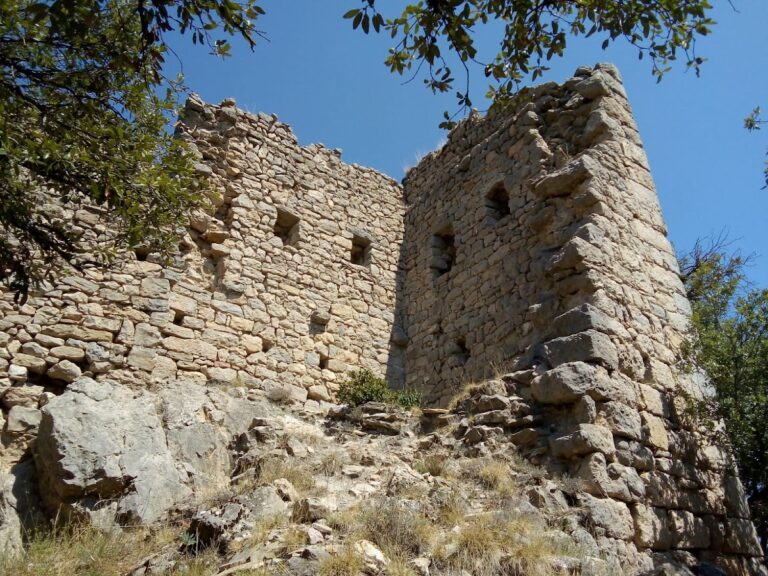
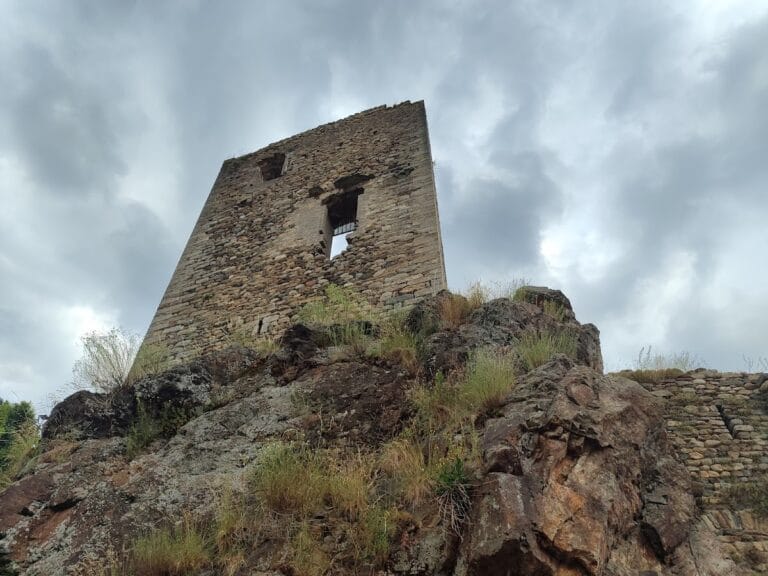
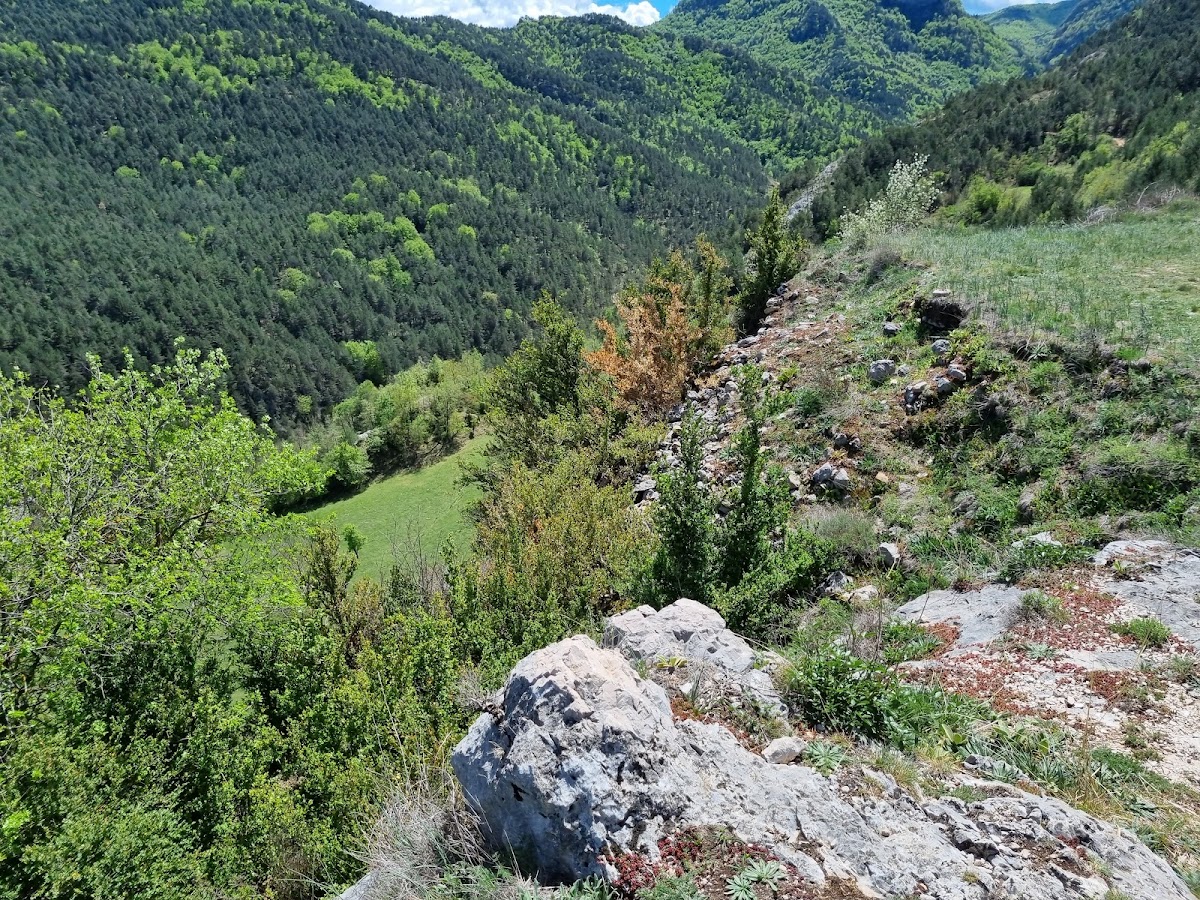
The surviving remains occupy a large rocky outcrop on a hill near the Junyent stream, on the left bank of the Arija, within the municipality of La Pobla de Lillet. The site stands at approximately 1,065 metres above sea level. At the summit, a wall survives for about 6 metres and reaches up to 3 metres in height. Its fairly regular masonry is made from small, carefully worked stones.
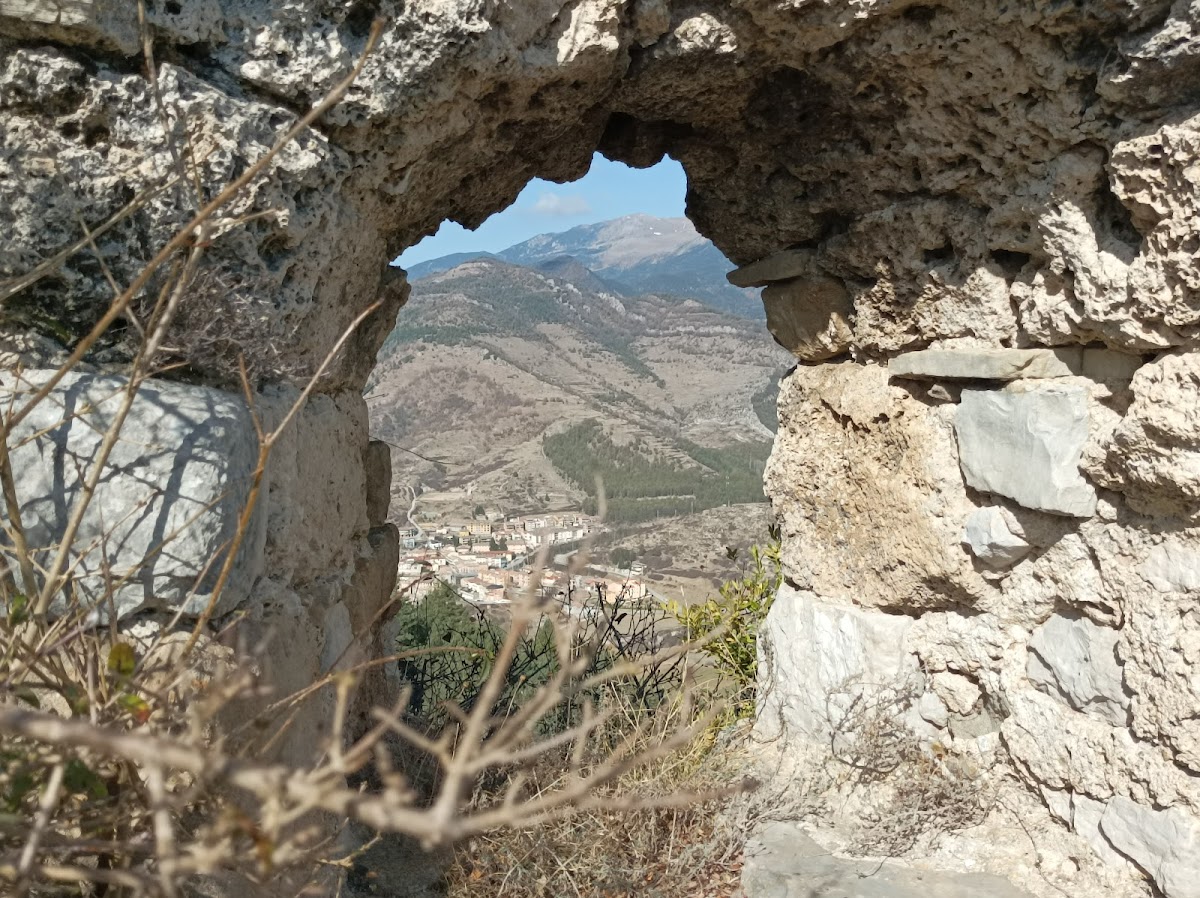
The wall retains part of a buttress, and a course of stones about 2 metres above ground level appears to mark the former position of a second storey. A pointed window, approximately 1 metre high, 80 centimetres wide, and 90 centimetres deep, forms another surviving feature. It apparently allowed the road crossing the Creueta pass between Berguedà and Cerdanya to be overseen. A large iron cross was installed at the highest point of the outcrop during the nineteenth century.