Haus Kilver: A Frankish Royal Estate and Agricultural Holding in Germany
Site at a Glance
- Rating
- 4.6
- Popularity
- Very Low
- Country
- Germany
- Primary era
- Unclassified
- External website
- Open
- Eras represented
- Unclassified
- Civilizations
- Unclassified
- Site type
- Domestic
- Remains
- Manor House
On this page8 sections
History
Frankish royal estate
Haus Kilver is a manorial estate in Bruchmühlen, Rödinghausen, Germany, whose early development as a Frankish royal estate dates probably to around AD 800. It was first mentioned in a written document in AD 851, making it the oldest settlement core in Rödinghausen with documentary evidence. In the ninth century, the estate was known as Villa Kilveri and served as a royal administrative and economic center.
The estate developed within the Frankish administration of the region after Charlemagne, also known as Charles the Great, conquered the Engern during the Saxon Wars of AD 772 to 804. These campaigns incorporated Saxon territories into the Frankish realm. Frankish counts governed territorial districts for the king from royal estates such as Kilver.
Ecclesiastical and aristocratic ownership
In AD 851, Louis the German donated Haus Kilver to the women’s convent founded in Herford around AD 822 under his father, Louis the Pious. Louis the Pious had been Charlemagne’s son and successor as emperor, while Louis the German ruled East Francia, the eastern part of the Frankish realm.
The Vincke family held the estate from the fourteenth century. The family also owned Gut Böckel from 1771 to 1820 and had earlier owned Gut Waghorst. Gut Kilver was a knightly estate with the right to representation in the territorial assembly of the County of Ravensberg, a historical territory in northwestern Germany.
From the Vincke family to the Höpker family
In 1818, the merchant August Friedrich Höpker of Lübbecke bought Haus Kilver from the bankrupt Vincke family. The estate has remained in the Höpker family since that purchase.
Haus Kilver continues to function as an agricultural holding. Slightly more than 70 hectares of agricultural land belong to the estate, most of it leased. Together with Gut Böckel, Gut Kilver is one of the largest agricultural enterprises in Rödinghausen. The property is protected as an architectural heritage monument in North Rhine-Westphalia.
Remains
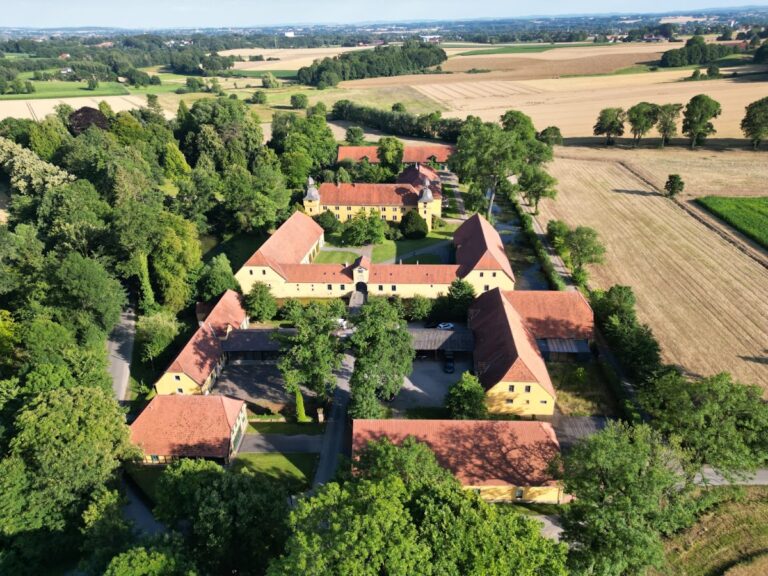
Moated estate and courtyard
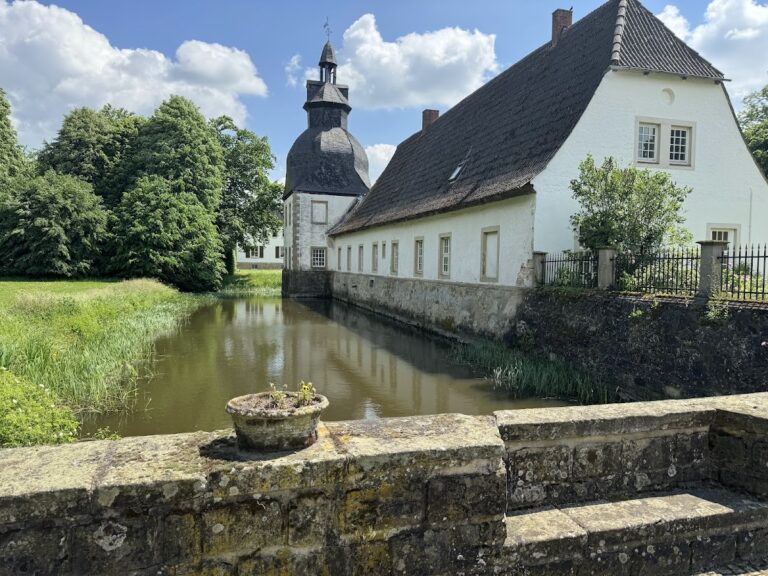
Surviving moat
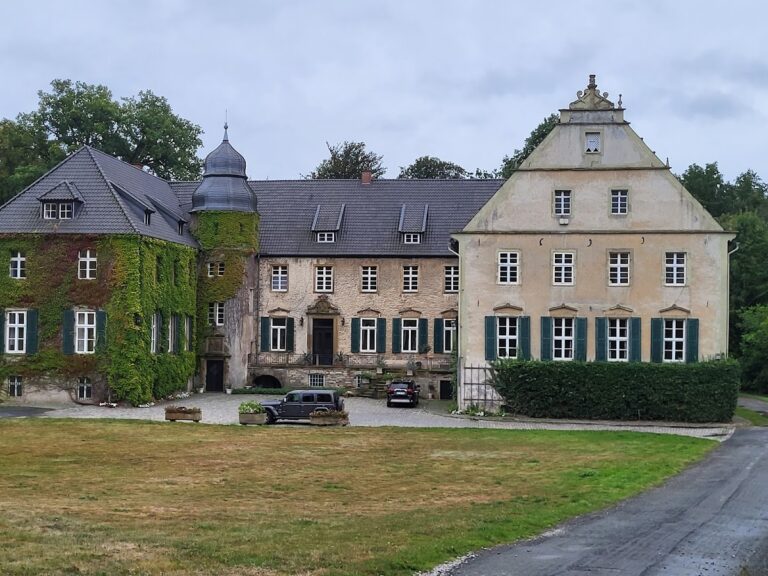
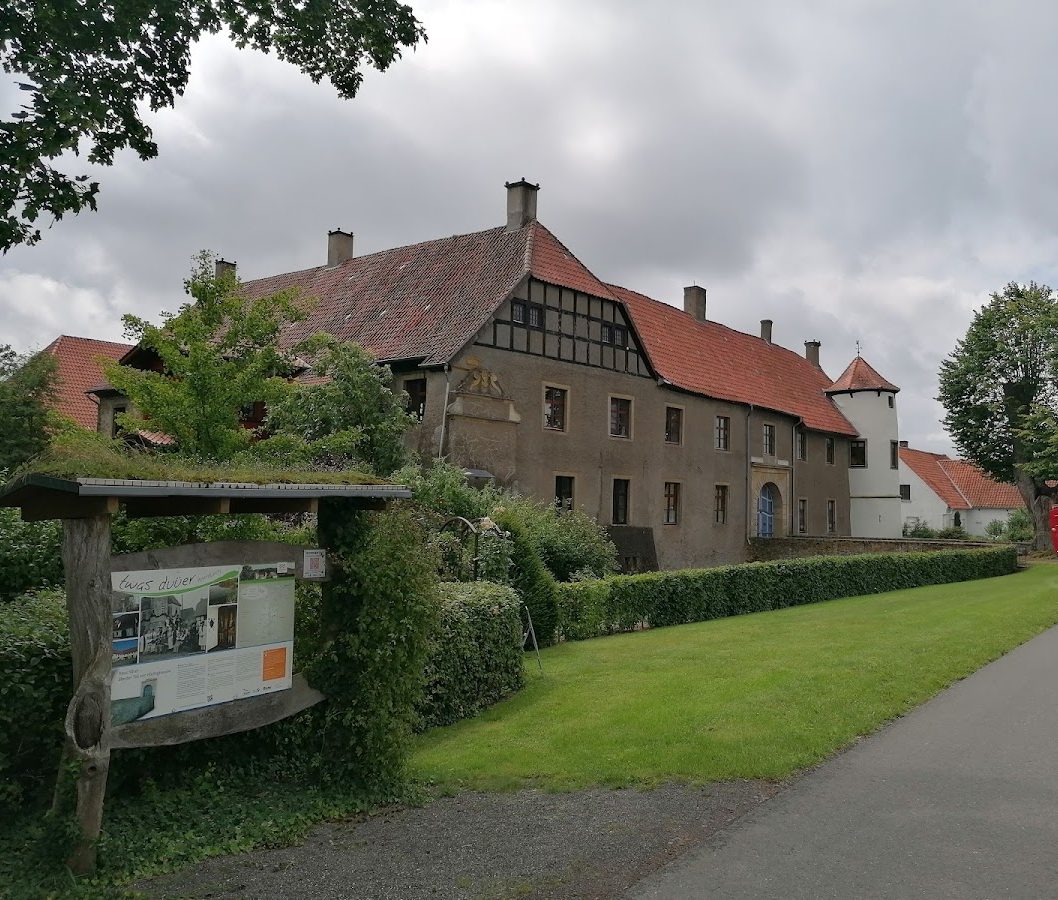
Haus Kilver was originally a moated castle, meaning a fortified residence surrounded partly or wholly by a water-filled ditch. Only the moat along the north side survives. The complex is preserved only in part, and rebuilding or enlargement probably took place several times. As a result, the surviving buildings do not form a single uniform architectural style.
Residential and agricultural buildings
The residential building and several agricultural buildings form an inner courtyard along the north and east sides of the complex. The agricultural structures remain connected with the estate’s farming operation. Some are typical Westphalian half-timbered farm buildings, constructed with visible wooden frameworks and infill panels. One courtyard building has a clock tower.