Felsenburg: A Ruined Hill Castle in Switzerland
Site at a Glance
- Rating
- 4.1
- Popularity
- Very Low
- Country
- Switzerland
- Primary era
- Medieval
- External website
- Open
- Eras represented
- Medieval
- Civilizations
- Holy Roman Empire
- Site type
- Military
- Remains
- Castle
On this page7 sections
History
Felsenburg is a ruined hill castle in Switzerland, probably built for the Barons of Kien at the end of the twelfth century. Its precise origins remain unknown. The castle stood above routes crossing the Alps and later formed part of the Lordship of Frutigen, a territorial jurisdiction governed by a lord.
Noble Inheritance
Felsenburg and the Lordship of Frutigen passed by inheritance to the Barons of Wädenswil in 1290 and then to the Barons of Turn in 1312. Medieval records identify the castle as castrum de Petra in 1339 and as Stein in 1368. The latter name means “Stone” in German.
Bernese Rule and Abandonment
Bern acquired Felsenburg and the rest of the Lordship of Frutigen in 1400. The authorities made nearby Tellenburg the seat of Bern’s bailiff, the official who administered the lordship for Bern. Felsenburg was then abandoned and fell into ruin. The ruins are designated a Swiss cultural property of national significance.
Remains
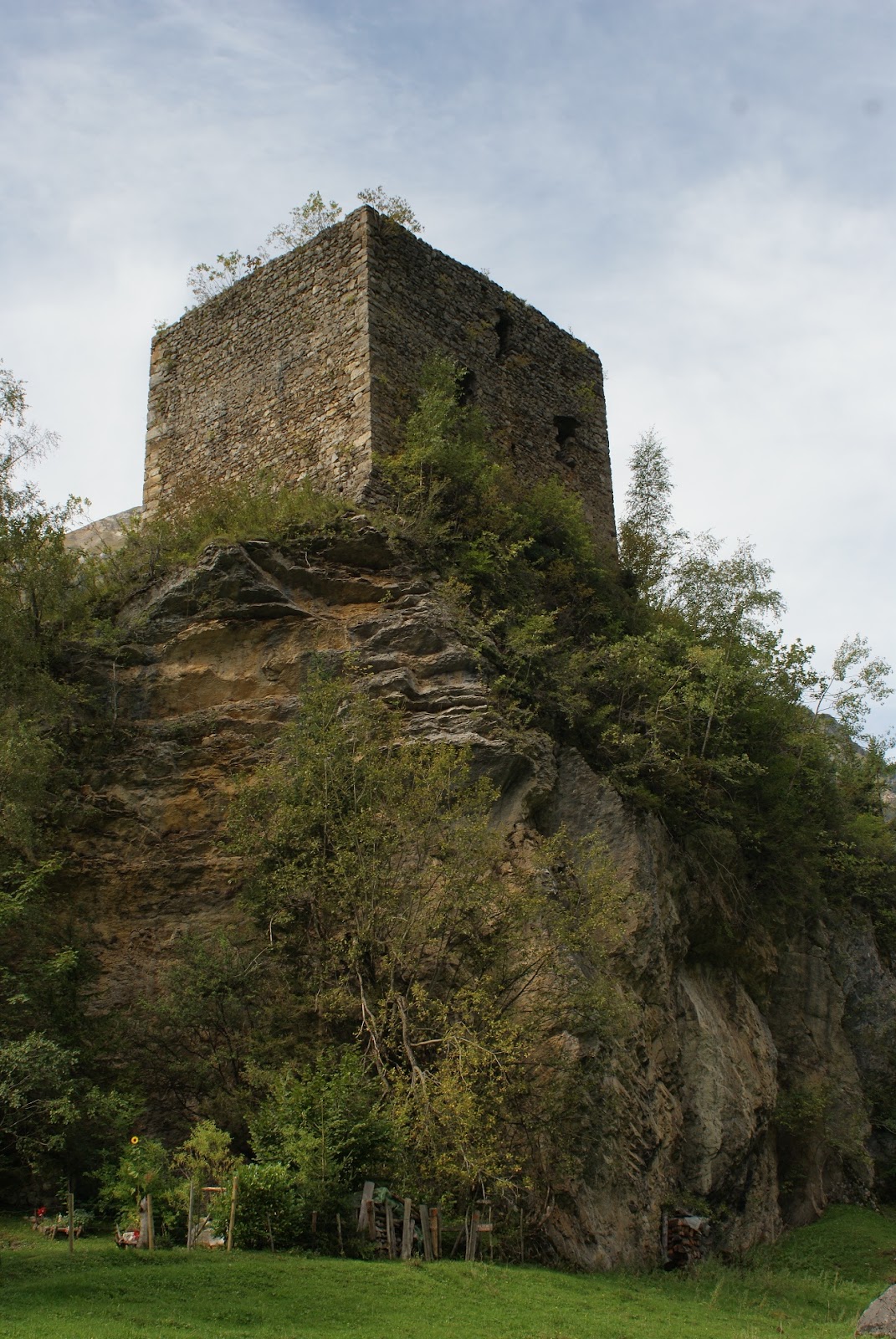
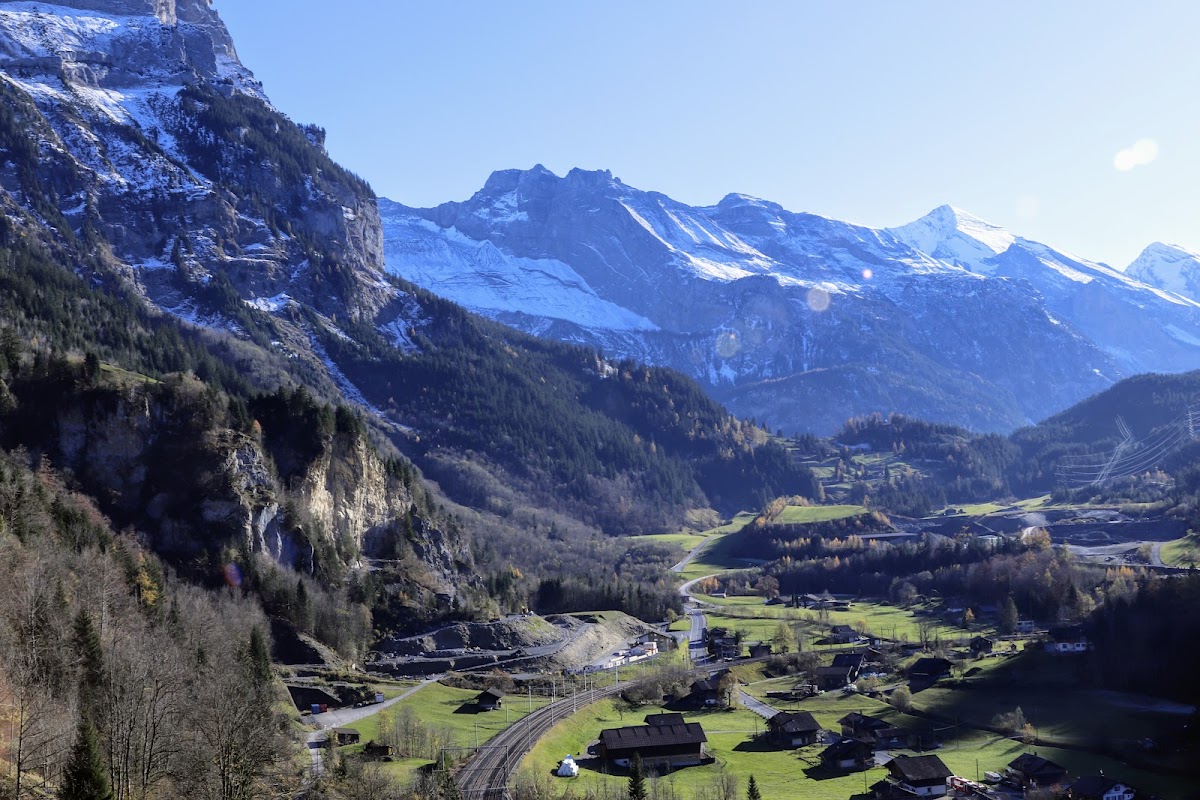
Felsenburg occupies a rocky spur at approximately 1,060 metres above sea level near Mitholz, above the municipality of Kandergrund in the canton of Bern. Its position overlooks the road leading into Valais over the Gemmi Pass, an Alpine route between the Bernese Oberland and Valais. The castle is also described as having controlled the Lötschen Pass, another route between these regions. It stands near Tellenburg and the ruins of Mülenen, and can be seen from the Lötschberg railway line.
Surviving Castle Fabric
Main Tower
The rectangular main tower forms the principal surviving structure of the ruined hill castle. It remains standing on the rocky spur and represents the central remnant of Felsenburg’s medieval construction.
Outer Walls
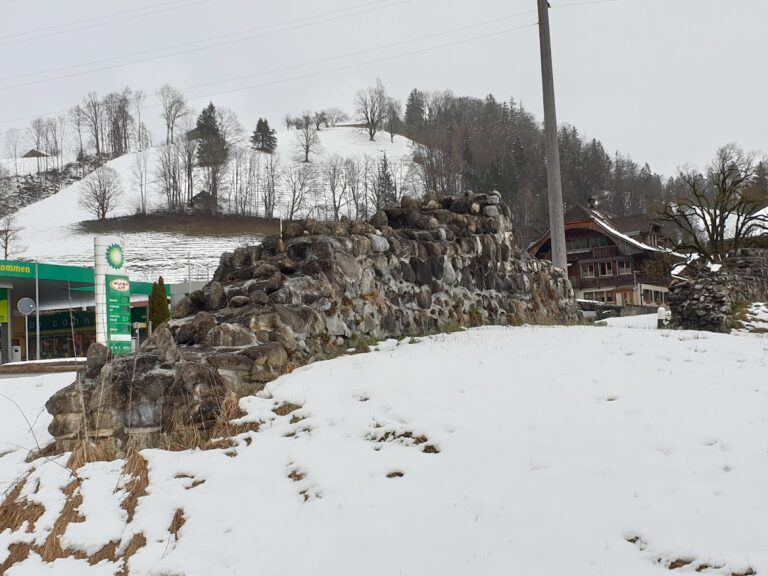
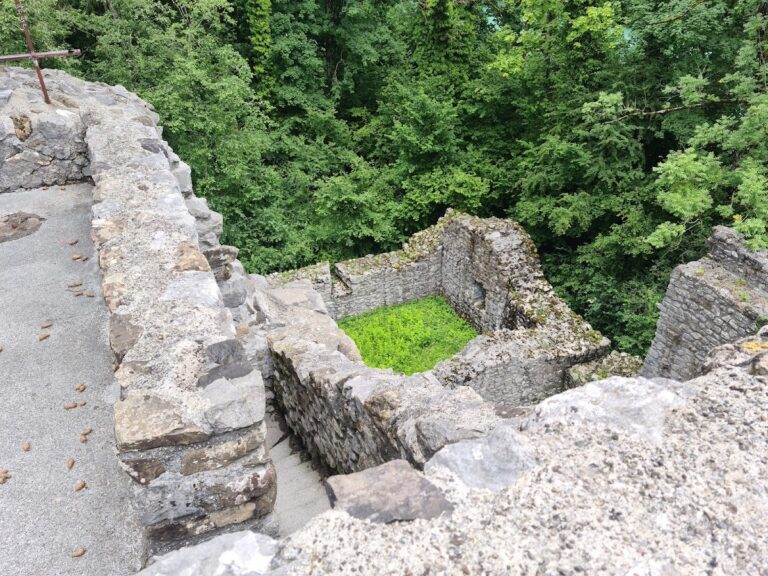
Remnants of the outer walls survive around the main tower. Together, these fragments preserve part of the castle’s defensive enclosure and show its position on the elevated rocky site.
Nearby sites