Château de Montarnal: A Medieval Castle in France
Site at a Glance
- Rating
- 4.9
- Popularity
- Very Low
- Country
- France
- Primary era
- Medieval
- Eras represented
- Medieval
- Civilizations
- French
- Site type
- Military
- Remains
- Castle
On this page8 sections
History
Château de Montarnal is a medieval castle in France, located in the hamlet of Montarnal at Sénergues. Its name, meaning “Arnaud’s mount,” appears in records from the second half of the eleventh century. The castle occupies a site above the Lot, a river whose crossing and navigation rights helped shape the power of local lords.
Medieval Lords and River Rights
The Austrin de Conques family, from which the first lords of Montarnal may have originated, held navigation or crossing rights on the Lot during the first half of the eleventh century. In 1287, Guy VI de Sévérac exchanged the rights he held over the old castles of Mouret, Montarnal, and Espeyrac for Eustache de Beaumarchais’s rights over the fiefs of Saint-Grégoire and Vimenet.
Montarnal initially belonged to the Montarnal family. It later passed to the Moret family, whose origins lay in Mouret, and remained in their possession until the eighteenth century. The castle then came to François Figeagol de Lagrange, who was its last lord before the French Revolution.
Restoration and Protection
Gérard Revel has restored Château de Montarnal since 1977. The privately owned castle was partially listed as a historic monument by an official order dated 25 April 1997. In France, this status places a building or site within the national system for heritage conservation.
Remains
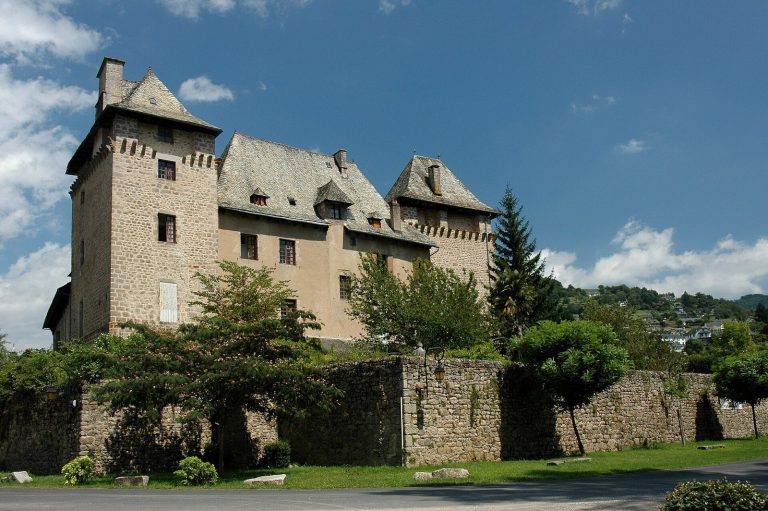
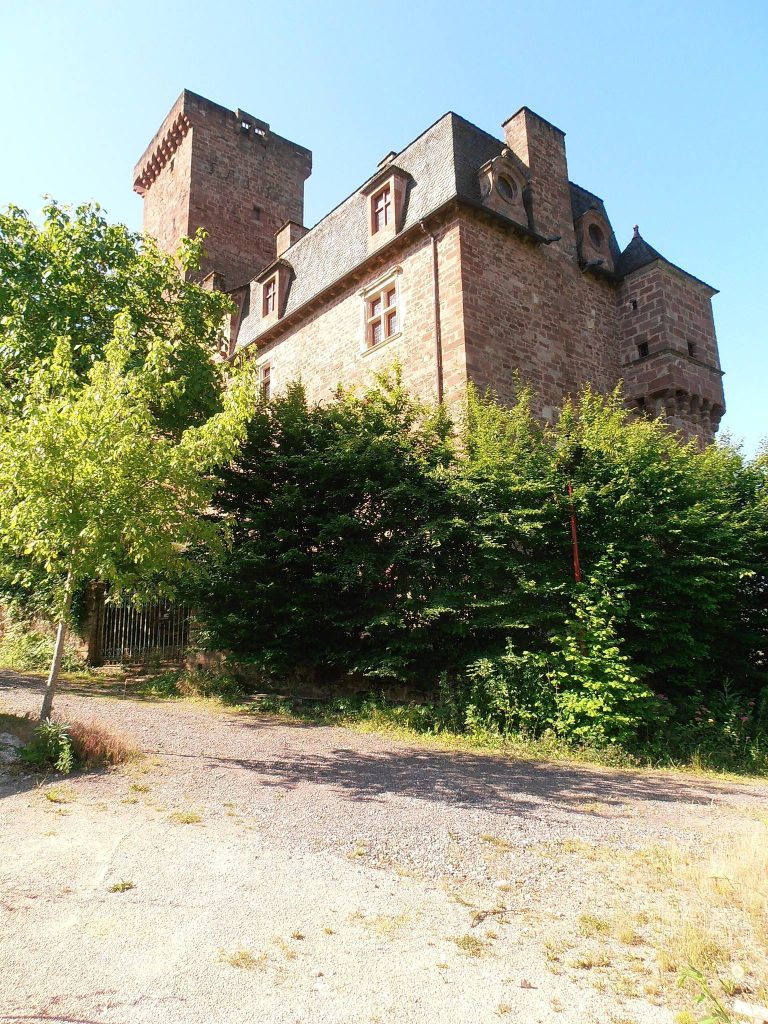
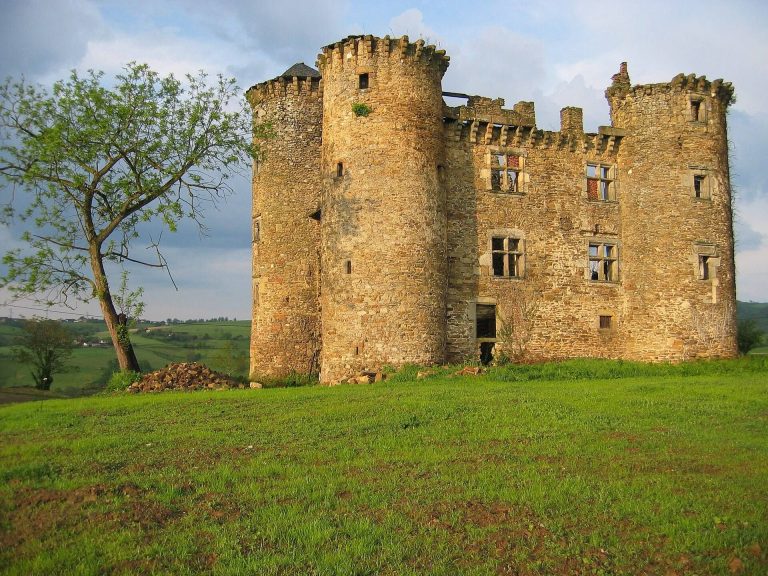
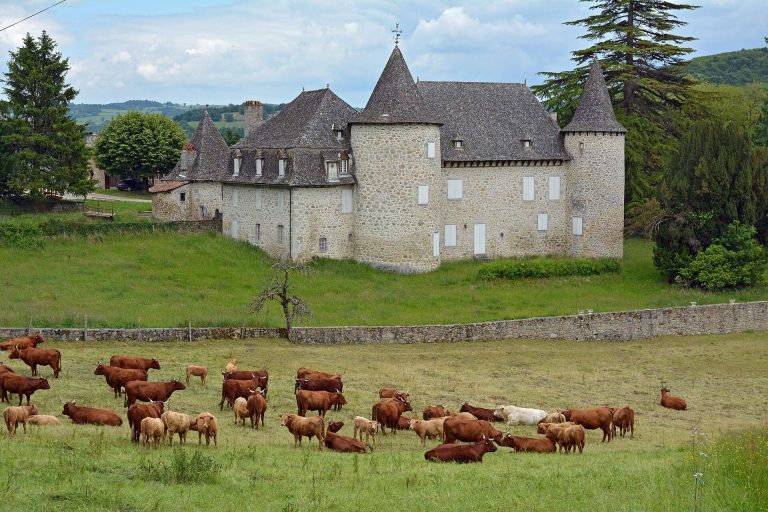
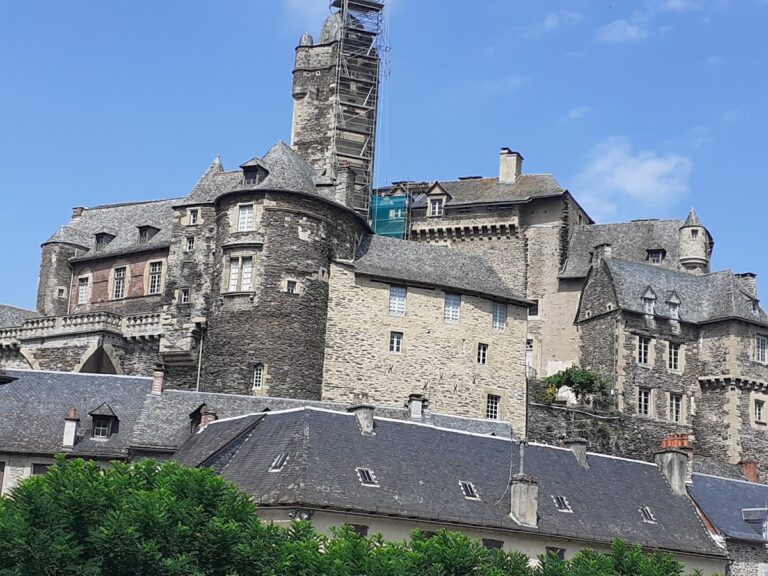
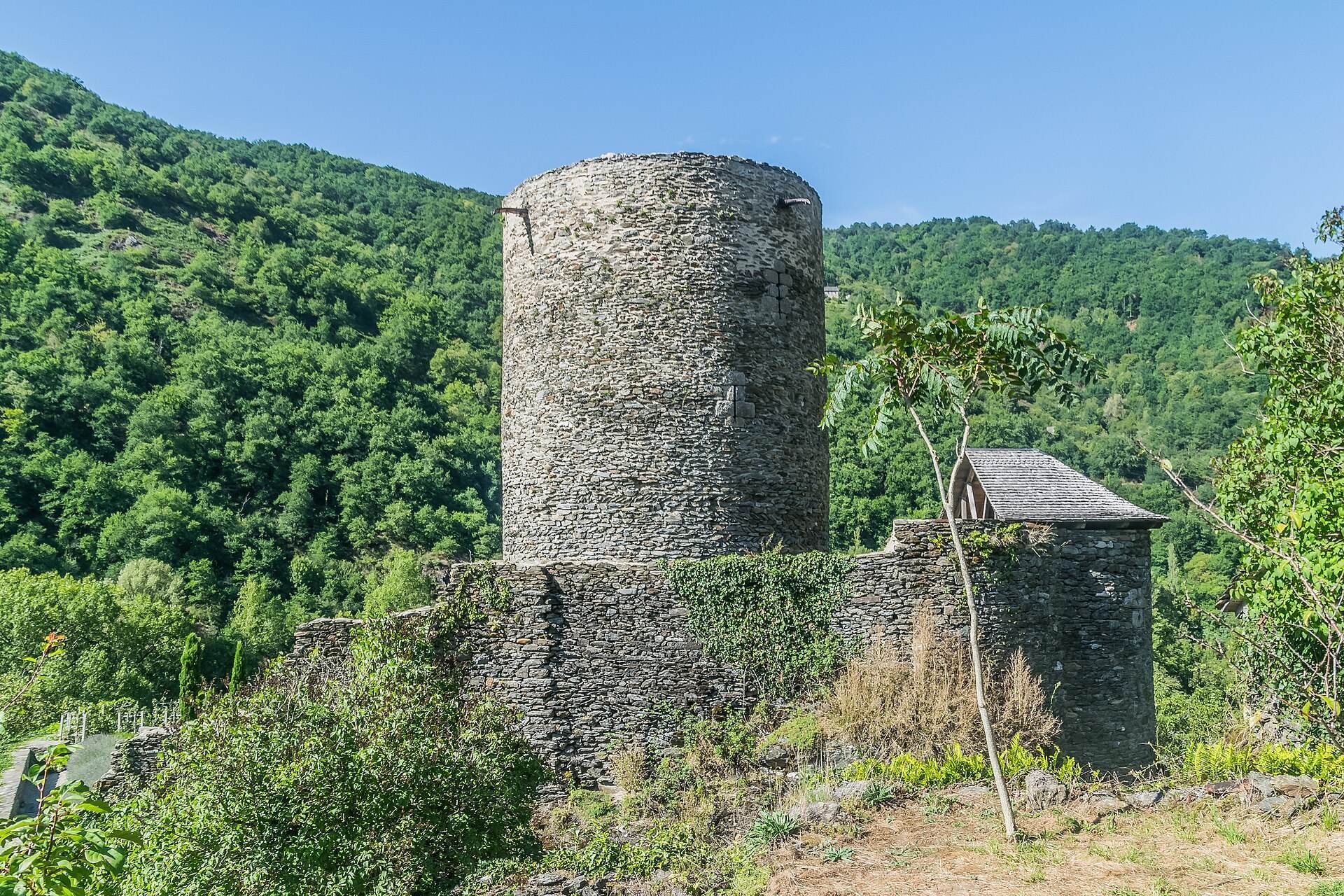
The surviving castle stands a few metres above the Lot on a rocky promontory in Montarnal. At this point, the river forms the boundary between the departments of Aveyron and Cantal. The remains comprise a round tower, a seigneurial hall, a fortified enclosure, meaning a defensive boundary surrounding the site, and a cellar cut into the rock.
Defensive and Residential Structures
Round Tower and Fortified Enclosure
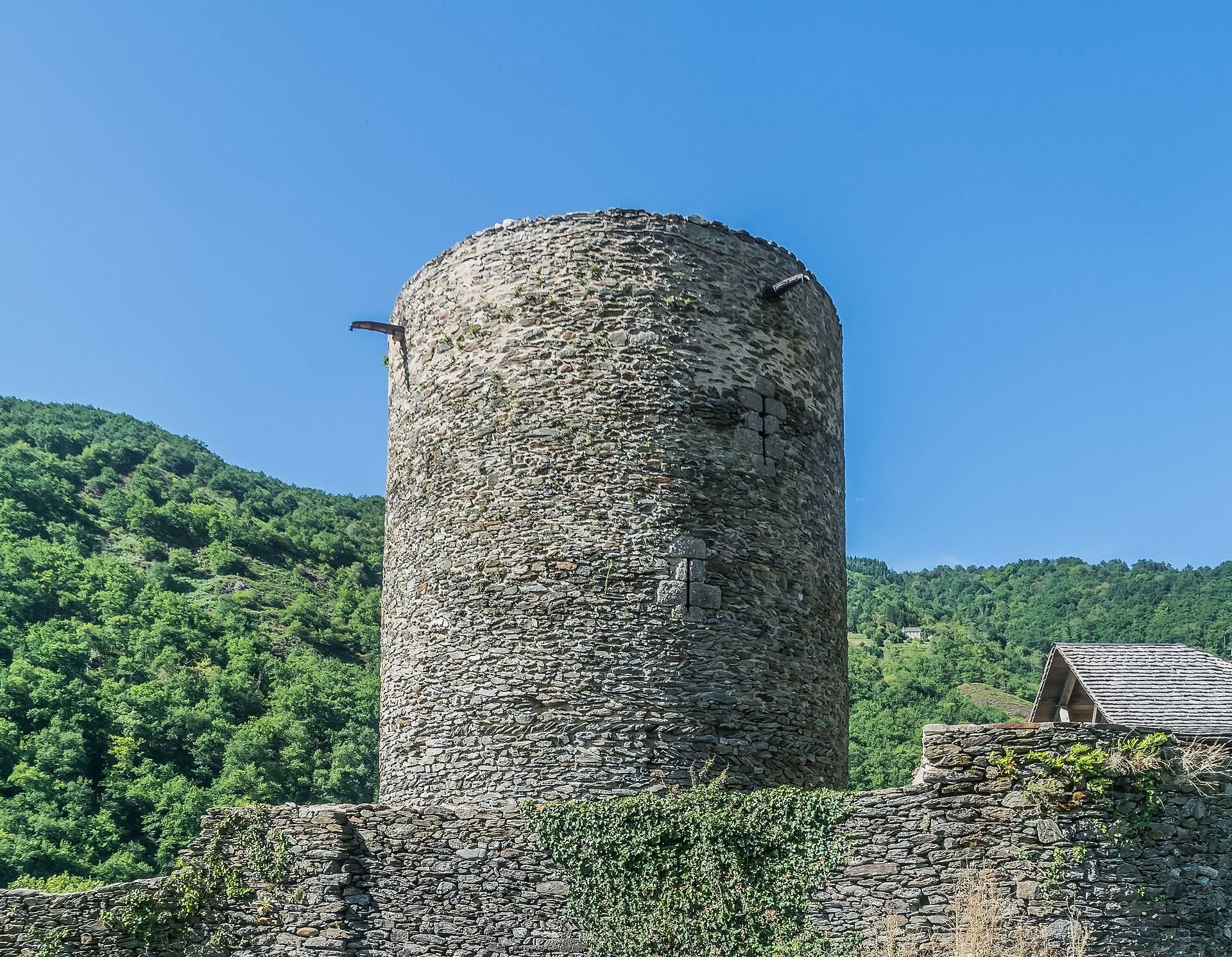
The round tower forms part of the surviving defensive fabric. It is associated with the fortified enclosure, the boundary wall or defensive system that surrounded the castle. Together, these remains define the castle’s protected perimeter on the rocky promontory above the Lot.
Seigneurial Hall
The seigneurial hall survives as one of the principal elements of the castle. A seigneurial hall was the main residential or representative room of a medieval lord’s residence. Its presence identifies the site as both a defensive stronghold and a residence connected with the local lordship.
Rock-Cut Cellar
A cellar excavated in the rock forms another surviving part of Château de Montarnal. Its position within the rocky promontory reflects the way the castle’s construction made use of the natural ground beneath the residence and defensive works.