Soběslav Castle: A Medieval Castle and Town Fortress in Czechia
Site at a Glance
- Rating
- 4.6
- Popularity
- Very Low
- Country
- Czechia
- Primary era
- Medieval
- Eras represented
- Medieval, Early Modern
- Civilizations
- Holy Roman Empire
- Site type
- Military
- Remains
- Castle
On this page10 sections
History
Soběslav Castle is a partially preserved castle in Soběslav, Czechia, probably founded by the Rosenberg dynasty in the thirteenth century. Its first written mention dates from 1385. Built into the town’s defensive system, it later became involved in conflicts between the Bohemian monarchy and powerful nobles, as well as in the Hussite Wars.
Rosenberg rule and royal conflict
The Rosenbergs were a powerful noble dynasty whose estates included Soběslav. During a conflict between the nobility and the monarch, Henry III of Rosenberg briefly imprisoned King Wenceslas IV at the castle. Wenceslas was king of Bohemia and King of the Romans during the late fourteenth and early fifteenth centuries.
The Hussite Wars
The castle resisted an attempted capture by Jan Žižka in 1421 and another attack by the Táborites in 1435. The Hussite Wars were religious and political conflicts in Bohemia that began in the early fifteenth century after the death of the reformer Jan Hus. Žižka was a leading Hussite commander, while the Táborites were the radical Hussite faction based at Tábor. Although the castle withstood both attacks, the town was burned on each occasion. The historian Tomáš Durdík proposed that the castle itself was burned during one of the later attacks.
Political change and recovery
The town fortifications were repaired in 1467. The following year, during the Bohemian civil war, Jan II of Rosenberg changed allegiance from the royal side to the Green Mountain League, a noble alliance formed against King George of Poděbrady. Jan II was consequently required to surrender the town to Zdeněk of Sternberg, while retaining the castle. The Rosenbergs recovered the town in 1481.
School, granary, and brewery
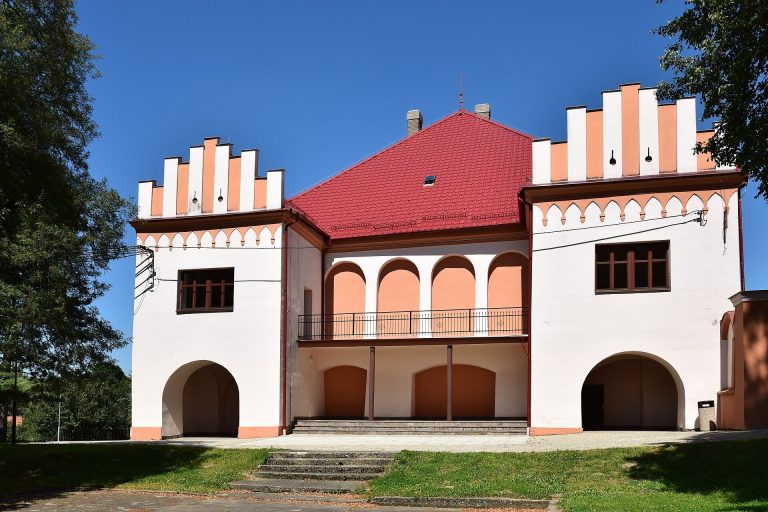
Under the terms of Peter Vok of Rosenberg’s will, Jan Jiří of Švamberk had part of the castle rebuilt as a Czech school between 1613 and 1615. After the Thirty Years’ War, the town converted the school into a granary. It was later changed into a malt house belonging to a brewery established in the castle palace. The brewery operated until 1951.
Decline and adaptation
The castle deteriorated during the second half of the twentieth century. Repairs began after 2001, and since September 2010 the northern part has housed the municipal library. Soběslav Castle has been protected as a cultural monument of the Czech Republic since 1963.
Remains
Fortifications and corner tower
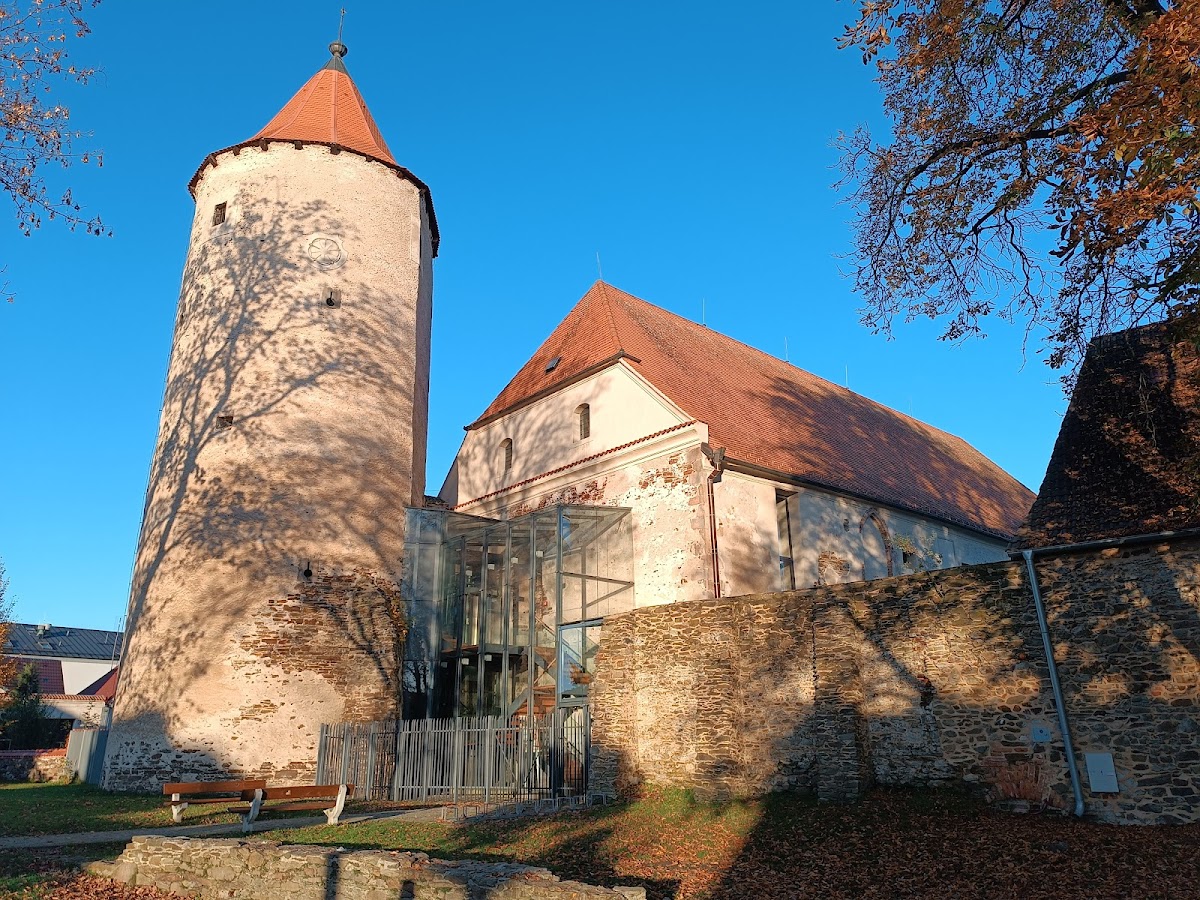
The castle stands at the northwestern corner of Soběslav’s historic town center, at approximately 410 meters above sea level. It formed part of the town fortifications, with the defensive walls joining the castle continuously. A three-quarter-round tower with a straight rear wall occupies the northwestern corner. Probably built after the middle of the fifteenth century, it was entered through a stone saddle portal, a doorway with a lintel whose sloping upper edges create a saddle-like profile.
Palace
A rectangular palace adjoins the northern wall. Its basement rooms retain barrel vaults, which are continuous curved ceilings spanning a room, while the ground-floor and first-floor ceilings are flat. The upper floor contained a large hall reached through a surviving portal from a gallery on the courtyard side. It also included a smaller residential chamber dating from the last quarter of the fourteenth century.
Former school building
The southern side contains the former Renaissance school building created through the rebuilding carried out between 1613 and 1615. The structure has been rebuilt several times, preserving the physical record of the castle’s later educational and utilitarian use.