Svákov: An Early Medieval Hillfort in Czechia
Site at a Glance
- Rating
- 4.7
- Popularity
- Very Low
- Country
- Czechia
- Primary era
- Medieval
- Eras represented
- Medieval
- Civilizations
- Unclassified
- Site type
- Military
- Remains
- Fort
On this page7 sections
History
Svákov is an early medieval hillfort in Czechia, west of Soběslav in the South Bohemian Region. The site was occupied during the Eneolithic, the Copper Age between the Neolithic and Bronze Age, and the Early Iron Age, but its surviving defenses and most archaeological finds belong to the early medieval period. Its later history is associated with the ninth-century sphere of Slavic princes.
Prehistoric and Early Medieval Occupation
Archaeological investigations around the turn of the twentieth century, including work involving the Czech archaeologist Jan Nepomuk Woldřich, recovered prehistoric material assigned to the Eneolithic and the Hallstatt period, the earlier phase of the Iron Age in central Europe. Because the find locations were uncertain, these discoveries could not establish the date of the hillfort’s ramparts.
A 2007 investigation found a single pottery sherd from either the Bronze Age or the Hallstatt period in sediment washed from the rampart. This discovery also could not date the fortifications. Most pottery fragments from the site belong instead to the Middle Hillfort period, a central phase of the early medieval hillfort period in the Czech lands.
Destruction and Historical Memory
The fortification was destroyed by fire twice in succession between the second half of the ninth century and the beginning of the tenth century. These events are connected with military upheavals after the fall of Great Moravia, a major ninth-century Slavic polity in central Europe, as well as with Magyar raids and the growing power of the Přemyslid dynasty, which established the medieval Czech state.
The earliest recorded reference to Svákov dates to around 1760. The Třeboň chronicler Petr Kašpar Světecký described an ancient town of Svákov whose destruction was followed by the foundation of Soběslav. The hillfort is protected as a cultural monument.
Remains
Setting and Fortifications
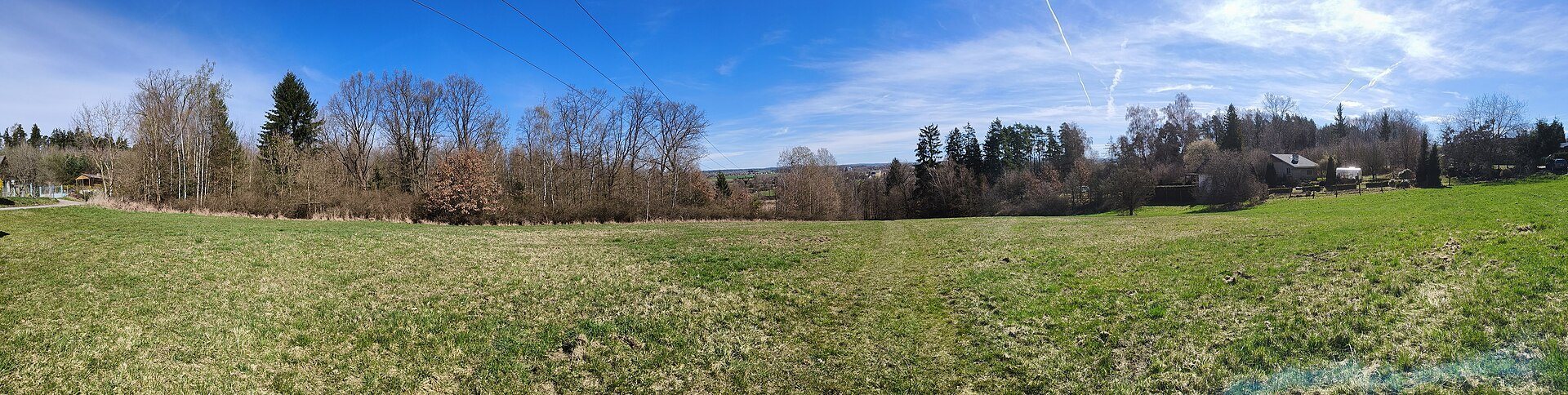
Svákov occupies a promontory of muscovite-biotite orthogneiss, a metamorphic rock formed from an earlier igneous rock, above the left bank of the Lužnice River. The site lies at approximately 440 to 455 metres above sea level, and the promontory rises about 40 metres above the river. On the southern side, a small unnamed stream runs below a slope about 25 metres high. The fortified area covers roughly 3.8 hectares, with its highest point near the centre and the ground descending toward the north and south. Steep slopes strengthened the natural protection on the southern and eastern sides.
Rampart and Ditch
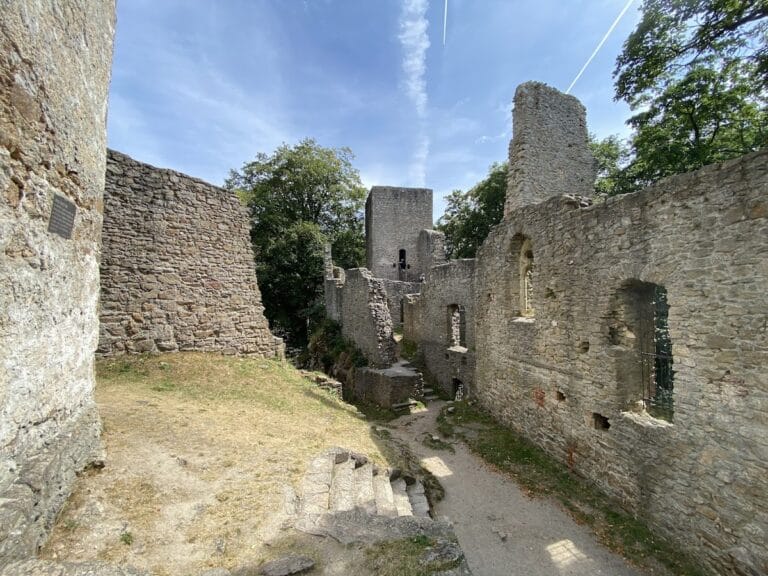
The northwestern approach was protected by a substantial rampart and an outer ditch. On its western and northwestern outer face, the surviving rampart reaches up to eight metres high. The ditch measures between three and twenty metres across and between one and three metres deep. The original defense stood on a sandy-clayey embankment. Its outer face used dry-laid masonry, stones placed without mortar, beside a wood-and-earth structure made from timber and compacted soil or clay. A stone wall may also have stood along the inner side.
Entrances and Interior
The principal entrance probably lay on the southwestern side, while another possible entrance led north toward the Lužnice. A break in the western rampart most likely formed after the hillfort had been abandoned. The internal arrangement remains uncertain, including the possible division of the enclosure into separate areas. A separately fortified court may have served as the residence of the local elite.