Castello di San Michele in Teverina: A Renaissance Castle in Italy
Site at a Glance
- Rating
- 4.6
- Popularity
- Very Low
- Country
- Italy
- Primary era
- Early Modern
- External website
- Open
- Eras represented
- Medieval, Early Modern
- Civilizations
- Papal States
- Site type
- Military
- Remains
- Castle
On this page7 sections
History
Castello di San Michele in Teverina is a castle in Italy, in the Lazio region, whose origins reach back to the twelfth century. A later tradition dates its foundation to 1164, when Piero di Mugnano, a feudal lord of the Tiber Valley, ordered a fortress to be built in Tuscia, the historic area of central Italy associated with northern Lazio and the former Etruscan territory.
The Baglioni Fortress
For almost five centuries, the fortress belonged to the Baglioni di Castel di Piero family. The fief and its castle were known as Castel di Piero until 1726. The Baglioni name also shaped the building’s later history through marriages and inheritance, including the traditional association of Caterina de’ Medici, a cousin of the family, with the earlier ownership of the fief.
In 1522, a dispute over the succession between Piero I Baglioni and Antonio Baglioni di Perugia brought the castle into a military conflict. Galeazzo Farnese besieged the fortress, and Piero resisted. Five hundred Corsican mercenaries were killed during the fighting, but the castle was eventually captured, and most of its defensive structures were dismantled.
Renaissance Reconstruction
A few years after the siege, Piero I recovered control of the property and commissioned a Renaissance castle over the remains of the medieval fortress. The Renaissance was an Italian cultural and artistic period that renewed interest in classical models and transformed architecture, art, politics, and learning. The rebuilding was apparently overseen by Piero’s wife, Caterina de Galeotto de’ Medici, and their daughter, Virginia Baglioni.
Later Noble Ownership
During the seventeenth century, the castle passed to the Domicelli family of Orvieto and later to other noble families. On 7 June 1690, with the authorization of Pope Alexander VIII, Marchioness Artemisia Simoncelli Cennini sold the castle and the title of count to Isidoro Benedetti of Spoleto. A papal brief is a formal document issued by a pope for an official decision or grant.
In 1726, a brief issued by Pope Benedict XIII allowed Isidoro’s son, Niccolò Benedetti, to change the name of the fief from Castel di Piero to San Michele. In 1804, a brief of Pope Pius VII, issued in accordance with Isidoro Benedetti’s wishes, transferred the family’s titles to Ermanno Gabrielli di Montevecchio. These titles included Prince of Umbriano, Duke of Ferentillo, and Count of San Michele.
In 1847, the principality and county were sold to Louis Desiré de Montholon-Semonville, who received formal investiture in both titles through a brief of Pope Pius IX dated 1 October 1847. The de Montholon family and its heirs retained the castle until 1970. The best-known member of the family was Charles-Tristan de Montholon, a French nobleman and military officer who accompanied Napoleon during his exile on Saint Helena and served as executor of his will.
Integration into Italy
San Michele was annexed to the Kingdom of Italy under Law no. 6165 of 31 December 1870. A royal decree dated 16 February 1873 changed the name to San Michele in Teverina. The surrounding valley was added to UNESCO’s Tentative List of World Heritage Sites in 2017, an inventory of places that a country may later nominate for the World Heritage List. The castle is also identified as Italian national heritage.
Remains
Castle and Village Layout
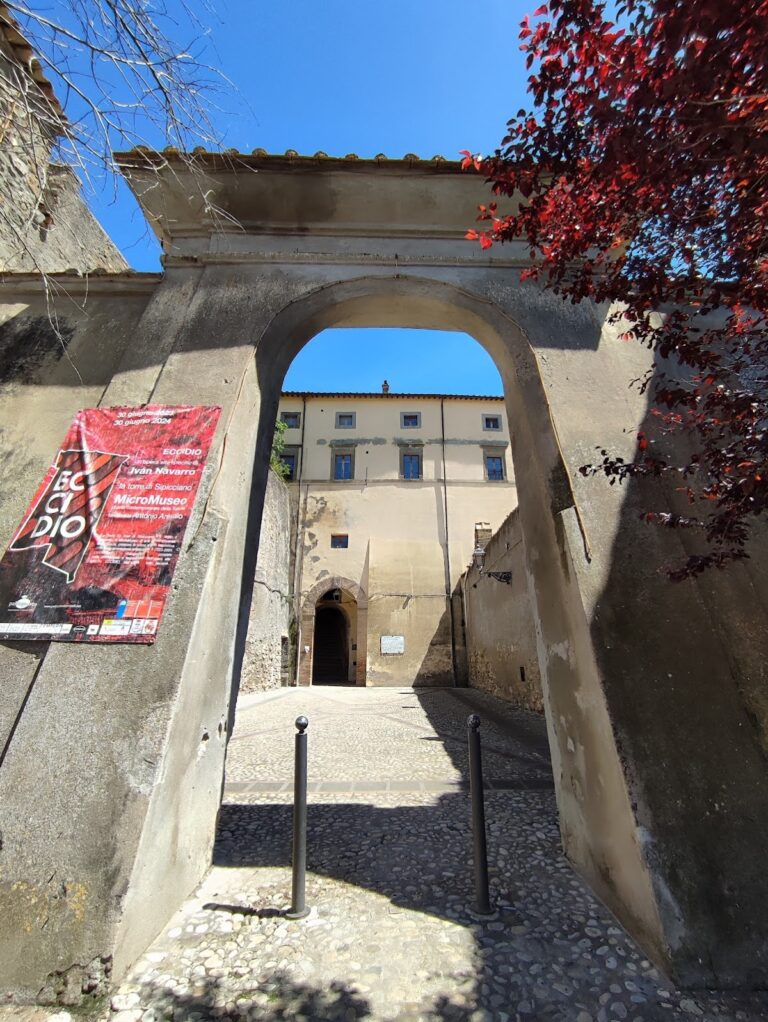
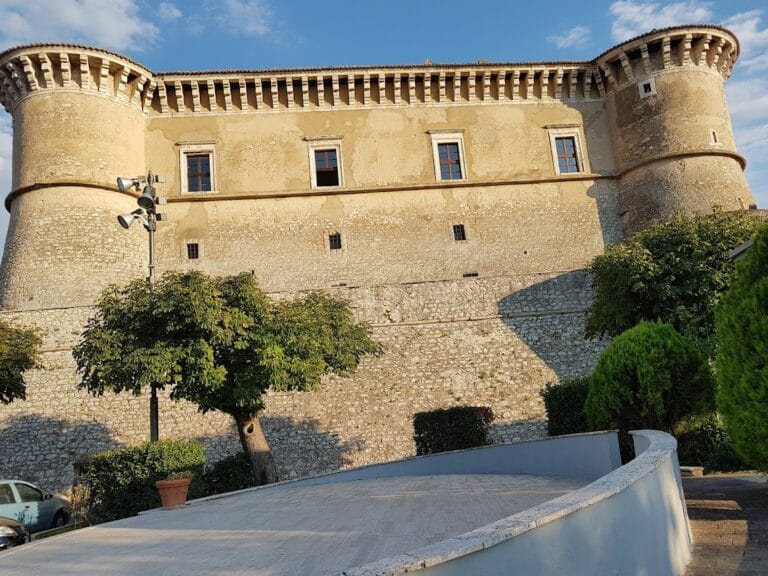
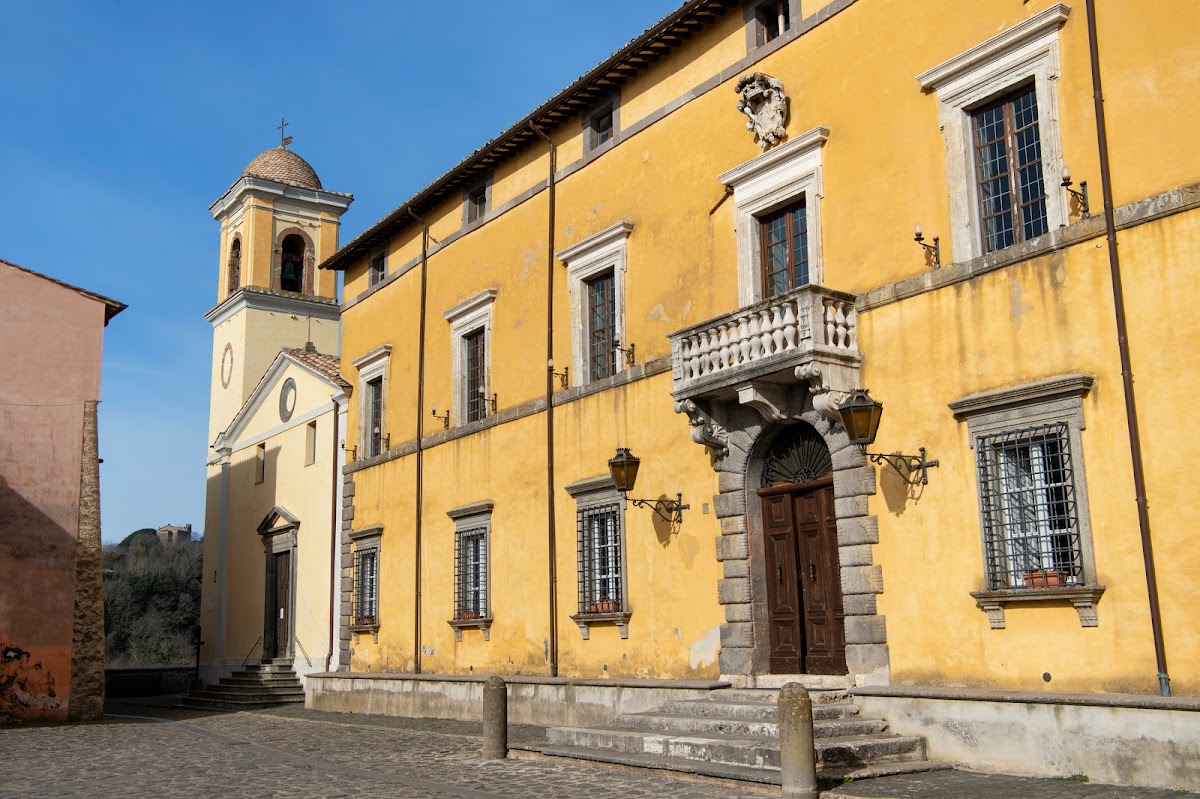
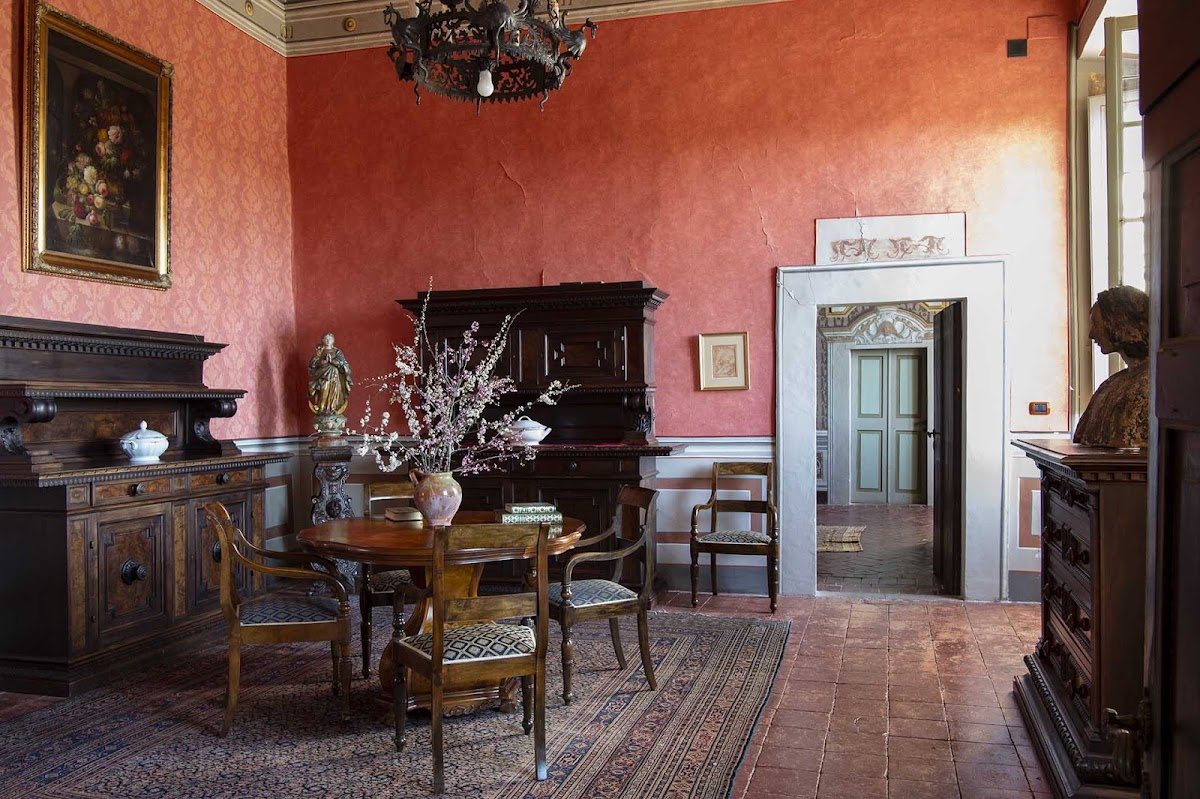
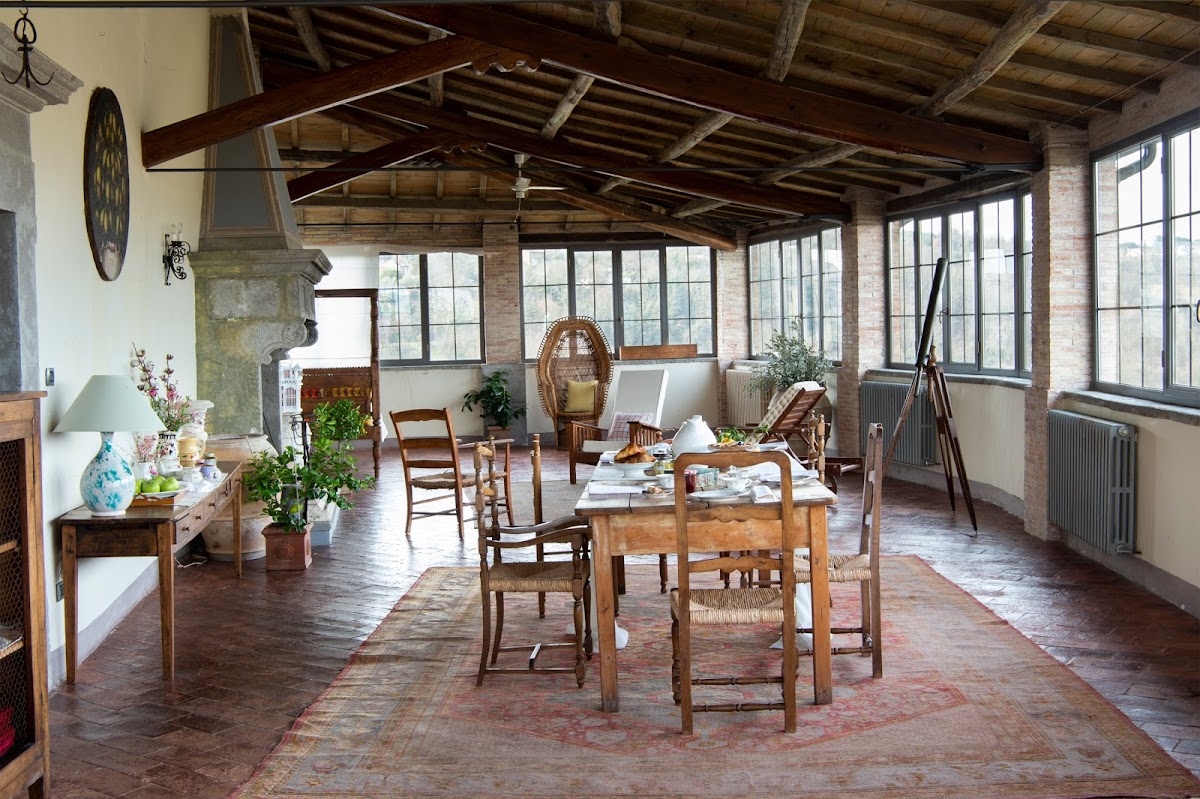
The Renaissance palace and the remains of the medieval castle occupy a wooded promontory at the edge of the village of San Michele in Teverina. The settlement is organized around a square that formerly functioned as the castle courtyard. Its surviving fabric consists mainly of the Renaissance construction associated with the period of Caterina de’ Medici, together with portions of the earlier medieval fortress.
The Renaissance castle stands directly over the medieval fortress, reflecting the rebuilding that followed the 1522 siege. Most of the medieval defensive structures had been dismantled after the castle was captured, while the later palace incorporated the remains of the earlier stronghold. The surviving complex therefore brings together the physical evidence of a medieval fortress and its subsequent transformation into a Renaissance residence.