Burg Kirberg: A Hilltop Castle Ruin in Hesse, Germany

Site at a Glance
- Rating
- 4.4
- Popularity
- Very Low
- Country
- Germany
- Primary era
- Medieval
- Eras represented
- Medieval
- Civilizations
- Holy Roman Empire
- Site type
- Military
- Remains
- Castle
On this page6 sections
History
Foundation and town rights
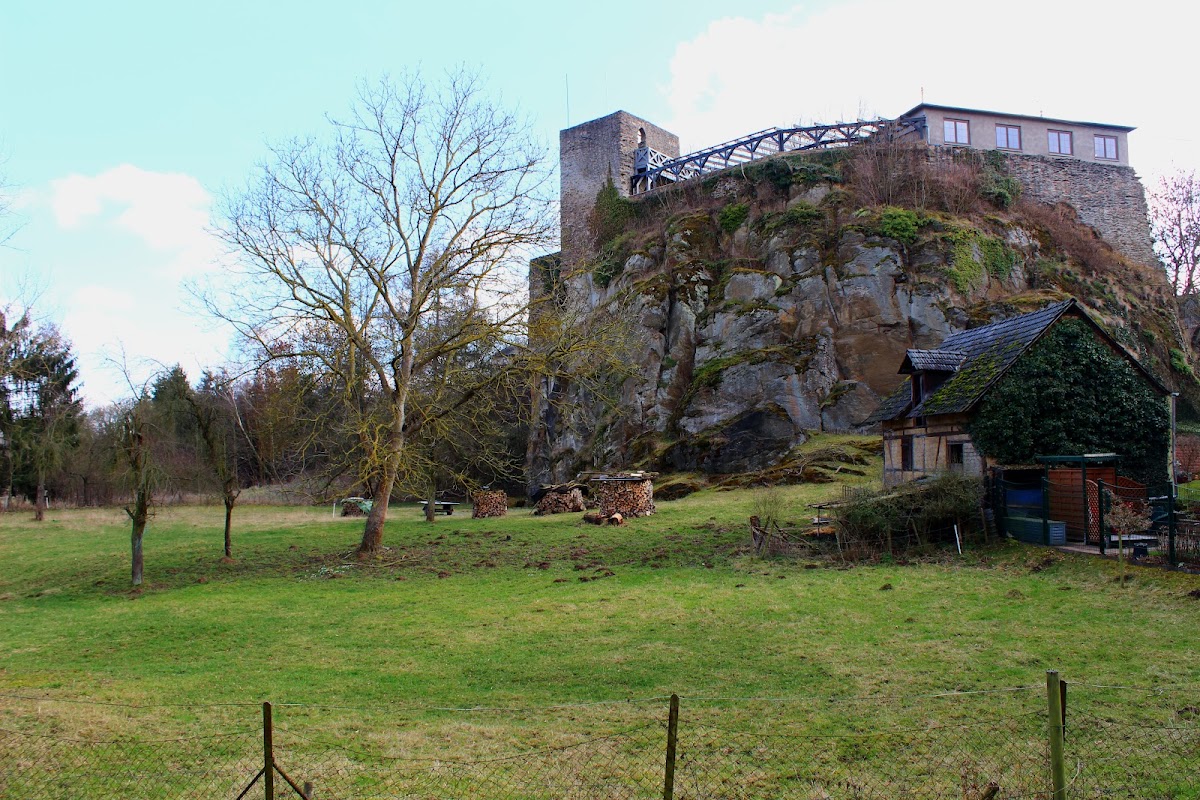
Burg Kirberg is the ruin of a hilltop castle in Germany, in Kirberg, now part of Hünfelden in Hesse. Built around 1355 by Gerhard of Diez and Johann I, Count of Nassau-Weilburg, it replaced a church that had stood on an isolated rock since around 790. The two regional ruling dynasties had fought over control of Kirberg in a feud that began in 1353. Negotiations to settle the dispute led to their joint castle project.
The castle was built with a church and a surrounding ring wall, a fortification enclosing the settlement. Kirberg also received town rights at this time. The castle therefore formed part of a wider reorganization of the rock and the town, rather than standing as an isolated residence alone.
Decline and later reuse
The castle appears to have been occupied for only a limited period. Its poor structural condition was noted by 1500, although the territorial lords continued to use it for accommodation during visits until the end of the sixteenth century. At least one guard remained there until 1670.
A pleasure garden was created on the rock in 1673. By around 1700, parts of the castle had either fallen to their foundation walls or been dismantled for building stone. An official demolition permit followed in 1790, and stone from the castle continued to be reused in roads and village buildings until the end of the nineteenth century. The site has aristocratic historical status and is protected in Hesse as a cultural monument.
Remains
Castle and settlement remains
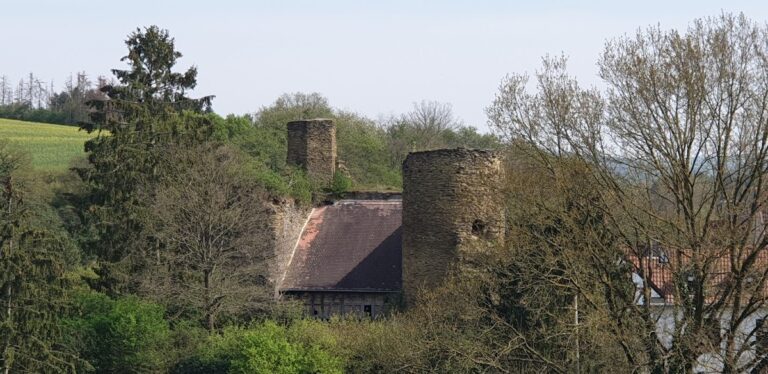
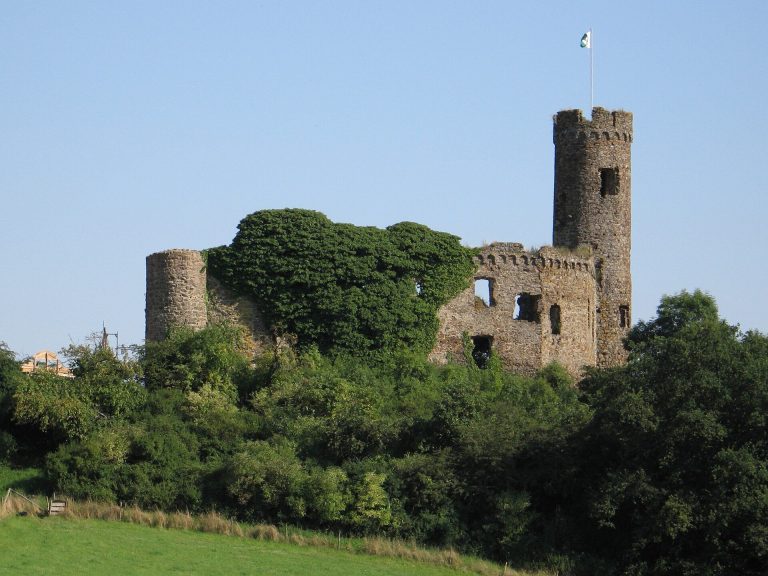
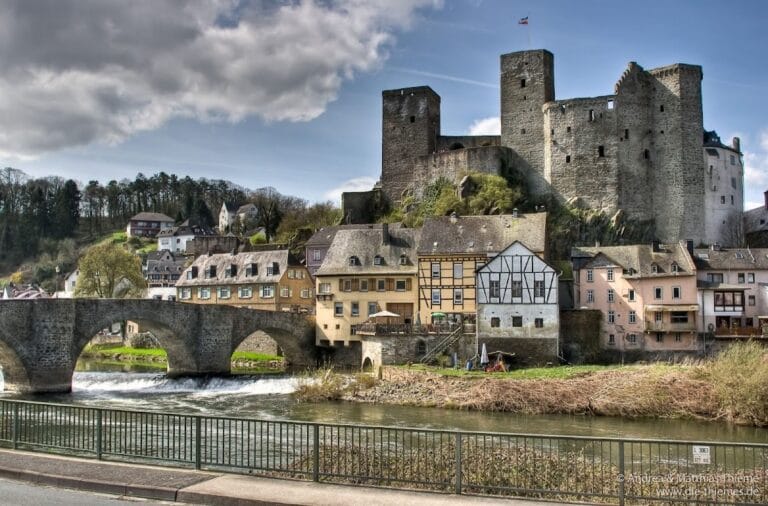
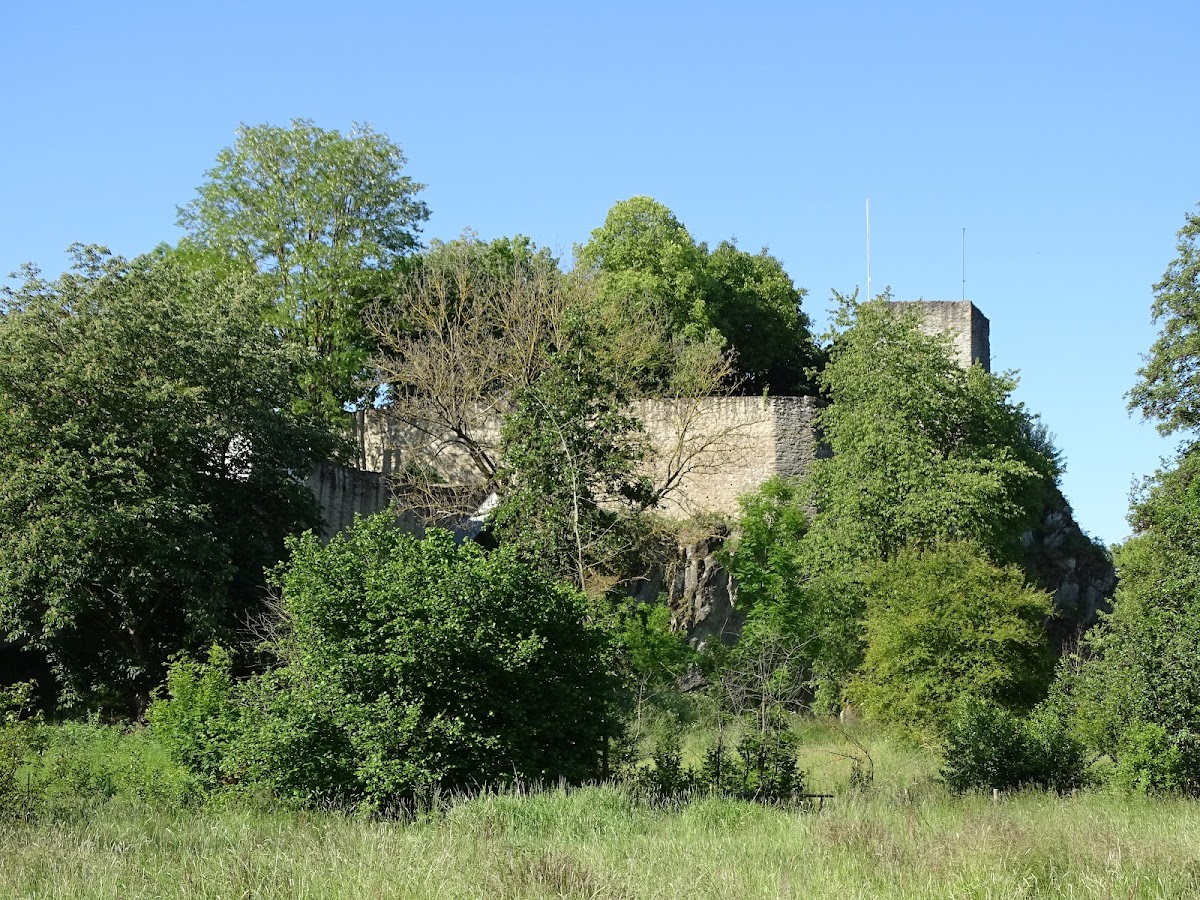
Burg Kirberg occupies an isolated Schalstein rock, a type of volcanic rock, and follows the elevated position of a hilltop castle. Only one tower and several sections of the surrounding walls survive. The castle was associated with the church and ring wall constructed for Kirberg around the time of its foundation, while the earlier church on the rock dated to around 790.
Manor residences and garden
Two manor residences stood within the castle grounds. They belonged to families of castle retainers, officials and service personnel connected with the administration and defence of a castle. By the beginning of the eighteenth century, these residences had been reduced to foundation walls. The pleasure garden laid out on the rock in 1673 formed part of the site’s later transformation as the castle buildings declined and their stone was reused.