Schwalbach Castle: A Medieval Defensive Fortress in Germany
Site at a Glance
- Popularity
- Medium
- Country
- Germany
- Primary era
- Medieval
- Eras represented
- Medieval, Early Modern
- Civilizations
- Holy Roman Empire
- Site type
- Military
- Remains
- Castle
On this page10 sections
History
Construction and the settlement below
Schwalbach Castle is a fourteenth-century hilltop fortress in Burgschwalbach, Germany, built by Count Eberhard V of Katzenelnbogen to defend the northeastern boundary of his lands. Eberhard had received these lands in an inheritance division with his brother Wilhelm II in 1352. The castle’s construction date is uncertain: lower structural timbers date to 1367–1368, while 1371 is traditionally given for completion of the main works. Given the project’s scale, completion by that year is considered unlikely. In 1373, a castle retainer or a person holding land granted by the count was recorded there.
A settlement already stood below the castle. In 1368, Emperor Charles IV, a fourteenth-century Holy Roman emperor, granted it town rights, including permission to build fortifications and hold a weekly market on Tuesdays. It did not develop into a fully formed town and was described into the eighteenth century as a settlement with some town-like characteristics.
Nassau residence and administration
The castle passed to the House of Nassau in 1536. Following an inheritance division in 1594, Count Wilhelm of Nassau-Weilburg, a branch of the House of Nassau, received Burgschwalbach and its administrative district. He made the castle his residence and carried out major renovations.
After Wilhelm died in 1597, his widow Erika lived at the castle until 1628. She directed substantial building work and restored the chapel, which had fallen into disrepair by the late sixteenth century. Services there were again being held by 1603. The castle continued to house Nassau-Weilburg administrative offices until 1720, by which time many of its buildings had deteriorated.
Decline, reuse, and restoration
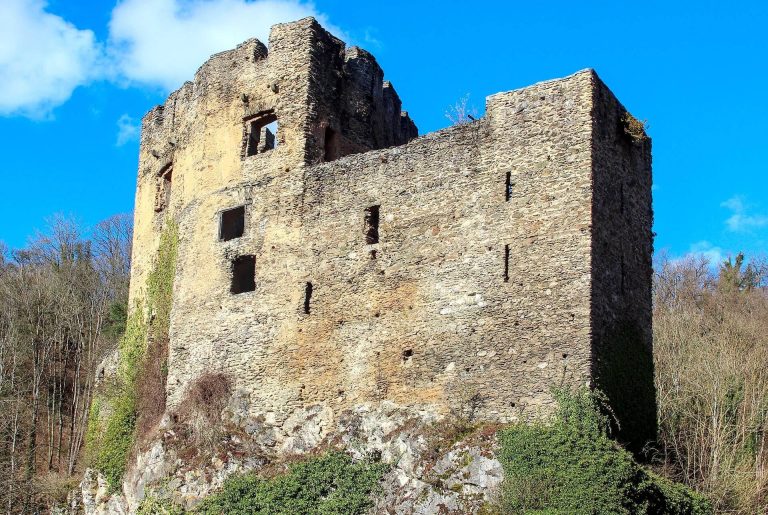
In 1737, the Nassau-Usingen administration, then responsible for Burgschwalbach and the surrounding lands, decided that repairs would cost too much and allowed the castle to decay. Furnishings, roofing, and timber components were auctioned and removed. The stone walls remained, although parts were ruined. In 1817, master carpenter Georg Philipp Schnabel bought the gatehouse. His family opened a restaurant at the castle in 1858, and a restaurant continues to operate there.
The stone buildings deteriorated further during the twentieth century, while the owners lacked funds for comprehensive repairs. After sections of the ring wall’s battlements broke away in 2006, safety measures and investigations followed. Restoration work began in 2010 with support from local authorities.
Remains
Layout and defenses
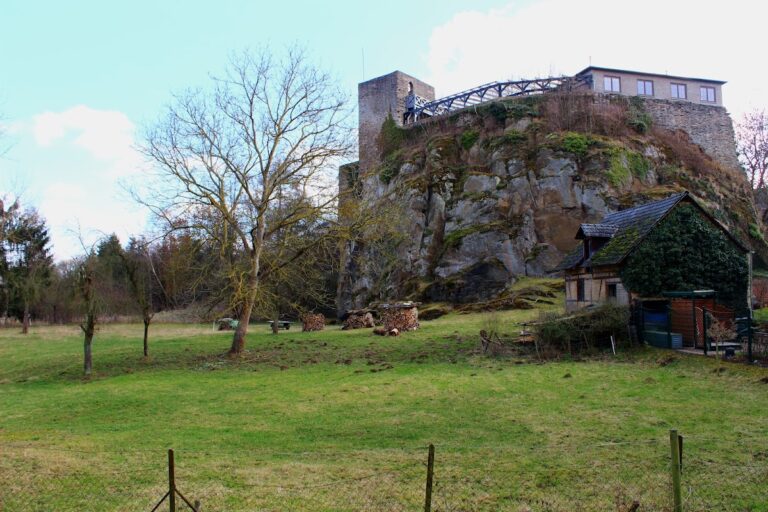
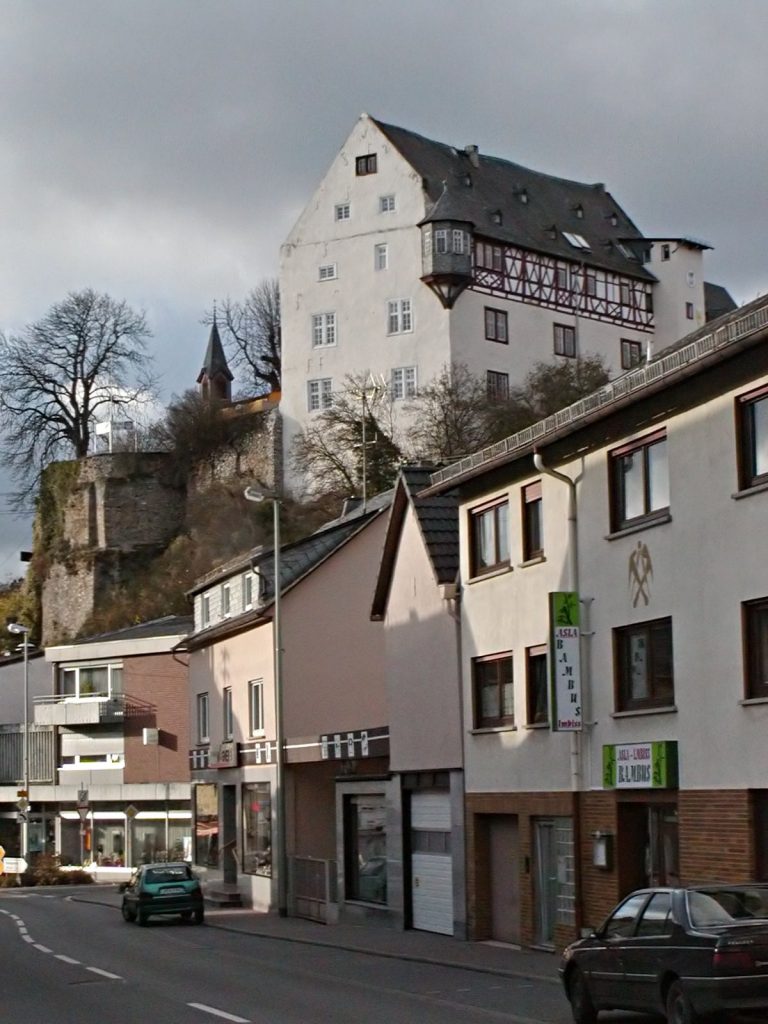
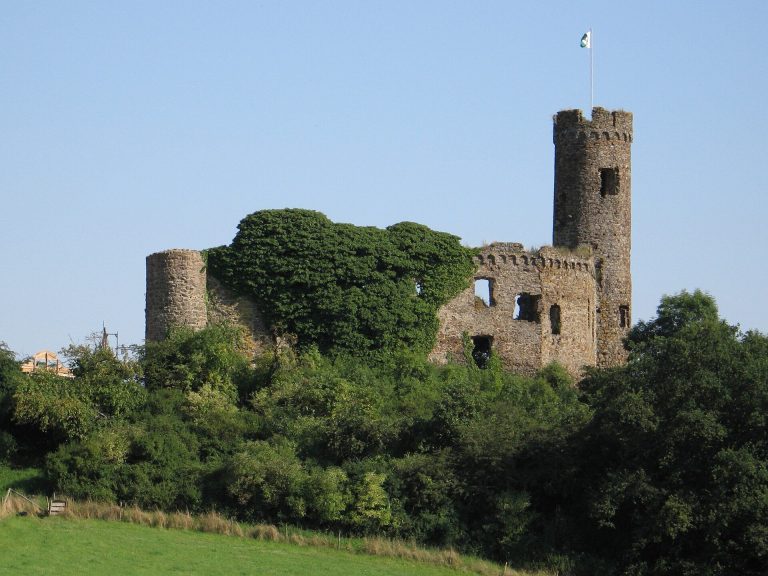
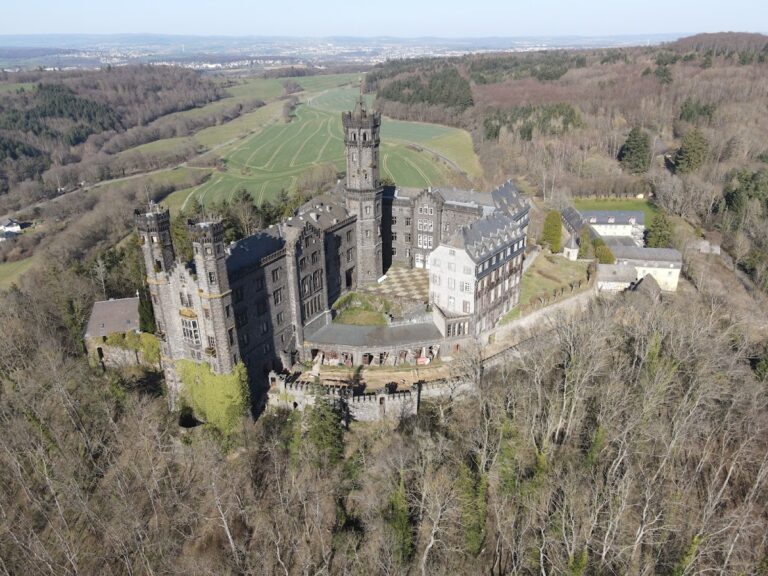
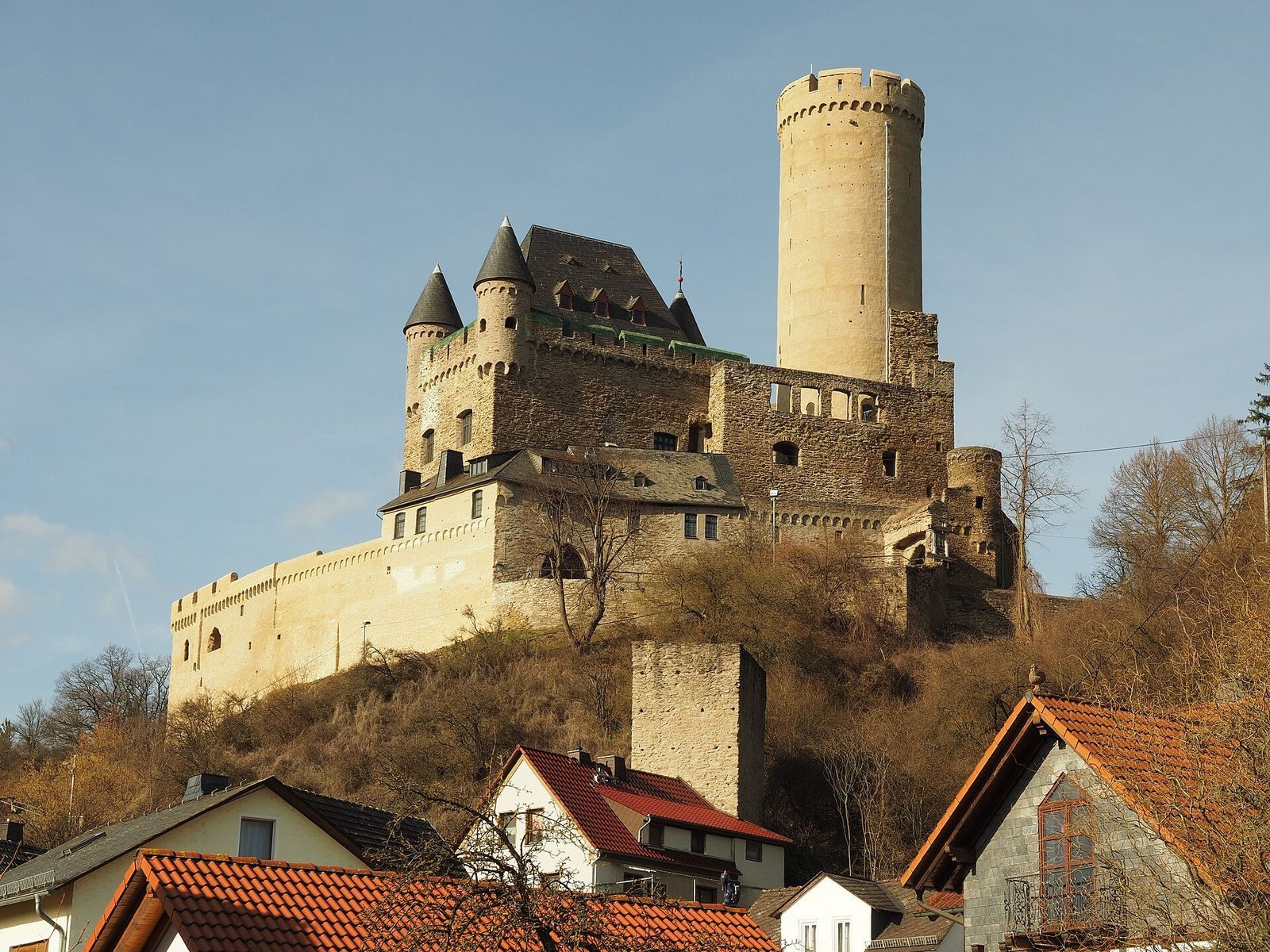
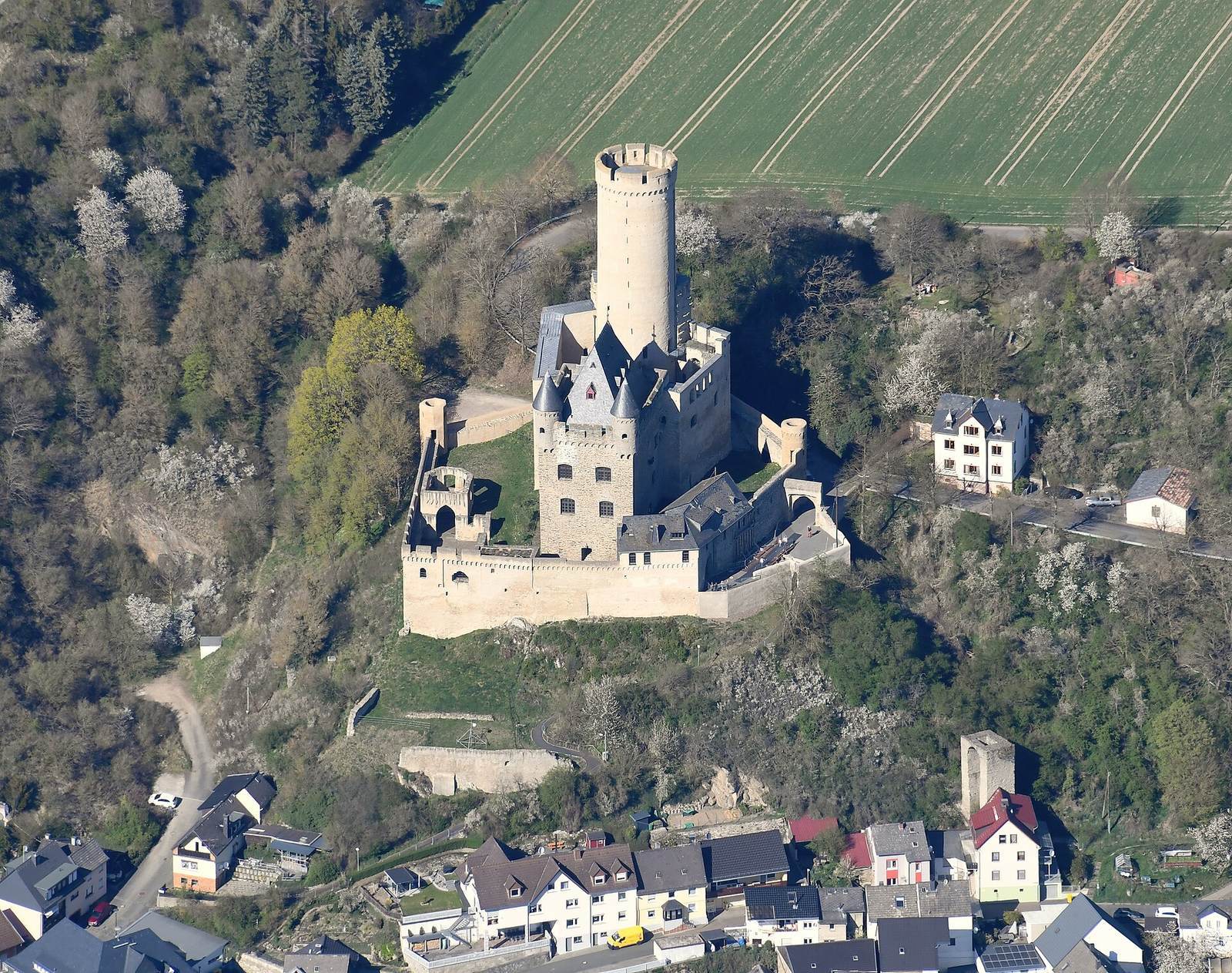
Set on a hilltop, Schwalbach Castle has a five-sided ground plan and was built of slate rubble stone. Its complex includes a round courtyard, a hall building, a three-storey principal residence, barracks, and service buildings. A continuous outer ring wall with two towers encloses the castle. A round defensive tower rises about 40 metres, while a deep ditch protected the keep. Substantial parts of the complex survive, and it has been partially restored.
Buildings and water supply
Residential and service buildings
The principal residence, known as a palas, was the castle’s main residential building. Alongside it stood the hall, barracks, and service buildings, forming the built core around the courtyard.
Chapel and altarpiece
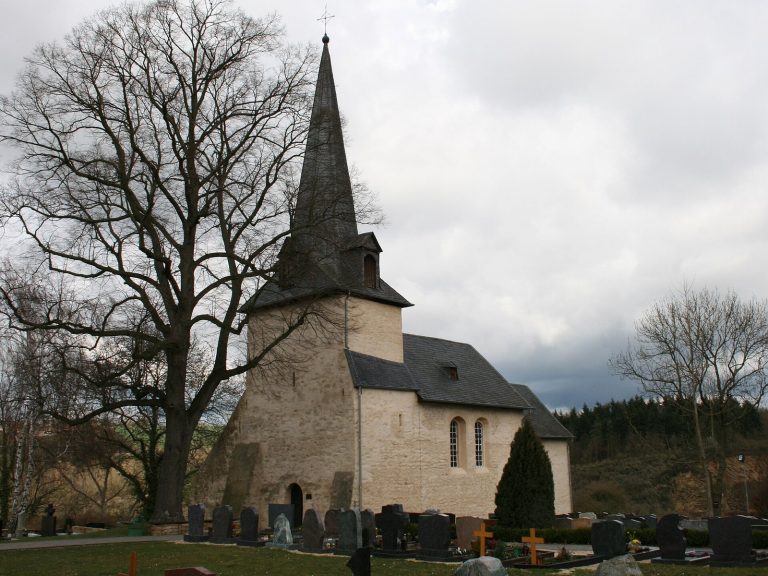
The chapel lies within the castle complex. Its painted winged altarpiece, dated 1517, is now kept in the storage rooms of the Landesmuseum Wiesbaden. The inner faces of the wings show four female saints against patterned gold backgrounds. On the outside, the left wing depicts a bishop’s ordination, while the right shows the Annunciation, the announcement to Mary that she would bear Jesus. The back of the central panel bears an image of Saint Christopher, traditionally associated with protecting travelers.
Underground water system
An underground conduit supplied water to the garrison and was concealed from view. The earlier line ran from the Präbach valley via Eichelberg to the castle, but it became unusable in 1545. A clay-pipe conduit replaced it in 1598. Remains of the water system were discovered at the site in 1962.