Fischburg: A Renaissance Residential and Hunting Castle in Italy


Site at a Glance
- Rating
- 4.3
- Popularity
- Very Low
- Country
- Italy
- Primary era
- Early Modern
- Eras represented
- Early Modern
- Civilizations
- Habsburg, Holy Roman Empire
- Site type
- Domestic
- Remains
- Castle
On this page5 sections
History
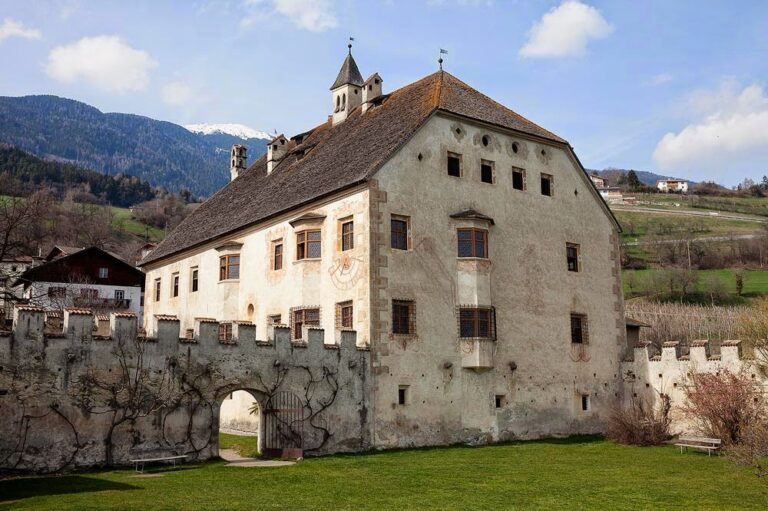
Fischburg is a seventeenth-century Renaissance residential and hunting castle in Italy, near St. Christina in South Tyrol. Engelhard Dietrich, Count of Wolkenstein, commissioned and built it between 1621 and 1641, completing the castle in 1641. It later served as the seat of the Wolkenstein court until the end of the eighteenth century.
Construction and purpose
Engelhard Dietrich intended Fischburg partly as a residence and hunting castle. He also imagined it as a defensive stronghold against the Venetians, although this military purpose was not supported. A 1615 account by his brother, Marx Sittich von Wolkenstein, linked the German name Fischburg to nearby fishponds where trout were raised. Inventories likewise show that the castle held more hunting weapons than weapons of war, along with numerous fishing implements.
The planning was attributed to Engelhard Dietrich, with the involvement of Hans Reichle, a German architect, artist, and fortification engineer who was present in 1625. Reichle had studied under Giambologna, a major Italianate sculptor and architect whose work influenced late Renaissance art across Europe. Reichle was active in Brixen, where he had built the bishop’s Hofburg.
Decline and restoration
Following French incursions, Fischburg fell into disrepair. In 1826, the Wolkenstein family auctioned most of the castle’s contents. In 1841, the castle was given to the municipalities of Wolkenstein and St. Christina, which assigned it as accommodation for poor people. This change of use was followed by severe deterioration of the buildings.
Baron Carlo Franchetti of Venice bought Fischburg in 1926. The castle was then restored externally and internally, with historic furnishings collected in Val Gardena and elsewhere in South Tyrol, including wood panelling, stoves, and extensive furniture. It remains in the possession of the Franchetti family. Fischburg and the Chapel of St. Ottilia are protected monuments under the Province of South Tyrol.
Remains
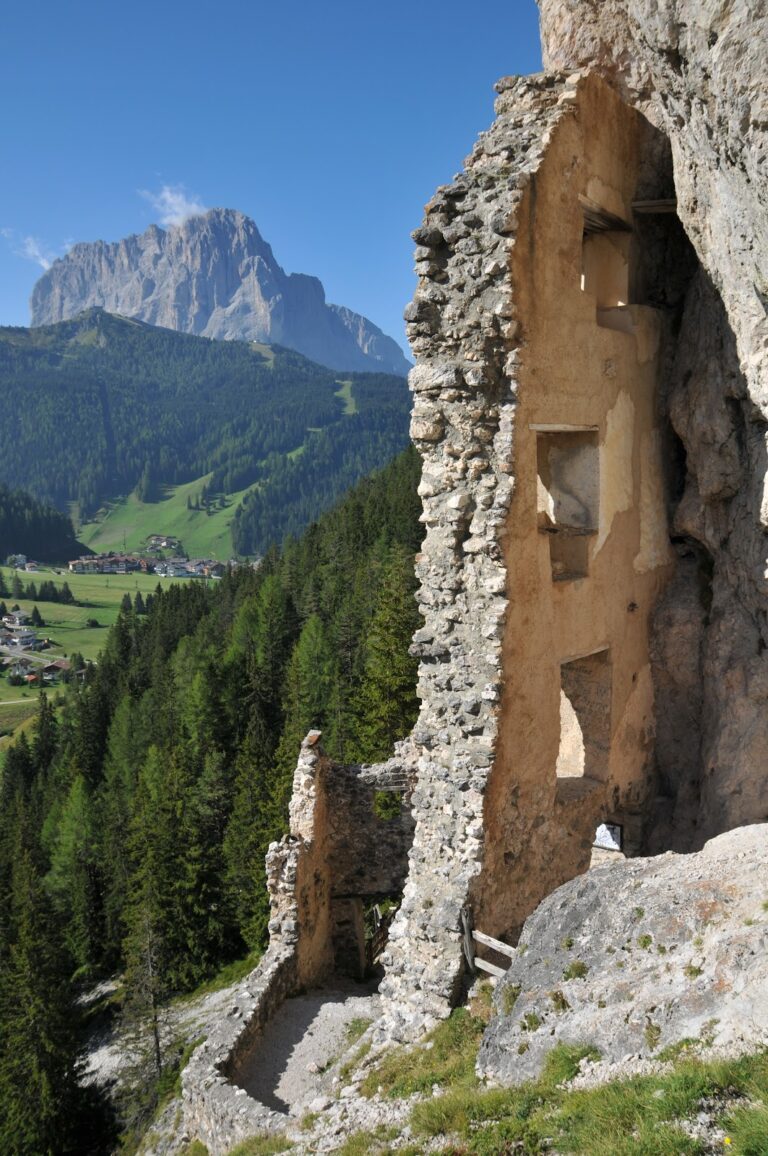
Fischburg stands on the orographic left side of the Val Gardena valley, south of the Grödner Bach, near the centre of St. Christina and below the Sassolungo group. The castle is a Renaissance-style residential and hunting complex with some fortification features. Its documented physical elements include a northern section, a western side, and a principal tower. The Saslong ski route passes close to the castle on an adjacent wooded slope.
Castle structures and chapels
A chapel dedicated to St. Cassian lies inside the castle. In front of the entrance stands the Chapel of St. Ottilia, a small Christian place of worship, with its altar documented as a separate feature. The restored interior of Fischburg contains wood panelling, stoves, and historic furniture gathered in Val Gardena and South Tyrol.