Jezdec Castle: A Medieval Rock Castle in Czechia
Site at a Glance
- Rating
- 4.3
- Popularity
- Low
- Country
- Czechia
- Primary era
- Medieval
- External website
- Open
- Eras represented
- Medieval
- Civilizations
- Holy Roman Empire, Kingdom of Bohemia
- Site type
- Military
- Remains
- Castle
On this page6 sections
History
Jezdec Castle is a small medieval rock castle in Czechia, on the northern edge of Liberec’s Ruprechtice district. Built by an unknown builder in the fourteenth century, it probably guarded the road from Liberec to Frýdlant. The castle ceased to exist in the fifteenth century.
Fourteenth- and fifteenth-century castle
The castle was known by several names, including Reitstein and Reitenštejn. Its precise founder is unknown, but written evidence and archaeological material place its use between the fourteenth and fifteenth centuries. The remains of a fire that destroyed its wooden structure indicate a violent end to the castle’s occupation, although the circumstances of that destruction are not established.
Archaeological investigations and traditions
In 1926, workers from the State Archaeological Institute excavated pottery sherds dating from the thirteenth to the fifteenth century. A probe excavation carried out in 1935 by the Jablonec Society for the Study of Ancient History examined the rampart. Its fill contained pottery from the eleventh to the thirteenth century. By then, the rampart had disintegrated and its supporting structure had rotted, prompting the amateur archaeologist Emil Gebauer to attempt a reconstruction.
Local traditions connect Jezdec Castle with a robber knight who was supposedly captured by the Bibersteins after the Hussite Wars, fifteenth-century religious and political conflicts in Bohemia. Another legend links the name to a horse that leapt into the depths, supposedly saving the leader of a band of robbers while leaving a hoofprint in the rock. A further tradition claims that a secret passage once ran from the castle to house no. 1 in Liberec.
Remains
Rocky spur and defenses
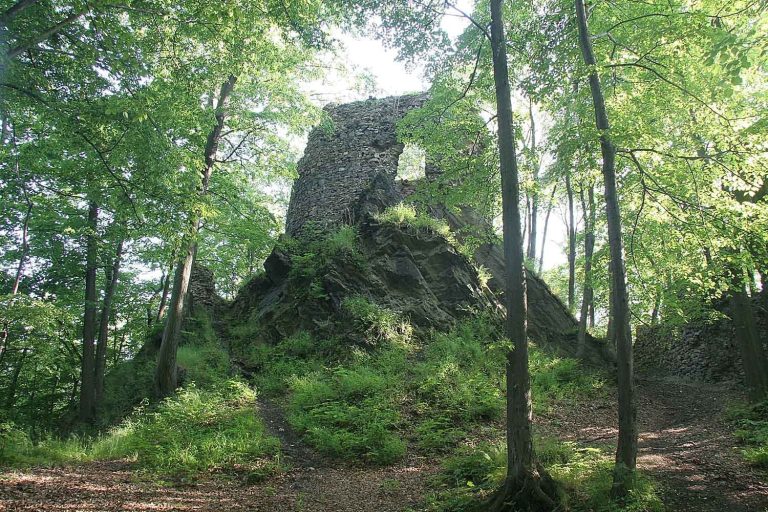
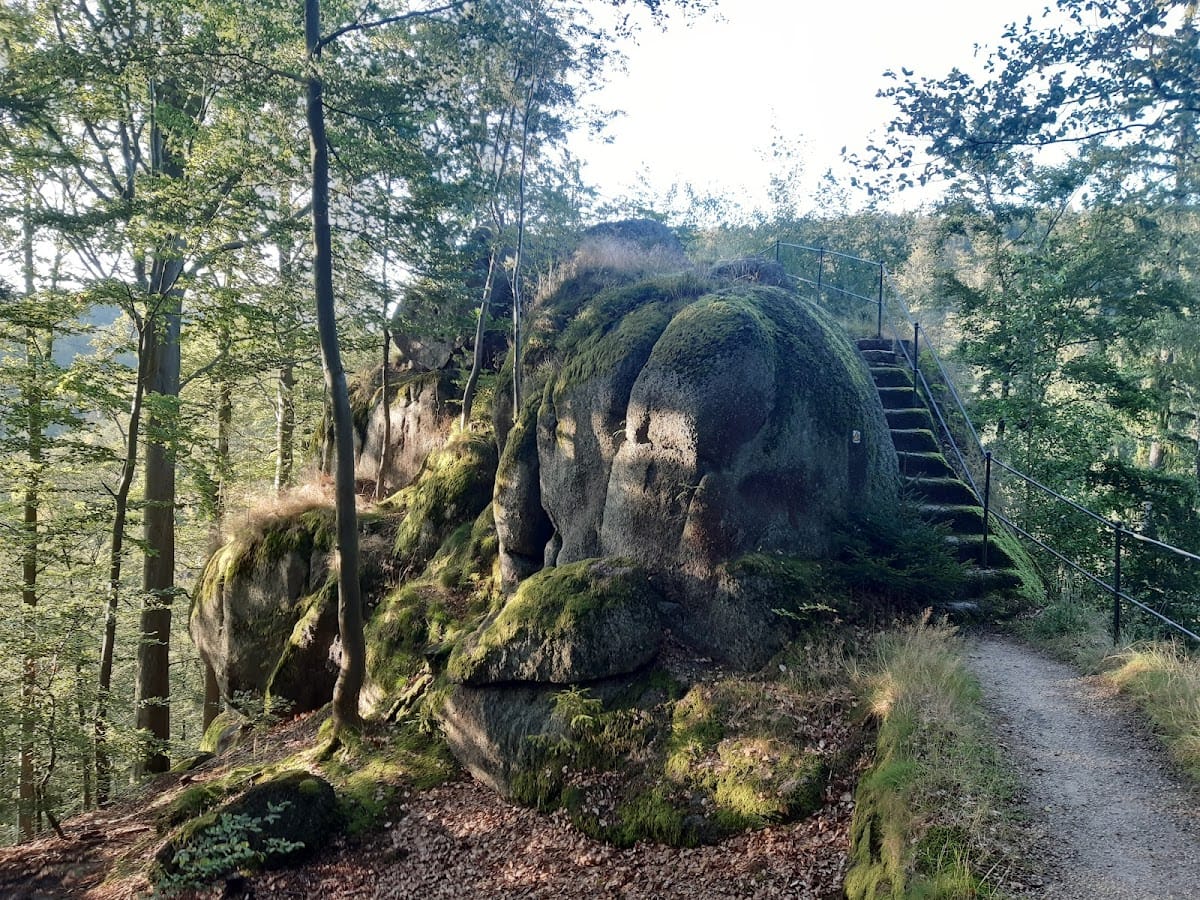
The remains occupy a granite spur of Žulový vrch above the Černá Nisa and Kateřinský Valley. The castle stood on three rocky ribs that supported a wooden structure. Cuttings in the rock and a rectangular depression mark the former building. On the southern side, a rampart and a ditch about two metres wide separated the promontory from the rest of the ridge. This southern approach was the castle’s only access point.
Wooden structure and archaeological finds
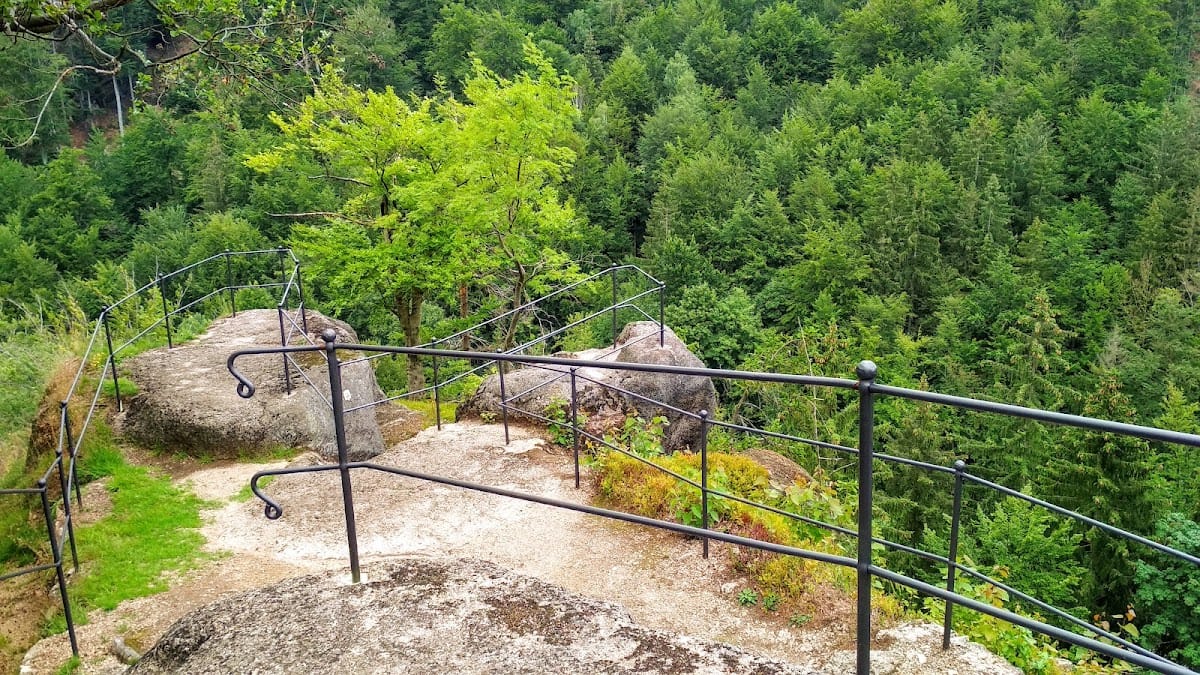
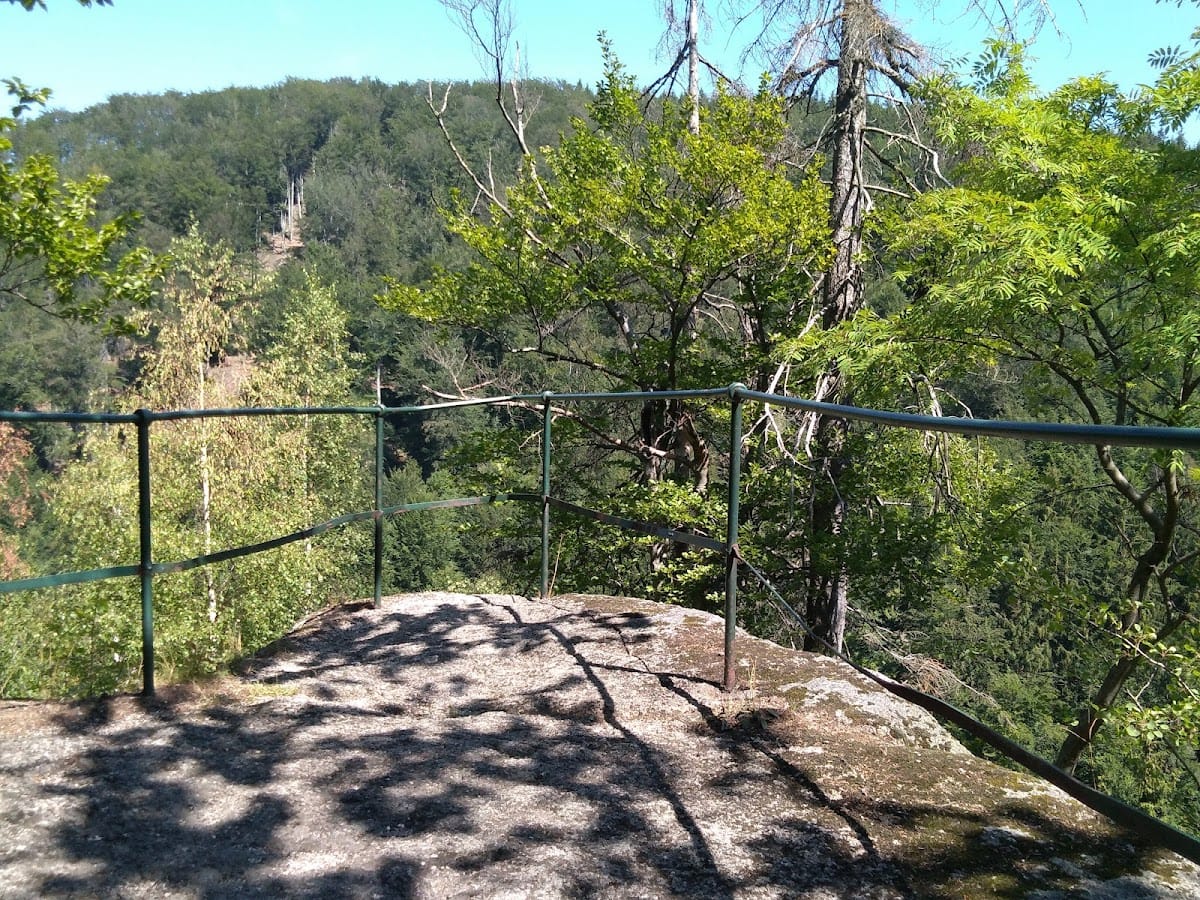
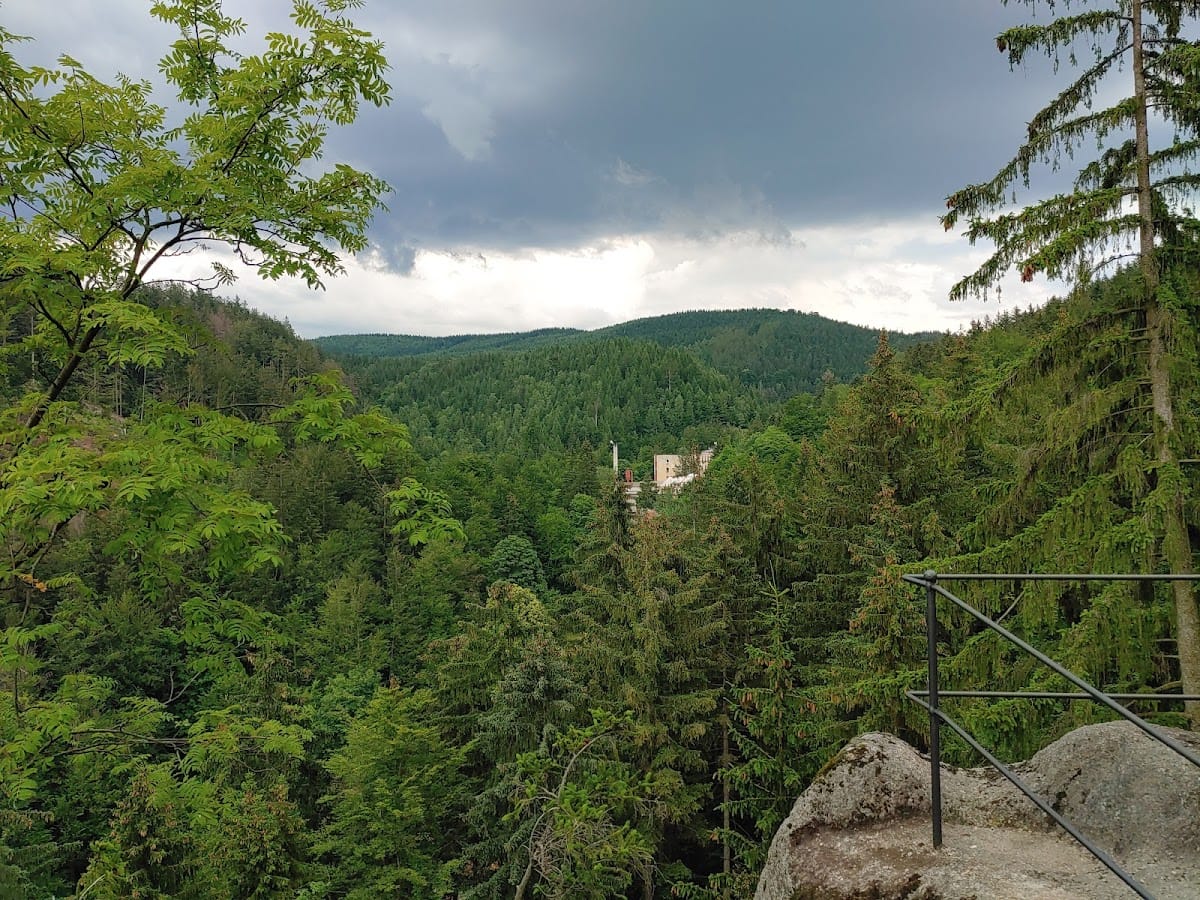
The upper layer of the castle mound contains ash and charcoal from the fire that destroyed the wooden castle. Pottery fragments and iron objects found there include horseshoe fragments, part of a sickle, a crossbow-bolt head, door and window fittings, and nails. Together, these remains provide evidence of the castle’s construction and everyday use. The location now functions as a rocky lookout.