Castle of Villaviciosa de Odón: A Palace-Fortress in Spain


Site at a Glance
- Rating
- 4.5
- Popularity
- Low
- Country
- Spain
- Primary era
- Early Modern
- External website
- Open
- Eras represented
- Medieval, Early Modern
- Civilizations
- Crown of Castile, Spanish
- Site type
- Military
- Remains
- Castle
On this page6 sections
History
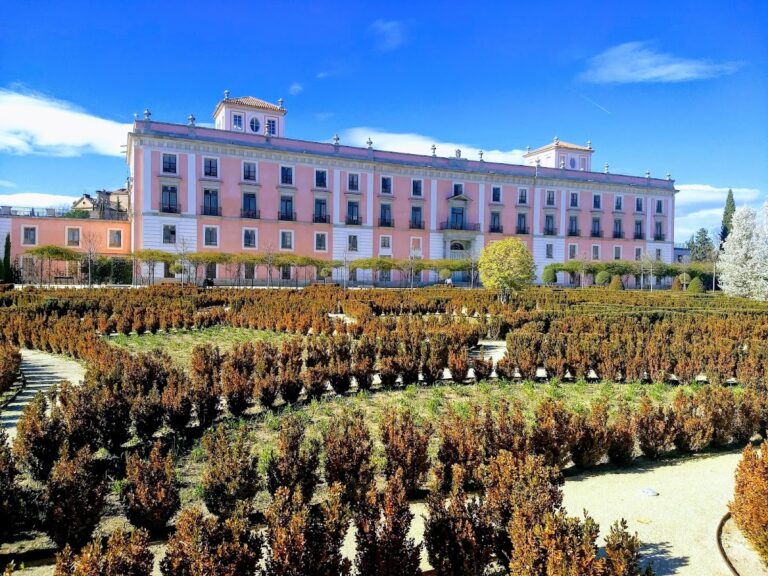
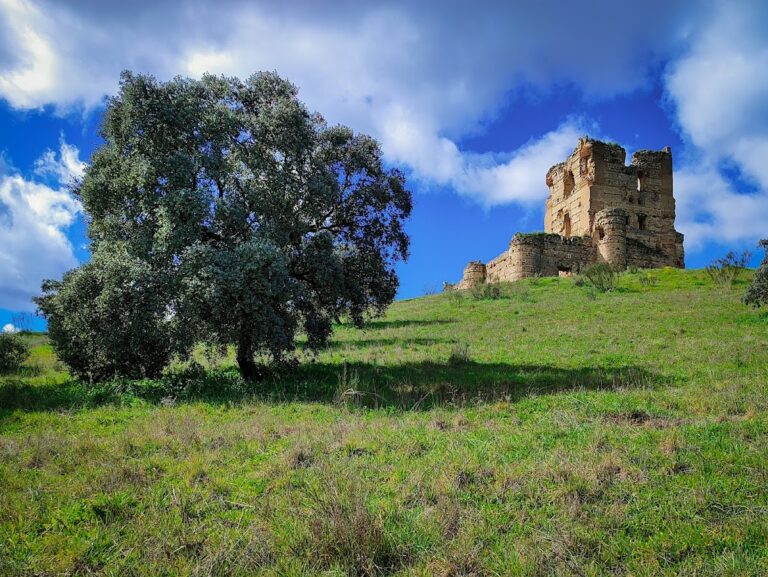
Castle of Villaviciosa de Odón is a palace-fortress complex in Spain, located in Villaviciosa de Odón near Madrid. Its first castle was built in 1496 by Andrés Cabrera and Beatriz Fernández de Bobadilla, Marquis and Marchioness of Moya, members of the noble family that held the County of Chinchón.
Foundation and reconstruction
The first construction on the site had been undertaken in the fifteenth century by the Counts of Chinchón. During the Revolt of the Comuneros, a major Castilian uprising against the government of Charles I in 1520–1521, captains Diego de Heredia and Antonio de Mesa demolished the castle in 1521.
In 1583, Diego Fernández de Cabrera y Bobadilla, the third Count of Chinchón, commissioned its reconstruction from Juan de Herrera, a Spanish royal architect associated with the austere style known as Herrerian architecture. Herrera gave one of the towers a different design from the others, creating the castle’s asymmetric profile.
Royal ownership and eighteenth-century use
Philip V of Spain bought the County of Chinchón in 1738 and granted its title and the castle’s ownership to his son Luis, an infante, meaning a son of the monarch who was not heir to the throne. Luis commissioned the architect Ventura Rodríguez to restore the castle, and the locality acquired its present name, Villaviciosa de Odón.
After the death of Bárbara de Braganza, Ferdinand VI’s queen consort, on 17 August 1758, Ferdinand VI moved into the fortress. He died there the following year. In 1797, María Teresa de Borbón, Countess of Chinchón, married Manuel Godoy, chief minister and favorite of Charles IV. After separating from the countess, Godoy was dismissed after the Mutiny of Aranjuez in 1808 and imprisoned in the castle, which had belonged to his father-in-law.
Forestry school and later institutional uses
Spain’s first forestry school, the Escuela Especial de Ingenieros de Montes, was established in 1846. It occupied and adapted the castle and its adjoining estate from 1848, with classes beginning on 2 January that year. The school moved to the House of Trades at the Monastery of San Lorenzo de El Escorial in 1870 and later relocated to Madrid in 1914. It is now part of the Polytechnic University of Madrid.
After the forestry school departed, the castle was assigned military use in 1886. This included a short-lived training school for recruits of the Carabineros Corps, a state service concerned mainly with customs and border control. For many years, the building also served as a granary and farm building.
War, restoration, and archival use
During the Spanish Civil War, the castle was looted and used as accommodation by troops from both the Republican and Francoist sides. In 1965, the Spanish state acquired it from owners descended from the Counts of Chinchón. Extensive restoration followed under the direction of the stonemason Jesús de Pichela.
Since 1972, the castle has housed the General Historical Archive of the Air, a Spanish institutional archive preserving historical records relating to the country’s air forces. The property belongs to the Spanish state and has generic heritage protection under the Decree of 22 April 1949 and Spain’s Law 16/1985 on Historical Heritage.
Remains
The surviving site is organized as a palace-fortress complex with an adjoining estate. Its architectural character combines fortified elements with the functions and status of a palace. The reconstruction commissioned in 1583 gave the building an asymmetric profile because Juan de Herrera designed one tower differently from the others. The structure has undergone more than one major intervention, including the eighteenth-century restoration ordered by the infante Luis and the extensive restoration carried out after the Spanish state acquired the castle in 1965.