Hermitage of Santa María la Antigua: A Medieval Mudéjar Church in Madrid
Site at a Glance
- Popularity
- High
- Country
- Spain
- Primary era
- Medieval
- Eras represented
- Medieval, Early Modern
- Civilizations
- Crown of Castile, Spanish
- Site type
- Religious
- Remains
- Chapel
On this page11 sections
History
The Hermitage of Santa María la Antigua is a thirteenth-century Mudéjar church in Carabanchel, Madrid, Spain. Mudéjar describes medieval Iberian Christian architecture shaped by forms and building techniques associated with Islamic traditions. The hermitage began as Carabanchel’s parish church, dedicated to Saint Mary Magdalene. It is regarded as the oldest Mudéjar temple in the Community of Madrid and the only hermitage of that style there to survive complete.
Early occupation and medieval church
People occupied the site before Roman times. A Roman villa dating from the second and third centuries stood beneath the hermitage, and some parts of the church date to the twelfth century. An earlier church may also have stood there during the Visigothic period, which followed Roman rule in Iberia, or under al-Andalus, the parts of the peninsula governed by Muslim dynasties.
The first written references to the church date to the thirteenth century, when it served as Carabanchel’s parish church under the dedication of Saint Mary Magdalene. Tradition links the site with Saint Isidore the Laborer, a medieval Christian saint associated with Madrid and agricultural life. He is said to have prayed there and watered his oxen, while two miracles attributed to him, involving a wolf and a loaf of bread, are also placed at the church.
From parish church to pilgrimage destination
By the end of the fifteenth century, the surrounding settlement had lost its population, which was redistributed to the newly founded towns of Carabanchel Alto and Carabanchel Bajo. Once both towns had churches, the hermitage lost its parish status during the sixteenth century. It became dedicated to Our Lady of Antigua and was affiliated with the church of Saint Sebastian the Martyr in Carabanchel Bajo.
After Saint Isidore’s canonization in 1622, the hermitage became a pilgrimage destination. Work during the seventeenth century improved, enlarged, and renovated the building. Although the pilgrimage later declined, the Congregation of Our Lady of Mount Carmel in Carabanchel revived a popular pilgrimage there in the late 1990s.
Burial and modern history
In 1860, funeral rites were held at the hermitage for María Francisca Palafox Portocarrero y Kirkpatrick, Duchess consort of Alba and sister of Empress Eugénie of Montijo, empress consort of France during Napoleon III’s reign. At the express wish of her friend José Osorio y Silva, Duke of Sesto and then mayor of Madrid, she was buried at the church. Her remains were later moved to the family pantheon at the Monastery of the Immaculate Conception in Loeches.
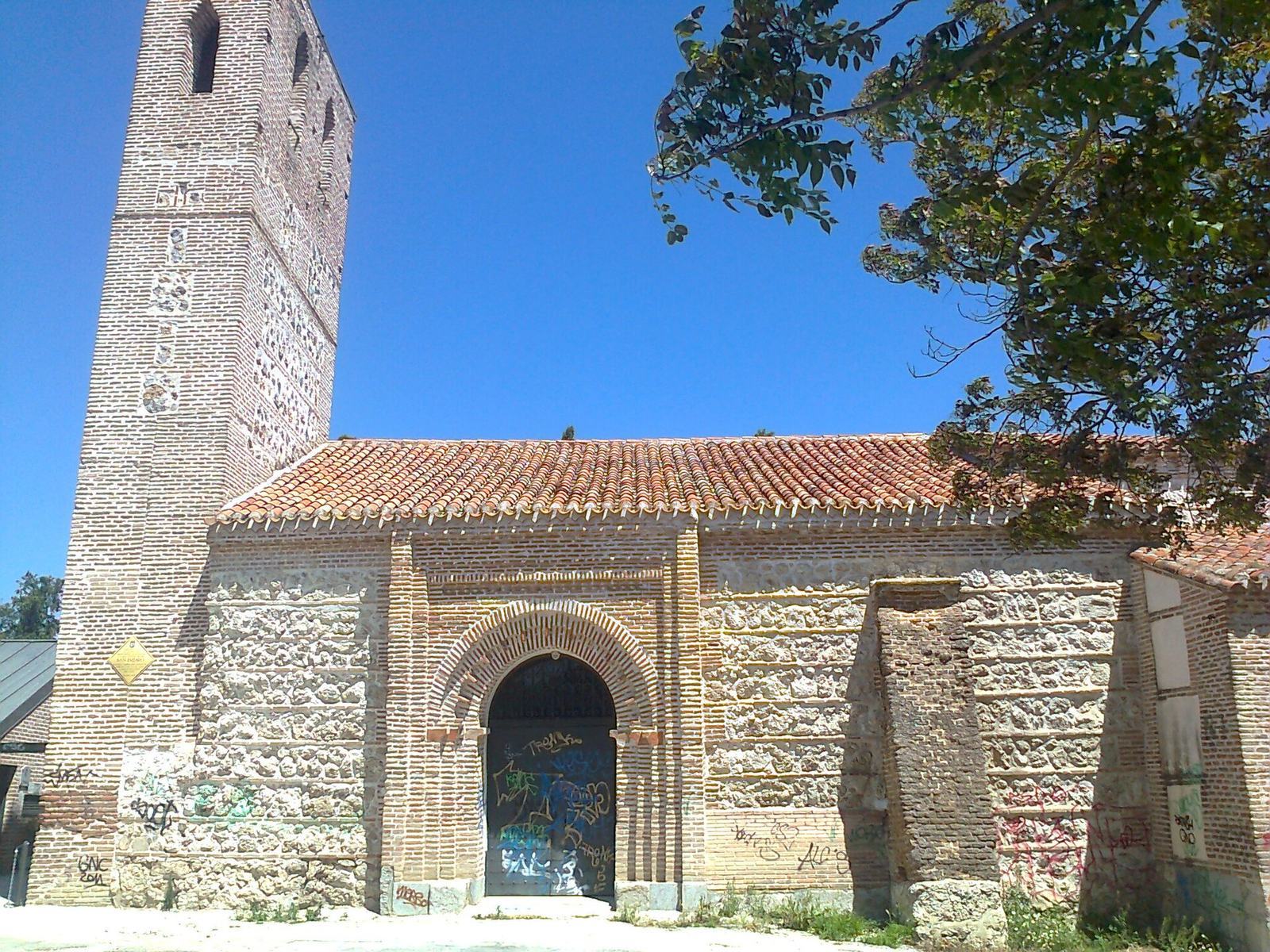
Spain declared the hermitage an Asset of Cultural Interest, a protected-heritage designation, in 1981. Restoration work took place in 1998 and again in 2002, after efforts helped secure a project by the Community of Madrid. The hermitage remains the chapel of Carabanchel Cemetery and is under the authority of the church of Saint Sebastian the Martyr. It belongs to the Archdiocese of Madrid and is served by secular clergy, priests who serve outside a religious order. Despite its protected status, the building has been abandoned and subjected to vandalism.
Remains
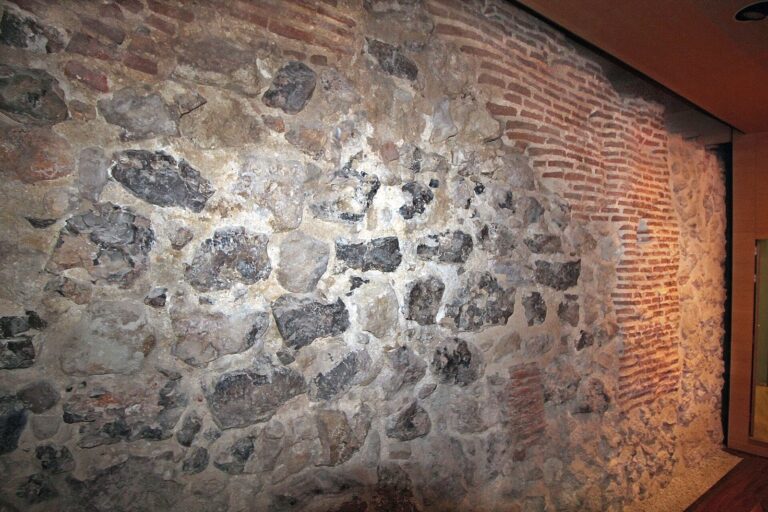
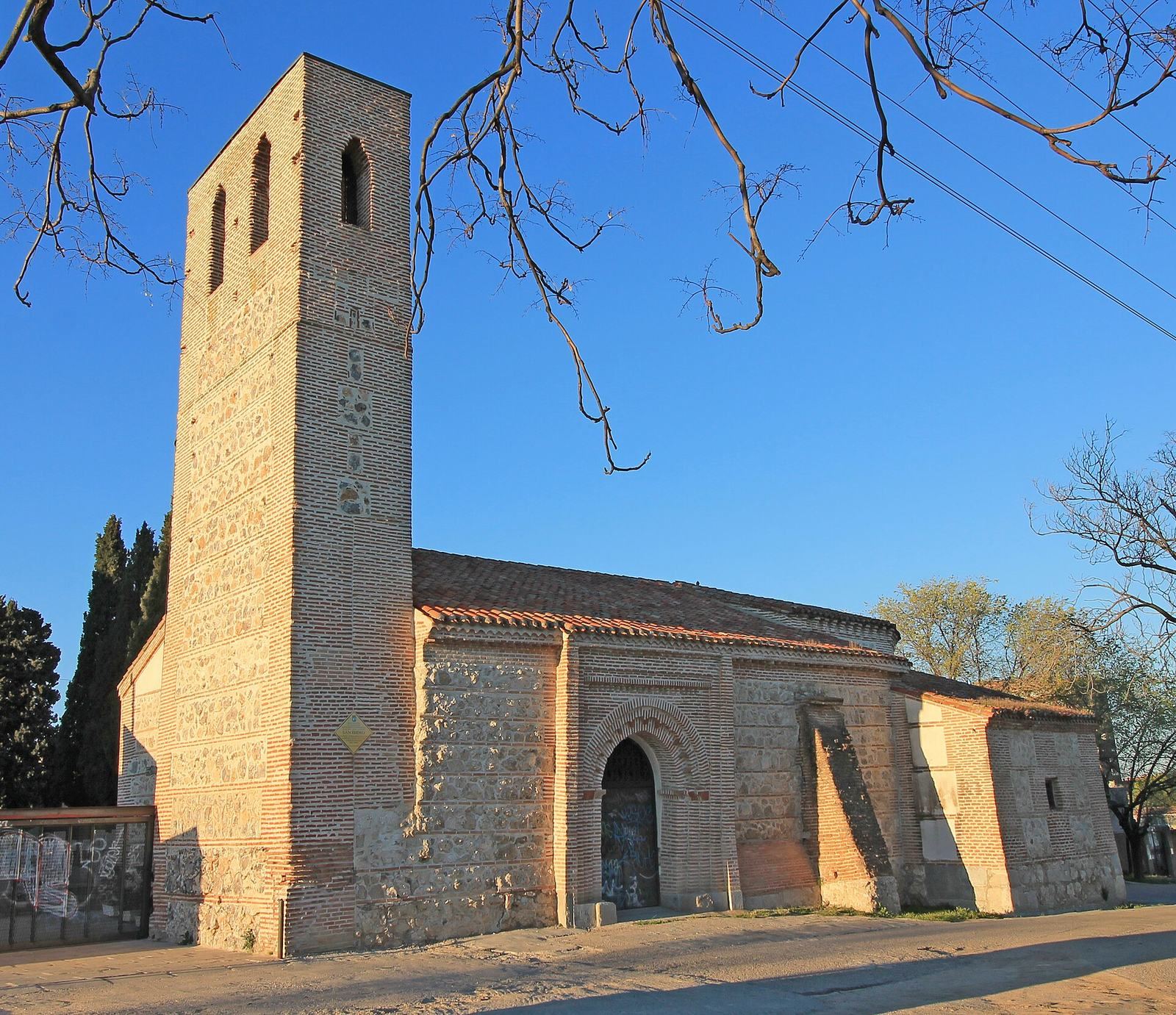
The rectangular hermitage measures 12.20 metres long by 9.85 metres wide and has three naves. Attached to the north wall of Carabanchel Cemetery, it lies between the old cemetery of Carabanchel Bajo and the site of the former Carabanchel prison. Brick and masonry define its surviving medieval fabric, which is especially well preserved at the apse end, tower, and south wall.
Building plan and fabric
Apse and sanctuary
The east-facing apse, the rounded end of the church, is semicircular and covered by a quarter-sphere vault, a curved ceiling shaped as a quarter of a sphere. Its masonry is arranged in parallel horizontal bands of brick. The apse meets the main body through a rectangular presbytery, the area around the altar, which is wider and covered by a barrel vault, a continuous curved ceiling. Roll-moulded brick corbels, or projecting supports, run beneath the apse eaves. A central window has a Toledo-style design and a pointed horseshoe arch, whose sides curve inward below the point where the arch begins.
Main body and south entrance
The main body follows a construction method similar to the apse. A sacristy, a room used to prepare for worship, and a house attached to the east wall were probably added during the seventeenth-century renovation; their masonry alternates with rectangular brick panels. Timber roof structures cover the three naves, which are separated by four pillars. A pointed double horseshoe arch connects them to the presbytery, with a multifoil arch, formed with a series of lobes, set behind it.
The brick portal projects from the south wall and slopes somewhat toward the ground. Its rectangular frame contains three round arches bordered by archivolts, decorative bands that frame arches. The central arch has twelve lobes. Bricks cut with a concave curve sit above stepped-back sides of the doorway, following a characteristic Mudéjar construction approach.
Tower
The rectangular tower measures 5.70 metres by 2.25 metres and rises 20 metres. Its solid lower stage uses construction like the main body and apse, with brick panels at the corners that vary in size and number. The hollow upper stage is built entirely of brick. Six openings, two on each long side and one on each short side, hold two bells made in the first half of the twentieth century. False pointed arches above the openings are formed by successive brick courses projecting inward. The tower originally had no staircase; the present staircase on its north face was added later.
Painted and carved interior
Medieval carpentry survives inside. A wooden structure beside the west wall carries painted scenes from Saint Isidore’s life alongside geometric designs, mainly in red and black. A tempera painting of the coat of arms of the Kingdom of Castile also remains. Paintings showing episodes from Saint Mary Magdalene’s life, dated to the fifteenth century, were uncovered during restoration work in 2020.
Archaeological finds
Archaeological remains uncovered at the site include ceramics, slabs, and amphorae attributed to the Carpetani, a pre-Roman people of central Iberia, and to the Romans.