Kanturk Castle: A Tudor Fortified House in Ireland



Site at a Glance
- Rating
- 4.6
- Popularity
- Low
- Country
- Ireland
- Primary era
- Early Modern
- External website
- Open
- Eras represented
- Early Modern
- Civilizations
- Irish
- Site type
- Military
- Remains
- Castle
History
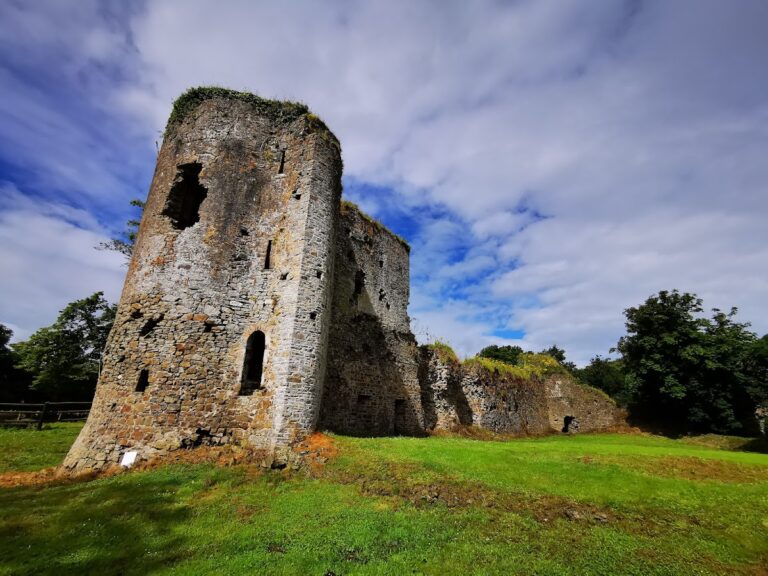
Kanturk Castle is a ruined fortified house in Ireland, built in the Tudor style around 1601 for MacDonagh McCarthy, an Irish nobleman associated with the country’s Gaelic aristocracy. It stands south of Kanturk near the confluence of the Allow and Dallow rivers, which flow into the Blackwater. McCarthy commissioned the castle as a defensive work to protect his lands against English aggression and the settlement of English colonists.
Local tradition holds that construction stopped after news of the project reached England’s Privy Council, a senior royal advisory and administrative body. The Council feared that the castle could become a base for attacks on English settlers and ordered McCarthy to halt the work. According to the same tradition, he then smashed the building’s blue ceramic roof tiles and threw the fragments into a nearby stream. The watercourse became known as Bluepool Stream because the pieces could be seen in it.
Kanturk Castle is owned by An Taisce, Ireland’s National Trust, which works to preserve the country’s built and natural heritage. The castle is listed as a National Monument because of its historical and architectural importance.
Remains
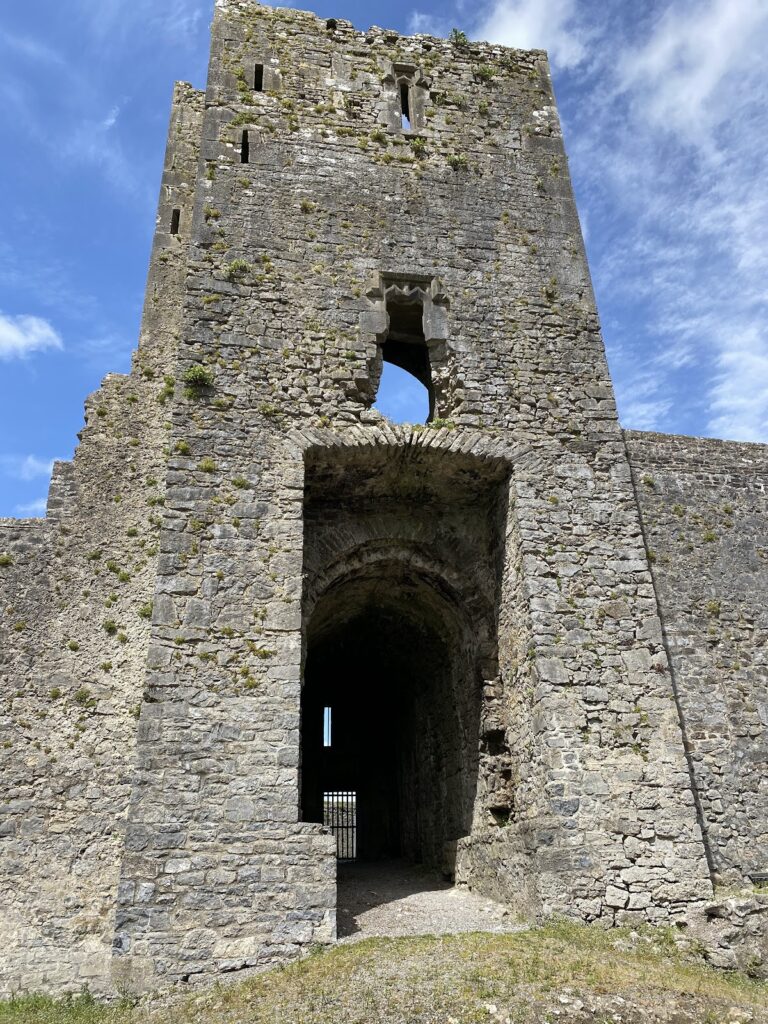
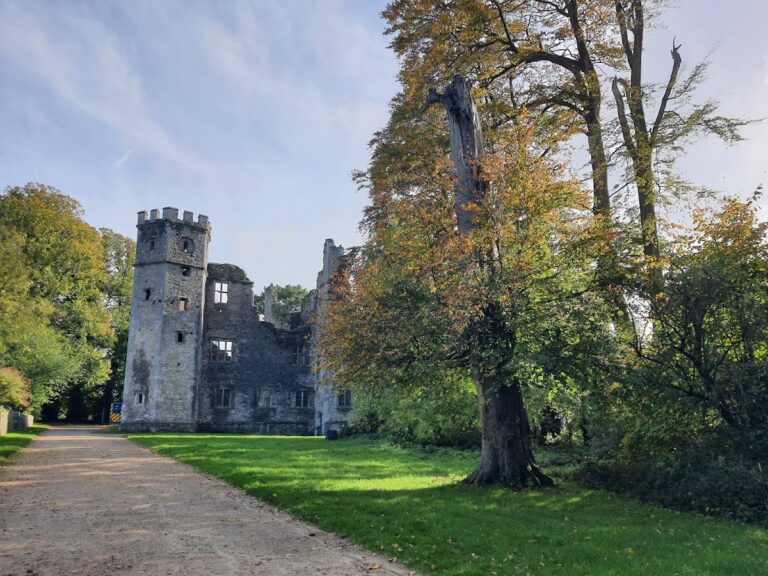
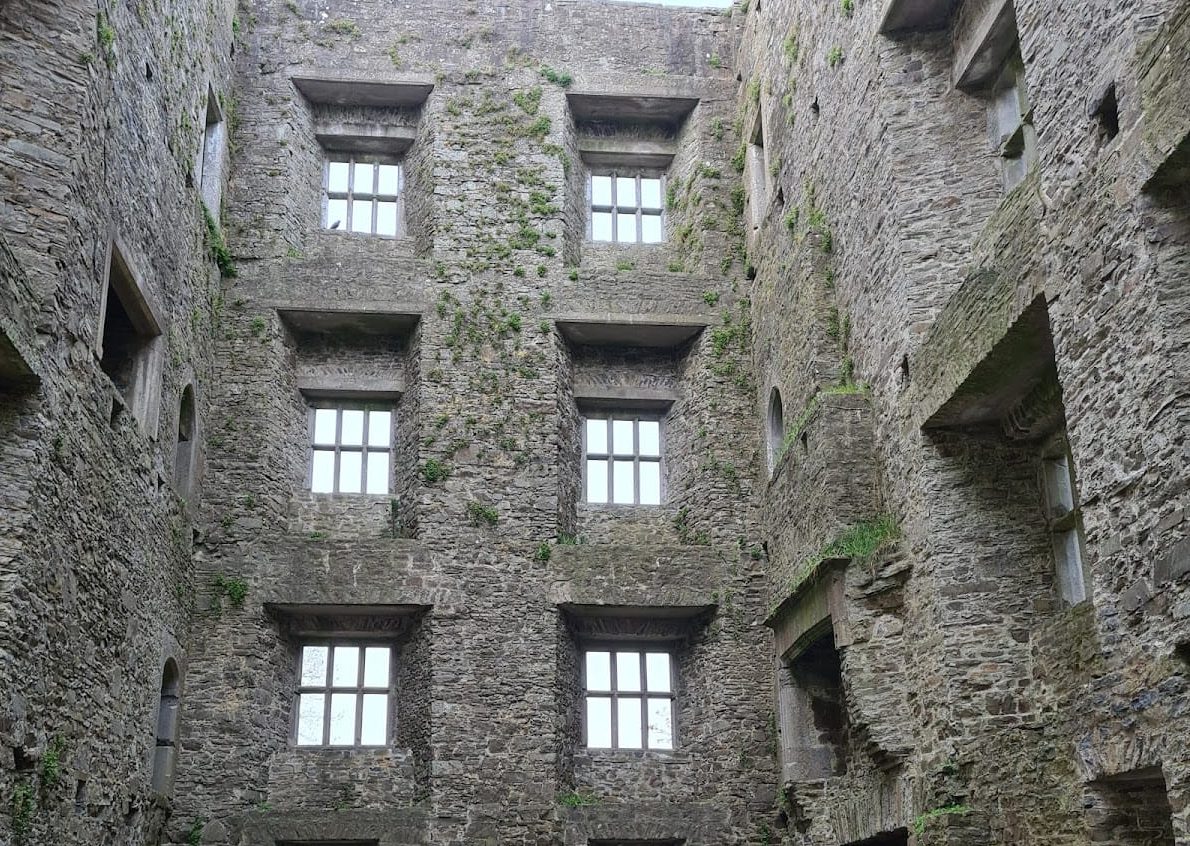
The surviving structure is a limestone-rubble fortified house arranged around a main block with four corner towers. The central building measures approximately 28 by 11 metres and rises four storeys. Each corner tower reaches about 29 metres and has five storeys. The remains stand near the Allow and Dallow rivers, south of Kanturk, and retain the substantial form of a Tudor defensive residence despite their ruined condition.