Ludgershall Castle: A Ruined Medieval Royal Residence in England


Site at a Glance
- Rating
- 4.3
- Popularity
- Low
- Country
- United Kingdom
- Primary era
- Medieval
- External website
- Open
- Eras represented
- Medieval
- Civilizations
- English
- Site type
- Military
- Remains
- Castle
On this page7 sections
History
Ludgershall Castle is a ruined twelfth-century fortified royal residence at Ludgershall in England, developed from an earlier castle associated with Edward of Salisbury, the medieval sheriff responsible for Wiltshire. A motte-and-bailey castle, combining a fortified mound with an enclosed courtyard, was probably built here in the late eleventh century. By about 1100, the site had passed into Crown possession.
From local lordship to royal control
John the Marshal, the king’s castellan, or appointed keeper and military governor of a castle, strengthened Ludgershall and may have added its northern enclosure. His son, William Marshal, a major medieval nobleman, probably inherited the castle before it returned to royal control. By 1174-75, Ludgershall was under the Crown. This change may have followed William Marshal’s opposition to Henry II during the Revolt of 1173-74, a rebellion against the king’s authority. Part of the castle was demolished at this time, possibly on Henry II’s orders.
A royal hunting residence
King John improved Ludgershall in 1210 for use as a hunting lodge. Henry III, who ruled England from 1216 to 1272, undertook further improvements between 1234 and 1251. These included a great hall constructed in 1244. Henry III visited the castle at least 21 times, confirming its place among the royal residences used during his reign.
Decline and later investigation
Ludgershall Castle was used less frequently during the fourteenth and fifteenth centuries and had fallen into disuse by the fifteenth century. By the 1540s, most of the ruins had been demolished and the site was levelled into a garden. A surviving twelfth-century tower was retained as a garden feature. In the medieval period, Ludgershall itself had greater political importance than it does today and could send two members to Parliament. This privilege continued until the Reform Act of 1832.
The first excavations took place between 1964 and 1972 under the direction of Peter Addyman of the University of Southampton. The ruins were designated a scheduled monument in 1981, a legal protection category for archaeological sites of national importance in England. English Heritage is identified as the owner.
Remains
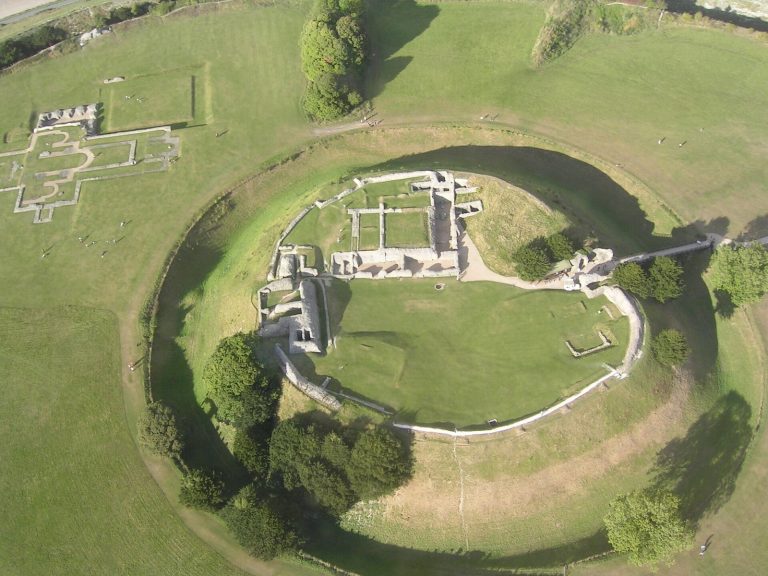
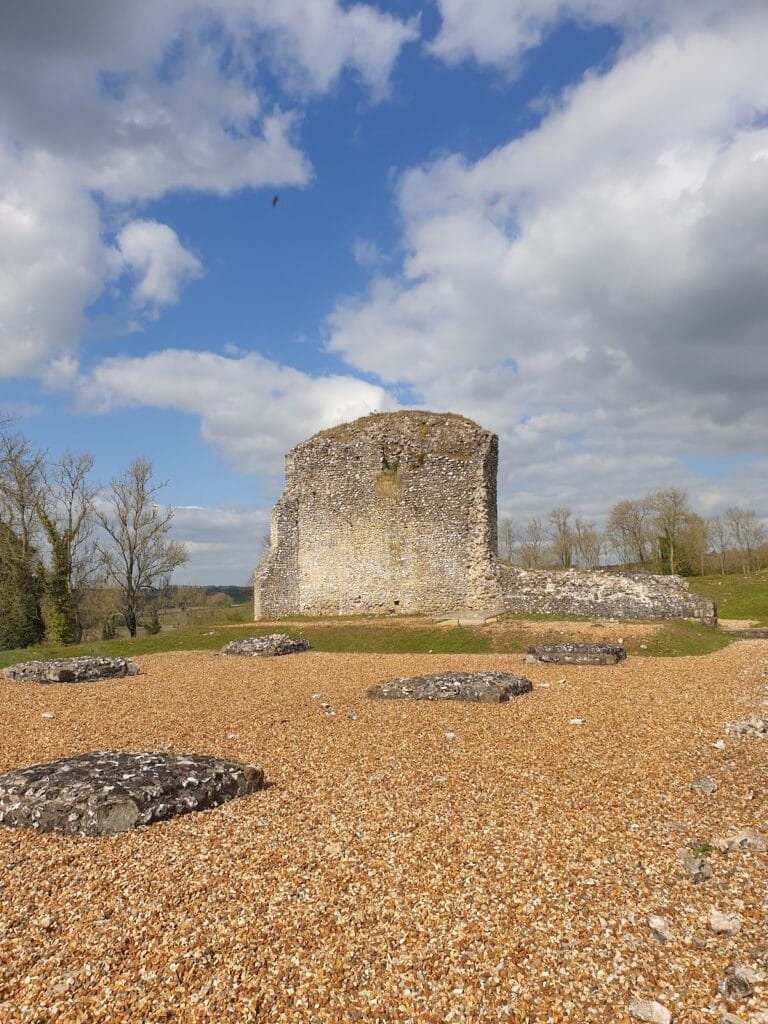
The castle was built of stone, and its surviving remains combine standing masonry with extensive earthworks. The site was arranged in a northern enclosure and a southern enclosure. The principal buildings occupied the northern enclosure, while the southern enclosure served as the bailey. Quarrying has substantially altered the earthworks, and part of the site is occupied by a private house.
Northern enclosure
The northern enclosure contained the great hall and a tower with royal living quarters. The great hall was added in 1244 as part of Henry III’s improvements. Three large standing walls survive among the ruins, while the twelfth-century tower remained as a garden feature after the wider site was levelled in the sixteenth century.
Southern bailey and earlier earthworks
The southern bailey contained stables, kitchens, and timber farm buildings. It lies within the surviving earthworks opposite the standing walls. This enclosure is thought to occupy an earlier Iron Age stronghold, linking the medieval castle layout with an earlier defended site. The earthworks remain extensive, although quarrying has changed their form.