Vieste Castle: A Norman Coastal Fortress in Italy

Site at a Glance
- Rating
- 4.2
- Popularity
- Low
- Country
- Italy
- Primary era
- Medieval
- External website
- Open
- Eras represented
- Medieval, Early Modern
- Civilizations
- Holy Roman Empire, Kingdom of Sicily, Norman
- Site type
- Military
- Remains
- Castle
On this page9 sections
History
Norman Foundation and Frederick II’s Rebuilding
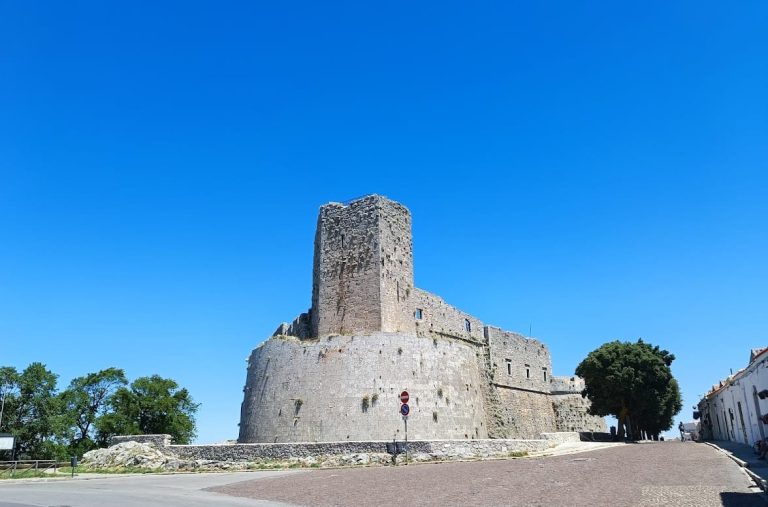
Vieste Castle is a coastal fortress in Vieste, Italy, built by the Normans during the second half of the eleventh century. The Normans were a medieval ruling and military elite of Scandinavian origin who established power in southern Italy. At the time of the castle’s construction, Robert Drengot was count of Vieste.
Venetian raids severely damaged the fortress in 1240, during the conflict between Frederick II and the papacy. Frederick II, the thirteenth-century Holy Roman Emperor whose rule included the Kingdom of Sicily, ordered the castle to be rebuilt, enlarged, and strengthened after the attack.
Later Attacks and Damage
The strengthened fortress withstood Turkish attacks during the fifteenth and sixteenth centuries. A major earthquake in 1646 then caused large sections of the castle to collapse.
Further damage occurred on 24 May 1915, shortly after Italy declared war on 23 May. The Austrian destroyer Lika shelled the castle, after which Austrian and Italian warships fought a naval battle several miles offshore. The Austrian navy prevailed, and the Italian destroyer Turbine was heavily damaged.
The castle was later restored and is now used by the Marina Militare, the naval branch of Italy’s armed forces. It is designated Italian national heritage.
Remains
Fortress Layout and Construction
Triangular Fortress
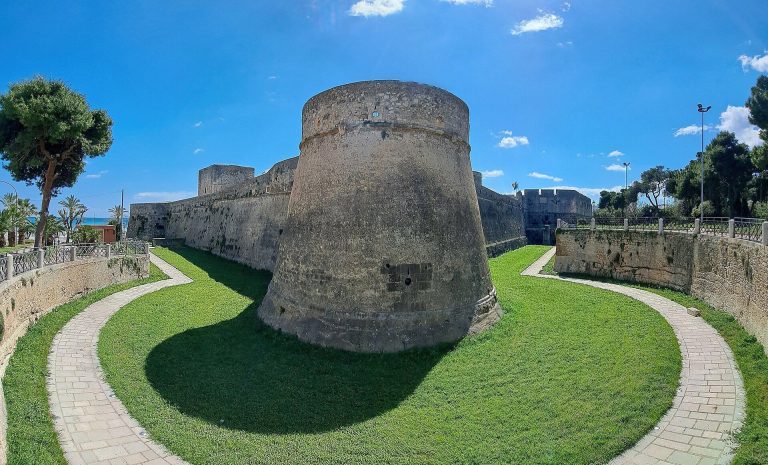
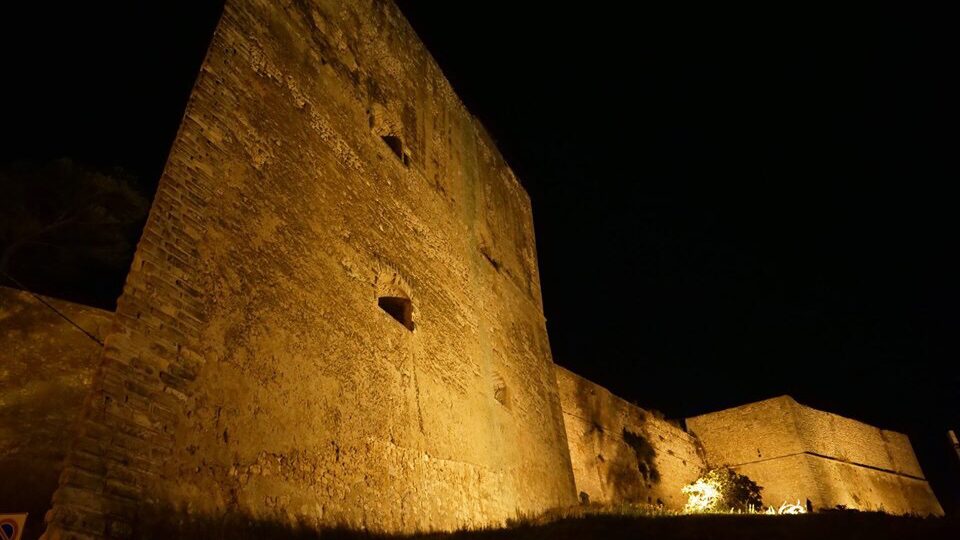
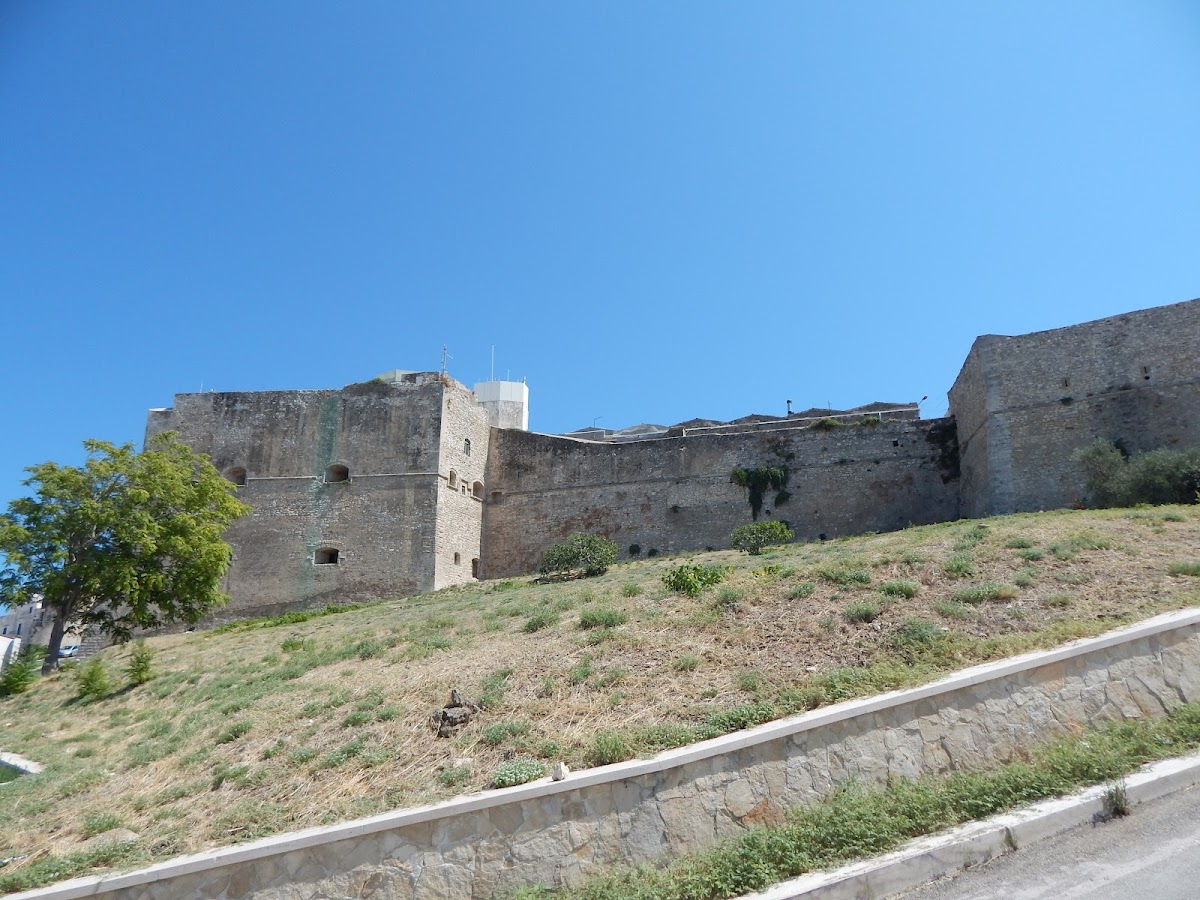
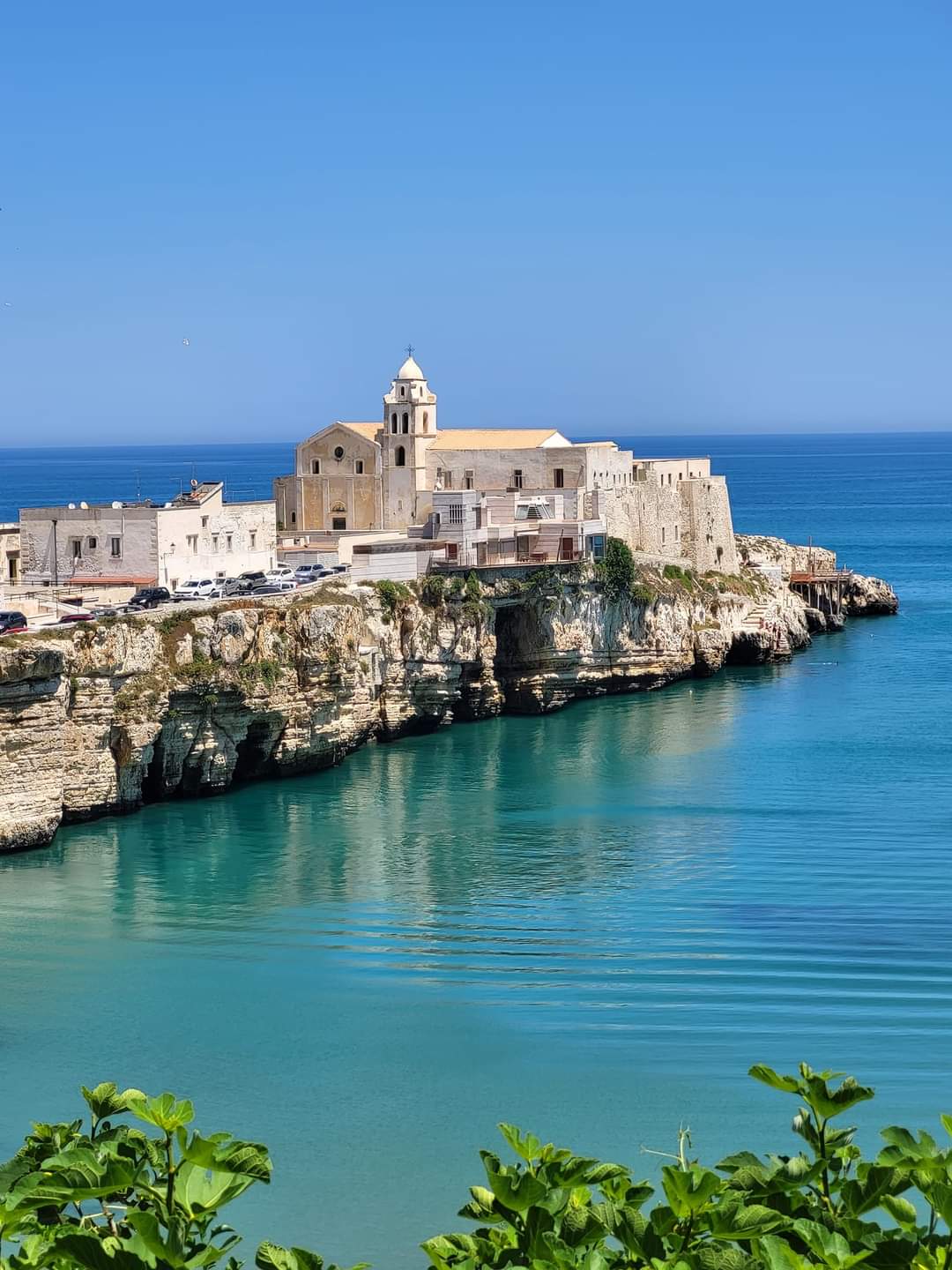
Vieste Castle is a massive lowland fortress with a triangular plan. It stands above an overhanging limestone cliff overlooking the sea and forms a prominent element of Vieste’s skyline. Its walls are built of brown rubble stone, whose color is visibly different from both the surrounding buildings and the naturally occurring stones.
Corner Bastions
The northern, eastern, and western corners are reinforced by distinctive lance-shaped bastions. A bastion is a projecting fortification designed to strengthen a defensive wall and allow fire along its outer face. These structures incorporate older round bastions, joining earlier defensive elements to the later form of the fortress.
Southern Coastal Section
Chapel and Residential Rooms
On the southern side, in the section projecting over the coast, are a chapel and several residential rooms. This area also contains a small bastion dating from the sixteenth century, adding a later defensive element to the accommodation and religious spaces along the seaward edge.