Vieste Cathedral: A Romanesque Cathedral and Co-Cathedral in Italy


Site at a Glance
- Rating
- 4.5
- Popularity
- Medium
- Country
- Italy
- Primary era
- Medieval
- External website
- Open
- Eras represented
- Medieval, Early Modern
- Civilizations
- Kingdom of Naples, Spanish
- Site type
- Religious
- Remains
- Cathedral
On this page12 sections
History
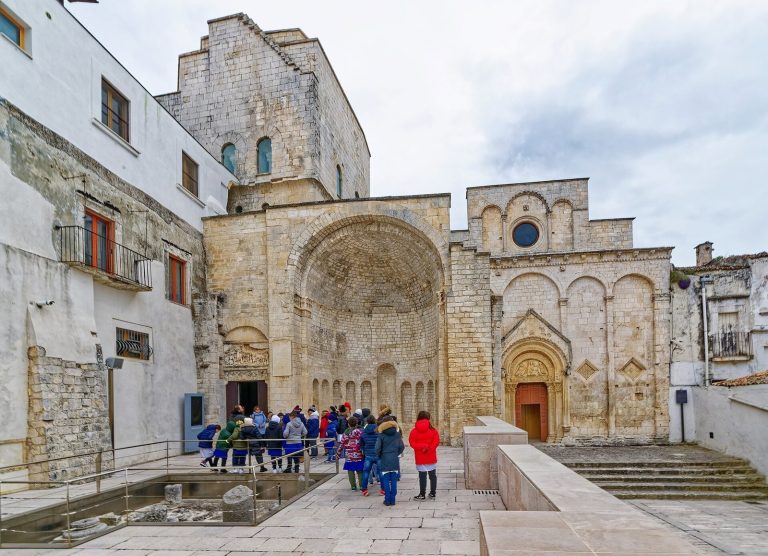
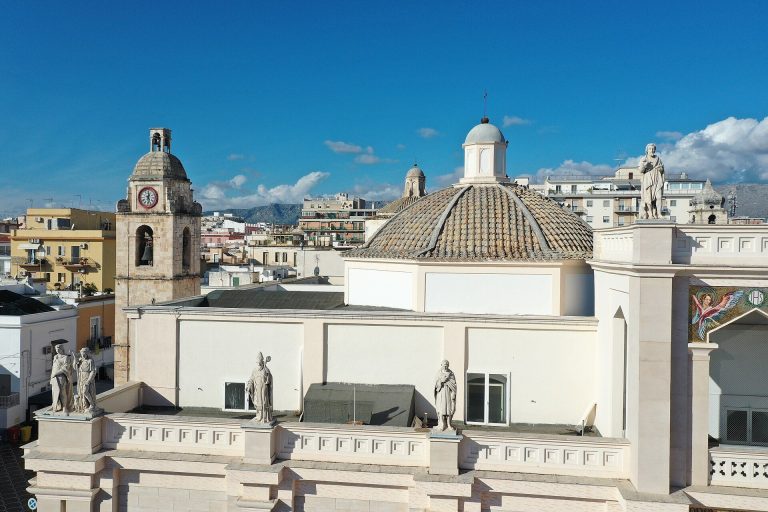
Vieste Cathedral, also known as the Basilica Co-Cathedral of Santa Maria Assunta, is a Roman Catholic cathedral in Vieste, Italy, built by the medieval Apulian Christian community around 995 or during the eleventh century in the Apulian Romanesque style. Dedicated to the Assumption of the Virgin Mary, it was constructed near Vieste Castle as the cathedral and episcopal seat of the former Diocese of Vieste.
Medieval origins and damage
The church was repeatedly affected by the unstable seismic conditions of the Gargano. Earthquakes from 1223 onward and the sack of Vieste in 1240 damaged the building. The cathedral was probably restored during the rule of Frederick II, the thirteenth-century Holy Roman Emperor whose authority extended across southern Italy.
Further destruction followed during Saracen raids, a historical European term for Muslim raiders or forces active in the Mediterranean. Raids in 1480 and 1554, together with later earthquakes, altered the building’s history. In the disaster of 1646, the western part collapsed. Severe earthquakes struck again in 1694 and 1792.
Rebuilding and diocesan change
The bell tower fell in 1772 and was rebuilt in the Baroque style. During the eighteenth century, the church was also modernized and strengthened against earthquakes. The work lowered the exterior walls, incorporated leaning columns into piers, and straightened the south wall overlooking the valley with stone facing.
Vieste lost its episcopal seat in 1818, when its diocese was merged with that of Manfredonia. The church consequently became a co-cathedral of the Archdiocese of Manfredonia-Vieste-San Giovanni Rotondo. A co-cathedral shares the seat or title of a diocese or archdiocese with another cathedral.
Modern restoration and status
The original Romanesque pillars were discovered in 1942 and exposed during restoration between 1976 and 1980. Additional restoration campaigns continued from 1988 to 2000. Earthquakes in the 1980s caused extensive damage, leading to structural repairs and the seismic isolation of the bell tower from the cathedral.
Pope John Paul II granted the church the title of minor basilica by decree on 12 February 1981. This is an honorary papal title for a church recognized for particular religious or historical importance. Vieste Cathedral remains an active Roman Catholic cathedral and co-cathedral of the Archdiocese of Manfredonia-Vieste-San Giovanni Rotondo.
Remains
Vieste Cathedral is a three-aisled basilica with a Latin-cross plan, in which a long central axis is crossed by a shorter transept. Columns of differing styles divide the nave, while ten chapels open from the side aisles. The present interior combines the medieval structure with extensive eighteenth-century alterations, including changes to the eastern end, new vaults, strengthened walls, and richly decorated furnishings.
Central nave and presbytery
Nave and ceiling
The main nave receives light through twelve upper windows. Near the side entrance, a single-lancet window, a narrow opening with one vertical light, survives from the original Romanesque cathedral. The original timber-truss roofs over the side aisles were replaced by vaults with lunettes, semicircular areas associated with a vault, and the choir was vaulted as well. Above the main nave is a richly painted eighteenth-century wooden ceiling in tempera, a technique using pigment bound with a water-based medium. Its three principal paintings show the Assumption of the Virgin Mary, Saint George, and the Archangel Michael.
Presbytery and high altar
The eighteenth-century rebuilding replaced the three original semicircular apses with a central presbytery and two side chapels. The presbytery, the area around the main altar, ends in a straight wall and is crowned by a seventeenth-century wooden choir. A large 1779 painting by Luigi Velpi depicts the Expulsion of the Merchants from the Temple. The eighteenth-century high altar is faced with polychrome marble and balustrades, and its front frescoes portray Saint George the Martyr and Saint Pontian. An eighteenth-century wooden crucifix stands beside it.
Chapels and devotional furnishings
Right aisle chapels
The Chapel of the Virgin of Merino contains a late Gothic wooden statue of the Madonna. The Chapel of Saint Francis of Paola is also located in the right aisle. In the Chapel of Saint Michael the Archangel, a sculpture of the Dead Christ is attributed to the Michelangelesque school, meaning artistic work influenced by Michelangelo’s style.
The Chapel of Saint Anne displays archaeological finds recovered during restoration, including an eighth-century Lombard sarcophagus. The Lombards were a Germanic people who established a kingdom in Italy during the early Middle Ages, while a sarcophagus is a stone coffin intended for burial. The right aisle also includes the Chapel of Our Lady of Sorrows and the Chapel of the Blessed Sacrament. The latter originally formed the terminal apse, or projecting end, of the right aisle and contains a 1771 painting of the Madonna and Child with Saints.
Left aisle chapels
The baptistery chapel contains a statue of the Immaculate Virgin dated 1756. The Chapel of Saint George holds modern statues of the archangels Michael and Raphael, together with relics of Padre Pio of Pietrelcina, the twentieth-century Italian Capuchin friar and Catholic saint.
The Chapel of the Most Holy Trinity originally formed the terminal apse of the left aisle. Several gravestones belonging to Vieste’s bishops remain visible in the cathedral, including the tombstone of the later Pope Gregory XIII.
Rosary chapel
Near the side entrance, the Chapel of the Rosary contains a 1581 altarpiece by Michele Manchelli showing the Madonna of the Rosary with Saints. The altarpiece is surrounded by fifteen panels representing the Mysteries of the Rosary.