Castello Episcopio: A Medieval Castle and Ceramics Museum in Grottaglie


Site at a Glance
- Rating
- 4.3
- Popularity
- Low
- Country
- Italy
- Primary era
- Medieval
- External website
- Open
- Eras represented
- Medieval, Early Modern
- Civilizations
- Kingdom of Naples
- Site type
- Military
- Remains
- Castle
On this page8 sections
History
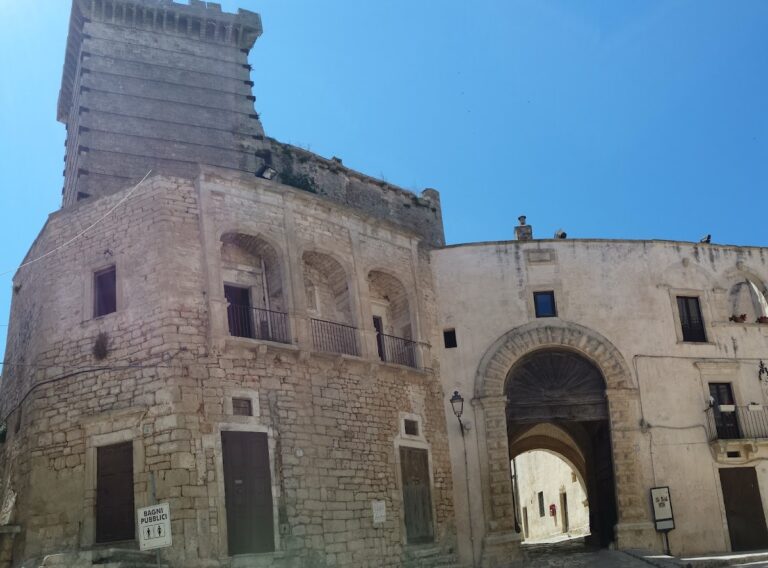
Castello Episcopio is a medieval castle in Grottaglie, Italy, whose keep was built at the end of the fourteenth century at the request of Giacomo d’Atri, Archbishop of Taranto. The complex formed part of a wider program that included the town walls and the mother church, the principal church of the town. Initially owned by the Archdiocese of Taranto, the castle represented the authority of Taranto’s feudal bishops for centuries.
Medieval foundation and later enlargement
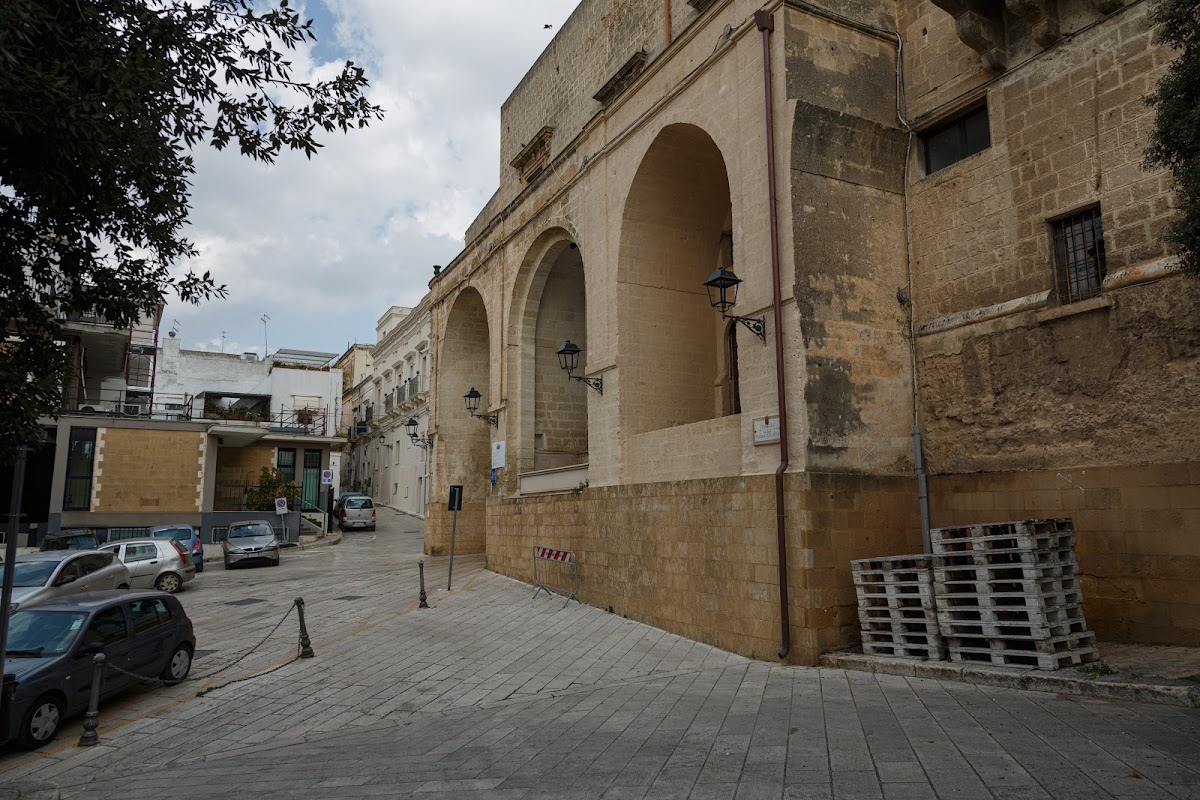
The original complex consisted of the keep and an eastern sector enclosed by a wall. It was later enlarged and remodeled, and its exterior received a Baroque facade. The castle stands near the Quartiere delle Ceramiche, the oldest part of Grottaglie, linking it to the historic center of the town.
Restoration and cultural use
Restoration in the early 1980s transferred the castle from the Archdiocese of Taranto to the Municipality of Grottaglie. The municipality continued to remodel the historic complex, with further rearrangement works carried out more recently. Since 1999, the restored castle has housed the Grottaglie Ceramics Museum, and the complex continues to serve as a setting for artistic and cultural events.
Remains
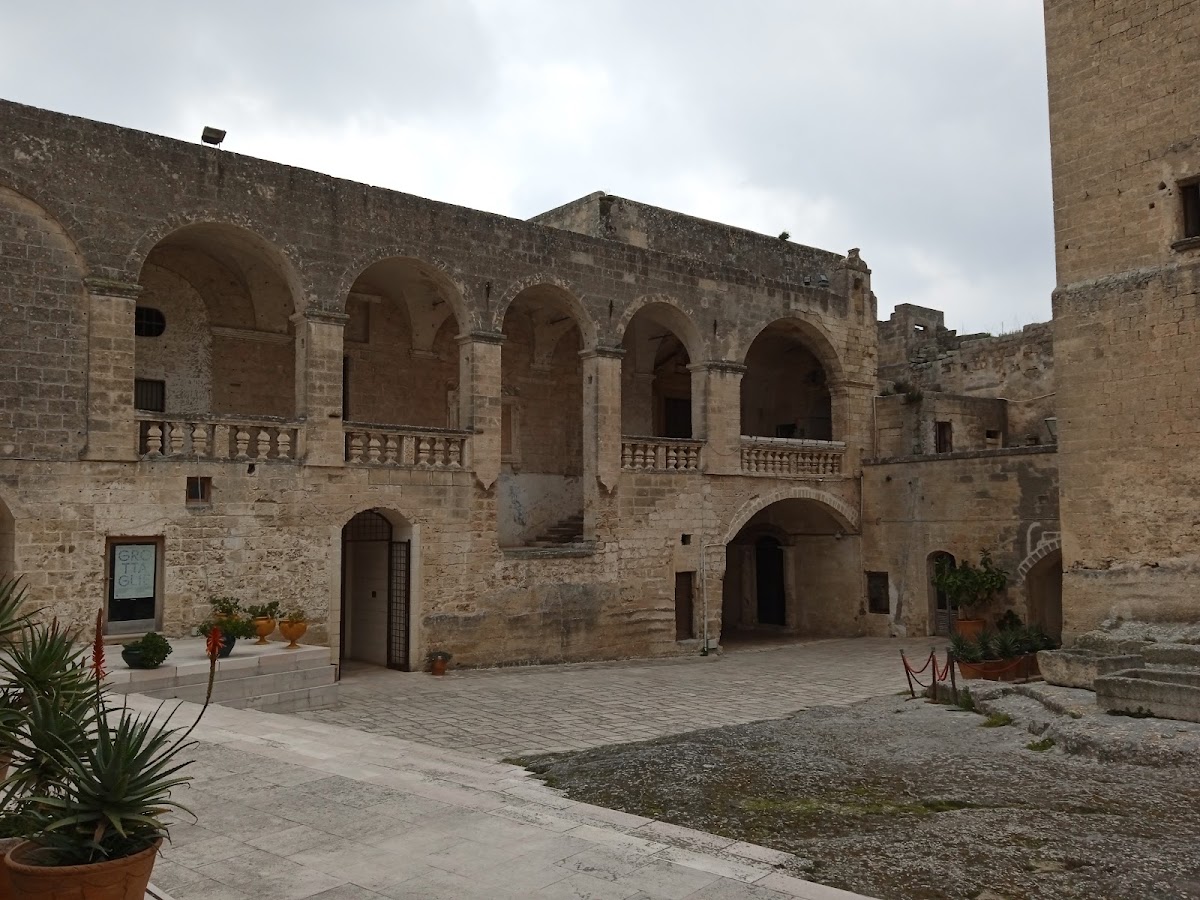
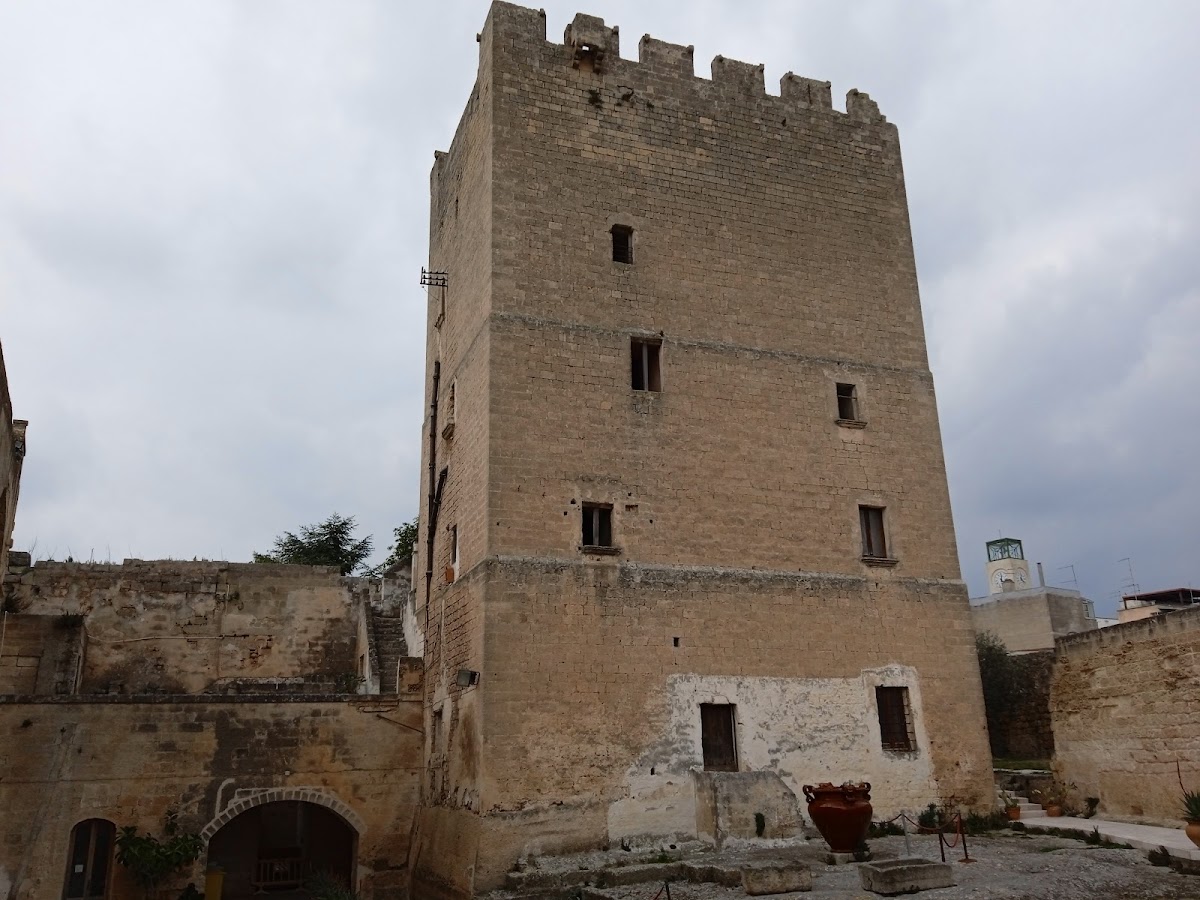
Castello Episcopio survives as a restored medieval complex built of dressed stone. Its principal elements are the rectangular keep, the eastern sector, the enclosing wall, and the later Baroque facade. Former stable rooms now contain the ceramics museum, giving the historic buildings a continuing cultural function.
Medieval core
The keep
The central keep has a rectangular plan and formed the main fortified tower of the castle. Descriptions give it three storeys, while the internal tower is also described as more than 28 metres high, with four floors that housed the bishops. Its construction belongs to the end of the fourteenth century, when Giacomo d’Atri commissioned the castle as part of the archdiocese’s wider building program.
Eastern sector and enclosing wall
The eastern sector and the enclosing wall belonged to the original medieval arrangement. Together with the keep, they defined the first form of the complex before later enlargement and remodeling altered its appearance.
Baroque facade and museum rooms
The later facade is Baroque in style, while rooms formed from the former stables accommodate the Grottaglie Ceramics Museum. The museum is arranged in sections devoted to archaeology, traditional ceramics, contemporary ceramics, maiolica, or tin-glazed earthenware, and nativity scenes. Its collections range from ceramics of the eighth century BC to objects from the present, assembled from public and private collections. A red oxblood-glazed vase stands in the castle courtyard.