Wartenfels Castle Ruins: A Medieval Castle and District Court in Austria
Site at a Glance
- Rating
- 4.7
- Popularity
- Low
- Country
- Austria
- Primary era
- Medieval
- External website
- Open
- Eras represented
- Medieval
- Civilizations
- Holy Roman Empire
- Site type
- Military
- Remains
- Castle
On this page8 sections
History
Foundation and Salzburg Rule
Wartenfels Castle Ruins is a medieval castle site in Austria, near Thalgau, founded in 1259 by Konrad von Steinkirchen, probably a member of the Tanner family, together with his son-in-law Konrad zu Kalham. The castle appears in written records from 1267. Konrad zu Kalham later adopted the name Konrad von Wartenfels, linking the family more closely with the stronghold.
In 1301, another Konrad von Kalham sold the castle and its associated estates to Salzburg Archbishop Konrad IV. A Salzburg archbishop was both the senior church authority in the archdiocese and a territorial ruler who governed castles, estates, and courts. The seller received the property back as a fief, meaning that he continued to hold it in return for service and allegiance.
After the Kalham family died out, the archbishop established a district court at Wartenfels. This was a local judicial and administrative institution operated on behalf of the Salzburg archbishop. The court remained at the castle until 1564, when it moved to a house in the centre of Thalgau.
Fire, Decline, and Later Associations
Wartenfels was burned during the Peasants’ War of 1525–1526, a widespread uprising in which rural communities challenged aspects of feudal authority and governance. Court officials paid compensation for the damage, but the castle was not fully rebuilt. Interior work was still being carried out in 1552, and the roof was re-covered in 1557.
Hunters and gamekeepers continued to live at Wartenfels for a time, while the castle gradually deteriorated. It eventually became a ruin retaining only limited sections of its outer masonry. A later tradition states that Paracelsus stayed at the castle in 1541. Paracelsus was the humanist physician, natural philosopher, and alchemist Theophrastus von Hohenheim. He was also said to have maintained a close relationship with Adelinde, the sister of the castle administrator.
The associated estate farm was the property known as “In Prichsen” at Thalgau-Egg No. 3. Its first recorded owner was Chunradus, listed in the bishopric’s estate register in 1336. The farm was renewed in 1578, and the ruin now belongs to the farm.
Remains
Setting and Fortified Layout
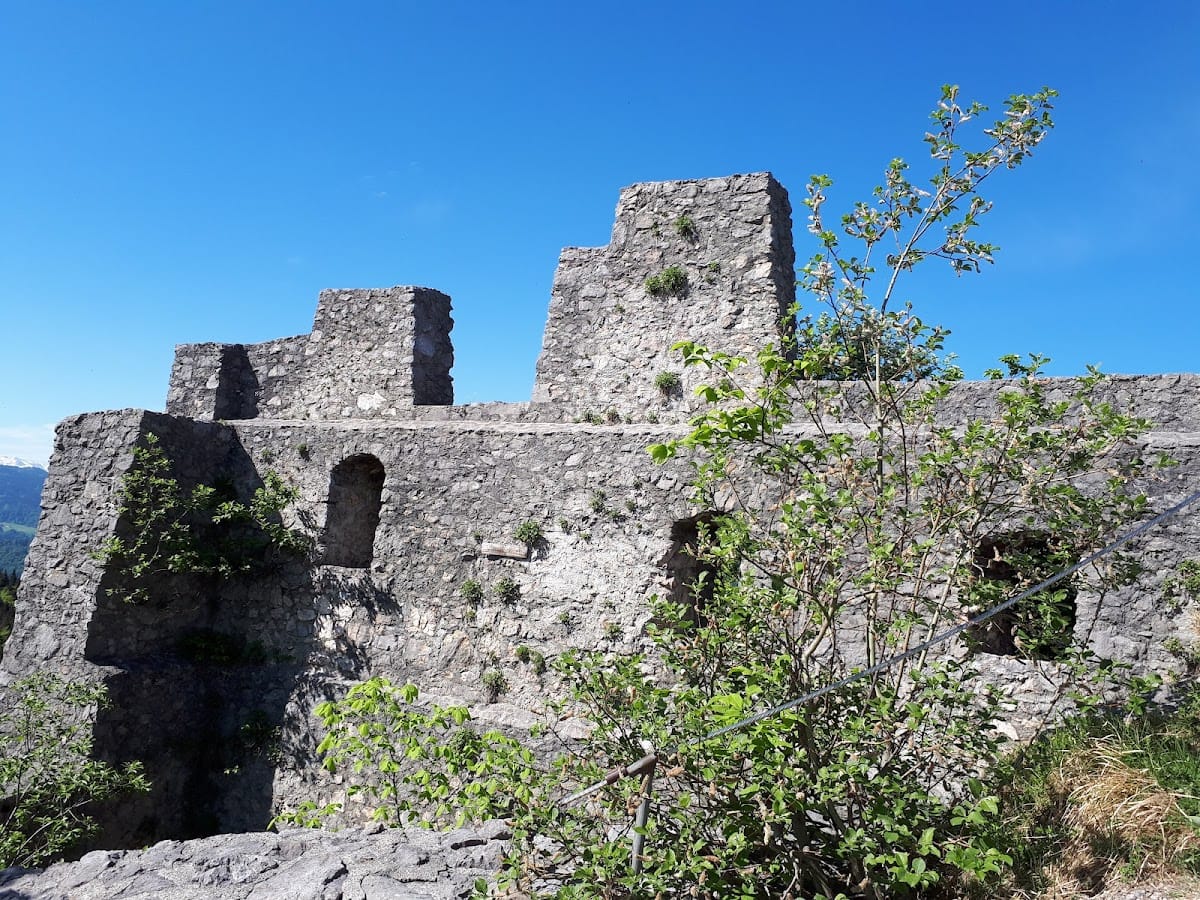
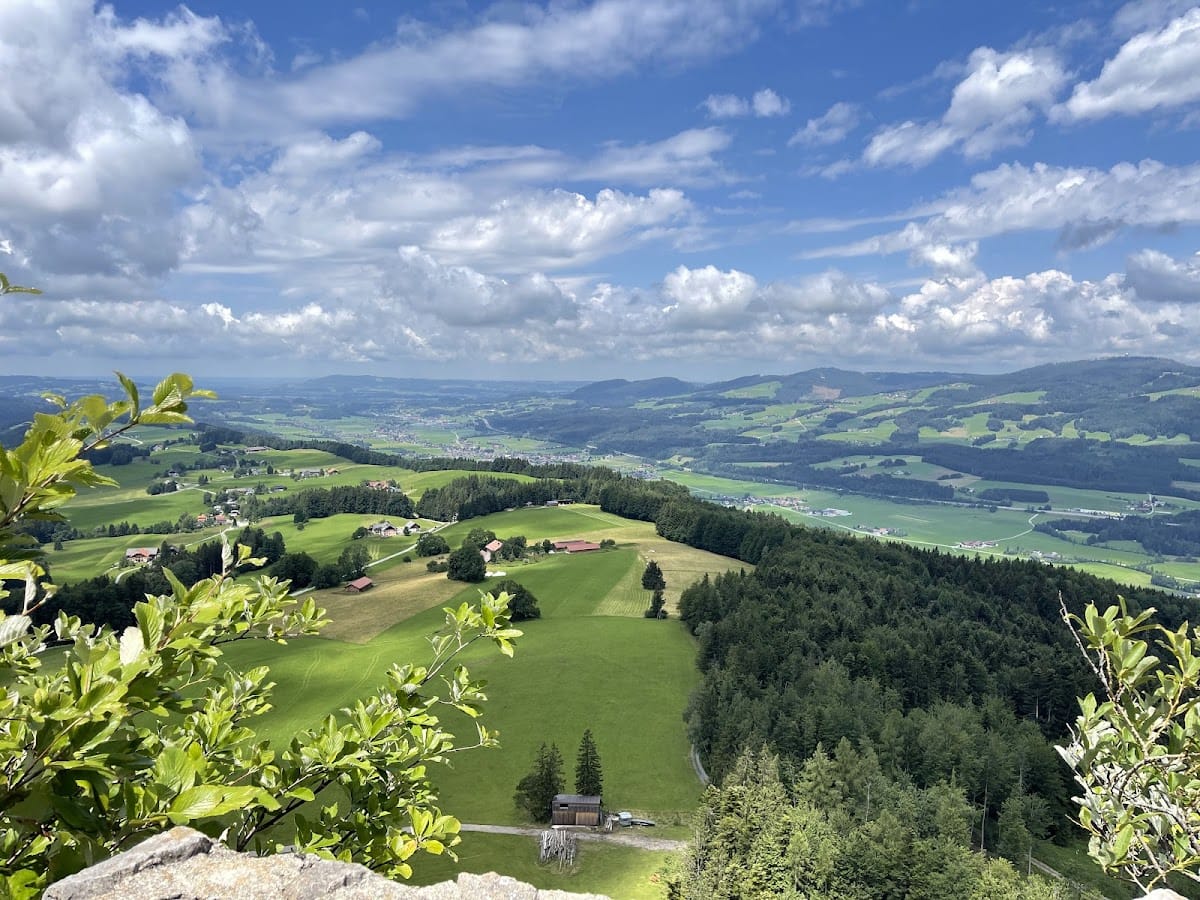
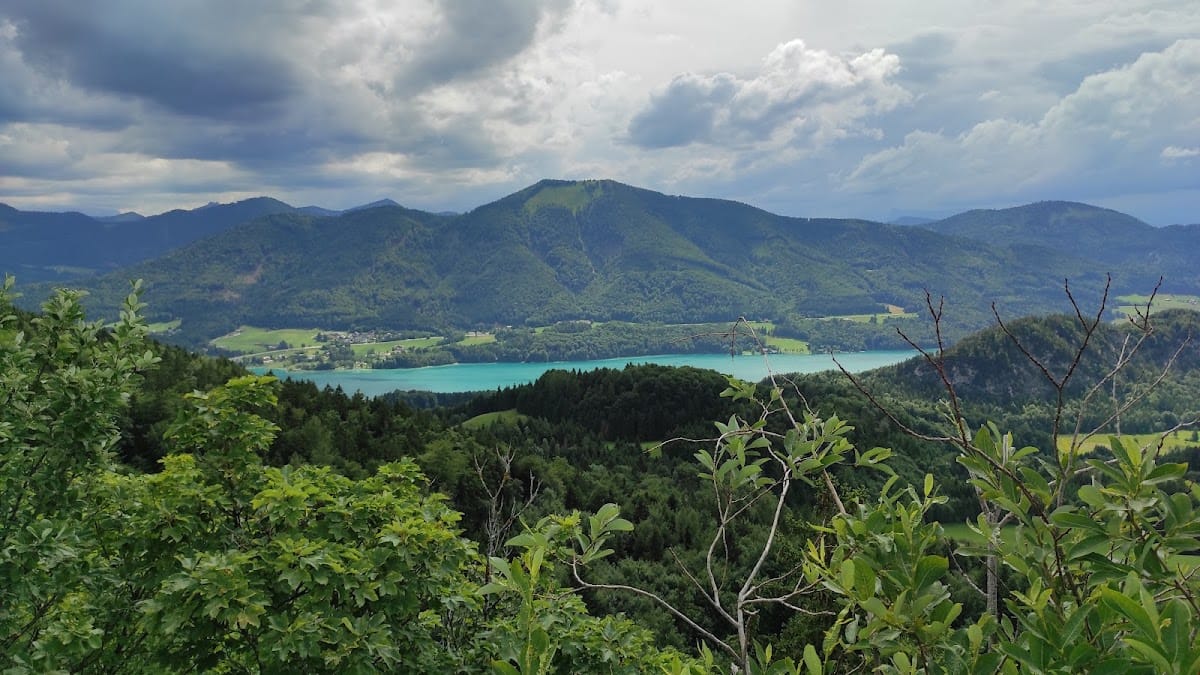
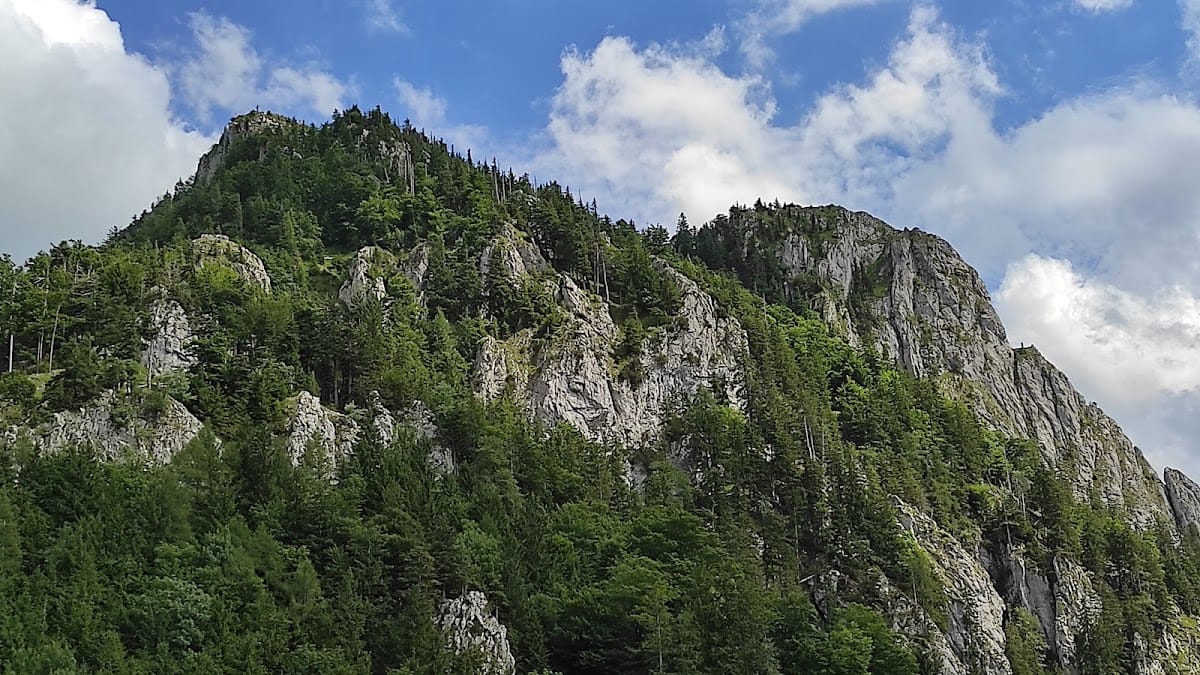
Wartenfels occupies a small rocky projection at the foot of the Schober, whose summit reaches 1,328 metres. The spur castle stands at an elevation of 924 metres above sea level, approximately 20 kilometres east of Salzburg. Its triangular ground plan follows the shape of the rocky site, while the wall on the relatively unprotected eastern side is approximately two metres thick.
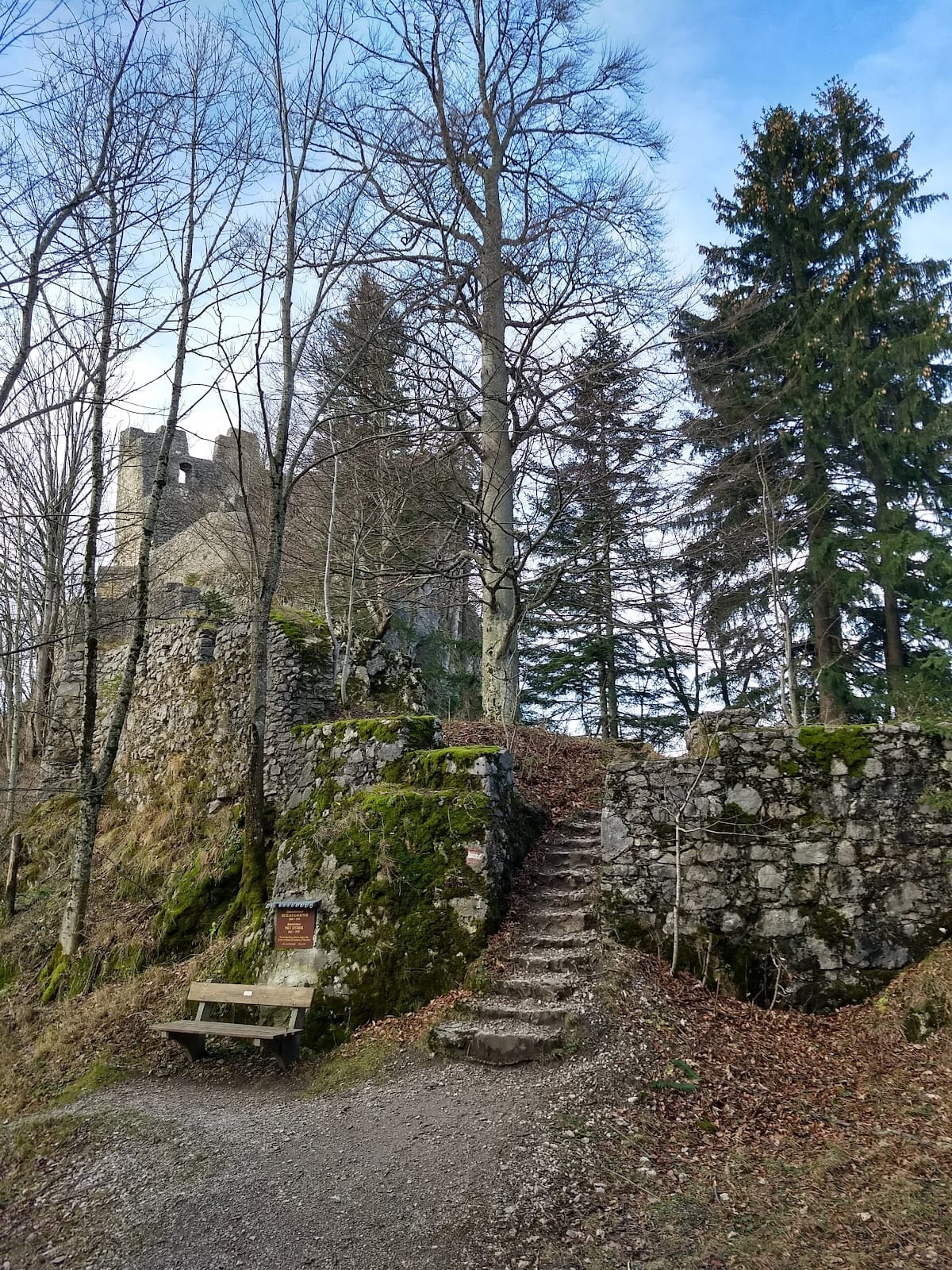
The probable castle gate lay in the eastern part of the site. Foundations of an agricultural or service building survive in the lower courtyard. From this courtyard, a narrow approach rises towards the main castle and was protected by defensive walls.
Main Castle Masonry
Lower Courtyard Annex
In the Late Middle Ages, a small ground-level annex was built in front of the main castle. It had its own zwinger, an enclosed defensive zone between or outside fortification lines that made an assault on the main castle more difficult. The entrance to the upper castle may have been protected by a drawbridge, although this remains uncertain.
Western Wall
Substantial masonry survives in the broad western wall. Wall-tooth projections, created by projecting blocks that could bond with adjoining construction, remain visible there, together with traces of three windows. The existing windows belong to the 1981 restoration rather than preserving the castle’s original appearance. That intervention addressed the danger posed by old masonry, while historical accuracy was not its primary objective.