Schloss Bürgeln: A Former Benedictine Provostry in Germany
Site at a Glance
- Rating
- 4.5
- Popularity
- Low
- Country
- Germany
- Primary era
- Early Modern
- External website
- Open
- Eras represented
- Early Modern, Modern
- Civilizations
- Holy Roman Empire
- Site type
- Religious
- Remains
- Monastery
On this page10 sections
History
Schloss Bürgeln is a former Benedictine provostry in Germany, standing on a wooded hill above Obereggenen in the present municipality of Schliengen, Baden-Württemberg. Founded in 1126 as a dependent settlement of St. Blasien Abbey, it administered monastic estates and pastoral responsibilities in the Markgräflerland. The surviving building dates from 1762 to 1764 and was constructed in the Rococo style, an eighteenth-century style known for light forms, curved shapes, and elaborate decoration.
Foundation and medieval development
The twelfth-century Chronicon Bürglense, a medieval chronicle concerning Bürgeln and its foundation tradition, states that a church had long stood on the hill. It was said to have been built by the ancestors of the Lords of Kaltenbach, served by a priest, and used as the Kaltenbach family burial place.
Around 1120, Werner of Kaltenbach the Elder entered St. Blasien Abbey after Gebhard III, Bishop of Constance, had taken refuge there. Around 1125, Werner’s unmarried son Wibert, with the consent of his father and his brother Werner, gave the entire Kaltenbach estate to St. Blasien, including the hill and its church.
At Werner the Elder’s request, Berthold I, Abbot of St. Blasien, founded a small monastic cell at Bürgeln in 1126. A cella was a small dependent monastic settlement. The new foundation initially housed three brothers and was soon developed into a provostry, a monastic establishment governed by a provost and serving as an administrative and pastoral center for a larger abbey. Werner of Kaltenbach the Younger became its first provost.
The provostry managed St. Blasien’s estates in the Markgräflerland and collected dues. Its religious duties included pastoral care for the nearby Sitzenkirch monastery and for the communities of Obereggenen, Kaltenbach, and Marzell. A fire destroyed the church and monastic cells in 1267. Abbot Arnold II arranged their rebuilding, which culminated in the consecration of a new altar in 1277.
Reformation and destruction
On 3 May 1525, during the German Peasants’ War, Markgräfler peasants attacked and plundered the St. Blasien provostries at Weitnau, Sitzenkirch, and Bürgeln. The conflict was a widespread uprising by peasants in the German lands against aspects of seigneurial authority and economic burdens.
St. Blasien and its extensive possessions belonged to Further Austria, the Habsburgs’ group of territories in southwestern Germany and neighboring regions. Bürgeln’s territorial lord, however, was first the Margrave of Hachberg-Sausenberg and later the Margrave of Baden-Durlach. When the Reformation was introduced in the margraviate on 1 June 1556, the provostry lost its pastoral functions. Sitzenkirch monastery was dissolved, and Protestant pastors were appointed in the communities formerly served by Bürgeln.
French troops severely damaged the provostry during the War of the Palatine Succession in 1689, a conflict involving France and several European powers over claims connected with the succession to the Palatinate. Because of its poor condition, the provostry building remained uninhabited from 1692 to 1698. Later repairs were judged inadequate, and several provosts proposed replacing the building.
The eighteenth-century rebuilding
Aloysius Mader, Provost of Bürgeln, eventually persuaded Meinrad Troger, Prince-Abbot of St. Blasien, to authorize a new building. The earlier provostry was demolished down to its foundations in 1762. Construction of the replacement began that year under Franz Anton Bagnato and was completed in 1764 under Prince-Abbot Martin Gerbert.
The new building was conceived not only as an administrative center but also as a representation of Catholic power. In 1782, Gerbert successfully resisted the Josephinist policies of Joseph II, the Habsburg ruler whose reforms increased state control over the Catholic Church and restricted or dissolved some ecclesiastical institutions. Gerbert initially prevented the secularization of St. Blasien and its provostries. Secularization meant the transfer of ecclesiastical property and institutions to secular authorities.
Transfer to Baden and changing ownership
The political settlement following the Peace of Lunéville and the Imperial Deputation of 1803 assigned ecclesiastical possessions as compensation to secular rulers. St. Blasien’s properties were allocated to the Order of Malta, although Austria refused to surrender them. After the Peace of Pressburg, the Austrian Breisgau passed to Baden on 15 April 1806. The Confederation of the Rhine Act of 12 July 1806 then transferred the Maltese principality of Heitersheim to the Grand Duchy of Baden, a German state created during the Napoleonic era, definitively incorporating Bürgeln into Baden.
The Grand Duchy of Baden sold Schloss Bürgeln to a farmer in 1809. The Catholic Religious Fund in Freiburg acquired the north wing and chapel in 1822, after which the estate and its parts passed through several further ownership arrangements.
Preservation and twentieth-century use
Elisabeth, Baroness von Gleichenstein, took over Schloss Bürgeln in 1912, added an extension, and restricted public access. In 1920, when she attempted to sell the property to Consul Felix Schleyer, municipalities and citizens of the Markgräflerland formed the Bürgeln-Bund to keep the site accessible to the public. The Baden state used its right of pre-emption to prevent the private sale. The association supplied the purchase price to the then-independent municipality of Obereggenen, which transferred the rights and obligations of ownership to the Bürgeln-Bund by contract.
The association then sought a private tenant whose payments could support maintenance and improvements. Richard Sichler became the tenant and, from 1922, also served as general director of Lingner-Werke AG in Dresden. He financed extensive renovation from his own funds, and the work was completed on 19 September 1926.
After returning from Asia in 1939, Sichler lived at Schloss Bürgeln. Disputes concerning the property’s use continued during his residence and reached both the press and the courts. After the Second World War, he brought five Benedictine sisters from the Monastery of Saint Lioba in Günterstal to the estate. The sisters, members of a Catholic monastic tradition based on the Rule of Saint Benedict, worked there as gardeners and guides.
Sichler died in 1952 at a hospital in nearby Müllheim from an embolism, and his lease ended in 1957. Shortly before his death, he had concluded two contracts in May 1952 for the state of Baden to purchase his furnishings and art collections at Schloss Bürgeln for 450,000 Deutsche Mark. The newly established state of Baden-Württemberg, represented by Finance Minister Karl Frank, refused to recognize the contracts. The collection was consequently auctioned for Sichler’s widow, Nelly Sichler, at Schloss Bürgeln from 23 to 26 September 1957. The lots included furniture, tiled stoves, porcelain, East Asian applied arts, miniatures, glass, bronzes, garden sculptures, and paintings. After the lease ended, the Bürgeln-Bund resumed responsibility for maintenance.
Schloss Bürgeln is now used for conferences, seminars, concerts, and celebrations, particularly during the summer.
Remains
Hilltop building and exterior
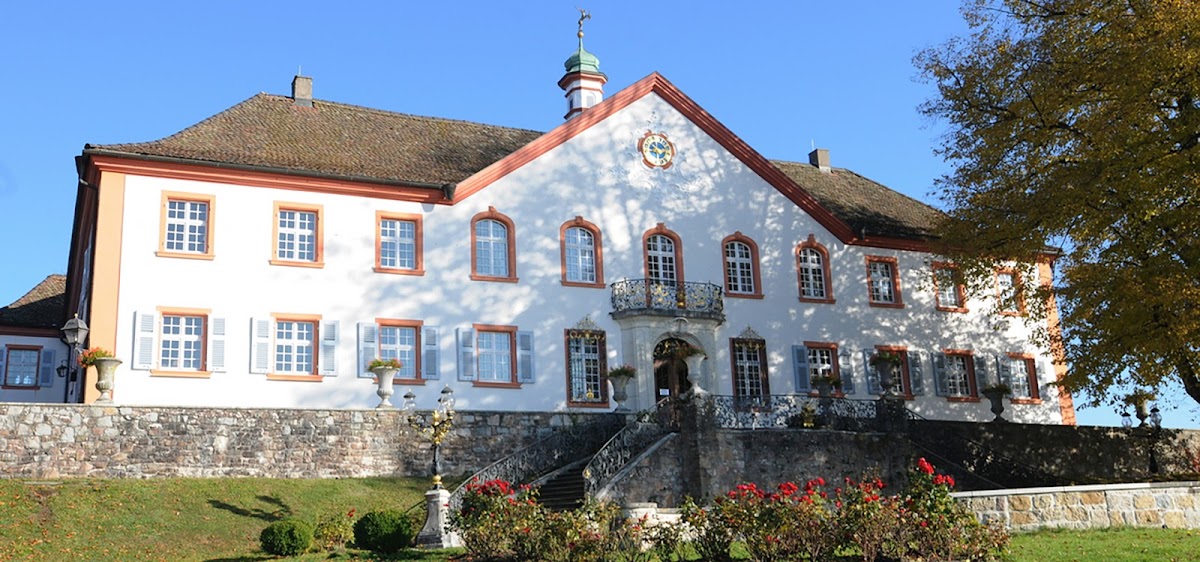
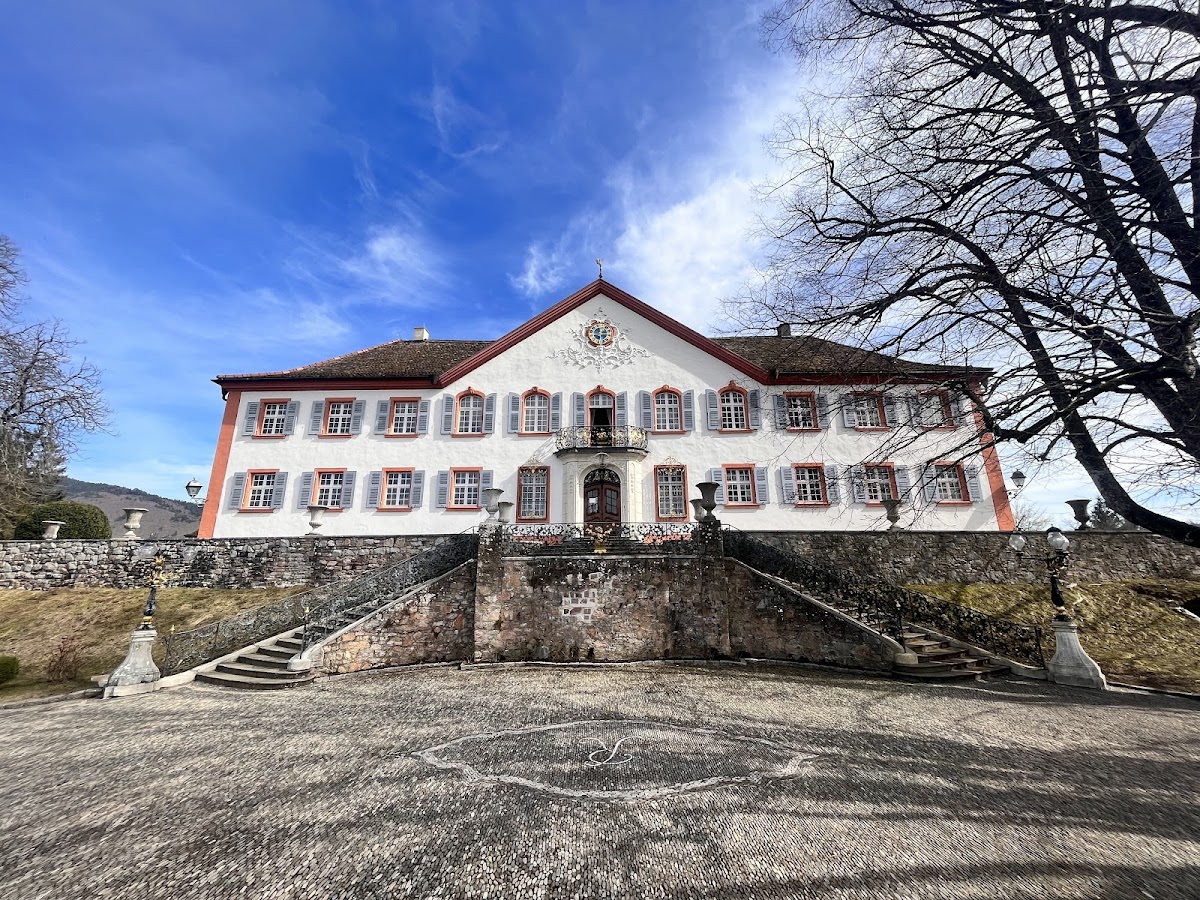
Schloss Bürgeln stands on a wooded hill rising to 665.4 metres above sea level. The present structure is the Rococo replacement built between 1762 and 1764 after the earlier provostry was removed to its foundations. Its two-storey main facade faces west and is organized around a central gable. The chapel is integrated into the north side of the building.
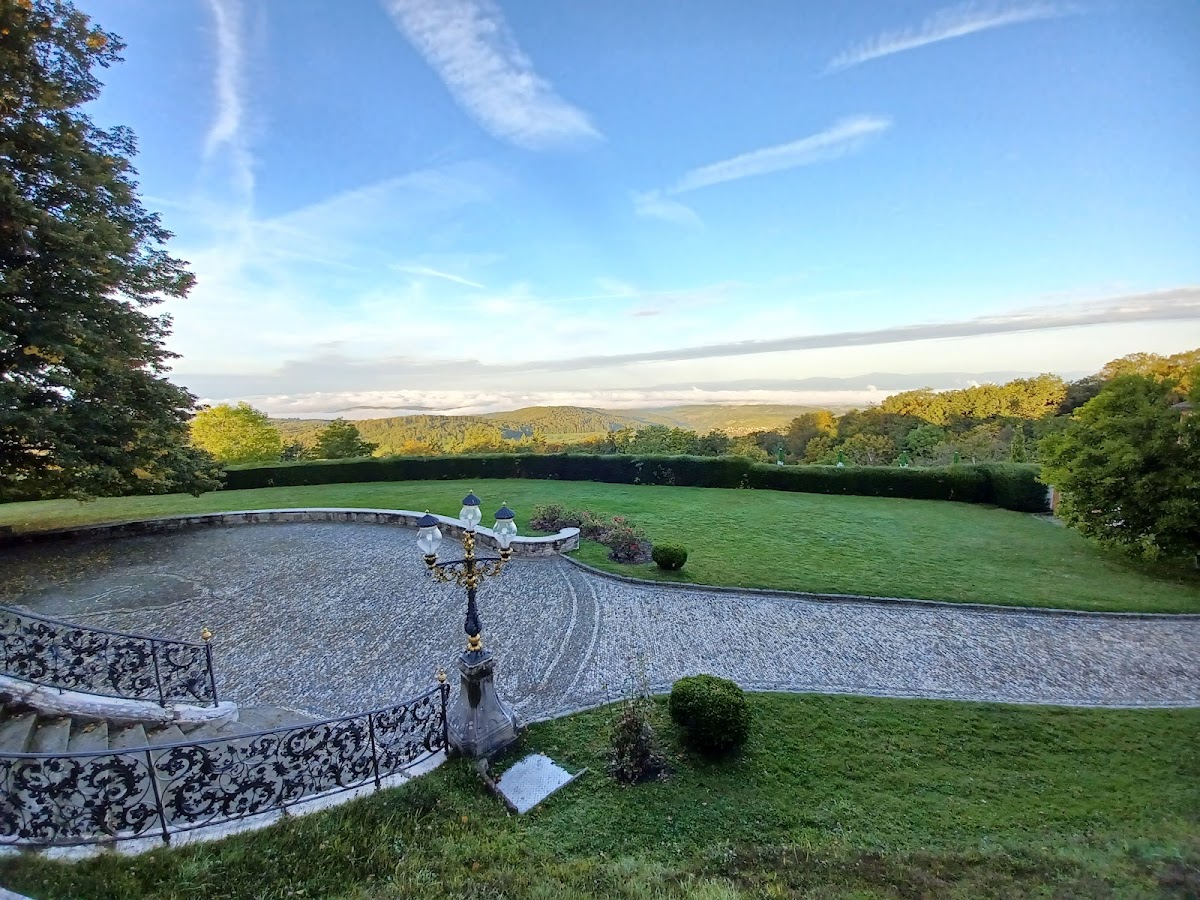
The exterior was altered during the twentieth century. After Elisabeth von Gleichenstein took possession in 1912, she added an annex. During Richard Sichler’s renovation, the architect Theodor Veil laid out a terrace in front of the west side and moved the staircase farther back. The interior was also comprehensively renovated.
Interior rooms and grounds
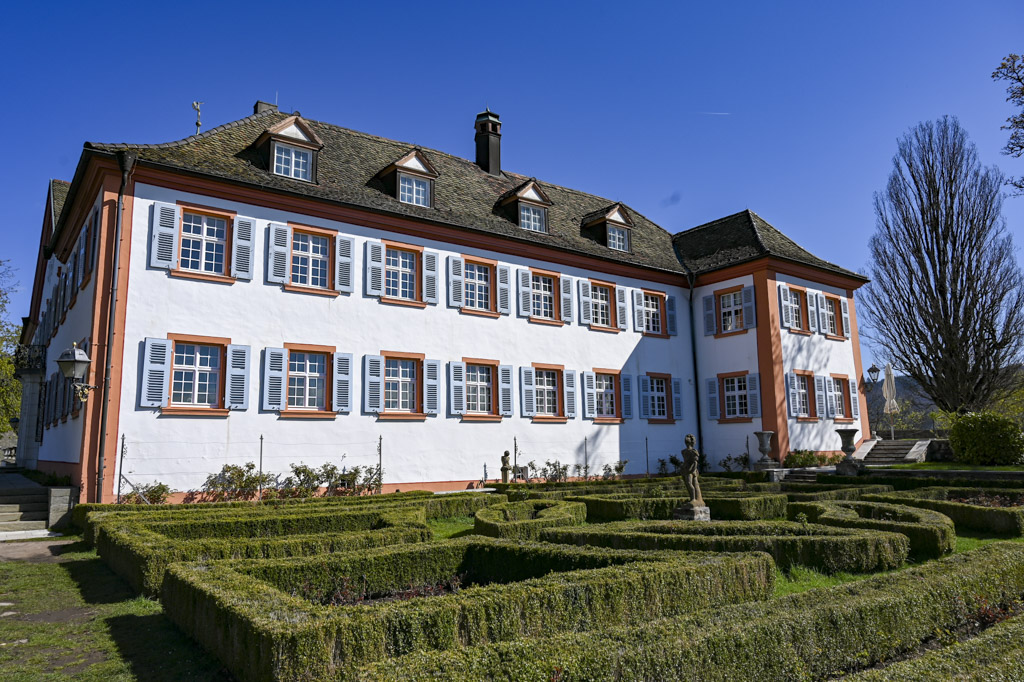
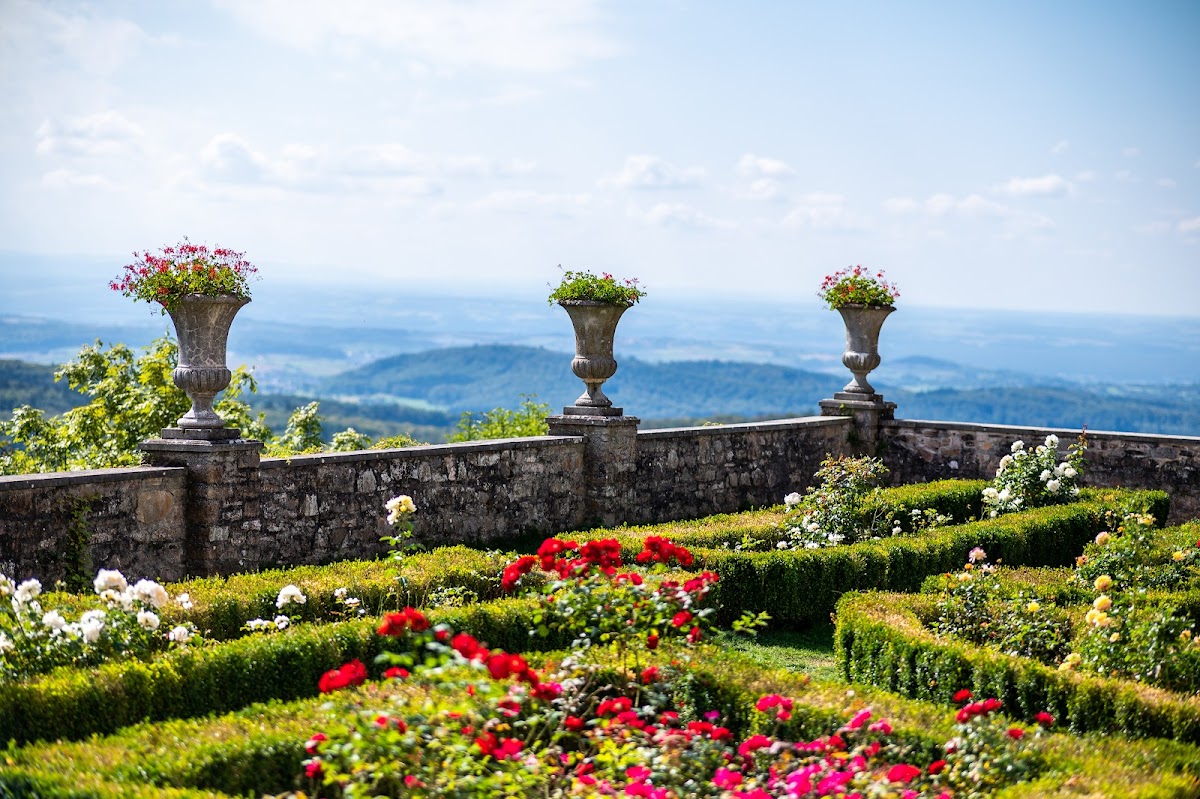
The surviving complex includes a chapel, a library, and a salon with a tiled stove. A rose garden occupies the south side of the site. These rooms and grounds form part of the building’s present arrangement, alongside the changes made through the annex and the 1920s renovation.
Chapel organ
The chapel contains a pipe organ built by Vleugels and installed in February 2017. It has one manual and no pedal, replacing the chapel’s former electronic organ.
Nearby sites