Castello Ruspoli: A Renaissance Castle and Family Residence in Vignanello


Site at a Glance
- Rating
- 4.4
- Popularity
- Low
- Country
- Italy
- Primary era
- Early Modern
- External website
- Open
- Eras represented
- Early Modern
- Civilizations
- Papal States
- Site type
- Domestic
- Remains
- Castle
On this page7 sections
History
Castello Ruspoli is a castle in Vignanello, Italy, whose recorded history reaches back to a fortress first mentioned in 847. During the pontificate of Pope Leo IV, the stronghold was converted into a monastery occupied by Benedictines until 1081. Its later development reflects the feudal and aristocratic history of Vignanello, including periods of contested control by the Holy See, the central governing institution of the Roman Catholic Church, and the Aldobrandini, Orsini, de Vico, and Borgia families.
From Fortress to Fief
In 1169, Emperor Frederick Barbarossa incorporated Vignanello into the territory of the Free City of Viterbo. In 1531, Pope Clement VII granted Vignanello as a fief, a territory held from a feudal ruler in return for allegiance and service, to Beatrice Farnese. Her daughter Ottavia married Sforza Marescotti, and Pope Paul III confirmed the grant while raising the fief to a county. The couple became its first count and countess.
The Renaissance Residence
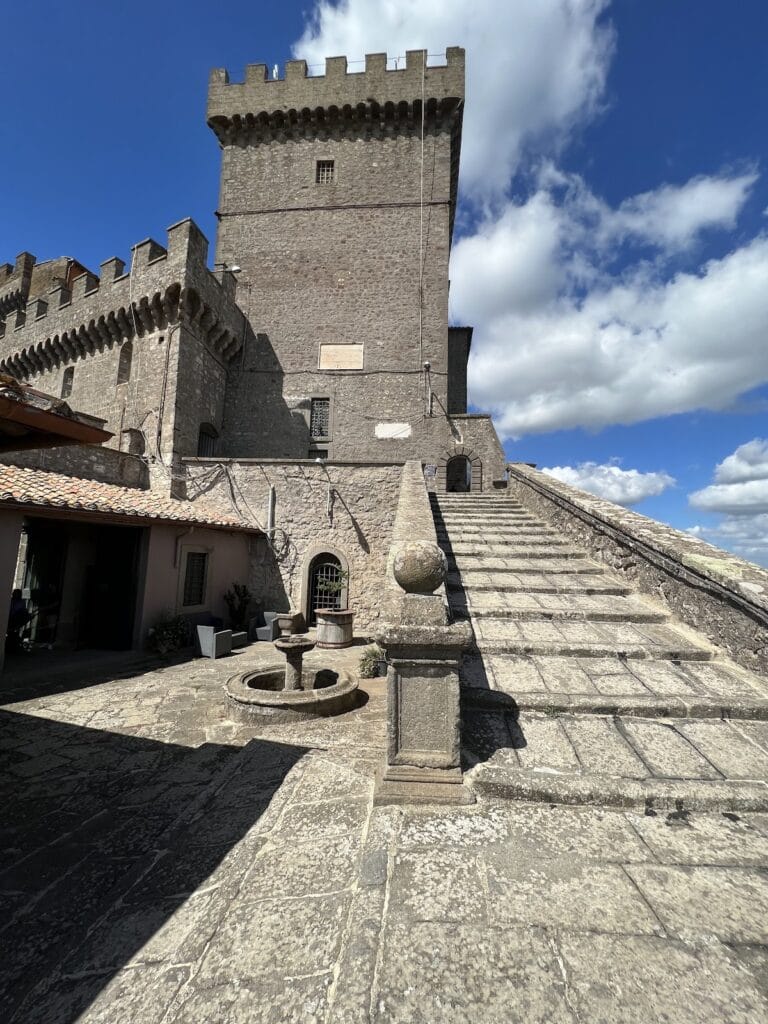
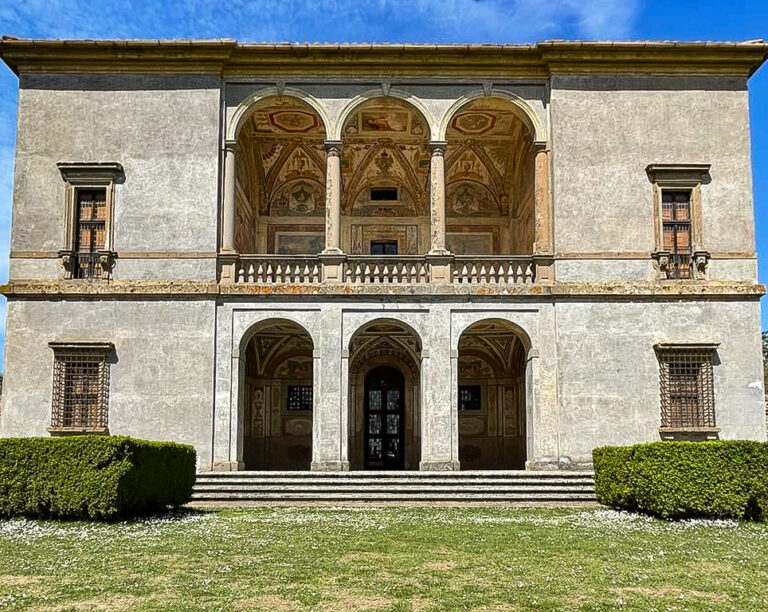
Around 1574, the castle was built as a residence for the ruling family. Its elaboration is attributed to Jacopo Barozzi da Vignola, an influential sixteenth-century Italian architect associated with Renaissance architecture. Although transformed into a residential complex, the building retained the military character of the earlier fortress. From 1610, Ottavia Orsini, who had married into the Marescotti family, established the Renaissance garden. She was the daughter of Vicino Orsini, creator of the Sacro Bosco, a sixteenth-century garden of monumental sculptures and architectural elements at nearby Bomarzo.
The Ruspoli Family
Francesco Maria Marescotti Ruspoli, the sixth Count of Vignanello, became the first Prince of Cerveteri, a title the Ruspoli family has continued to use. The family maintained residences in Vignanello, Rome, and Cerveteri, and Castello Ruspoli remains in Ruspoli ownership. It continues to serve as a private family residence. The reconstruction and preservation of its park are particularly associated with Claudia Ruspoli.
Remains
Castello Ruspoli is well preserved and remains in residential use. Its layout continues to express the character of a fortified structure, even though the complex was adapted as a residence. The surviving grounds include a formally planned Renaissance Italian garden, a chapel on the ground floor, the Secret Garden below the principal garden, and former Ruspoli hunting grounds extending to the east.
The Renaissance Garden
The principal garden is divided by four paths into twelve rectangular sections. Boxwood hedges, originally made with rosemary, create geometrical plant sculptures, while a central fountain is enclosed by four conch-shaped balustrades. A labyrinth forms part of the garden design. Below the main garden lies the area known as the Secret Garden, and the former hunting grounds continue eastward from the castle.
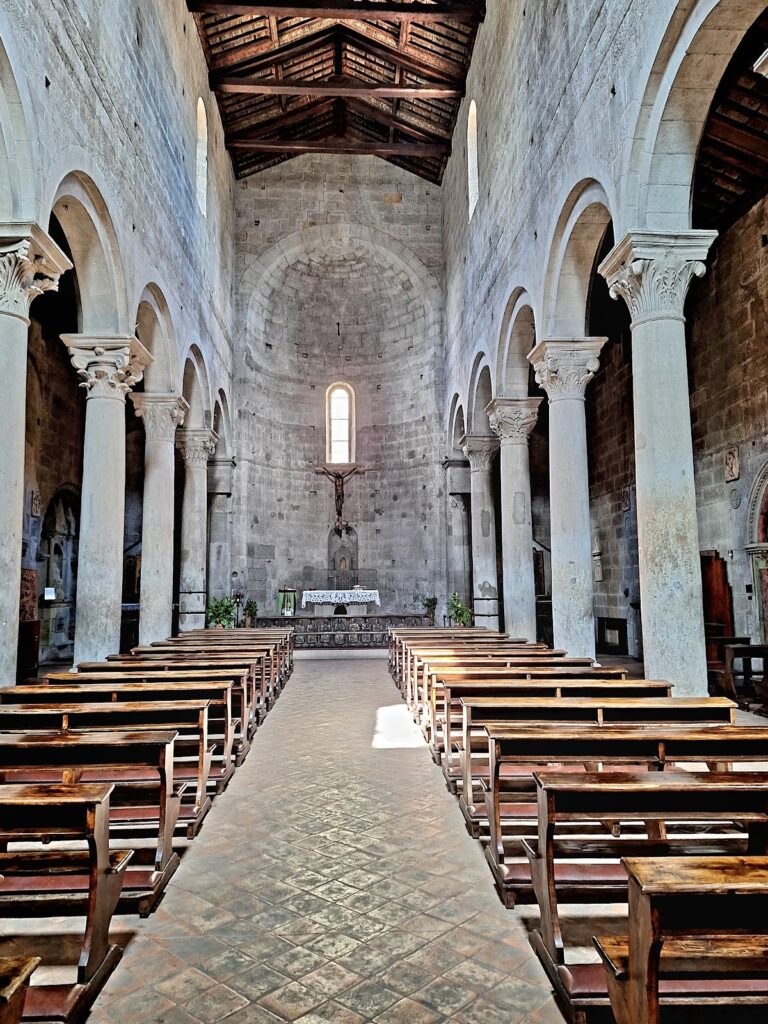
Chapel of Saint Hyacintha Marescotti
A chapel dedicated to Saint Hyacintha Marescotti occupies the ground floor. She was a member of the Ruspoli family and was canonized by Pope Pius VII in 1807. Canonization is the formal recognition by the Catholic Church that a deceased person is a saint.