Falerii Novi: A Roman City and Medieval Abbey Site
Site at a Glance
- Popularity
- High
- Country
- Italy
- Primary era
- Classical
- Eras represented
- Classical, Medieval
- Civilizations
- Papal States, Roman
- Site type
- City
On this page9 sections
History
Falerii Novi is a Roman city in the modern hamlet of Faleri, within the municipality of Fabrica di Roma, Italy. It was established after Rome’s conquest of its Faliscan predecessor, Falerii Veteres, in 241 BCE.
Conquest and refoundation
The Falisci, an ancient people of central Italy, rebelled against Rome in 241 BCE. Roman consul and commander Titus Manlius Torquatus led the campaign. Roman heavy infantry was initially defeated, but Faliscan cavalry was beaten and Roman forces won a second battle. The conquest lasted six days and more than 15,000 Faliscan citizens were killed. Rome took half the territory, along with weapons, cavalry, property and enslaved people. After razing Falerii Veteres, the Romans founded Falerii Novi on a plain several kilometres away and deported survivors there.
Imperial-period city
The settlement later became a colony, perhaps during the reign of Augustus, Rome’s first emperor, and was called Junonia Faliscorum. In the Augustan period, four magistri Augustales, local officials associated with worship of the emperor, arranged and paid for paving the Via Augusta in connection with public games. The road is thought to have served as a local processional route; its name may have referred to celebrations held in Augustus’s honor.
Decline and monastic reuse
Bishops of Falerii are recorded until 1033. As the settlement declined, its population shifted back to the more defensible site of Falerii Veteres. Falerii Novi last appears in literary accounts in 1064.
In the late twelfth century, Cistercian monks from Savoy, members of a Western Christian monastic order, began building the abbey church of Santa Maria di Falleri among the city ruins. Photographs from 1972 show the church ruins before restoration.
Remains
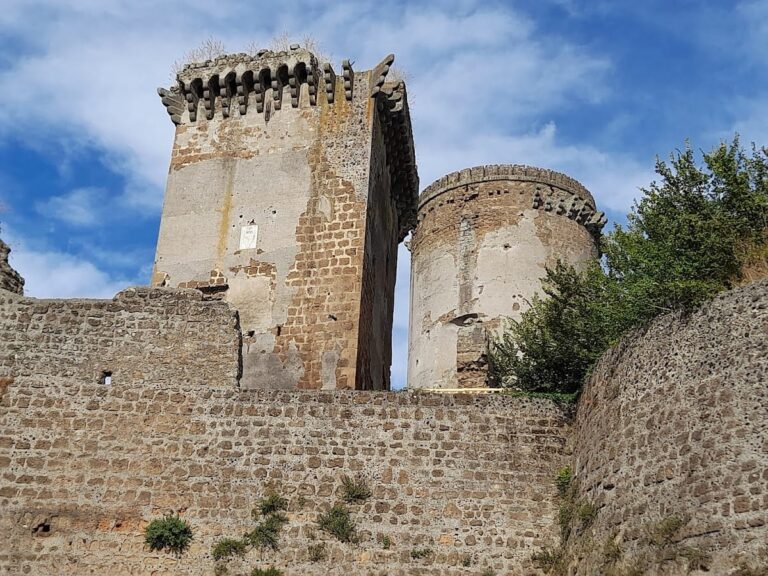
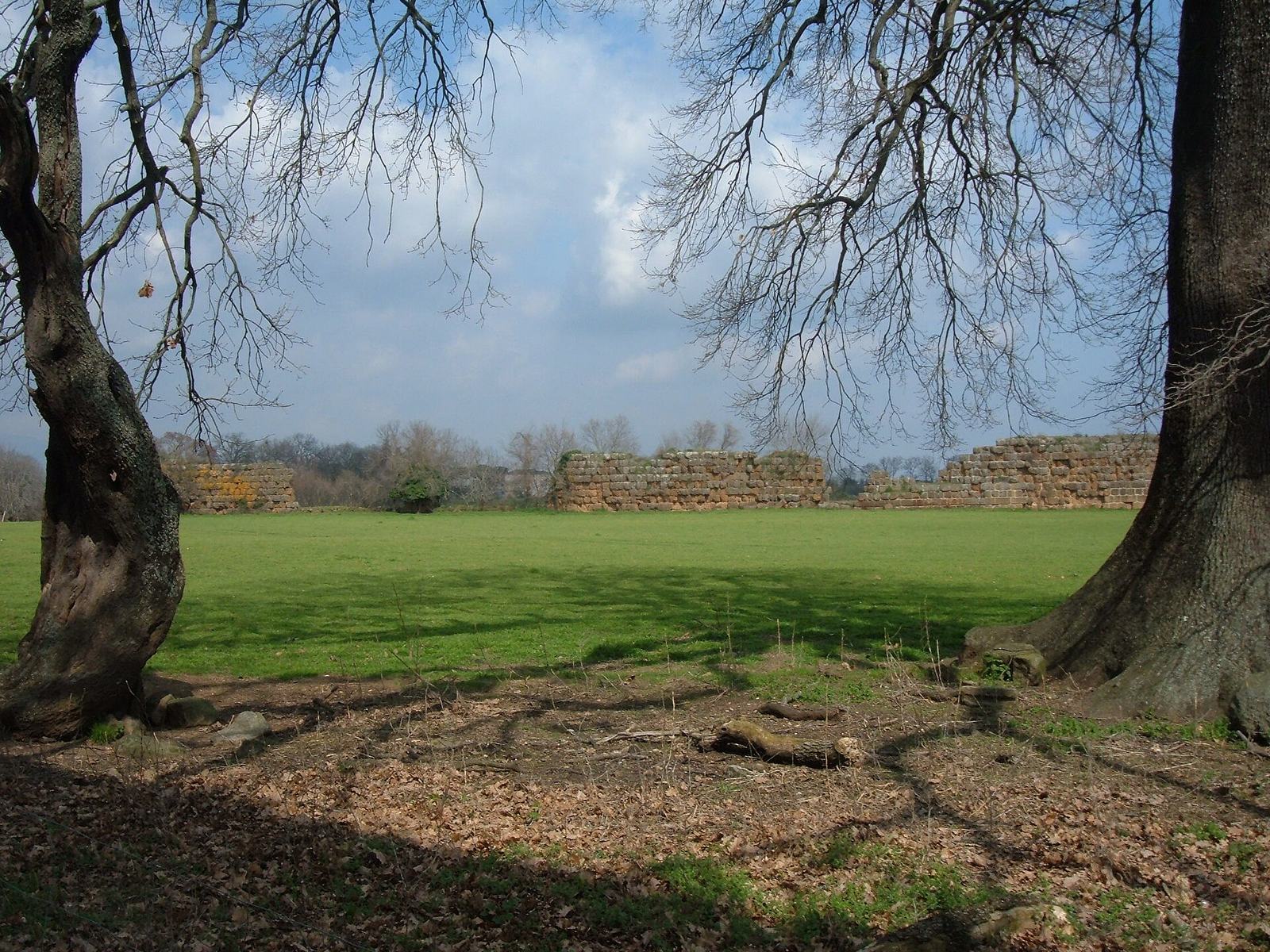
Falerii Novi has an approximately triangular plan, enclosed by a circuit of Roman military walls about 2,400 metres long. The city’s street pattern overlays earlier Faliscan and Republican Roman dirt tracks, while Roman public buildings and the medieval abbey form distinct parts of the surviving remains.
City walls and gates
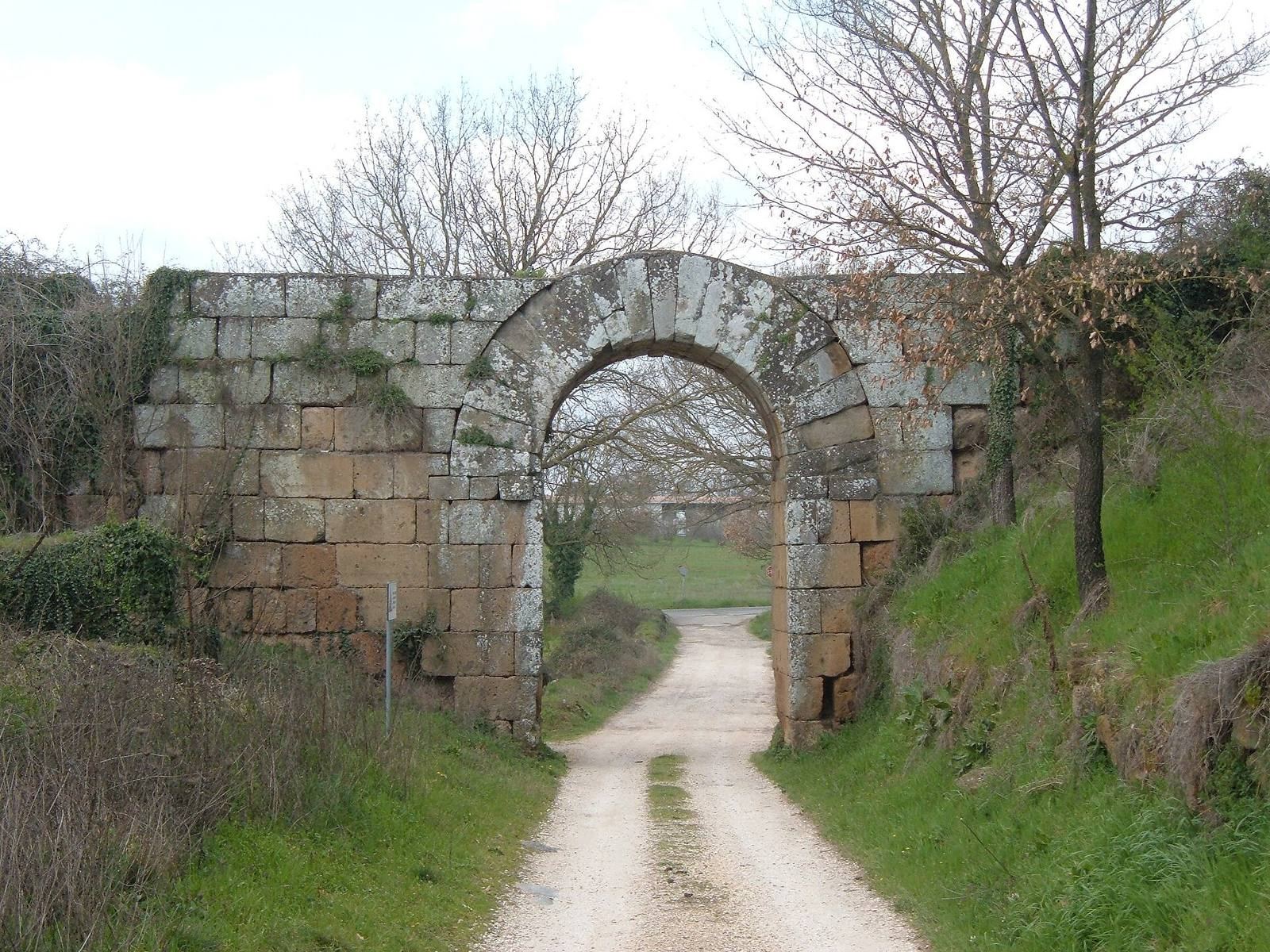
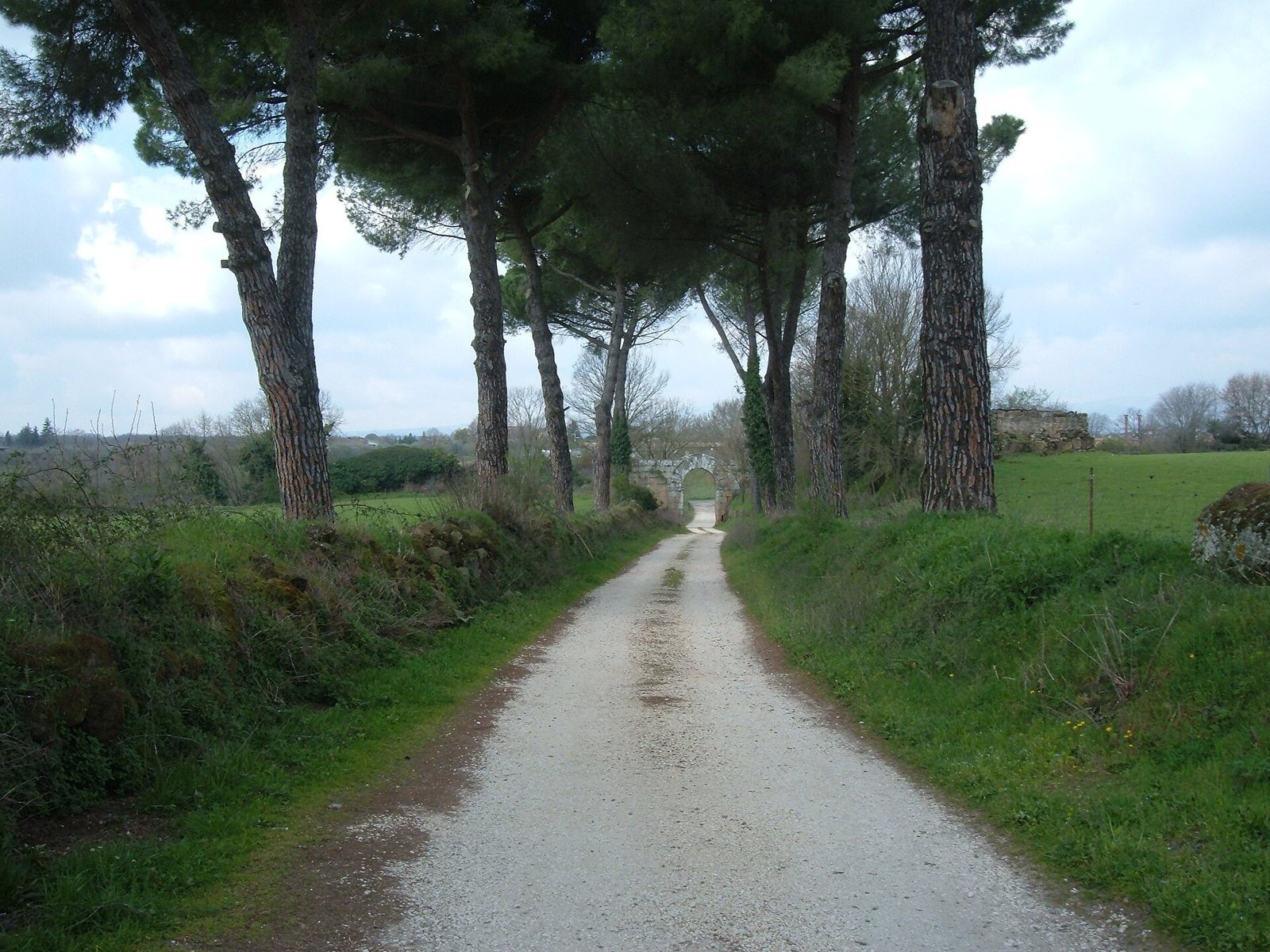
The wall circuit is notably well preserved. It once had about 80 towers, of which about 50 survive, and eight gates, including two especially notable examples. The Cimina Gate stands at the western end of the city’s principal east–west route.
Streets and Roman roads
The route that became the Via Annia in the imperial period is now called the Via Amerina. It branched from the Via Cassia, passed through Nepi and Falerii Novi, and continued north toward Amelia. The Via Augusta probably formed the main west–east street, running from the western Cimina Gate toward an eastern gate and the sanctuaries near Falerii Veteres. It crossed the Via Annia at right angles. Inscriptions describe the Via Augusta’s alignment between the gates and the Via Annia; a second inscription, probably taken from Falerii Novi to Campagnano, also refers to the road.
Excavated public buildings
The city’s forum, its civic center, and its theatre were fully excavated in the nineteenth century. The amphitheatre beyond the walls was also excavated during that period; its arena measured 55 by 33 metres. Radar surveys in 2020 mapped outlines of numerous buildings and monuments, as well as the street network.
Medieval abbey church
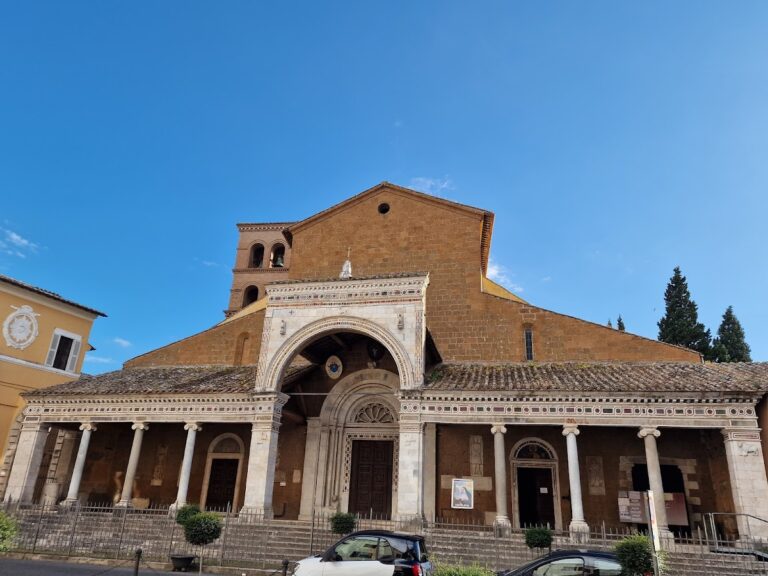
The Romanesque abbey church of Santa Maria di Falleri stands among the city remains. Romanesque is a medieval architectural style characterized by forms such as rounded arches. The church was built using material taken from the ancient remains. Its apses, or semicircular ends, survive, and the Cosmati, a medieval Roman family of marble workers and decorators, worked on its portal.