Reifferscheid Castle: Medieval Hilltop Fortress in Germany

Site at a Glance
- Rating
- 4.5
- Popularity
- Medium
- Country
- Germany
- Primary era
- Medieval
- Eras represented
- Medieval
- Civilizations
- Holy Roman Empire
- Site type
- Military
- Remains
- Castle
On this page10 sections
History
Medieval Lordship
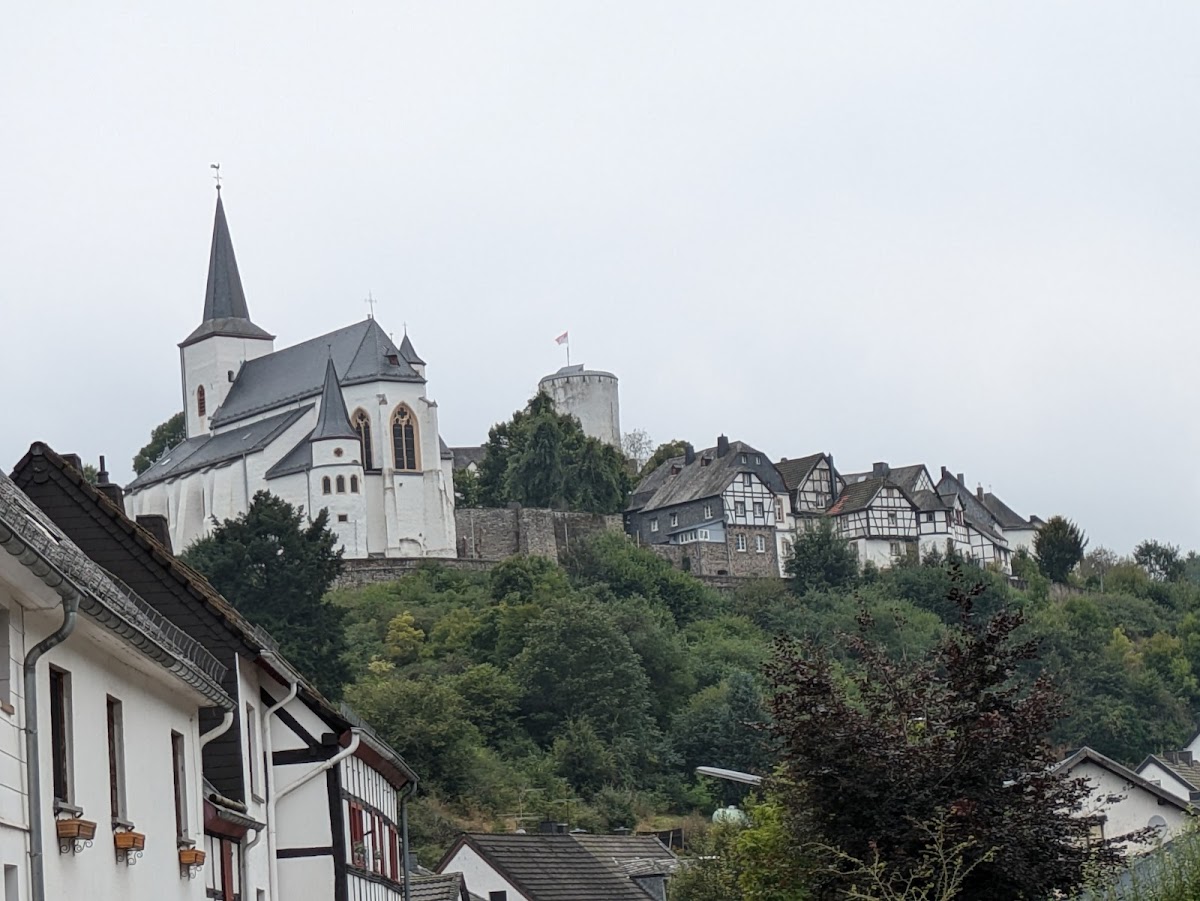
Reifferscheid Castle is a medieval hilltop fortress in Reifferscheid, Germany, within the municipality of Hellenthal near the German-Belgian border. It was first recorded in 1106 as Riferschit, when Duke Henry of Limburg and Lower Lorraine owned the castle and burned it to prevent its capture by an enemy. The name probably refers to a woodland clearing associated with a man called Rifhari.
In 1130, Archbishop Frederick I of Cologne raised a chapel near the castle to parish-church status. Steinfeld Abbey, a medieval monastery in the Eifel, supervised the parish. The Lords of Reifferscheid appear in the records from 1195, and several years later the brothers Gerhard and Philip divided their lordship. This division created the separate Wildenburg branch of the family.
Shortly after John V of Reifferscheid took control of the lordship, the castle came under attack in 1385. The besieging Meuse-Rhine Land Peace Alliance brought together Cologne and Aachen, the archbishops of Cologne and Liège, and the Duke of Jülich. The alliance acted against John’s raids, which were treated as violations of the medieval public-peace system known as the Landfrieden. The siege lasted three months but failed, and the allied forces withdrew.
In 1416, the Lords of Reifferscheid inherited the Lower Salm line of the Counts of Salm. They subsequently adopted the name Salm-Reifferscheid, linking the castle’s ruling family with the Salm inheritance.
Fire, Palace, and Military Destruction
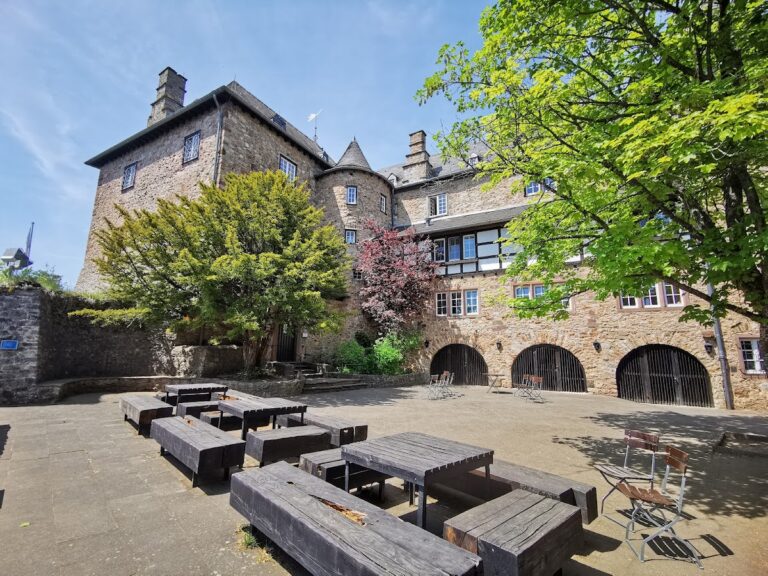
A fire damaged the castle in 1509, leading to rebuilding. On 23 June 1669, a second fire destroyed Reifferscheid and the castle completely. The owner then erected a representative Baroque palace, using the remains of the earlier fortress. The settlement connected with the castle’s special legal privileges was also rebuilt on the foundations of the former enclosure.
During the War of the Palatine Succession, a European conflict fought from 1688 to 1697 between France and a coalition of opposing powers, troops of Louis XIV slighted the palace in 1689. Louis XIV was the king of France from 1643 to 1715, and his expansionist policies contributed to the wars that affected fortified sites in western Europe. The palace was apparently rebuilt quickly, since the draughtsman Mathieu Throuüet showed it as fully restored in an ink drawing made around 1725.
Ruin and Preservation
French Revolutionary Army troops occupied and destroyed the complex in 1794. In 1803, the Lords of Reifferscheid were dispossessed and the lordship was dissolved. The ruin was sold for demolition in 1805 and entered private ownership. Over the following decades, it served as a quarry, supplying stone for buildings in the surrounding area.
The ruin returned to the Salm-Reifferscheid family in 1889, after the family had been raised to princely status. Since 1965, the municipality of Hellenthal has owned the site. Reifferscheid’s residents have strongly supported its preservation in recent decades, and the locality has received several awards for these efforts.
Remains
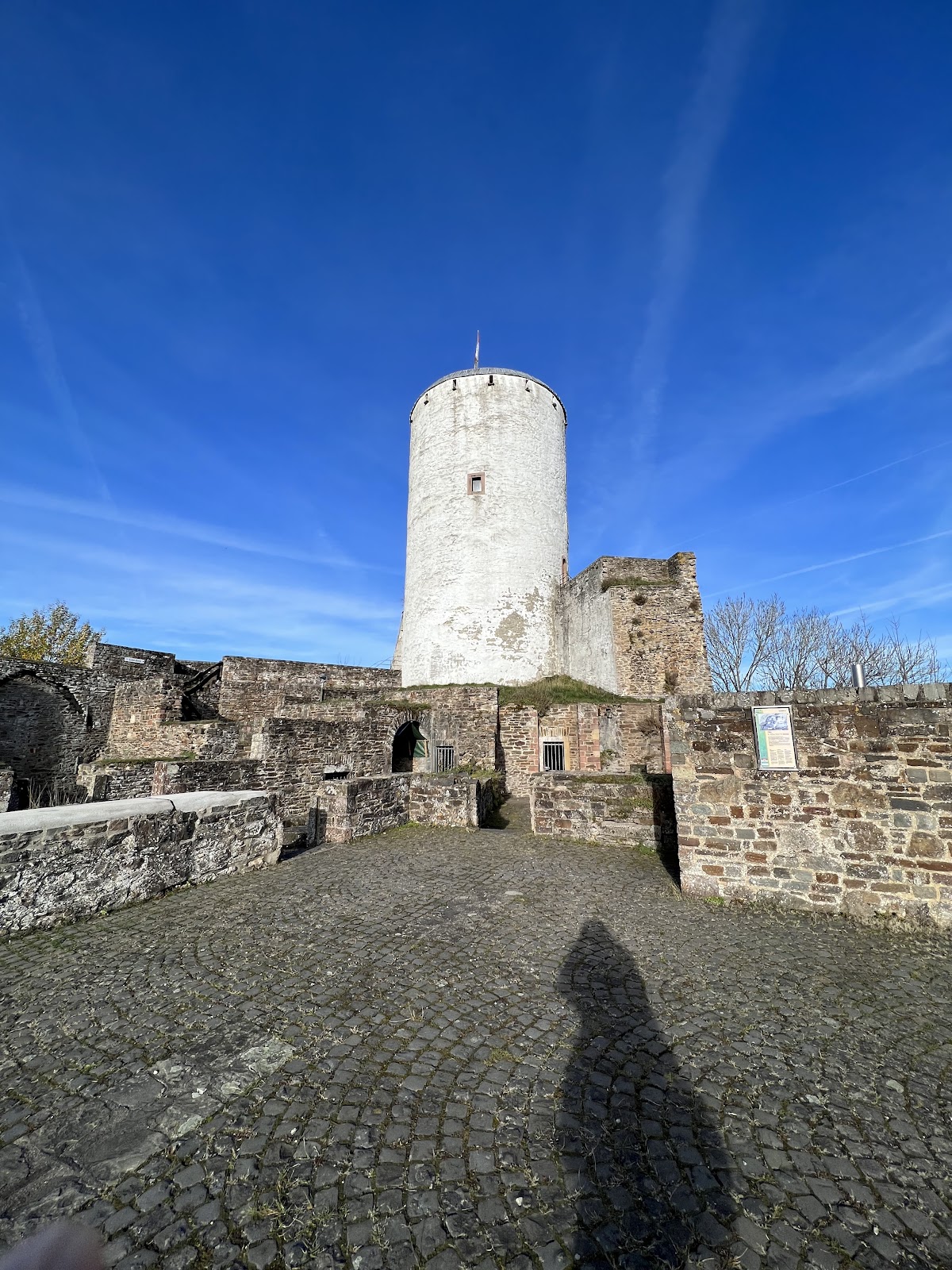
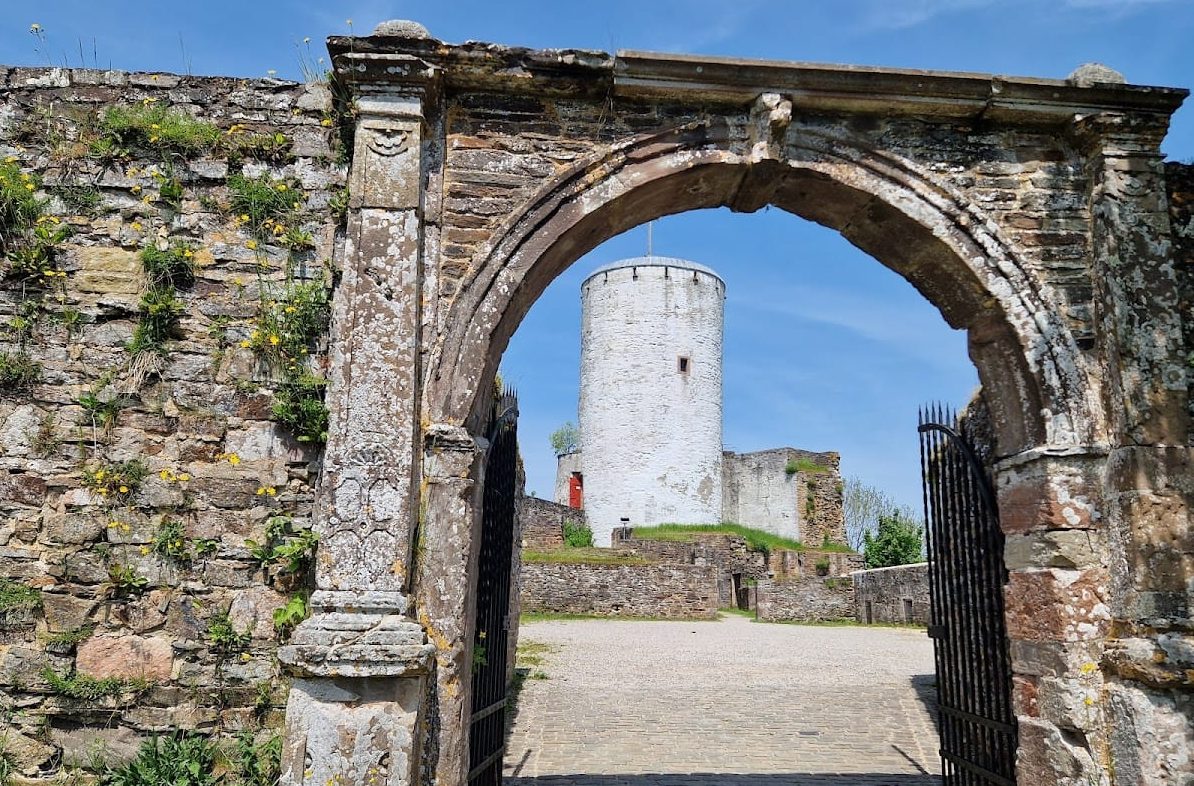
Reifferscheid Castle occupies a medieval hilltop at about 450 metres above sea level. Its surviving fabric consists of parts of the defensive enclosure, a gatehouse with flanking round towers, and a prominent principal fortified tower. The later Baroque palace stood over the earlier castle, while subsequent destruction and quarrying greatly reduced the amount of masonry that remains.
Fortification Walls and Entrance
Curtain Walls
Fragments of the curtain walls preserve portions of the medieval defensive boundary. These walls formed the enclosure of the hilltop fortress and were later incorporated into the site occupied by the Baroque palace. Their surviving sections are part of the reduced medieval fabric left after the palace’s destruction and the reuse of the ruin as a quarry.
Gatehouse and Round Towers
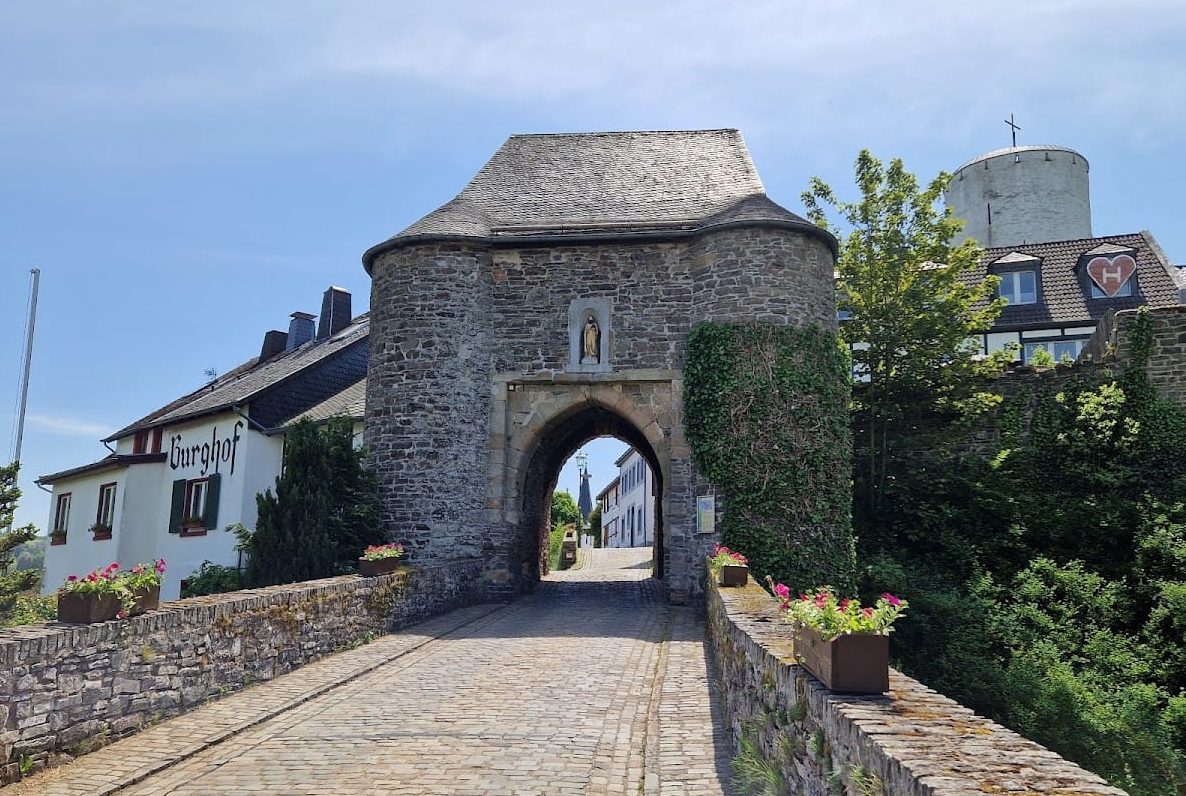
The gatehouse survives with two round towers positioned on either side of it. A gabled entrance passage forms part of the gateway, giving the surviving entrance a clearly defined medieval defensive character. The gatehouse and its flanking towers belong to the fortress remains that continued to shape the later palace site.
Principal Tower
Bergfried
The prominent round bergfried, the principal fortified tower of a medieval German castle, is built from rubble-stone masonry. It served as a strong defensive and observation structure rather than as the castle’s ordinary residential quarters. The tower is now painted white, and its platform stands at approximately 470 metres above sea level.