Château d’Yèvre-le-Châtel: A Medieval Royal Fortress in France


Site at a Glance
- Rating
- 4.5
- Popularity
- Medium
- Country
- France
- Primary era
- Medieval
- External website
- Open
- Eras represented
- Medieval
- Civilizations
- French
- Site type
- Military
- Remains
- Castle
On this page8 sections
History
Château d’Yèvre-le-Châtel is a medieval fortress in France, rebuilt around 1200 in response to developments in military architecture associated with the Crusades. It occupied a strategic position between the duchies of Orléans and the Île-de-France, on the road linking Paris and Orléans, as Philippe Auguste worked to strengthen royal authority.
Early lordship and Fleury Abbey
From the tenth century, Yèvre belonged among the possessions of Fleury Abbey, a major Benedictine monastery. The monks repeatedly complained to Hugues Capet, king of the Franks from 987 to 996, about exactions imposed by Baron Arnoul of Yèvre. Arnoul’s wife, Lucinde, was traditionally said to have founded an abbey within the castle enclosure under the invocation of Saint Gault, a Breton saint whose relics were reportedly brought to the area by monks fleeing Norman invasions.
After Arnoul died, the king intervened several times against his successors. Their castle was dismantled and was probably only a wooden fortification raised on a motte, an earthwork mound supporting a defensive structure. In spring 1079, an army from Burgundy joining Philippe I’s forces for the siege of Le Puiset stopped at Yèvre.
Royal control and reconstruction
The castle was probably attached to the French crown around 1112, when Louis VI compelled the viscount Foulques to surrender Yèvre-le-Châtel. The king then made it a powerful castle jurisdiction, strengthening its administrative and military importance.
Around 1200, Philippe Auguste ordered the castle to be rebuilt according to newer military methods brought from the Crusades. The final reconstruction is apparently associated with Gilon du Tournel. The fortress formed part of the king’s effort to consolidate his realm while controlling an important route between Paris and Orléans.
War, decline, and preservation
During the Hundred Years’ War, the long conflict between the English and the French crowns, Yèvre and Montargis were the only fortified places north of the Loire that did not fall to the English or the Burgundians, the supporters of the Duchy of Burgundy who opposed the Armagnac-aligned French faction during part of the war. Nicolas de Giresme, captain of the stronghold, took an active part alongside Jeanne d’Arc in the liberation of Orléans.
By the end of the fifteenth century, the expansion of the royal domain and advances in artillery had made the castle’s defenses obsolete. Yèvre-le-Châtel consequently lost its importance and its role as a fortified stronghold. An inventory from 1610 described the castle as being in ruins.
The ruins were classified as a protected historic monument in France in 1862, and the commune owns the property. Volunteers from the Chantiers Histoire et Architecture Médiévales association restored the castle between 1982 and 1984. A major restoration campaign followed from 1999 to 2002.
Remains
Fortified layout
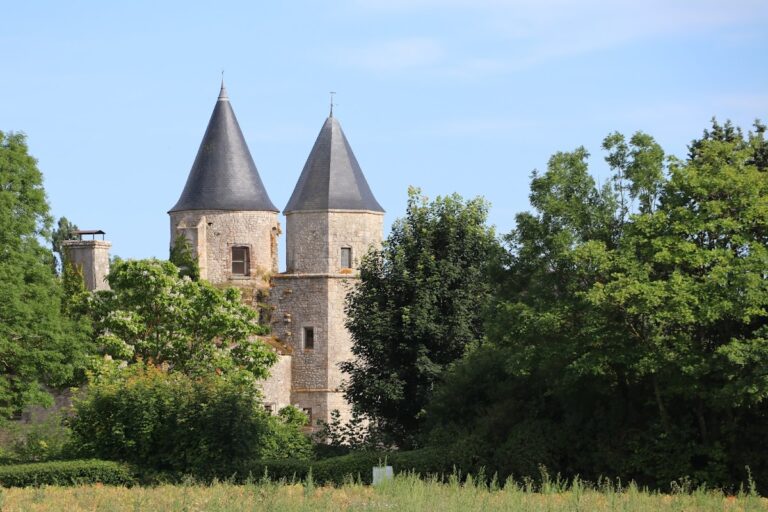
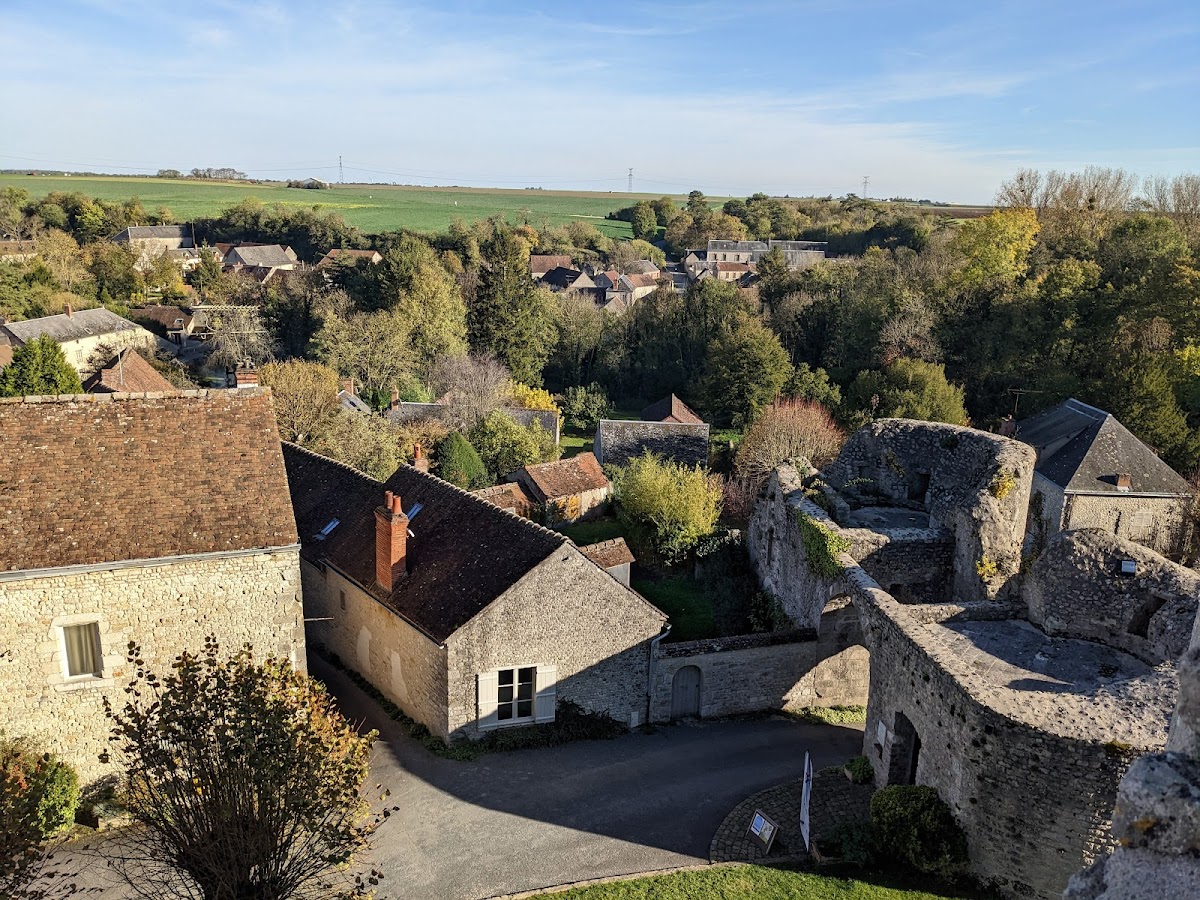
The castle stands east of Pithiviers on a break in the Beauce plateau. It occupies a motte surrounded by dry moats, and its plan forms a diamond with a semicircular tower at each point. Curtain walls, the defensive walls linking the towers, carry a wall-walk, a passage along their upper level. The tower tops provide a wide panorama over the Beauce, the Gâtinais, and the edges of the Forest of Orléans.
Upper courtyard
The present entrance leads to the upper courtyard by a wooden staircase. In the medieval arrangement, a drawbridge descended onto a pier that remains in place and is now connected to a wooden ramp. The courtyard contains garden plots laid out with more than 150 aromatic, medicinal, and dye plants.
Lower bailey and entrances
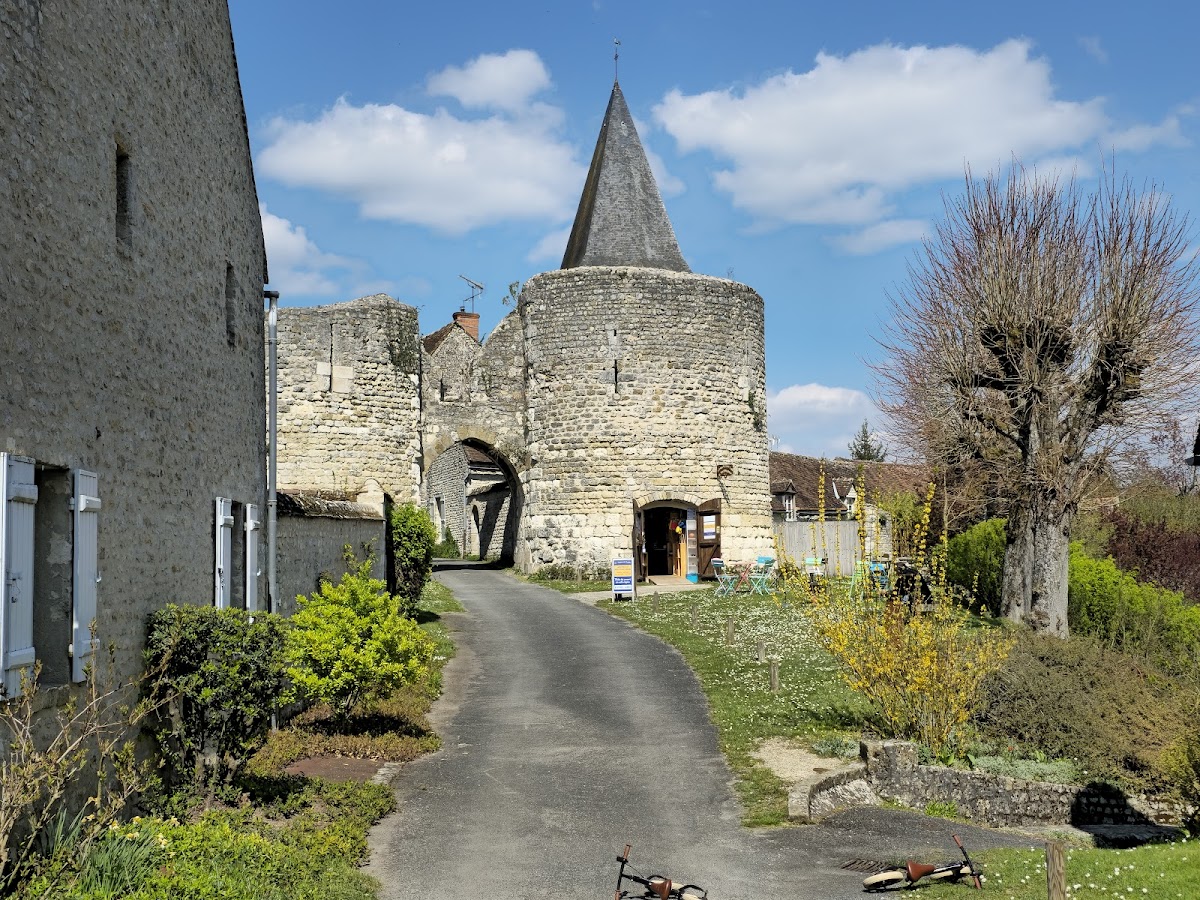
Access to the lower bailey is protected by an entrance gatehouse flanked by two towers. The gateway was equipped with a vertically sliding portcullis, a double-leaf gate, and a murder hole, an opening above the entrance through which defenders could attack those below. A postern set into the eastern rampart also provides access to the lower bailey.