Udine Castle: A Renaissance Fortress and Civic Museum Complex in Italy


Site at a Glance
- Rating
- 4.5
- Popularity
- Medium
- Country
- Italy
- Primary era
- Early Modern
- External website
- Open
- Eras represented
- Bronze Age, Early Modern
- Civilizations
- Venetian
- Site type
- Military
- Remains
- Castle
On this page8 sections
History
The ancient hill and medieval fortress
Udine Castle is a Renaissance fortified complex in Udine, Italy, built on the summit of an artificial hill. Tradition attributed the elevation to Attila the Hun, the fifth-century ruler of the Hunnic Empire, who was said to have ordered his soldiers to raise it so they could watch Aquileia burn after the city was sacked in AD 452. Archaeological studies reported in April 2022 instead indicate that the hill was constructed during the Bronze Age, about 3,500 to 3,000 years ago, with a more precise date of approximately 1400 to 1300 BC.
The first documented reference to a building on the hill dates from 983. In that year, Holy Roman Emperor Otto II donated its castrum, a fortified military settlement, to Rodoaldo, Patriarch of Aquileia. The patriarchs belonged to the Patriarchate of Aquileia, an ecclesiastical principality whose leaders held both religious and territorial authority in Aquileia and Friuli.
Rebuilding in the Renaissance
The present castle occupies the site of a fortress built by the Patriarchs of Aquileia. That earlier stronghold was destroyed by the earthquake of 1511. Construction of the current Renaissance building began on 2 April 1517 and continued for more than fifty years, approximately until 1567.
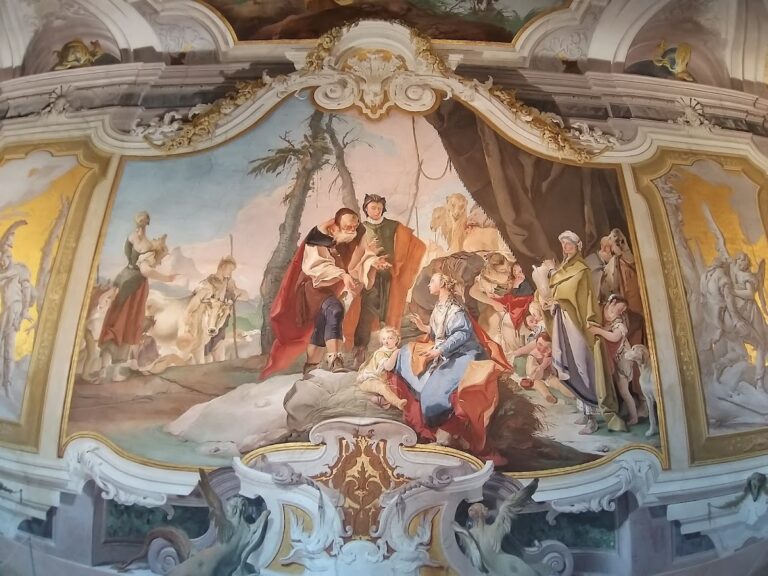
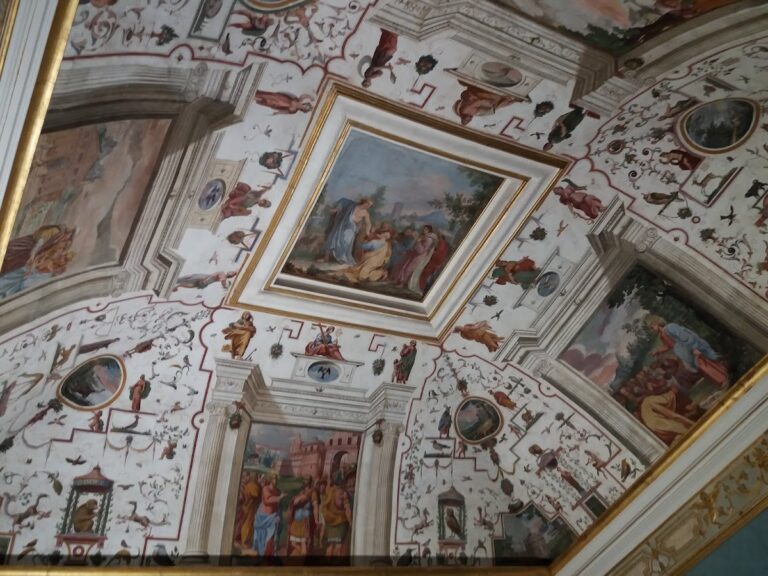
Giovanni da Udine, an Italian Renaissance painter and decorator associated with Raphael, took part in the final construction phase. He completed the exterior finishing and decorated the Parliament Hall, while Francesco Floreani later finished the work left incomplete after Giovanni’s death.
Parliament and later civic use
The Parliament Hall accommodated the council of the Patria del Friuli until the Napoleonic occupation of Friuli in 1797. The Patria del Friuli was a political assembly representing Friuli, making the hall an institutional setting for the region’s early parliamentary government.
The castle now houses Udine’s Civic Museums. Its cultural role includes collections devoted to art, archaeology, coins and related currency objects, the Risorgimento, a nineteenth-century movement that led to the political unification of Italy, drawings and prints, and Friulian photography. Carlo Emilio Gadda, an Italian writer known for novels, essays, and short stories, dedicated his collection Il castello di Udine to the castle.
Remains
Hill and fortified complex
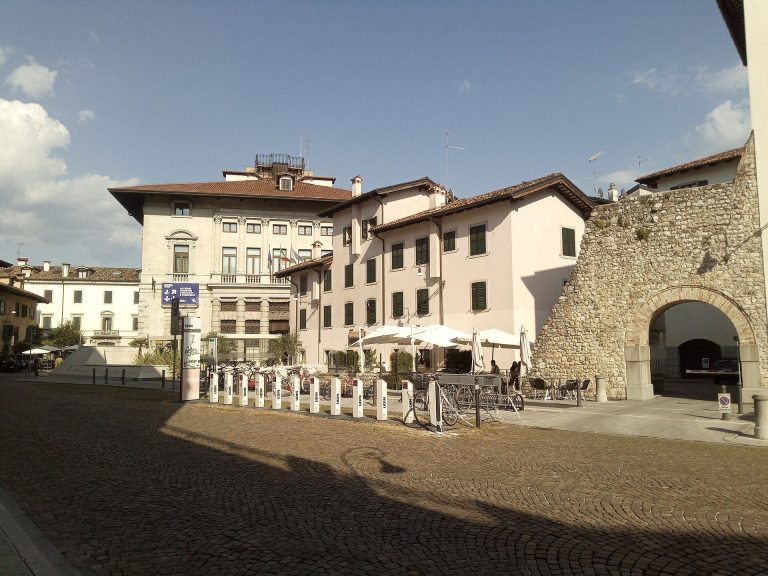
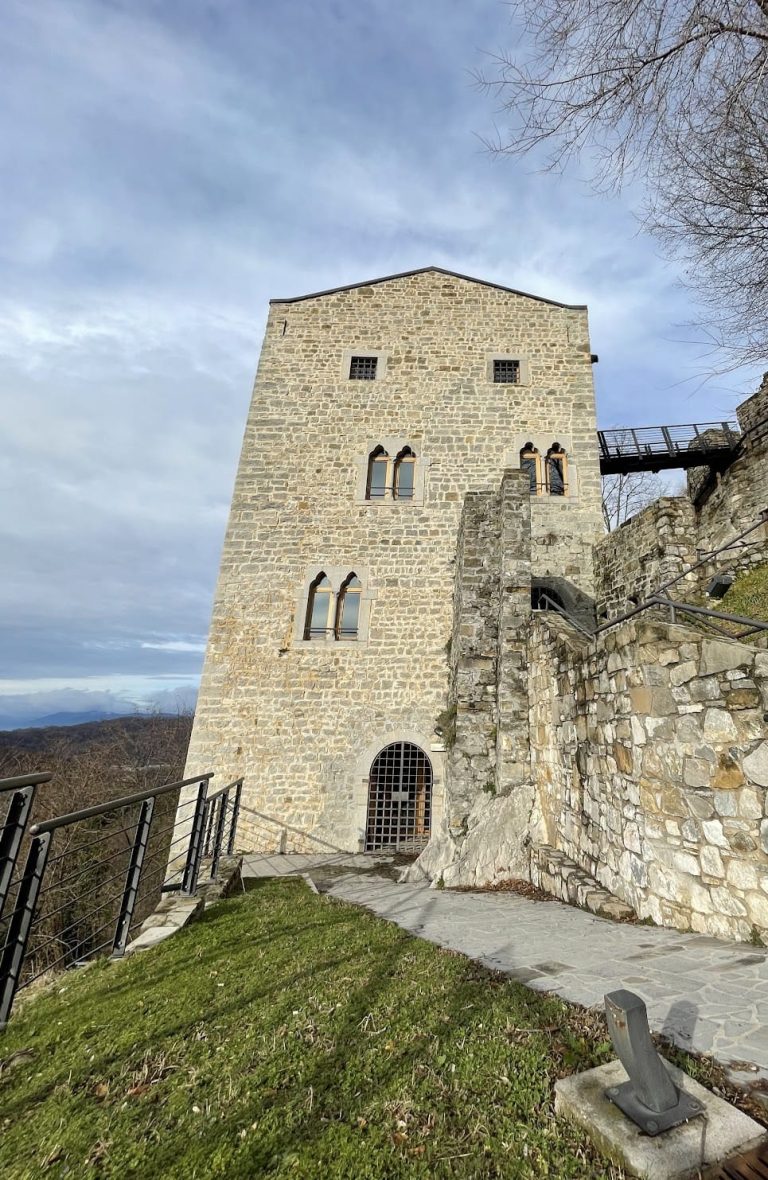
The castle stands in Udine’s historic centre on the summit of Castle Hill, an artificial elevation rising from the Friulian plain. The hill is described as the largest prehistoric artificially raised mound in Europe. The surviving complex includes the approach and entrance, the main castle building, a rear elevation with a courtyard, and the castle forecourt.
Renaissance building
The castle building has three floors and is made of brick masonry covered with plaster. Its exterior finishing belongs to the final phase of the Renaissance construction, while the Parliament Hall retains decorative work begun by Giovanni da Udine and completed by Francesco Floreani.
Museums and collections
The building contains the Civic Museums’ art gallery, archaeological and numismatic collections, the Museum of the Risorgimento, a gallery of drawings and prints, and the Friulian photography museum. The complex also includes a photo library with more than 150,000 images and a university-style library containing more than 30,000 volumes. Its rooms are used for temporary exhibitions.
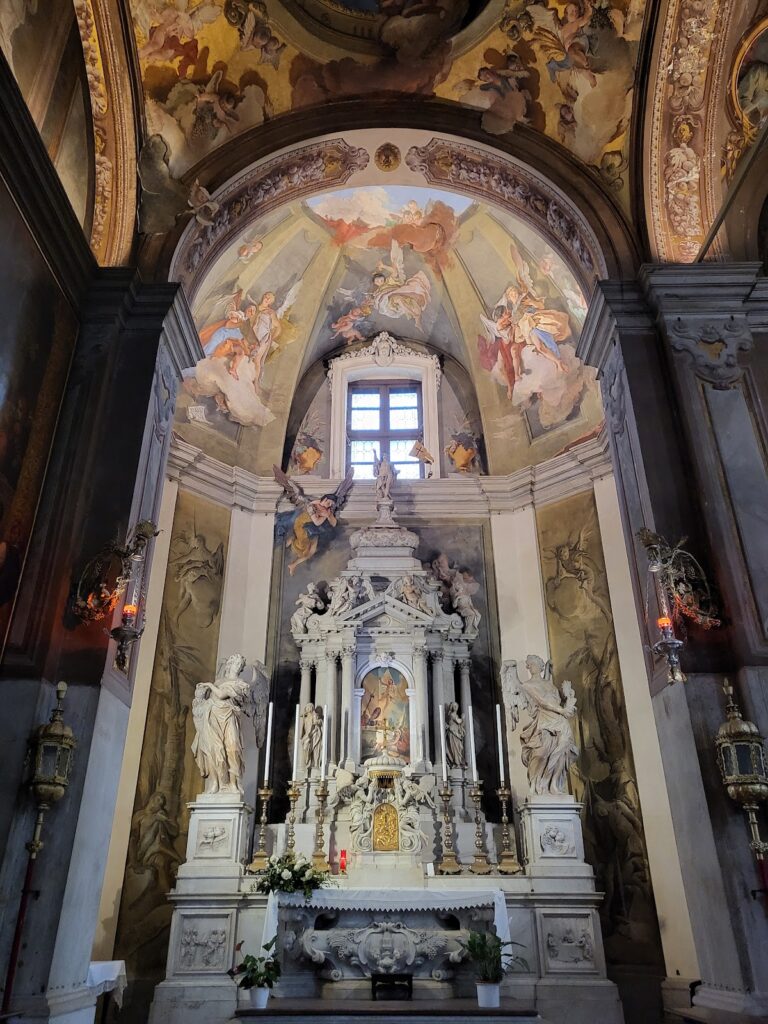
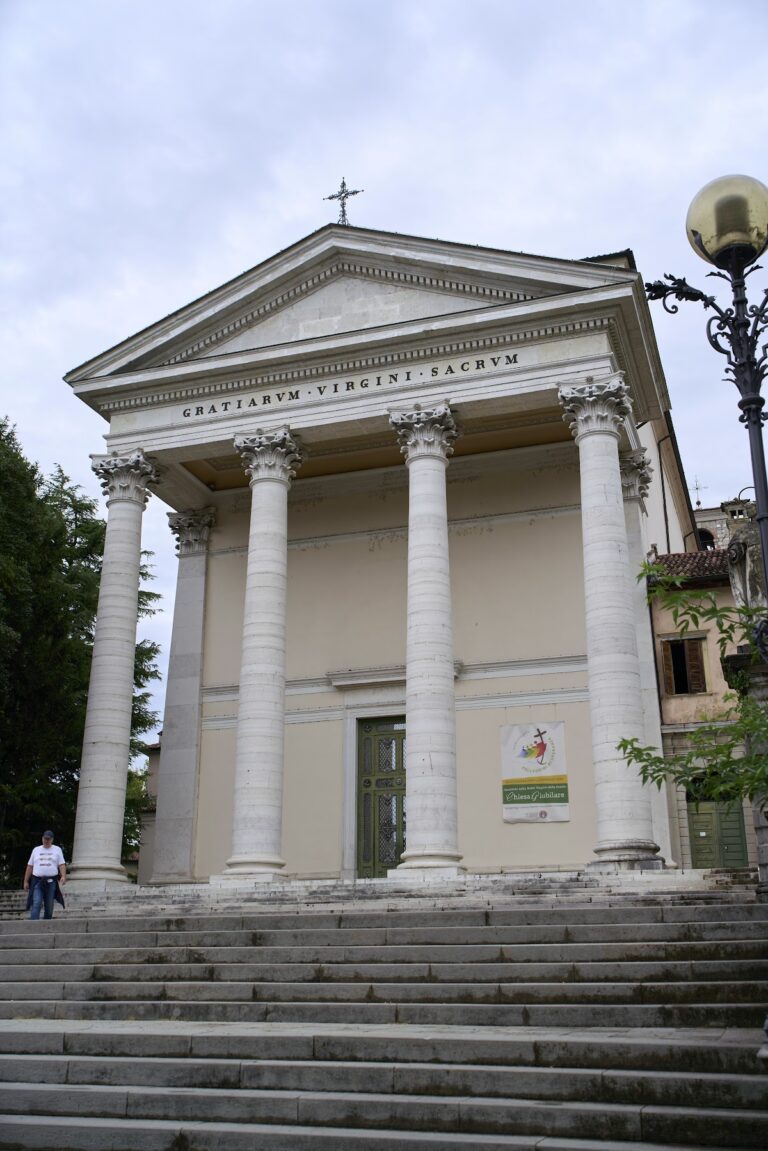
An angel is associated with the bell tower of the Church of Santa Maria di Castello, which forms part of the castle complex.