Cieszyn Castle: A Piast Ducal Residence and Medieval Fortress in Poland
Site at a Glance
- Rating
- 4.7
- Popularity
- Medium
- Country
- Czechia
- Primary era
- Medieval
- External website
- Open
- Eras represented
- Medieval, Early Modern, Modern
- Civilizations
- Habsburg, Holy Roman Empire
- Site type
- Military
- Remains
- Castle
On this page13 sections
History
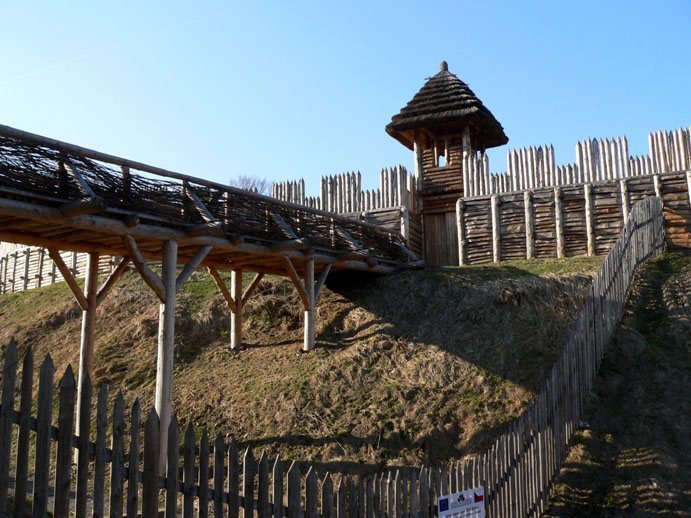
Cieszyn Castle is a historic fortified residence in Cieszyn, Poland, whose medieval development included a Gothic stone castle from the 14th century. Castle Hill was inhabited as early as the 2nd century BC, and a Slavic fortified settlement was established there at the turn of the 9th and 10th centuries. With timber-and-earth defenses, palisades, and ramparts, it served as a support base for Old Cieszyn and as a frontier stronghold on the southern edge of the Polish realm during the reign of Bolesław I the Brave.
Early stronghold and Piast administration
The stronghold was first recorded in 1155. Under the early Piast monarchy, it became the seat of a castellany, a territorial district governed from a fortified center by a castellan. The complex included a palatium, the ruler’s principal residential and administrative building, while the nearby rotunda served as the settlement’s church and religious center.
After the Duchy of Cieszyn was established, intensive rebuilding probably began under its first duke, Mieszko of Cieszyn. His son, Casimir I, and his grandson, Przemysław I Noszak, continued the expansion of the ducal residence. During this development, the stronghold was transformed into a Gothic stone castle. Gothic architecture was the later medieval style associated with pointed arches, vaulting, and vertically emphasized construction.
Expansion and repeated fires
In the 15th century, the castle was enlarged and linked with Cieszyn’s defensive walls. Its political role was illustrated by the visits of prominent members of the ruling elite. In 1412, Duke Bolesław I of Cieszyn hosted the Polish king Władysław Jagiełło. In 1454, the castle accommodated Elisabeth of Austria, the bride of Casimir IV Jagiellon, together with an entourage of about 2,000 Polish and Czech knights and nobles.
Fire repeatedly damaged the castle and town during the 15th and 16th centuries. Fires were recorded in 1484, 1520, 1552, 1570, and 1603. Following the major fire of 1520, Duke Casimir I ordered rebuilding and remodeling. The complex was partially repaired after the fire of 1603, while Renaissance alterations reshaped parts of the castle during the 16th century. A powerful bastion, a projecting fortification designed to support defensive fire, may have been added to the lower castle during this period.
War, destruction, and Habsburg administration
The Thirty Years’ War, a major European conflict fought from 1618 to 1648 among Habsburg forces, Sweden, and other powers, brought repeated military occupation and plundering. Swedish troops occupied Cieszyn Castle in 1645. In 1646, an imperial Habsburg siege caused catastrophic damage when artillery fire struck the complex and miners blew up underground passages. Most residential and service rooms were destroyed, particularly in the lower castle and in part of the upper castle.
Duchess Elisabeth Lukrecia of Cieszyn had taken refuge in Kęty during the war and could not return to the damaged castle as her residence. Until her death in 1653, she lived in town houses near Cieszyn’s market square. The same year brought the extinction of the Cieszyn Piast dynasty, the branch of the Piast family that had ruled the Duchy of Cieszyn. The Habsburgs, who acquired control of the duchy after the Piast line ended, placed the administration of the Cieszyn Chamber in the ruined complex.
After 1659, damaged structures were dismantled for building material. New service buildings and a brewery were erected on the grounds. Another fire damaged the complex in 1720, and an earthquake caused further destruction in 1786. These events left the former ducal residence increasingly fragmented before its 19th-century transformation.
19th-century redevelopment
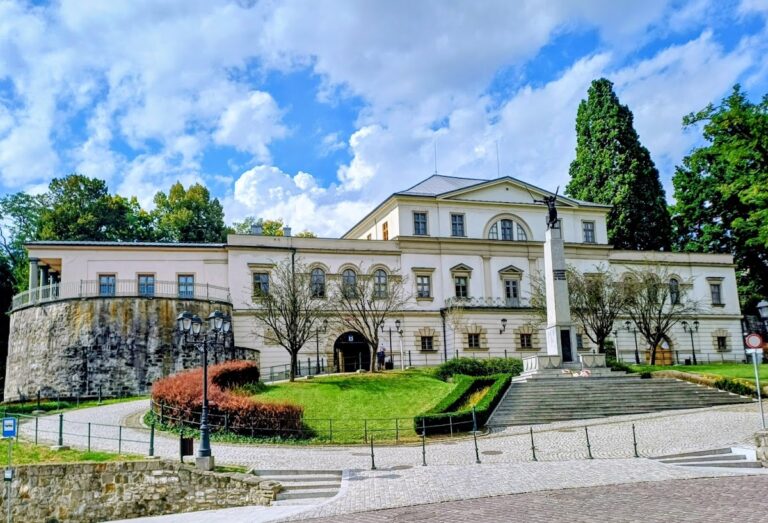
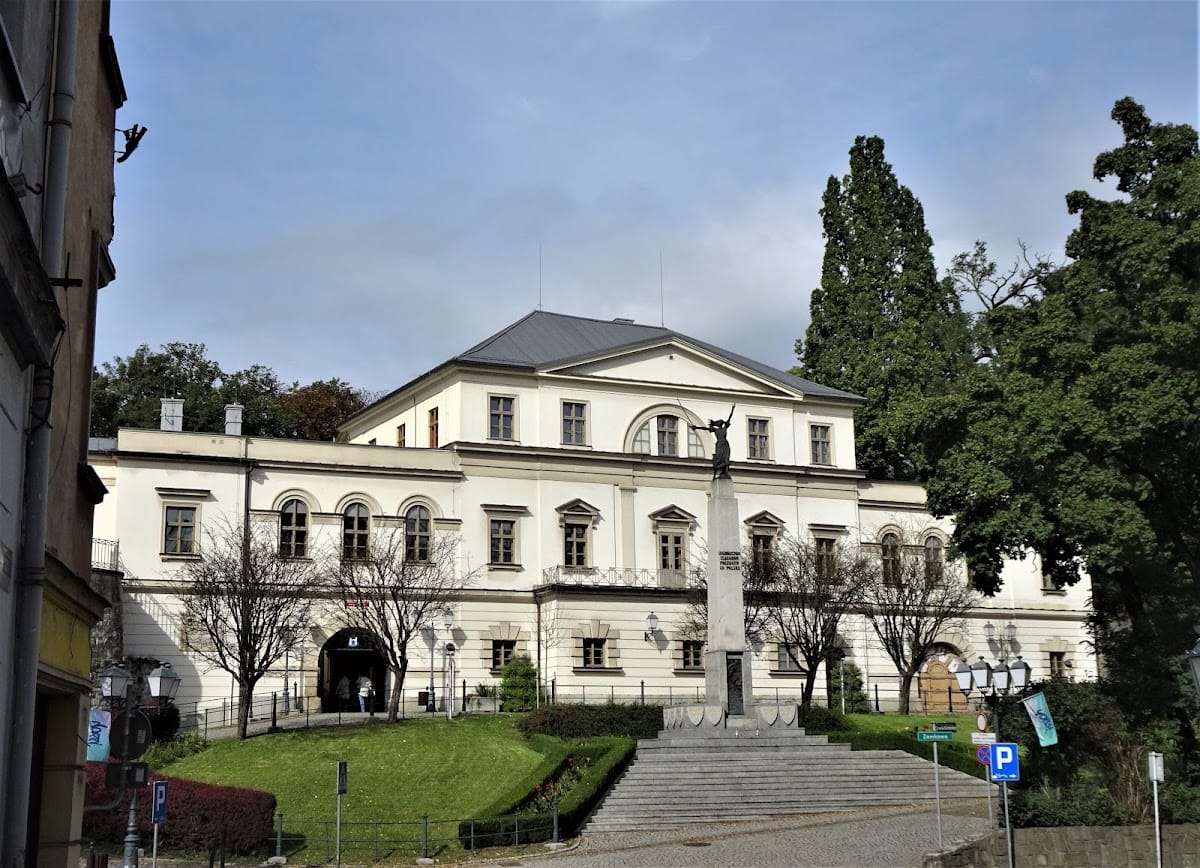
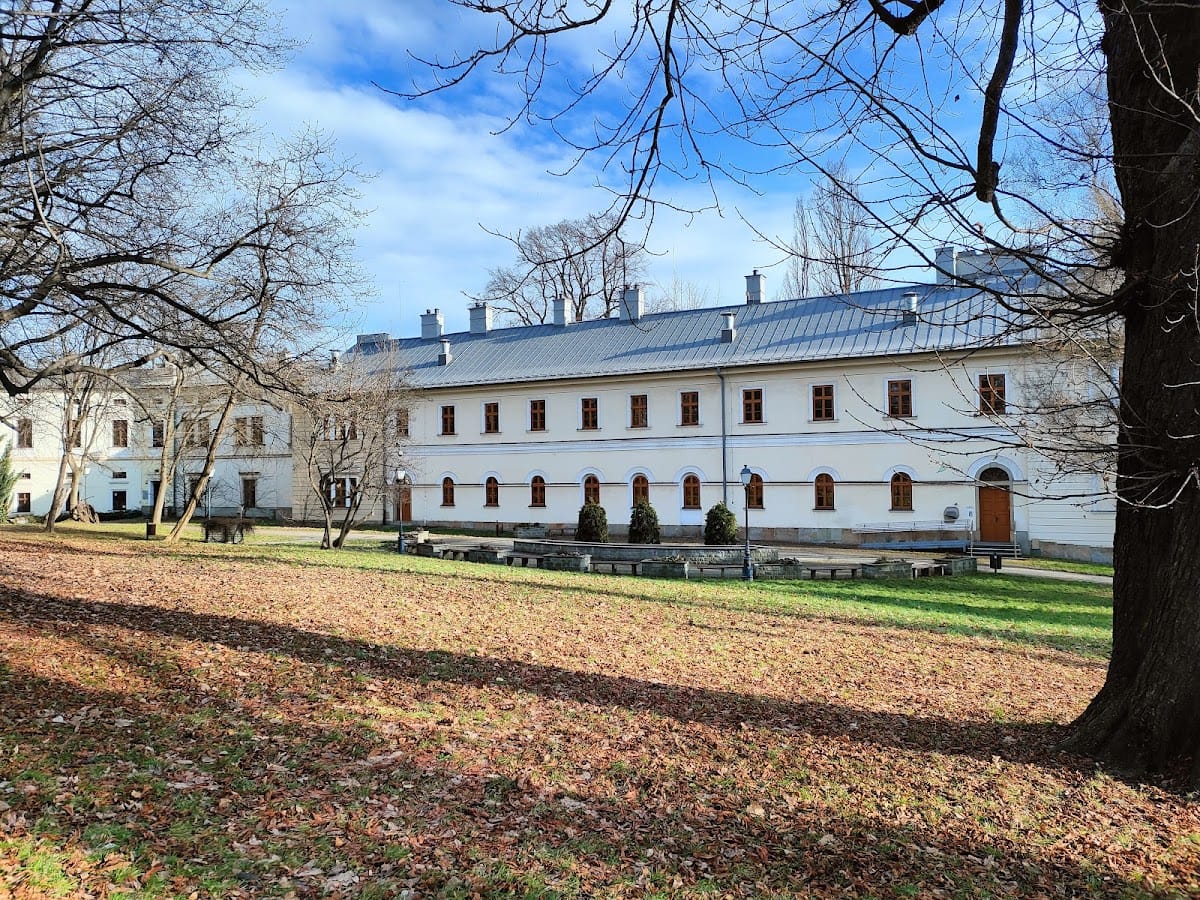
In 1838, Duke Karl Ludwig of Austria-Teschen commissioned the Viennese architect Joseph Kornhäusl to dismantle most of the remaining Piast castle and create a new residence. The dismantling took place in 1839. The castle complex was replaced by a Neoclassical palace, an orangery, and an English-style park containing artificial ruins. A brewery was also established on the former castle grounds. The redevelopment ended the castle’s use as a functioning fortress, although the Piast Tower and Romanesque rotunda were retained.
Later archaeological work revealed fragments of castle walls and additional foundations. Together with the surviving Piast Tower and rotunda, these remains preserve evidence of the Piast ducal residence and its successive medieval and early-modern phases.
Remains
Layout and defensive works
The castle occupied Castle Hill and was divided into an upper castle and a lower castle. The upper section held the residential and representative ducal quarters, while the lower section contained service and economic buildings, servants’ accommodation, an arsenal, stables, a prison, and other subsidiary rooms. The earliest defenses used timber-and-earth ramparts and palisades. From the second half of the 13th century, stone walls began to enclose the hill, and later defenses included triple walls, towers, and bastions. The complex was built with stone, brick, and timber.
Lower castle defenses
The lower castle was a substantial multi-storey structure with underground levels. Round bastions strengthened its northern and southern corners. An entrance from the town crossed a moat by drawbridge and continued over an outer rampart with a palisade. The principal gate stood at the north-eastern corner in a gate building protected by a cylindrical gate tower. The tower was approximately 10 metres in diameter, with walls about 3.4 metres thick, and stood along the circuit wall near the road leading to the castle.
Early towers and upper-castle fortifications
A stone cylindrical tower in the western part of the early stronghold measured approximately 12.5 metres in diameter. Another round tower stood near the former entrance to the upper castle, whose foundations survive. The upper castle developed around a courtyard enclosed by high ducal buildings, triple defensive walls, towers, and bastions. The main residential buildings were probably positioned immediately west of the Piast Tower.
Surviving principal buildings
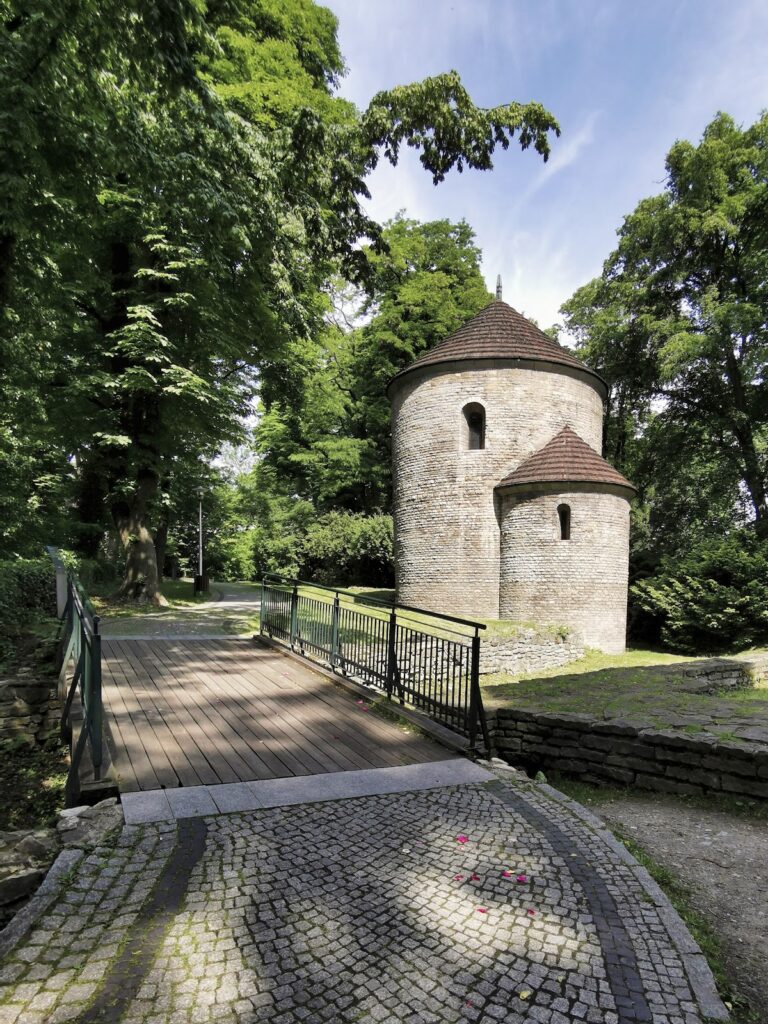
Romanesque rotunda
The Romanesque rotunda of Saint Nicholas was built in the 12th century and is dated to around 1180. A rotunda is a centrally planned, usually circular church. This building stood in the upper-castle courtyard as the castle chapel and religious center. It survives to approximately 15 metres in height.
Piast Tower
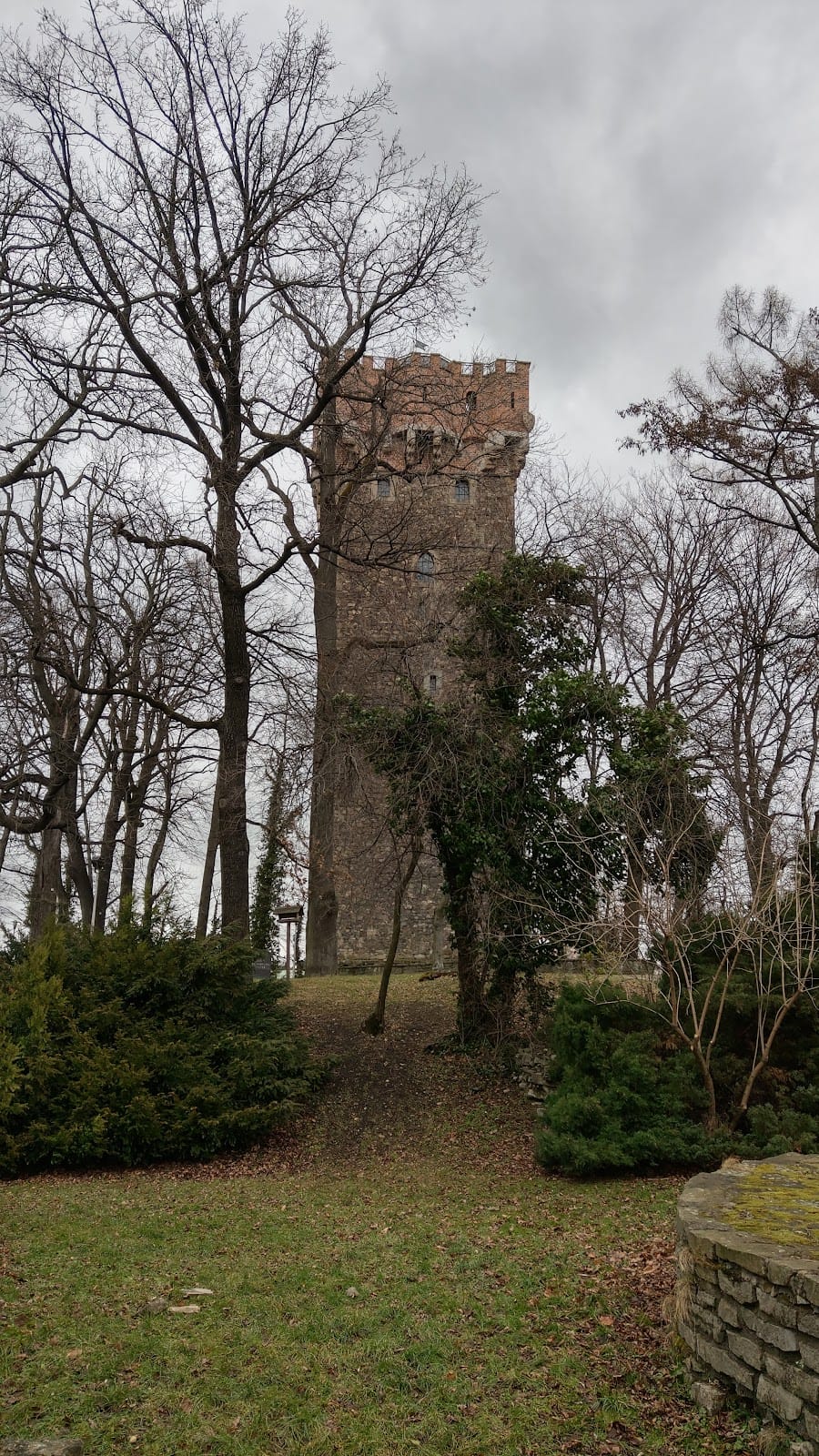
The Piast Tower was begun under Przemysław I Noszak as the principal tower of the Gothic residence. It initially rose about 12 metres and was later increased to eight storeys, reaching approximately 24 metres. Its defenses included substantial machicolations, projecting openings through which defenders could drop or pour materials onto attackers, supported by stone corbels. Four corner turrets and a high tent-like roof completed the defensive design, while the upper corners carried stone coats of arms of the Cieszyn Piasts.
The tower served as the castle’s final defensive refuge during an attack. It also had residential, prison, and watch functions, making it both a defensive and practical part of the ducal residence. It remains the principal surviving secular structure of the castle.
Archaeological remains and later structures
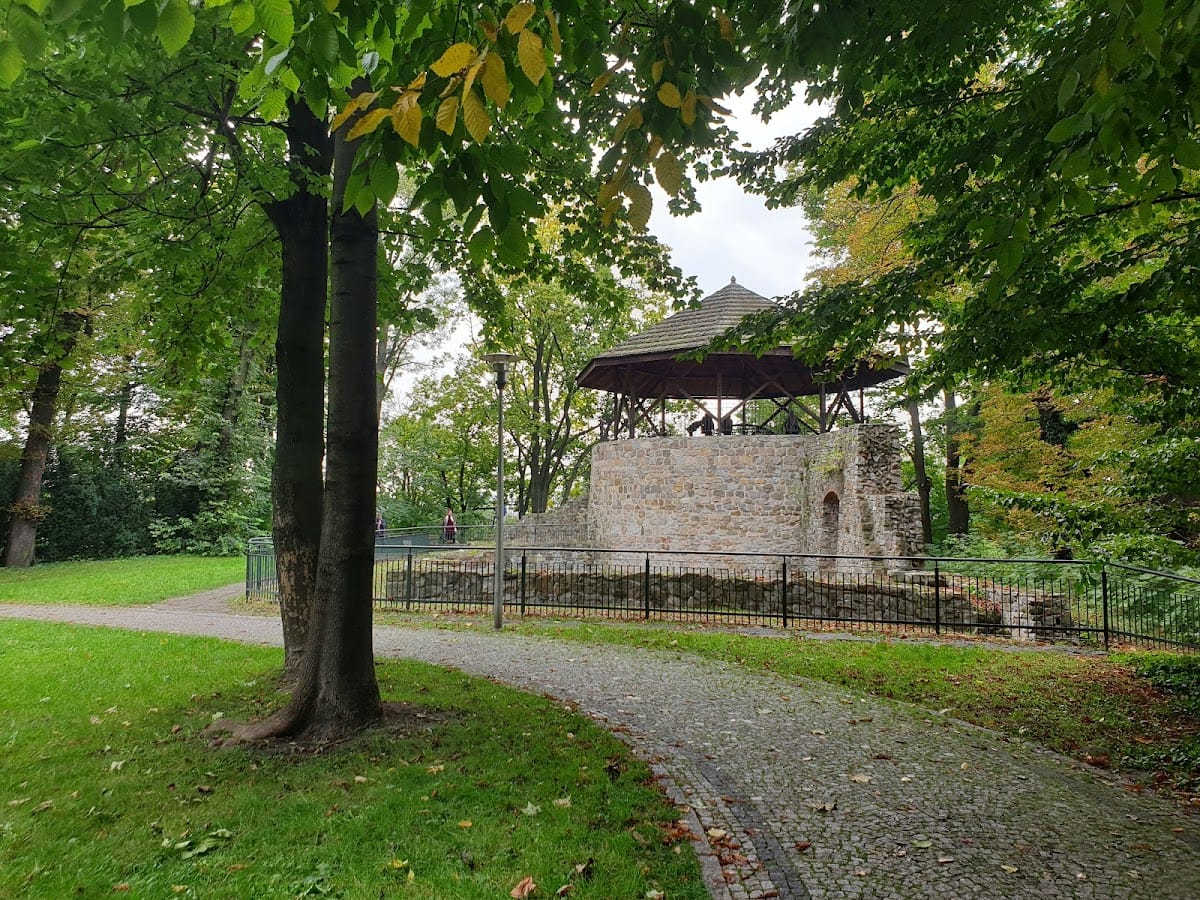
The surviving archaeological remains include the lower part of a round tower, foundations of the gate bastion and entrance passage, sections of the curtain walls, and foundations of former rooms, including the castle kitchen. The remains of a guard tower with a dungeon are roofed to prevent rainwater from accumulating within the structure. The later Habsburg redevelopment is represented physically by the Neoclassical palace, orangery, English-style park with artificial ruins, and 19th-century brewery built on the former castle grounds.