Hukvaldy Castle: A Medieval Fortress and Episcopal Residence in Czechia

Site at a Glance
- Rating
- 4.7
- Popularity
- Medium
- Country
- Czechia
- Primary era
- Medieval
- External website
- Open
- Eras represented
- Medieval, Early Modern, Modern
- Civilizations
- Habsburg, Holy Roman Empire
- Site type
- Military
- Remains
- Castle
On this page18 sections
History
Hukvaldy Castle is a medieval fortress in Czechia, built in the second half of the thirteenth century and first mentioned in 1285. Its foundation is associated with the Counts of Hückeswagen, while Frank of Příbor is identified as its builder. The castle was probably established after Frank of Hückeswagen and his family lost Starý Jičín, which they had previously held. It initially helped defend the trade route between Olomouc and Krakow before becoming the fortified administrative center of the Hukvaldy estate under the Olomouc bishops.
Foundation and Episcopal Administration
Frank received part of the surrounding territory from Olomouc Bishop Bruno of Schauenburg in 1256 and made Příbor his seat. His descendants became known as the Lords of Příbor. The name Hukvaldy probably recalled the family’s former ancestral castle of Hückeswagen, a noble seat in the Rhineland. From the mid-fourteenth century, the bishops of Olomouc developed Hukvaldy into a strongly fortified residence and the administrative center of their ecclesiastical principality and estate.
The castle changed hands several times during the fourteenth century. In 1316 it passed to the Olomouc canons Dětřich and Jindřich of Fulštejn, then to Jindřich of Kytlice in 1321. Jan Volek, an illegitimate son of Wenceslaus II, acquired it in 1337 or 1347. In 1359 Jan Očko of Vlašim secured Hukvaldy for the Olomouc bishopric, and Emperor Charles IV subsequently donated the castle and estate to the bishopric.
A document dated 18 December 1359 lists the estate’s extensive holdings. They included Kozlovice, Tichá, Nová Tichá, part of Závěšice, Manská Sedlnice, Sklenov, the vanished settlement of Petrovice, Trnávka, Chlebovice, Metylovice, and the town of Příbor. A smaller outpost on the Hrádek spur above Myslík probably served as an advanced guard post for Hukvaldy. It disappeared shortly after the Hussite Wars, when the main castle’s defenses were strengthened.
Pledges, Hussite Conflict, and Noble Occupation
During the Margrave Wars, conflicts within the House of Luxembourg that affected control of Moravian territories, Hukvaldy was repeatedly pledged because its holders struggled to finance or maintain its defenses. Mikuláš of Rýzmburk pledged it to Jobst of Volfsberg in 1389 and to Jakub Ščenět of Bělín in 1390. In 1400 Bishop Jan XI Mráz pledged the castle to Emperor Sigismund of Luxembourg, who immediately transferred the pledge to Juro of Messenpek, castellan of Orava Castle. Bishop Lacek of Kravaře tried to redeem Hukvaldy, but died in 1408 before completing the effort.
The Hussite Wars, the fifteenth-century religious and political conflicts associated with the followers of Jan Hus, disrupted the surrounding territory. Armies led by Sigismund Korybutovič and the Polish King Władysław passed through the region in 1422. In 1428 Bishop Jan XII Železný pledged Hukvaldy to Duke Bolko of Falkenberg. Upper-Silesian Hussites seized the castle in 1434. Later that year Jan Tovačovský of Cimburk bought it, and it subsequently passed to Mikuláš Sokol of Lamberk, Sigismund of Luxembourg, and Jan Čapek of Sán.
Jan Čapek of Sán acquired Hukvaldy in 1438, made it his second residence, and launched raids from the castle into Poland, Hungary, and Austria. He improved its fortifications and stationed a permanent garrison there. After his death in 1452, the estate passed to his son-in-law Jan Talafús of Ostrov.
Late Fifteenth-Century Reconstruction
King George of Poděbrady bought Hukvaldy in 1465 and sold it in 1466 for 7,000 gold coins to Bishop Tas, also known as Protasius, Černohorský of Boskovice. Tas owned one quarter of the castle, while the rest belonged to his brothers Jindřich Jičínský, Beneš, and Dobeš of Boskovice. Reconstruction began in 1469, when the castle was being prepared for use as a bishop’s residence.
When Tas changed sides in 1476, moving from the supporters of George of Poděbrady to the Catholic side, royal forces attacked Hukvaldy. After Tas died in 1482, Dobeš continued the reconstruction with greater emphasis on defense. He spent heavily on the western side between 1486 and 1488. Following Dobeš’s death in 1493, Beneš of Boskovice transferred military forces from Ostrava to Hukvaldy in 1495, making it the only fortress in the region.
In 1497 Beneš agreed that the Olomouc bishop could purchase the castle for 6,000 gold coins. Beneš died in 1507, and Hukvaldy passed to his daughter Kateřina. Bishop Stanislav Thurzo finally acquired it in 1511. The castle returned to the permanent control of the Olomouc bishops in the early sixteenth century and remained connected with the bishopric until nationalization in 1948.
Sixteenth-Century Fortification and Episcopal Use
Fearing Ottoman attacks, Thurzo continued the defensive works, which were completed around 1537. The approach road was moved to its present position, while a gate tower, bastions, and guardhouses were added. A bastion is a projecting fortification that allows defenders to cover walls and approaches with flanking fire. In 1544 Hukvaldy became a land-border fortress whose duties included maintaining patrols.
The estate was gradually consolidated with the neighboring Místek-Frýdlant estate. An agreement of 1522 between the bishop and Duke Casimir of Cieszyn provided for its future attachment to Hukvaldy. The castle was temporarily pledged to Jeroným Syrakovský of Pěrkov in 1545, but returned to Bishop Marek Khuen in 1553.
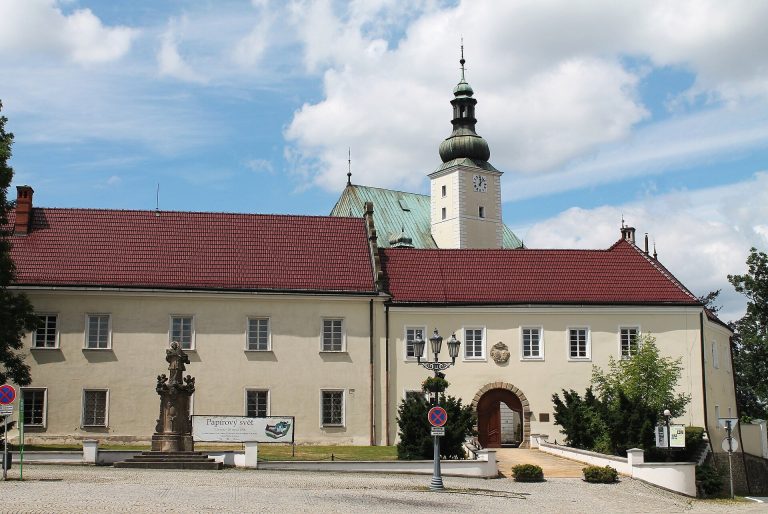
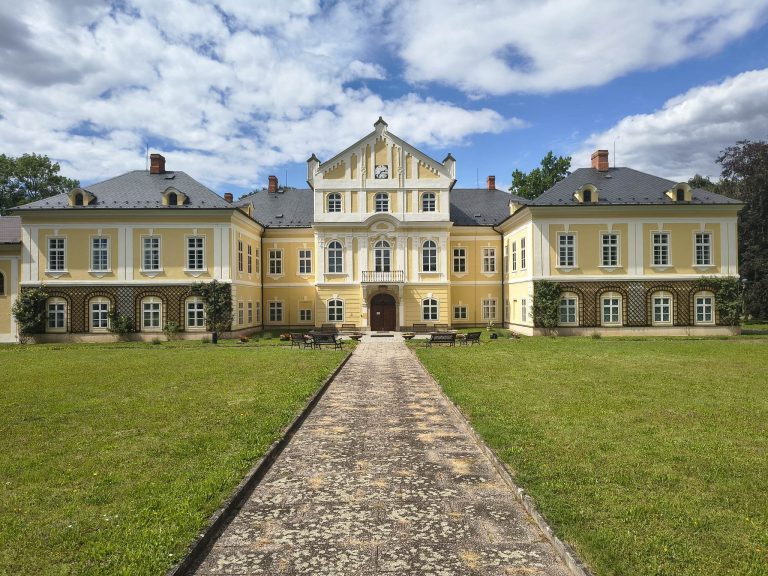
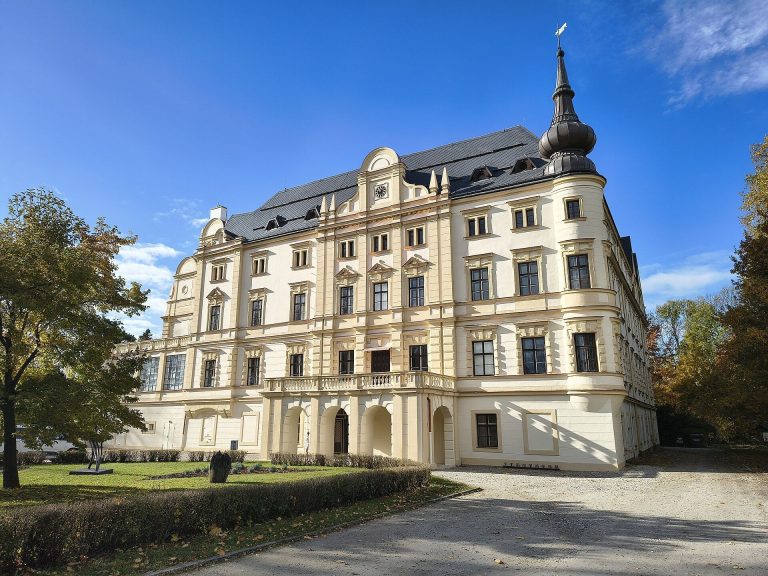
Under Marek Khuen, Hukvaldy underwent major modernization. A large palace, known as the château, was built in the courtyard, probably under the direction of the Italian master Gabriel Vlach of Příbor. The bishopric also established a prison for priests in the western wing. The castle’s role therefore extended beyond military defense to episcopal residence, estate administration, and confinement.
Water supply remained a persistent problem. A well was ordered in 1560, and a second was begun in 1580 and completed the following year. It too proved insufficient, so miners from Kutná Hora were brought in during 1589 to excavate a third well. Work on the outlying fortifications continued at the same time.
Prison, Refuge, and Wartime Stronghold
Hukvaldy served as both a prison and a place of refuge. In 1585 Bishop Stanislav Pavlovský ordered the arrest and transfer of Canon and Dean Jan Filopon Dambrovský of Dambrovka, who was accused of poisoning three bishops. He was investigated at Hukvaldy, temporarily moved elsewhere in 1586, returned briefly in 1587, and was later taken away and beheaded. In 1587 Bishop Pavlovský himself sought refuge at the castle during a plague outbreak.
In 1588 about one hundred hajduks, armed irregulars or infantrymen, were stationed at Hukvaldy to protect the estate from Tatar and Cossack attacks. After the bishop’s death in 1598, his administrator Valentin Pavlovský fled to Silesia when financial mismanagement was discovered. Bishop Franz von Dietrichstein became the owner in 1599. In 1602 he summoned the Estates’ army to defend Hukvaldy against a threatened invasion by Bocskay’s forces from Hungary.
During the Thirty Years’ War, the castle resisted a nine-month Danish siege in 1626 and later endured a Swedish blockade. Hukvaldy is described as never having been conquered. Its military history thus continued long after its transformation into an episcopal administrative center.
Fire, Abandonment, and Conservation
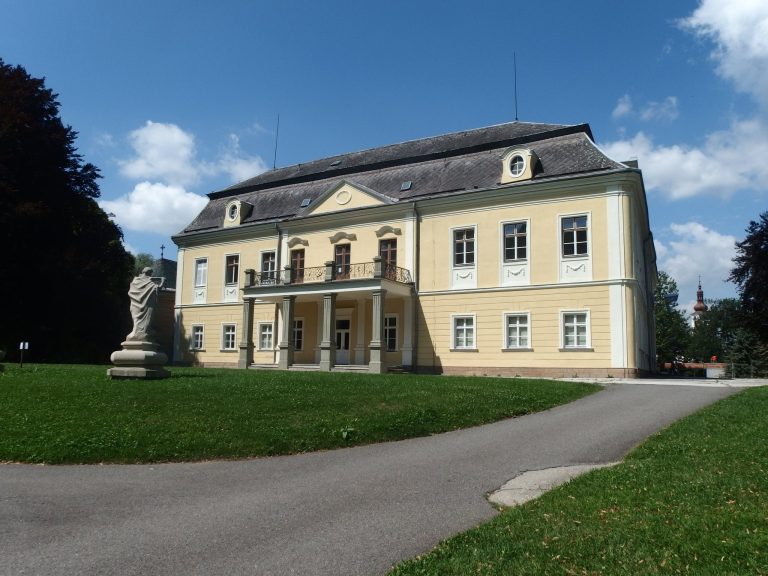
Administration of the Hukvaldy estate moved to a newly built small palace in 1760. On 5 October 1762, lightning set fire to the castle’s wooden buildings. They burned to the ground, destroying the archive. Hukvaldy was then abandoned, and its ruins deteriorated until the twentieth century.
The castle chapel and the wider ruin were restored and conserved repeatedly, especially during the nineteenth century and in later modern campaigns. Repair and conservation work has continued into the present. The state nationalized Hukvaldy in 1948, and the castle complex has been protected as a cultural monument since its registration in 1958.
Remains
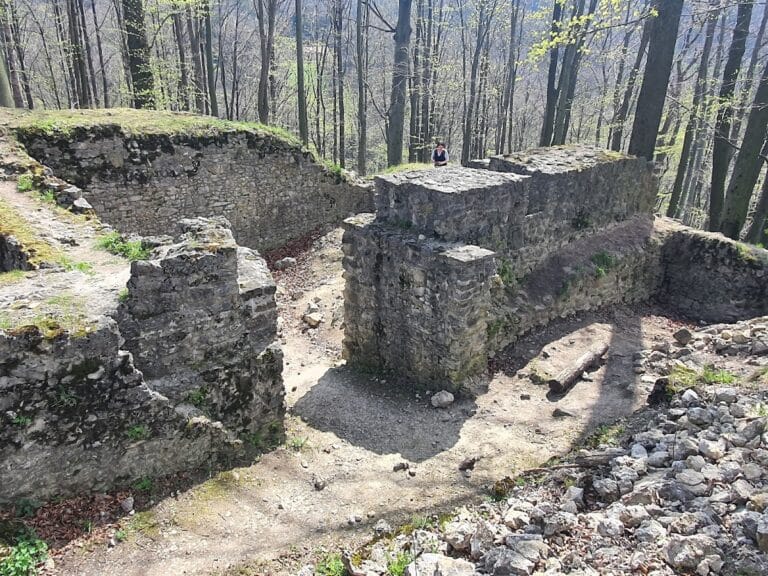
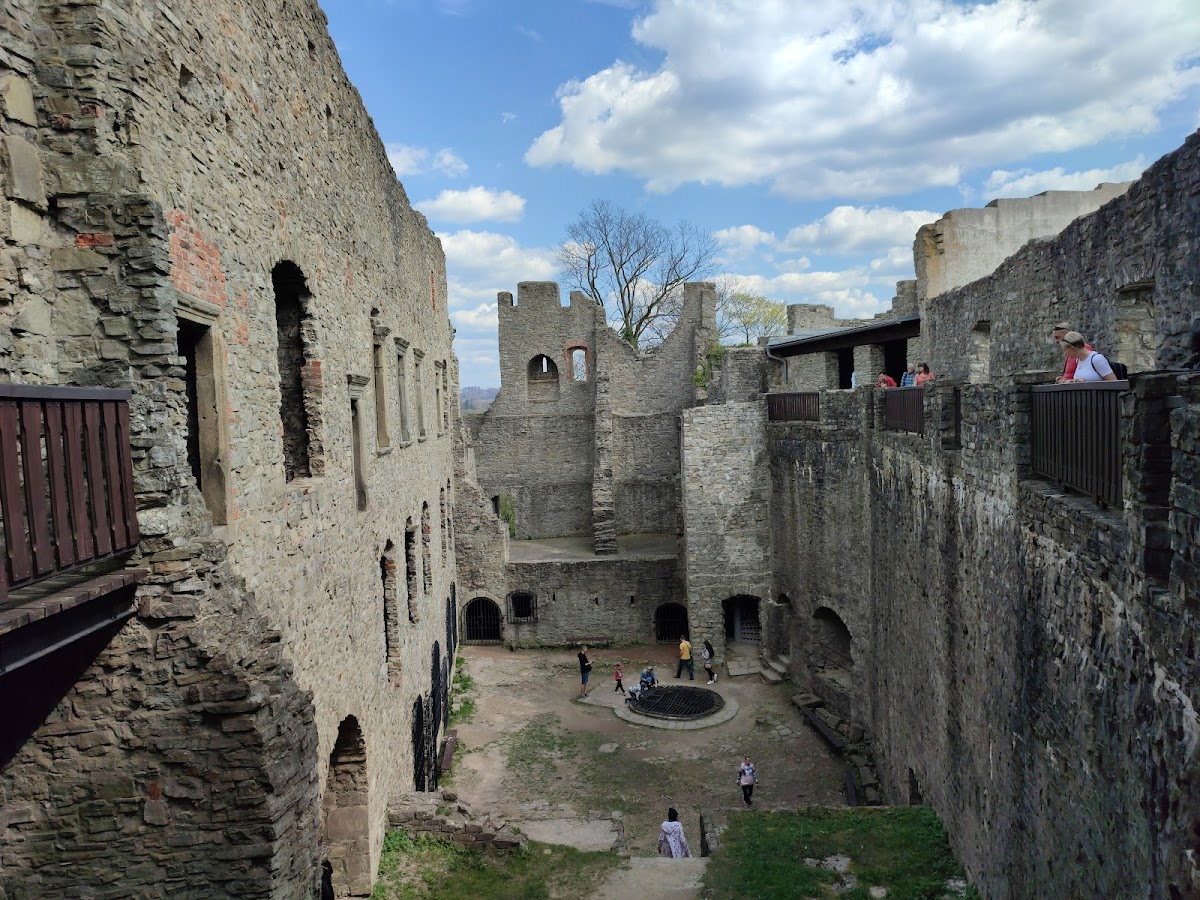
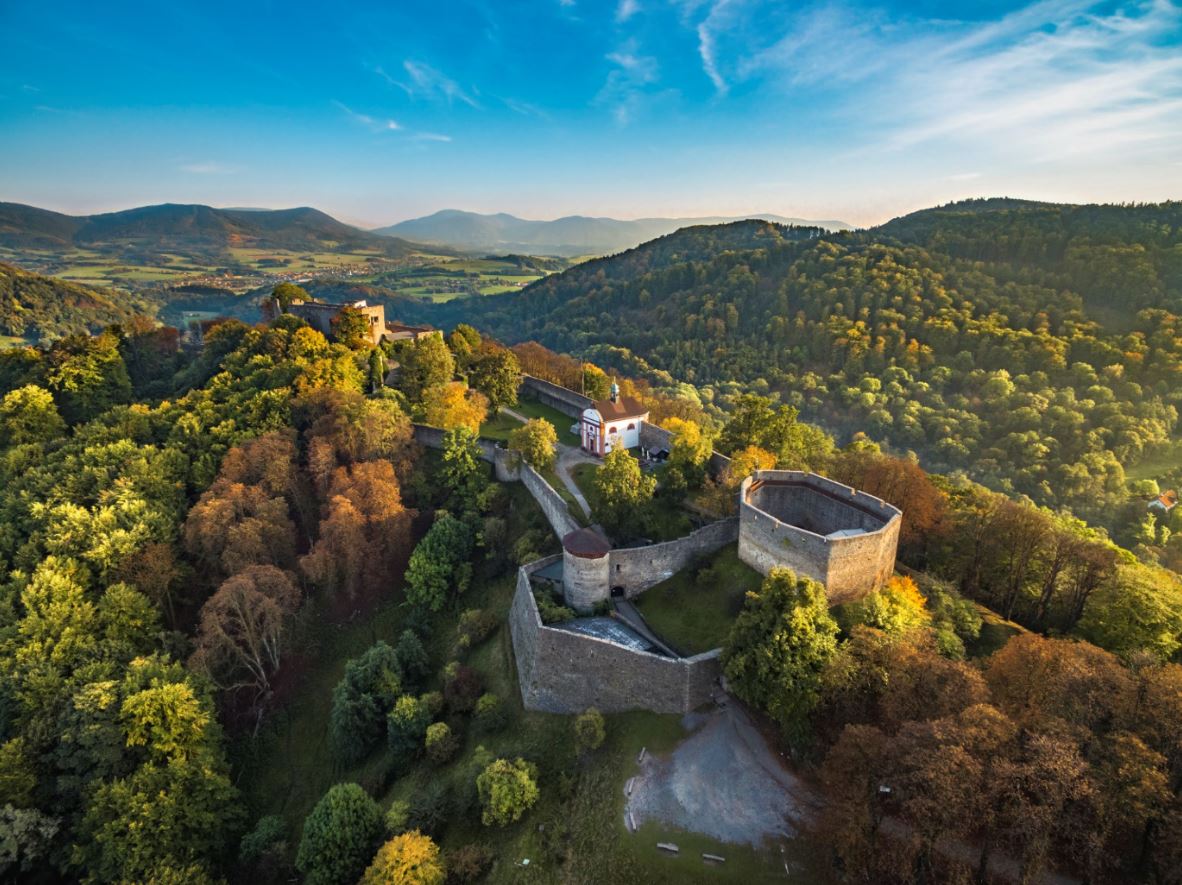
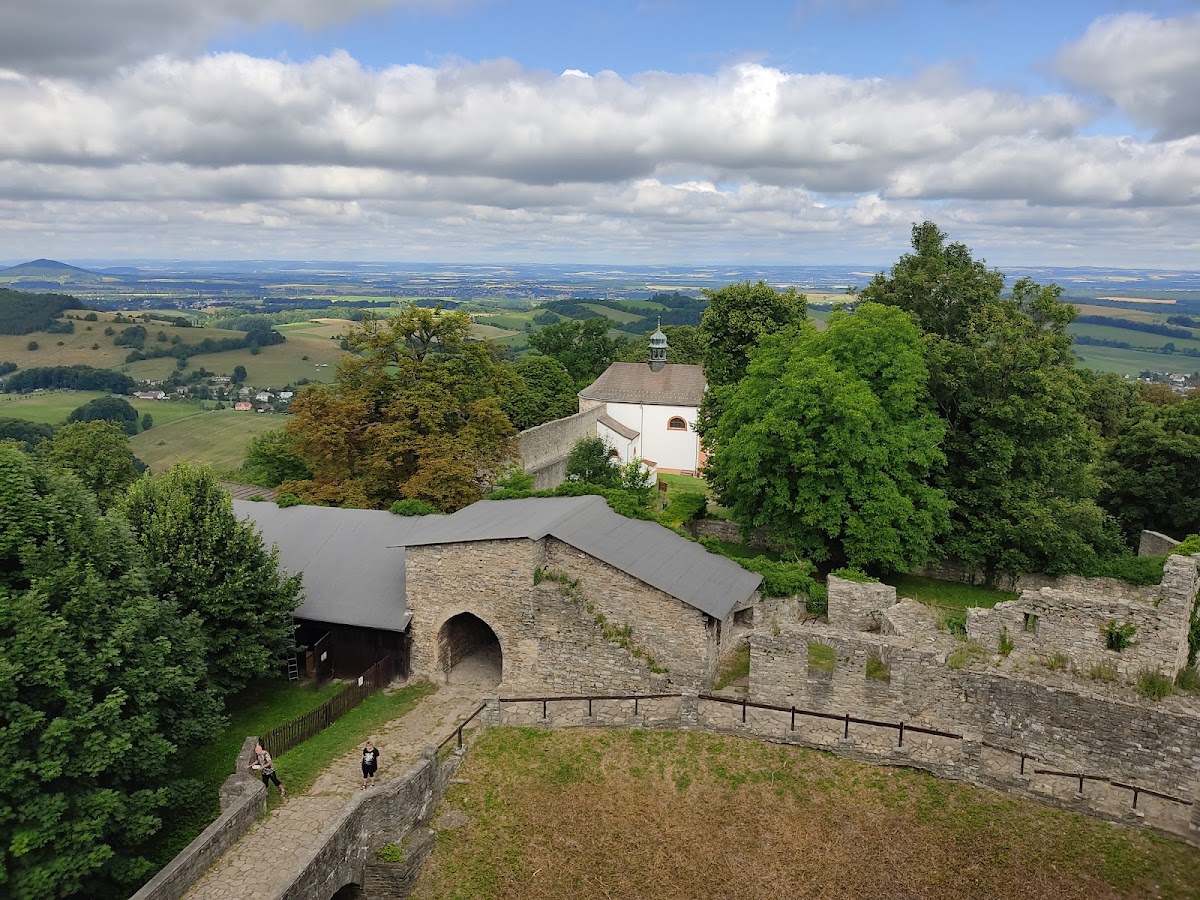
Hukvaldy occupies the summit of a strongly elongated hill above the Ondřejnice valley in the Palkovické hůrky hills, within the foothills of the Beskids. The complex extends for about 320 meters and has a perimeter of approximately 800 meters. Its defensive walls, about 2 meters thick, are reinforced by nine towers. The castle is arranged in six successive sections, each entered through a separate gate, with the second gate leading to the main courtyard and now serving as the principal entrance.
Outer Fortifications
Kulatina Tower
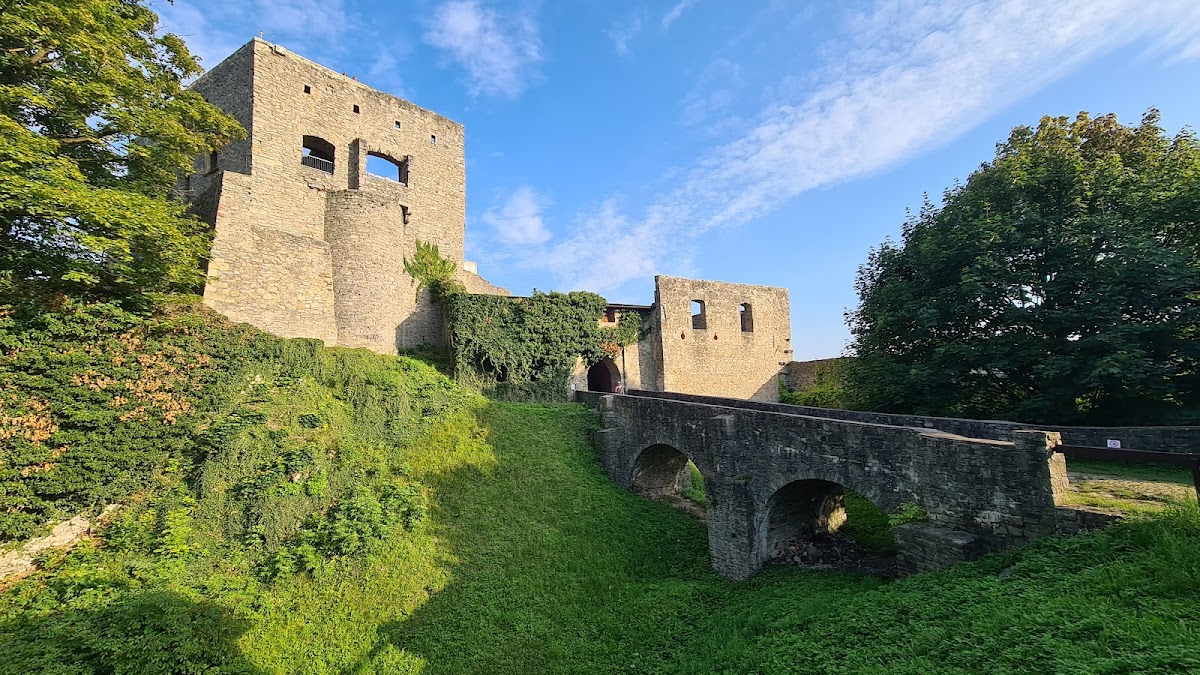
A massive tower above the main gate is known as Kulatina. Rising about 34 meters and measuring approximately 25 meters in diameter, it is described as the oldest part of the defensive complex and dates from the thirteenth century. The site also includes a hilltop tower, or motte, meaning a raised defensive earthwork or hill, together with the remains of an interior portal bearing a decorative motif.
Bastions and Western Defenses
The final section is protected by two corner bastions. The western defenses were particularly strengthened in the late fifteenth century, during the reconstruction carried out after the Boskovice family acquired the castle. Further advanced fortifications were added in the sixteenth century, when Hukvaldy was adapted as a land-border fortress.
Courtyard Buildings and Chapel
Saint Andrew’s Chapel
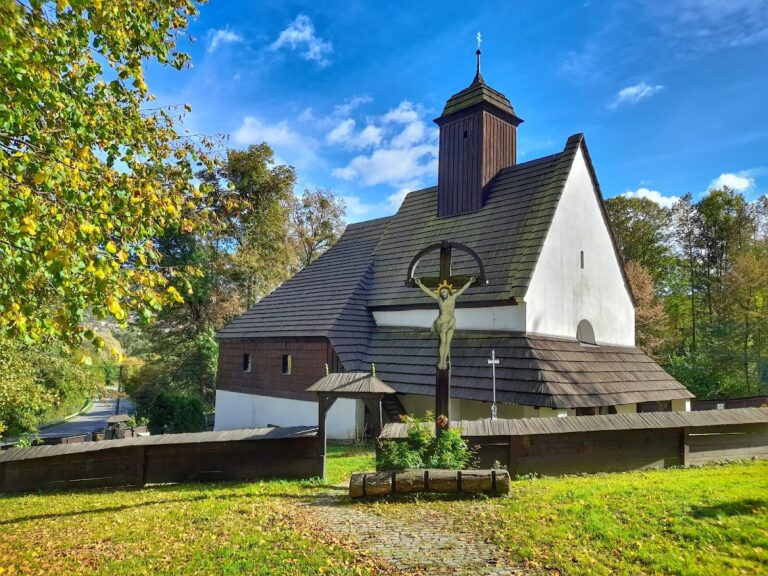
A Renaissance chapel dedicated to Saint Andrew stands in the main courtyard. Built in 1602, it is described as the best-preserved part of the castle. Its acoustics have supported concerts and wedding ceremonies. Saint Andrew, one of the apostles of Jesus, was the traditional patron to whom the chapel was dedicated.
Palace and Prison Wing
The courtyard contained a large sixteenth-century palace, or château, created during the modernization under Bishop Marek Khuen. The western wing held a prison for priests, with prison areas identified as Barborka and U Zámečníka. These buildings preserve the castle’s later role as an episcopal residence and place of confinement as well as a military stronghold.
Stonework and Water Supply
Building Stone
Stone for the castle buildings and defenses came from a sandstone quarry at Kazničov, which remained in operation until the nineteenth century. Kazničov sandstone was also used in buildings at Rychaltice, Příbor, Místek, and Hukvaldy.
Wells
The castle’s water infrastructure included at least three wells. One sixteenth-century well reached approximately 150 to 170 meters in depth and is partly filled in. It was equipped with a manually operated lifting wheel. A wooden palisade around one well was replaced by a stone enclosure in 1592, built by Bernard of Ostrava.
Park and Natural Setting
An English-style park of more than 450 hectares surrounds the castle. A nineteenth-century wall encloses the grounds, which are entered through a Neo-Baroque gate. The park contains old oaks, limes, elms, and chestnut trees. Its enclosed grounds support mouflon, fallow deer, and sika deer, while ravens and black storks nest among the surrounding rich flora and fauna.