Stickhausen Castle: A Trade Route Fortress in Germany


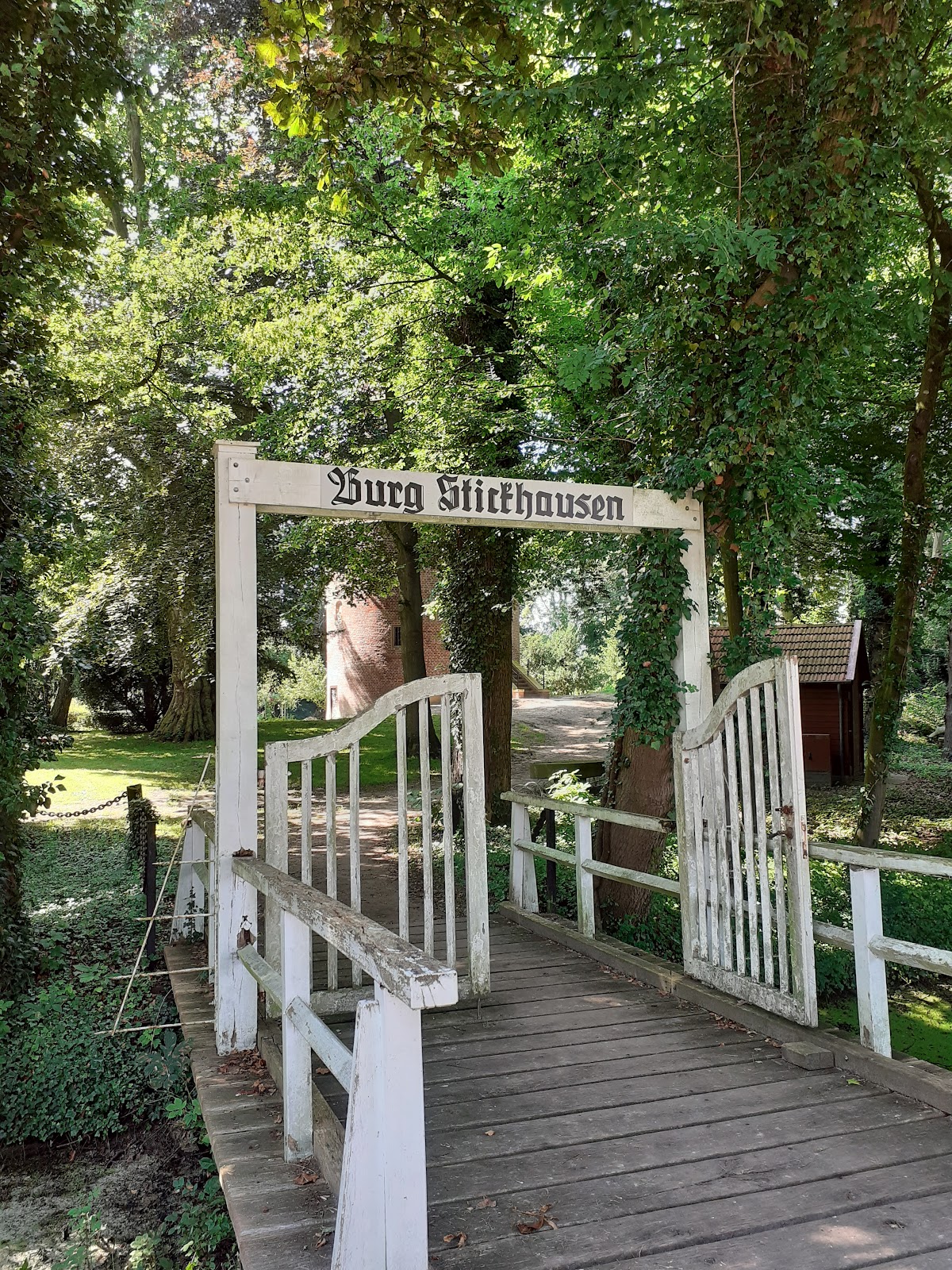
Site at a Glance
- Rating
- 4.4
- Popularity
- Low
- Country
- Germany
- Primary era
- Medieval
- External website
- Open
- Eras represented
- Medieval, Early Modern
- Civilizations
- Holy Roman Empire
- Site type
- Military
- Remains
- Castle
On this page12 sections
History
Stickhausen Castle is a fortified site in Germany, on the western edge of Stickhausen in the district of Detern. The Hanseatic city of Hamburg built it around 1435 to protect its westward trade routes. Despite its later connection with East Frisian rulers, the castle was never the seat of an East Frisian chieftain.
Hamburg and the East Frisian border
After intense conflicts, Hamburg pledged the castle around 1453 to Ulrich I, an East Frisian chieftain who later became a count. He enlarged it as a replacement for the older Schlüsselburg border fortress at Detern. Schlüsselburg had guarded access to East Frisia against the neighboring County of Oldenburg, but repeated destruction and rebuilding eventually reduced its importance, and it disappeared from documentary records.
Count Edzard I added the surviving round tower around 1498. During the Saxon Feud, a sixteenth-century conflict involving Saxon and East Frisian political forces, a coalition of princes led by George, Duke of Saxony, captured the castle and held it for three years.
Artillery fortifications and political change
Following the Reformation, Countess Anna commissioned a fortified gun platform in 1558. Stone from the abandoned Barthe Abbey and from Uplengen Castle was used in its construction. Count Enno II had ordered Uplengen Castle demolished in 1535. Further construction took place under Count Johann II, who died at Stickhausen Castle in 1591.
The castle was repeatedly contested during the Thirty Years’ War, the European conflict fought from 1618 to 1648 whose armies occupied fortresses throughout the German territories. Ernst von Mansfeld’s mercenary troops held Stickhausen from 1622 to 1624 and strengthened it with several outworks. East Frisian counts briefly recovered control after their withdrawal, but Hessian troops occupied the castle from 1637 to 1640 and completed its conversion into a fortress by adding a fortified secondary position.
Demolition, administration, and preservation
Prussia took control of East Frisia in 1744, after which Stickhausen no longer served a military purpose. Frederick the Great, Frederick II of Prussia, ordered the fortress demolished. The large round tower and parts of the fortifications survived.
The former gatehouse was converted and enlarged in 1822 for use as a bailiff’s office, the administrative workplace of a district official. The round tower later served as a prison and as the bailiff’s residence. The former eastern secondary position gradually developed into the village of Stickhausen.
The castle entered private ownership in 1885. Artillery fire damaged the tower during the Second World War, and initial efforts to secure the building began in 1951. A heritage and folk-culture museum was formerly housed in the tower. After a long period when the tower could not be visited, the Samtgemeinde Jümme, a municipal association in Lower Saxony, purchased the site in 2019. The Stickhausen Castle Association, founded the same year, began establishing a museum, while extensive exterior conservation continued through August 2020.
Remains
Stickhausen Castle stands beside the Jümme on the western edge of the present settlement. Together with the nearby Leda, the river belongs to the Leda-Jümme area, known as East Frisian Mesopotamia. These waterways supported east-west trade during the Middle Ages and the early modern period. The name Stickhausen combines words meaning “stick” or “pole” and “house,” referring to a house strengthened with palisades.
Castle core and surviving tower
Round tower
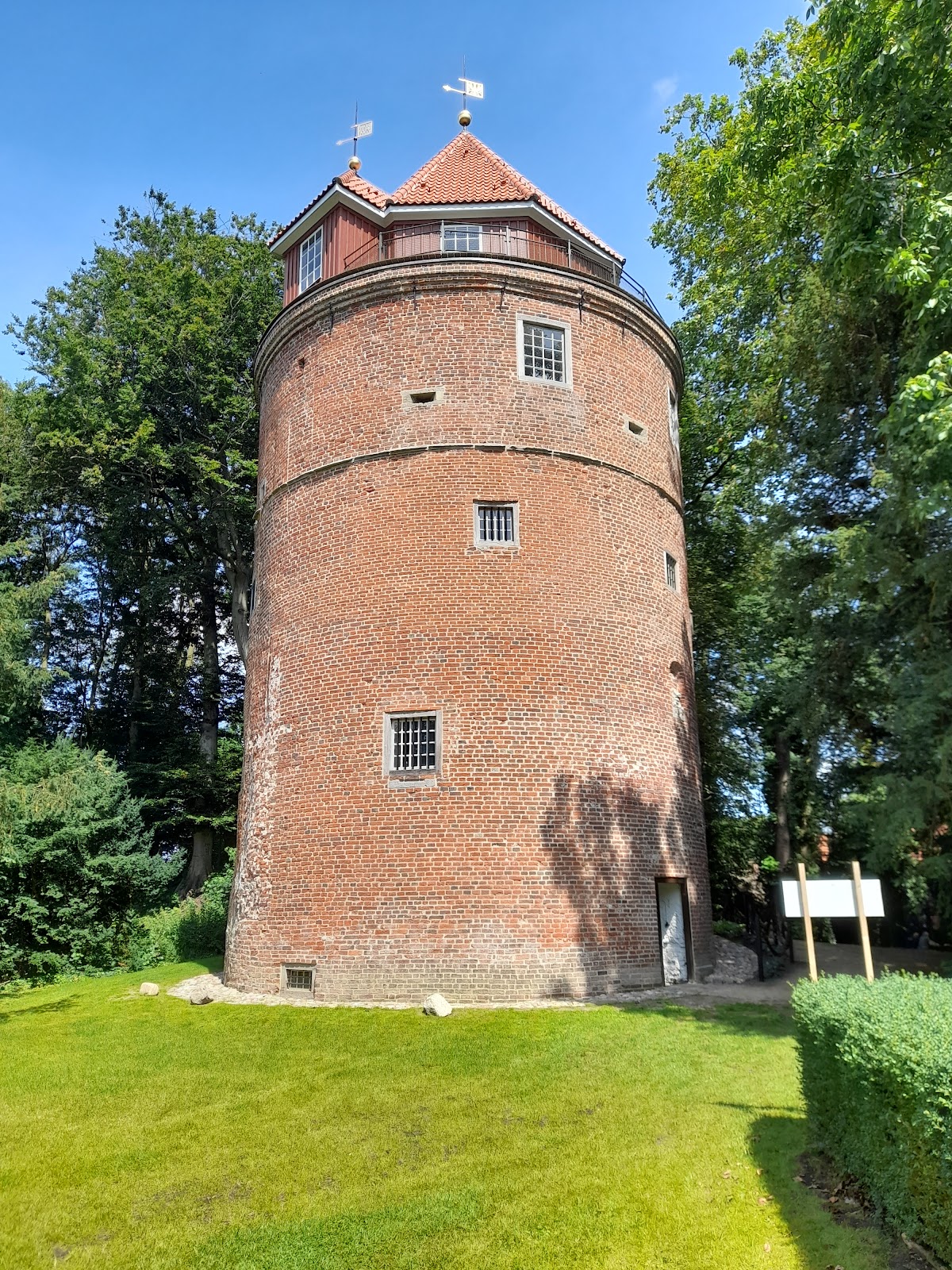
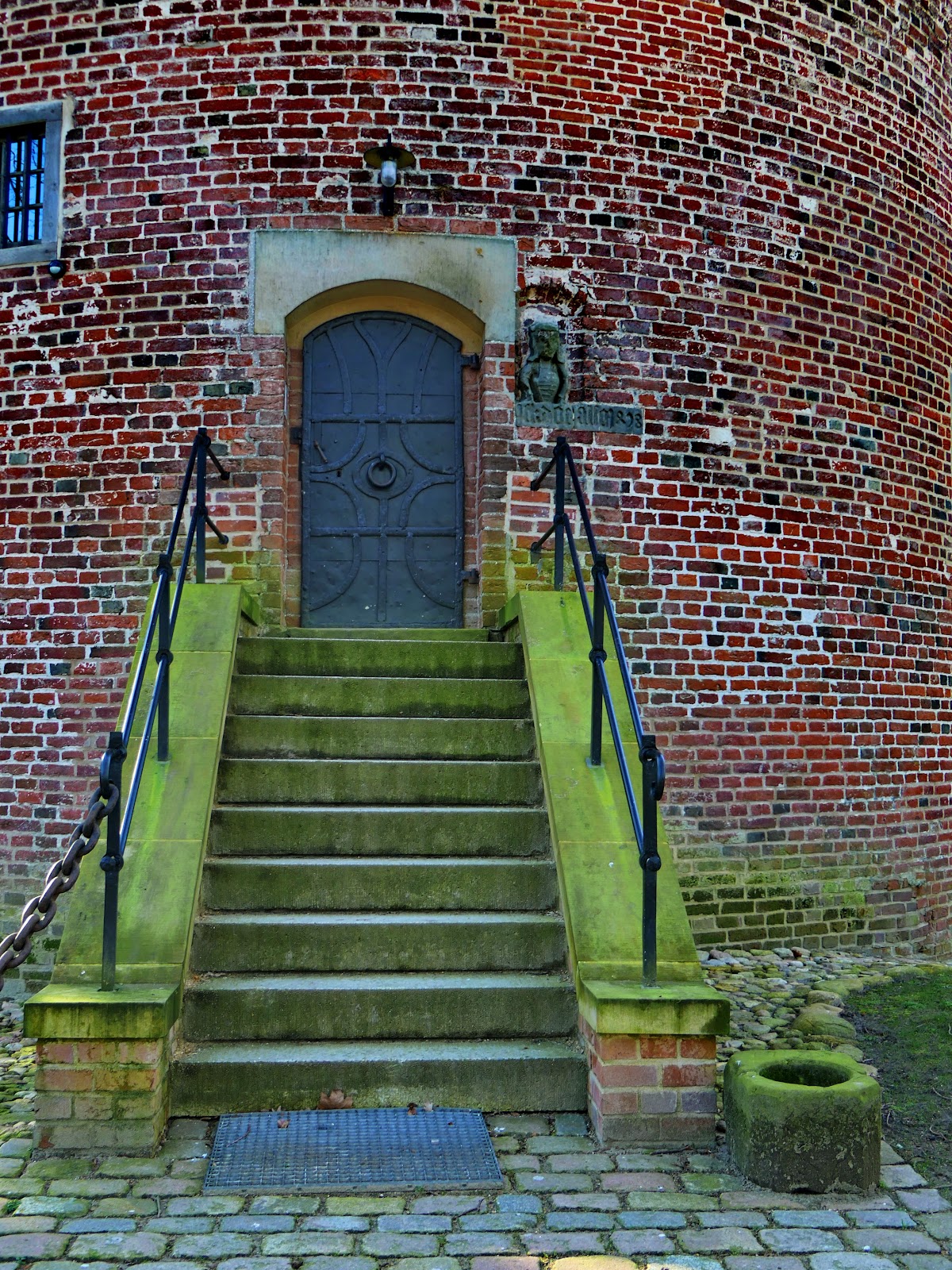
The principal surviving building is the round tower erected around 1498 under Count Edzard I. It is the clearest remaining element of the former fortress, whose other physical evidence consists mainly of traces of the ramparts. The tower is associated with a coat of arms, and its exterior fabric underwent extensive conservation through August 2020.
Former gatehouse
The original castle included a stone house surrounded by a moat, together with a bailey, an enclosed outer area for service and economic buildings. The bailey contained a gatehouse and farm buildings, while ramparts and a second moat enclosed the wider complex. The former gatehouse bears an exterior coat of arms dated 1578. Its upper floor once contained a garrison church, and the surrounding bailey also included stables, a peat barn, and a burgrave’s house.
Fortress works
Dwenger and artillery positions
The 1558 gun platform, locally called a Dwenger or zwinger, formed a polygonal bastion, a projecting defensive work designed to support fire along the surrounding walls. The fortifications also included a powder tower. During the seventeenth-century expansion, the Dwenger remained part of the main defensive arrangement, which included four artillery positions in the principal fortress.
Ravelin and eastern subwork
A southern ravelin, a detached outwork usually placed before a fortified position, stood between the Jümme and the outer works. The eastern subwork contained barracks, residential buildings, and farm buildings, and included one artillery position. The main fortress itself comprised a three-winged castle with a corner tower, while the older bailey and the Dwenger formed connected parts of the larger defensive complex.
Interior collections and interpretation
The former museum displays in the tower presented several phases of its later use. Ground-floor prison cells contained torture instruments, including a rack and clamps. The first floor reconstructed the living conditions of a prison guard, while the second floor presented the castle’s history. The attic held a collection of birds and bird eggs. A cannon was also kept in the tower, alongside numerous teapots, pots, and similar objects collected mainly between about 1950 and the 1970s.
Nearby sites