Matthäikirche (Leer-Bingum): A Romanesque Lutheran Hall Church


Site at a Glance
- Rating
- 4.6
- Popularity
- Very Low
- Country
- Germany
- Primary era
- Medieval
- External website
- Open
- Eras represented
- Medieval, Early Modern, Modern
- Civilizations
- German, Holy Roman Empire
- Site type
- Religious
- Remains
- Church
On this page11 sections
History
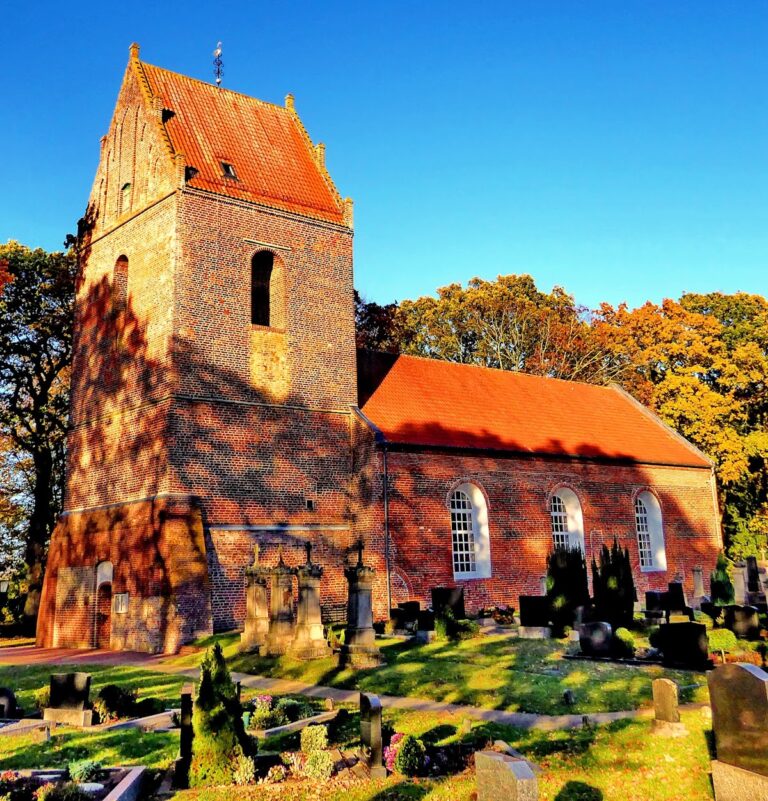
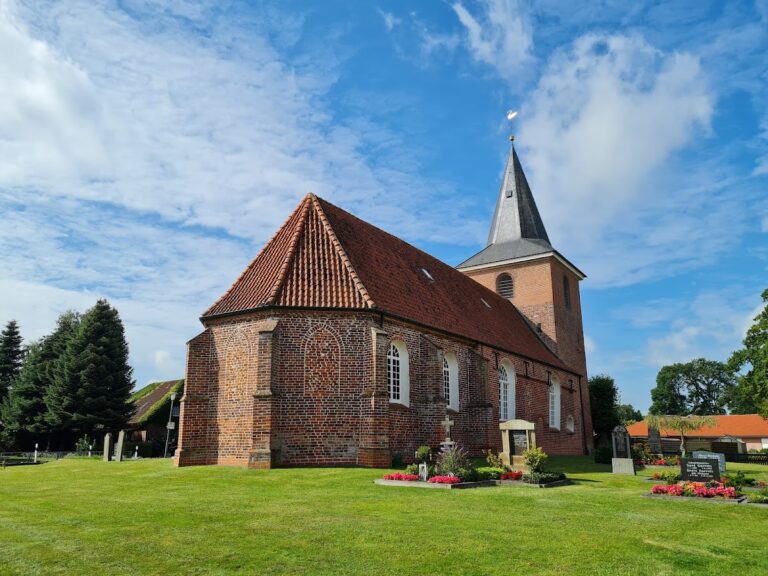
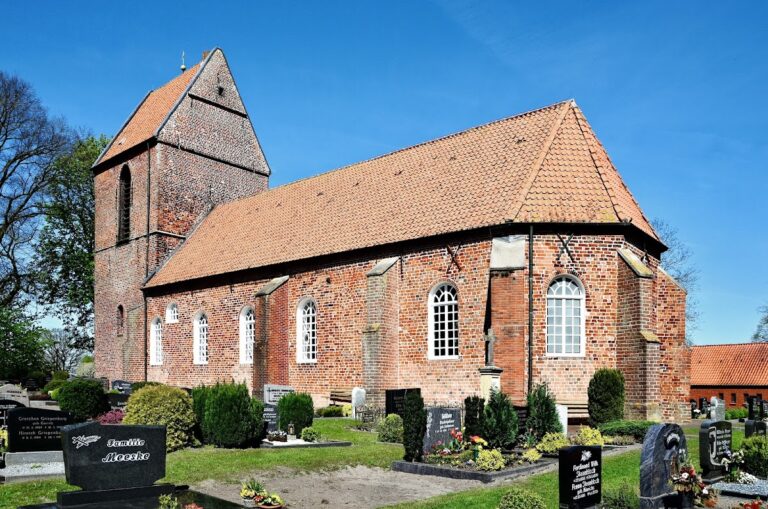
The Matthäikirche (Leer-Bingum) is an Evangelical Lutheran church in Germany, built in the first quarter of the thirteenth century as a Romanesque hall church. Romanesque architecture preceded Gothic architecture and is associated with thick masonry, round arches, and relatively simple geometric forms. The brick church replaced an earlier wooden building and remains dedicated to Matthew, one of the Twelve Apostles and the traditional author of the Gospel of Matthew.
Medieval and Reformation history
During the Middle Ages, the congregation belonged to the Hatzum provostry of the Diocese of Münster. A provostry was an administrative district within a diocese, while the Diocese of Münster was a Roman Catholic ecclesiastical jurisdiction. The congregation adopted Lutheranism around 1525, although most of its members were Reformed. Lutheranism and the Reformed tradition were distinct Protestant confessions that emerged during the sixteenth-century Reformation.
This confessional division produced a dispute over Communion in 1653 and 1654 after a new pastor was appointed. The disagreement concerned the celebration or administration of the Eucharist and reflected the differing Protestant traditions within the congregation.
Alterations and restoration
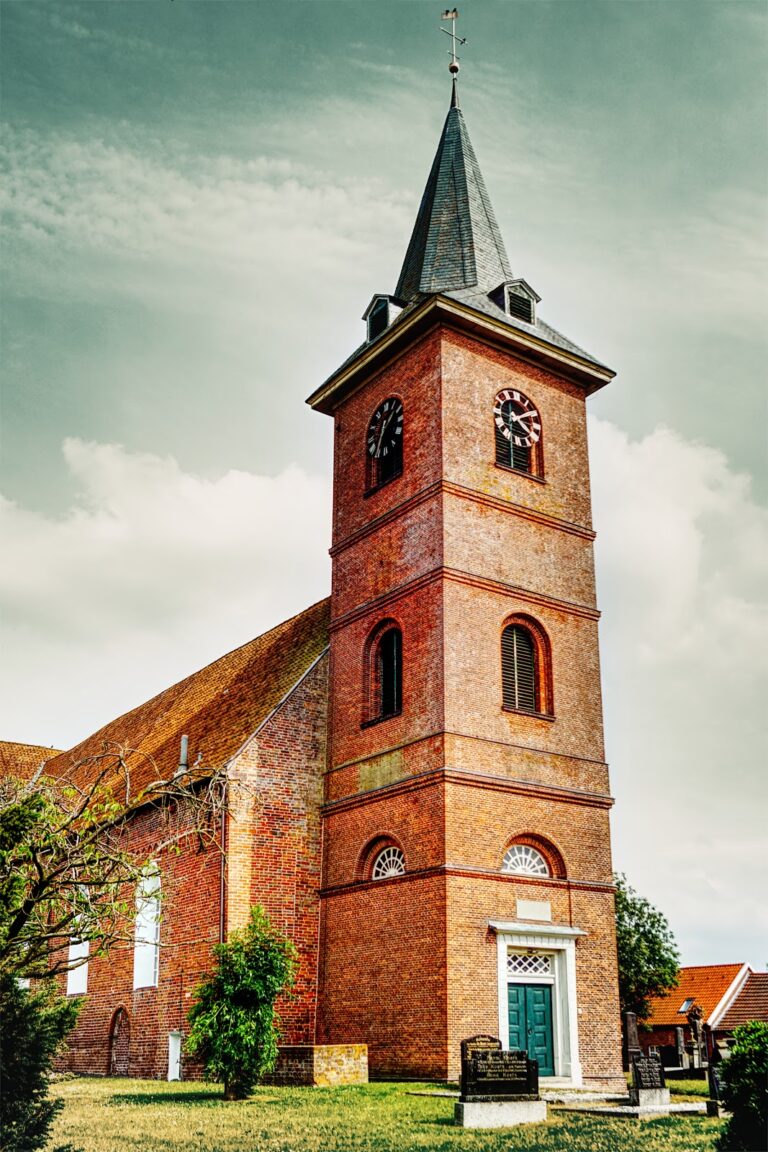
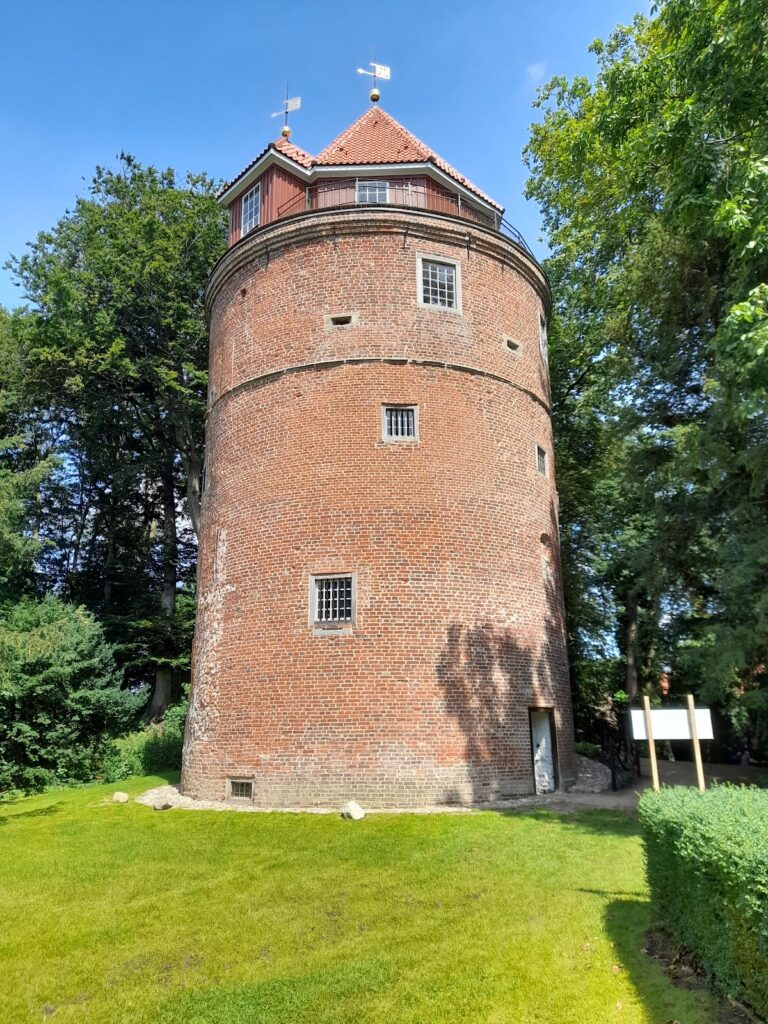
Around 1700, the upper parts of the church walls were probably removed, and the ceiling was lowered. In 1766, a detached bell tower was built in the parallel-wall type, whose principal structure consists of two parallel masonry walls. The west front was renewed in 1793. At the same time, the side portals were blocked and a new entrance was made in the west wall.
The church floor was later raised by approximately 1.5 metres because flooding from the Ems threatened the building. An extensive renovation between 1959 and 1969 restored features associated with the original Romanesque church, including the wooden flat ceiling and the smaller round-arched windows on the north side. The larger windows on the south side were retained. The church is part of the Evangelical Lutheran Church of Hanover. In 2012, Simon Laudy cast a new three-bell peal.
Remains
The Matthäikirche is a rectangular, brick-built hall church with a small semicircular apse at the east end. A hall church has a nave in which the central and side spaces are approximately the same height. The apse, a rounded termination commonly placed at the east end of a church, has a half-dome and three windows. A large round arch opens it to the nave. The detached bell tower stands separately from the church and preserves the parallel-wall design of its 1766 construction.
Church interior and furnishings
Ceiling, windows, and seating
The interior is closed by a flat wooden beam ceiling restored during the twentieth-century renovation. The north wall has smaller round-arched windows associated with the Romanesque appearance restored from 1959 to 1969, while the south side retains larger windows. Dark-green pews made in 1969 are arranged with a central aisle.
Baptismal font and altar
The oldest furnishing is a fourteenth-century baptismal font carved from yellow Bentheim sandstone. Its octagonal basin carries low-relief decoration and originally served as a holy-water basin. The block altar is made of red brick and has a red-sandstone mensa slab, the tabletop of an altar, probably dating from before the Reformation.
Pulpit
The polygonal wooden pulpit was made by Frerick Albers in 1691 and painted red. It rests on an octagonal base whose volutes, or spiral scroll ornaments, support the pulpit basket. Projecting cornice bands are linked by turned free-standing columns. The panels carry strapwork, an ornamental pattern of interlaced bands, and show the Evangelists beneath round arches, each with a symbol and an open book. Albers is commemorated in the book of Luke, while the Cromminga family coat of arms identifies the donor family. The sounding board above the pulpit has seven projections and a gilded dove on its underside.
Modern artistic and musical features
Stained glass and altar cross
Three stained-glass windows were designed in 1966 by Joachim Schubotz, an artist from Hanover. Schubotz also designed the altar cross, made in 1968.
Organ
Jürgen Ahrend and Brunzema built the organ in 1969 in the Structuralist style, which emphasizes clearly expressed geometric structure and formal organization. Its sound follows the North German Baroque organ tradition. The instrument has 13 stops distributed across two manuals, the keyboards played by the hands, and a pedal keyboard played by the feet.