Burg Hartenstein: A Medieval Hill Castle in Germany


Site at a Glance
- Rating
- 4.5
- Popularity
- Low
- Country
- Germany
- Primary era
- Medieval
- External website
- Open
- Eras represented
- Medieval, Early Modern
- Civilizations
- Electoral Palatinate, Holy Roman Empire
- Site type
- Military
- Remains
- Castle
On this page7 sections
History
Origins and first records
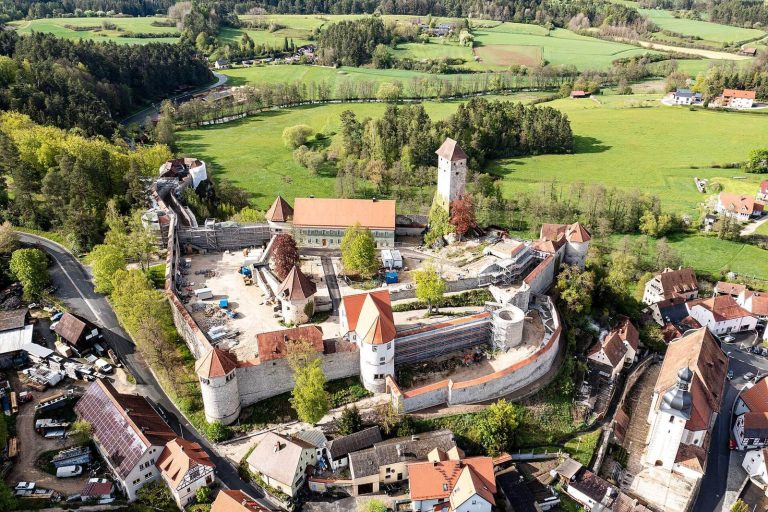
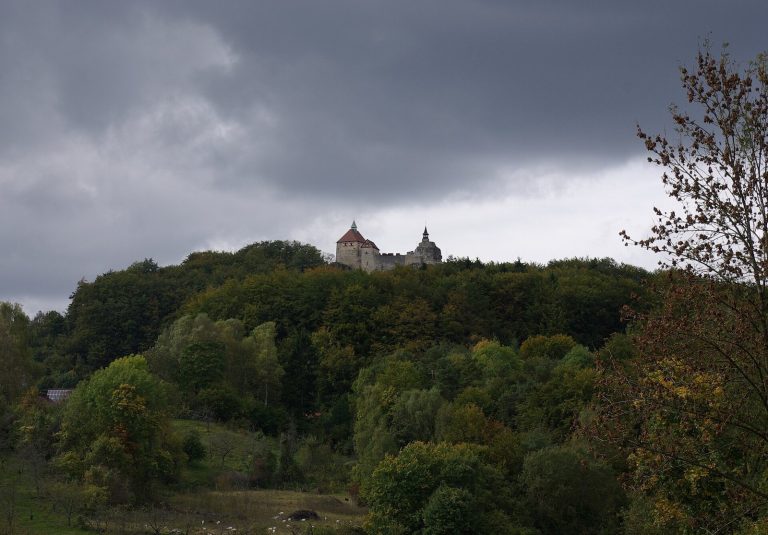
Burg Hartenstein is the surviving remnant of a medieval hill castle above Hartenstein in Germany. It probably originated no earlier than the first half of the thirteenth century, possibly during the Interregnum, the period in the Holy Roman Empire conventionally dated from 1254 to 1273. The castle may have been established independently by the Reichsministerials of Neidstein, trusted imperial or princely officials who held military, administrative, and landed responsibilities.
Large ashlar blocks with clamp holes, together with associated ceramic finds, support this dating. The castle was first documented in 1268, when it was held by Rupert, a knight known as “of Hertenstein.” Earlier claims that the site originated in the tenth century resulted from misinterpretations of a charter. The proposed identification of this Rupert with a man called Rupert of Herte, “of Stein,” who was recorded in 1016, is also rejected.
In 1268, Rupert of Hartenstein and his brothers Konrad, Heinrich of Hartenfels, and Rupert V of Neidstein donated property to Engelthal Convent for the salvation of their father Rupert IV of Neidstein’s soul. The record places Burg Hartenstein within the network of regional noble families associated with Neidstein and Hartenfels.
Wittelsbach control and military changes
After Heinrich of Hartenstein died, the castle passed in 1324 or 1325 to the related Schenks of Reicheneck. In 1325, its defenders repelled an assault by troops from Nuremberg. Shortly afterward, King Ludwig the Bavarian took control of Burg Hartenstein. Ludwig was a Wittelsbach ruler who later became Holy Roman Emperor. Under the Treaty of Pavia in 1329, he assigned the castle to the Palatine branch of the Wittelsbach dynasty, which ruled the Electoral Palatinate.
After 1503, major extensions were carried out under Ludwig von Eyb the Younger, a Palatine administrative official and the probable author of Wilwolt von Schaumberg. Outer fortifications were added in the late seventeenth century. When the castle was captured during the War of the Spanish Succession, the major European conflict of 1701 to 1714 over the Spanish succession and the balance between Habsburg and Bourbon power, these outer defenses were blown up in 1703.
Private ownership and preservation
Burg Hartenstein remained privately owned by the Haunhorst family until 2001. Hans Anna Haunhorst, a former imperial attaché, meaning a diplomat assigned to an imperial diplomatic mission, bought the castle shortly after the First World War and restored it. The municipality of Hartenstein acquired the complex from Mia Haunhorst in 2002. The Haunhorst family crypt lies in the garden area, where Mia Haunhorst was buried in 2013.
In 2004, the municipality founded Burg Hartenstein AG to preserve the castle and make it accessible to the public. The Friends of Burg Hartenstein association followed on 21 September 2005, supporting cultural use, especially a permanent exhibition on the history of knighthood in Franconia. An exhibition on Franconian knighthood opened in the upper floors of the main building in November 2009. A lecture hall was established, and special exhibitions were intended to supplement the permanent display. The Bavarian State Office for Monument Protection lists Burg Hartenstein as both an architectural monument and an archaeological monument.
Remains
Surviving castle complex
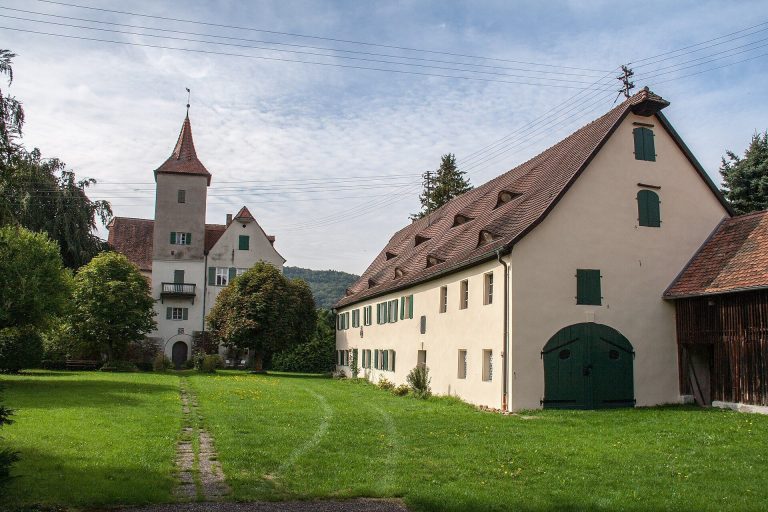
Burg Hartenstein stands on an elevation of approximately 528 metres above sea level. The surviving complex includes the palas, the principal residential and representative building of a medieval castle, and the gatehouse. Its thirteenth-century origins are reflected in large ashlar blocks with clamp holes, which form part of the construction evidence connected with the castle’s early phase. The complex survives as a remnant of the former hill castle rather than as a fully preserved fortress.
Later structures and interior spaces
The castle historically included outer fortifications built in the late seventeenth century, which were destroyed by blasting in 1703 after the capture of the site. The main building contains exhibition rooms on its upper floors, a ground-floor coat-of-arms hall, and a lecture hall. A restaurant was planned for the coat-of-arms hall. In the garden area, the Haunhorst family crypt forms a later feature of the castle grounds.