Burg Hauseck: A Late-Medieval Noble Castle in Bavaria

Site at a Glance
- Rating
- 3.9
- Popularity
- Very Low
- Country
- Germany
- Primary era
- Medieval
- Eras represented
- Medieval
- Civilizations
- Duchy of Bavaria, Holy Roman Empire
- Site type
- Military
- Remains
- Castle
On this page6 sections
History
Burg Hauseck is a former late-medieval noble castle in Germany, located above Hauseck in Bavaria’s Upper Palatinate. It was probably built between 1329 and 1338 as a medieval hilltop fortress, likely by Duke Rudolf I to strengthen his claims against the Schenks of Reicheneck. Its absence from the Treaty of Pavia of 4 August 1329 and its first documentary mention in 1338 support this dating, although its origins had not been thoroughly investigated archaeologically by 2009.
Palatine and Bohemian Rule
Hauseck first appears in a 1338 partition agreement involving the Palatine counts, high-ranking territorial lords of the Wittelsbach dynasty. Because of financial obligations to Charles IV, the king of Bohemia and Roman-German emperor, the Palatine counts pledged the castle and extensive parts of the Upper Palatinate in 1353. In 1354, Charles IV granted Hauseck as a Bohemian fief, meaning a fortified property held from the king of Bohemia in return for allegiance and defined obligations, to Konrad of Kemnath, the queen’s chamberlain. He also granted Konrad the right of opening, which allowed the authority to use the castle for military purposes or station troops there. Konrad’s presumed sons Johann, Conrad, and Heinrich inherited the fief and renewed this right in 1358.
Heinrich XI of Wildenstein and his wife, Elsbeth of Henfenfeld, acquired the fief soon afterward and transferred it to their relative Ulrich of Henfenfeld on 6 February 1372. Ulrich sold Hauseck to Stephan of Wolfstein on 26 May 1380. The castle remained a Bohemian fief, while the right of opening passed to the Bavarian dukes from 1373 under the Treaty of Fürstenwalde. That agreement settled Otto V’s renunciation of claims to Brandenburg in favour of the House of Luxembourg in exchange for compensation and possessions in the Upper Palatinate.
Nuremberg Administration and Destruction
Before 1489, the Laufer ironworks proprietor Jörg Petz acquired Hauseck from the Wildenstein family. He sold it in 1492 to Sebold Peringsdorfer and his son-in-law Jobst II Haller, who transferred its use to the Nuremberg council around 1500. During the War of the Landshut Succession, a late-medieval conflict over the inheritance of the Bavarian duchy, Palatine forces captured the castle in 1504, but Nuremberg troops recaptured it. Jobst III Haller sold Hauseck to the Imperial City of Nuremberg in 1507. As a self-governing city holding its status directly from the emperor, Nuremberg used the castle as an administrative seat for governing its surrounding territory. The Nuremberg stonemason Michael Beheim probably repaired it for this purpose.
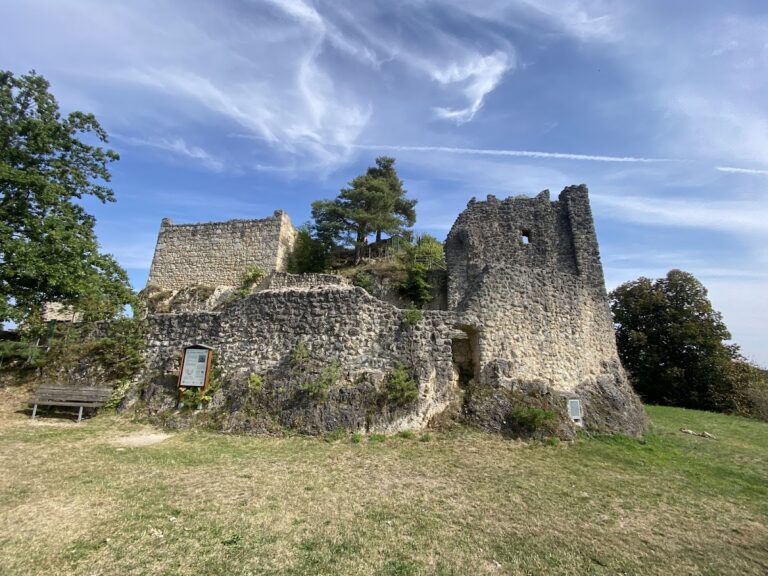
During the Second Margrave War, a sixteenth-century conflict associated with Albrecht Alcibiades’s campaigns and widespread destruction in Franconia, his troops reached Hauseck on 27 May 1552 and set it on fire. Nuremberg then left the damaged castle in ruins. By 1774, it was described as a heap of rubble. The surviving foundation walls from the fourteenth century and later are protected as a listed architectural monument, while medieval and early-modern archaeological evidence in the area of the castle and palace ruins has archaeological protection.
Remains
Upper Castle
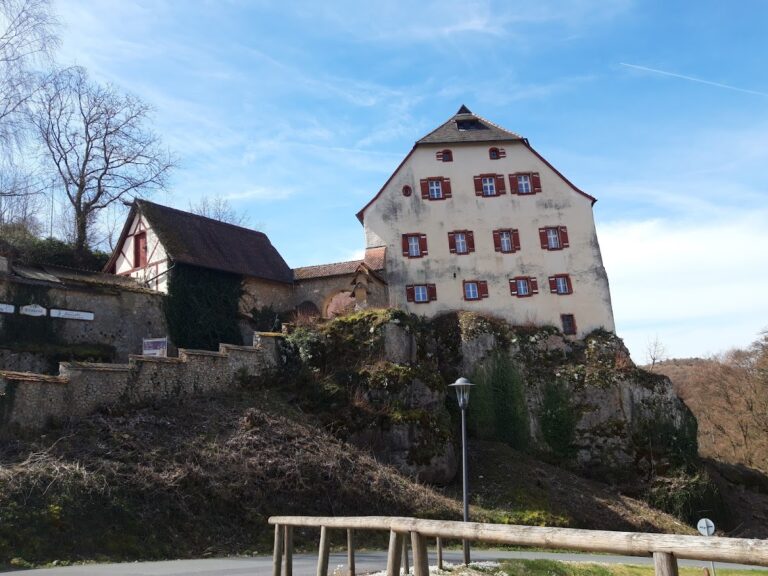
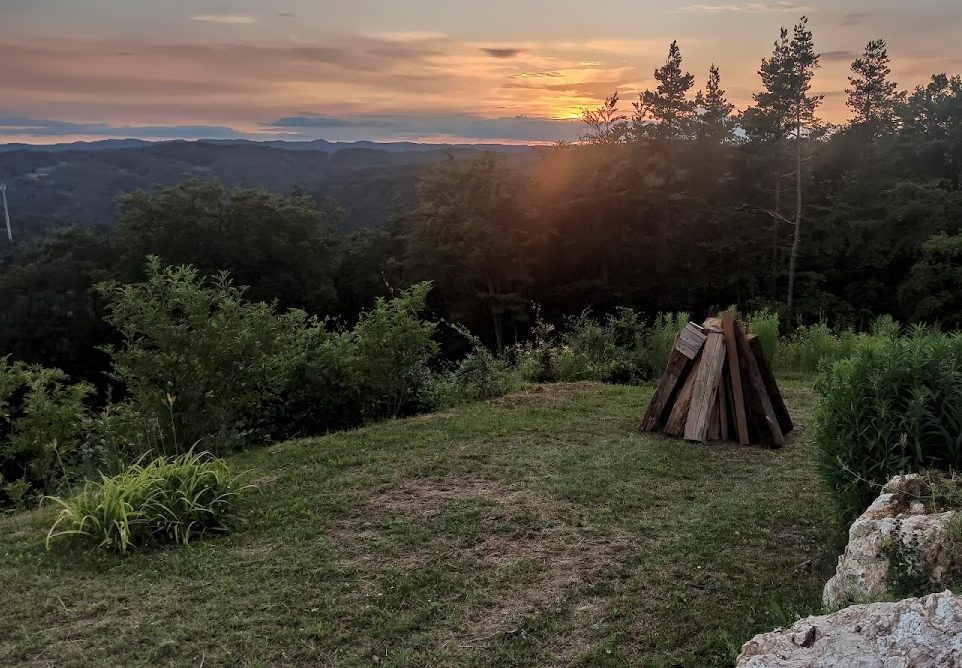
Burg Hauseck occupies a summit position on Hauseck Castle Hill, immediately northeast of Hauseck, within the Franconian Switzerland–Franconian Jura Nature Park. The hilltop complex stood at about 540 metres above sea level, with the upper castle positioned on a rocky outcrop at 505 metres. Built with rubble-stone masonry, the upper castle now survives as a ruin threatened with total loss. Its visible remains include foundation walls dating from the fourteenth century and later, preserving parts of the fortified summit structure.
Lower Castle
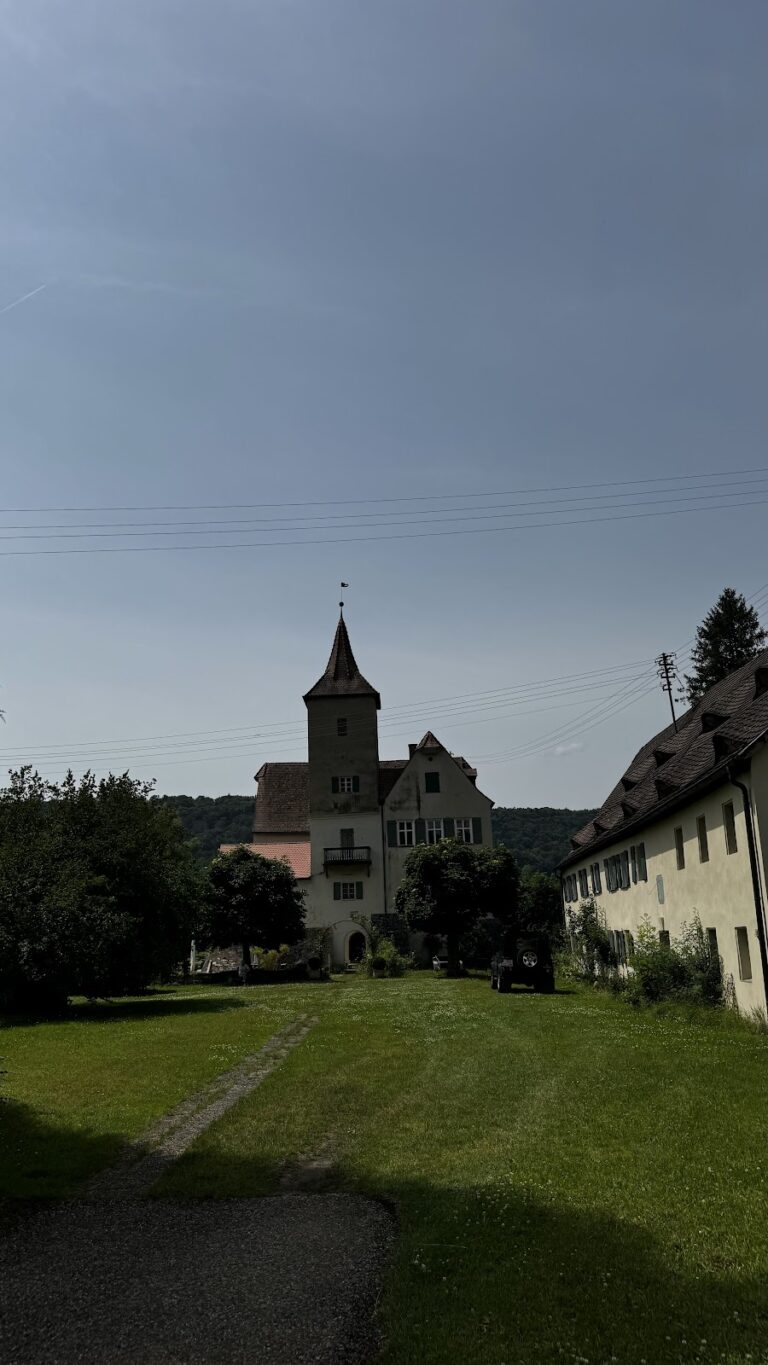
The complex also included a lower castle at the western foot of the rocky outcrop. The upper and lower sections therefore occupied separate levels of the same castle site, with the upper fortress on the rock and the lower section at its western base. Almost nothing remains of the lower castle, whose area has been converted into a private agricultural property.