Burg Neidenfels: A Medieval Hilltop Castle Ruin in Germany


Site at a Glance
- Rating
- 4.4
- Popularity
- Low
- Country
- Germany
- Primary era
- Medieval
- External website
- Open
- Eras represented
- Medieval
- Civilizations
- Electoral Palatinate, Holy Roman Empire
- Site type
- Military
- Remains
- Castle
On this page5 sections
History
Burg Neidenfels is a ruined medieval hilltop castle in Germany, above the settlement of Neidenfels in Rhineland-Palatinate. Count Palatine Rudolf II, a Wittelsbach ruler of the Palatinate, built it around 1330 as the successor to Burg Lichtenstein on the neighboring ridge. The castle first appears in documentary evidence in 1338.
Feudal Rule and Expansion
The castle was held at different times by the Lords of Lichtenstein and by Gerhard and Johannes of Odenbach, Wachenheim, and Moosbach. In 1356, Johann von Wachenheim lent Rudolf II 500 gold gulden to expand Neidenfels.
In 1409, Dieter II Landschad von Steinach and his wife Irmgard held the castle as fiefholders and were obliged to spend 400 gulden on it. After becoming ruler in 1410, Elector Ludwig III enfeoffed the nobles of Steinhausen. The Angellocher family held Neidenfels in the period that followed. An elector was a prince entitled to participate in the election of the Holy Roman Emperor.
From Electoral Possession to Destruction
In 1577, Elector Johann Casimir granted Neidenfels to Peter Beutterich, a cavalry colonel, diplomat, and government official. Beutterich was later described as Johann Casimir’s foreign minister. Johann Casimir was a sixteenth-century Wittelsbach prince and elector of the Palatinate.
French forces destroyed the castle with explosives in 1689 during the War of the Palatine Succession, a European conflict from 1688 to 1697 in which French armies invaded and devastated parts of the Palatinate. In 1749, Forester Glöckle tried to reuse stone from the ruins to build vineyard terraces on the castle hill, but the project failed.
Preservation and Local Traditions
The municipality of Neidenfels accepted the castle as a gift in 1935 and began preservation work. Extensive conservation measures followed in 1986, helping maintain the site as a ruin.
Two explanations have been proposed for the name Neidenfels. One connects it with older German forms meaning “lower rock,” reflecting its lower position in relation to Burg Lichtenstein. The other associates the name with a warrior’s anger or zeal and with the castle’s supposed defensive purpose.
Local tradition tells of a lord of Neidenfels who became jealous of his brother at Burg Lichtenstein and secretly killed him with an arrow shot through a window. The story says that Burg Lichtenstein then disappeared, while Neidenfels remained and gave its name to the settlement. Another tale concerns two shepherd brothers who lost valuable goats near the ruins. One brother met a white woman at a cleft in the rock, where she filled his bag with a heavy substance. After the impatient brother opened part of his bag, he found goat dung, while the other later discovered that the remainder had become gold.
Remains
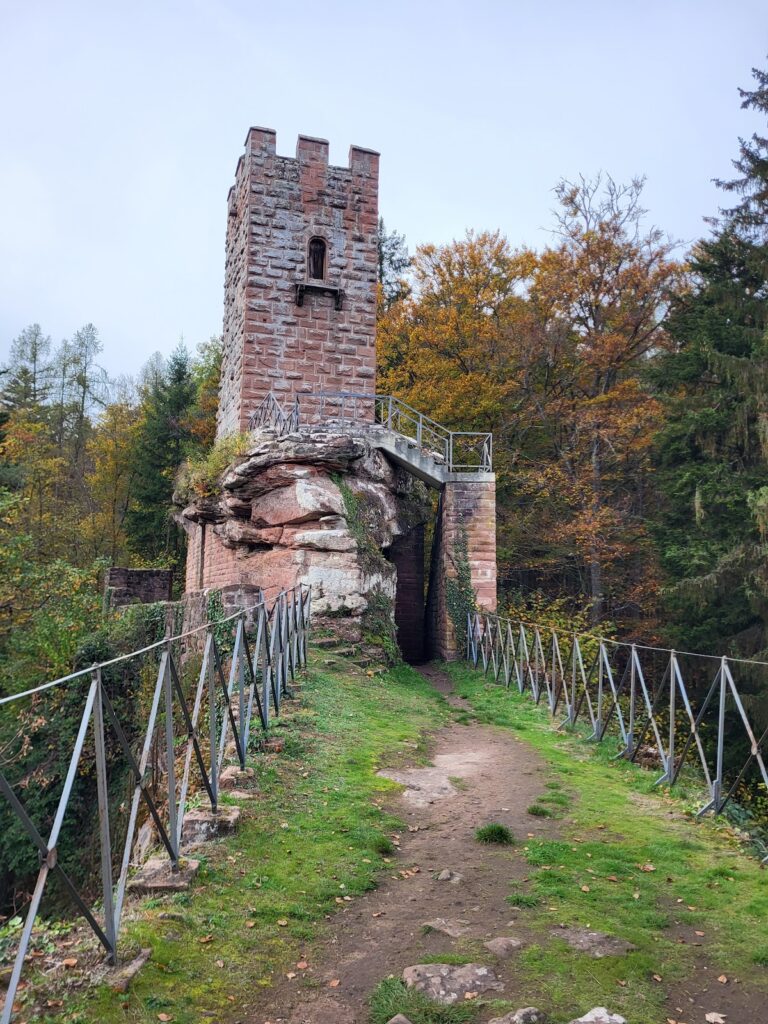
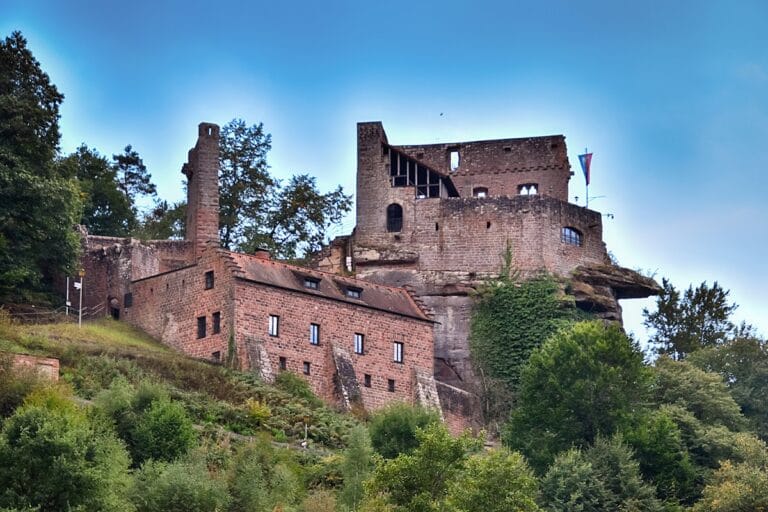
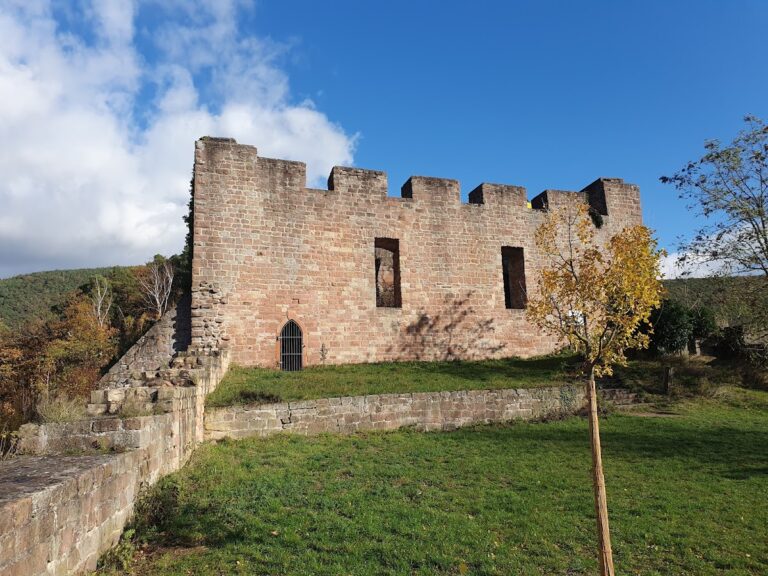
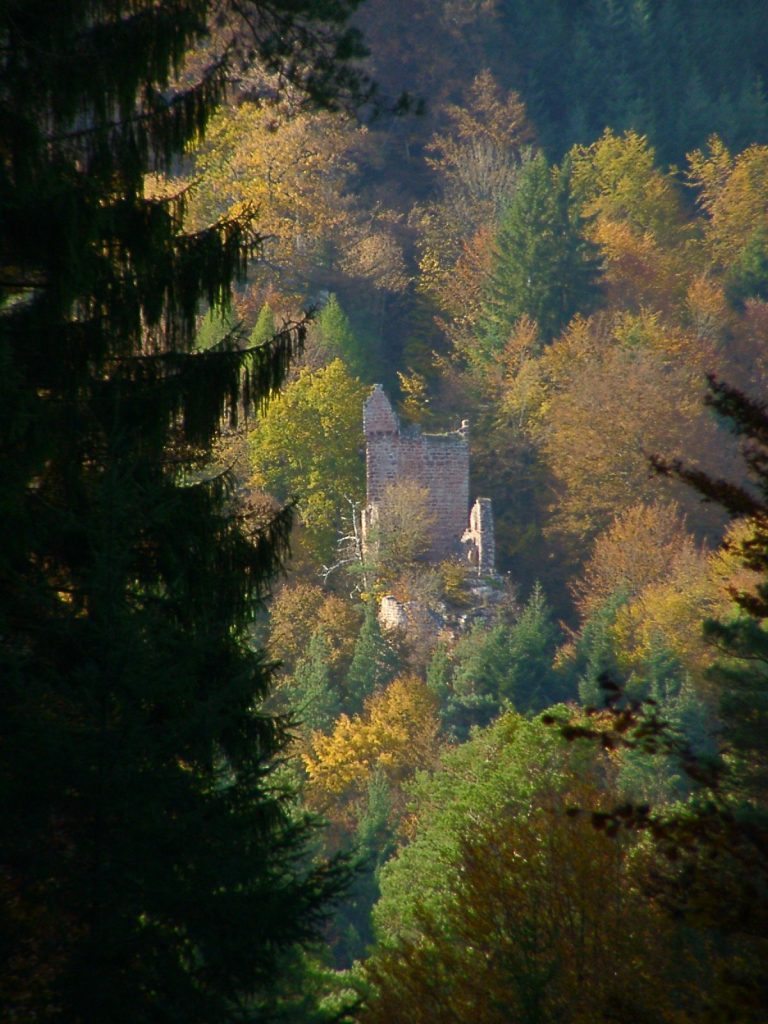
Burg Neidenfels occupies a rocky outcrop at approximately 258 metres above sea level on the Schlossberg above Neidenfels, in the Bad Dürkheim district. The hilltop castle stands on a lower rocky elevation than the ridge associated with Burg Lichtenstein. Its surviving form is a ruin on the elevated natural site, reflecting the position on which the fortified residence and stronghold was built.