Châtelard Castle: A Thirteenth-Century Alpine Fortress in Italy


Site at a Glance
- Rating
- 3.9
- Popularity
- Low
- Country
- Italy
- Primary era
- Medieval
- Eras represented
- Medieval
- Civilizations
- Duchy of Savoy, Holy Roman Empire
- Site type
- Military
- Remains
- Castle
On this page7 sections
History
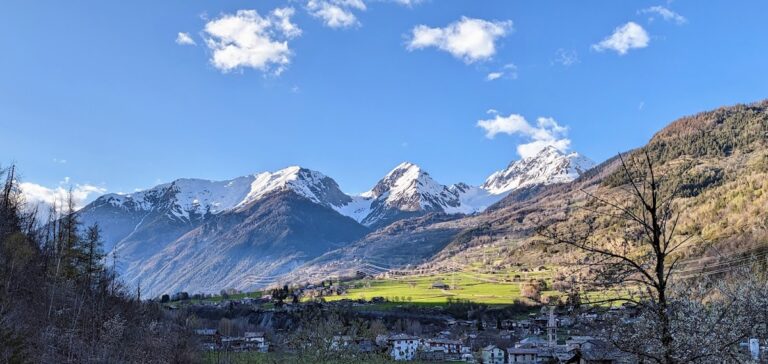
Châtelard Castle is a medieval fortress in Italy, located at La Salle in the Aosta Valley. It was built during the first half of the thirteenth century, probably between 1230 and 1245, by Rodolphe Grossi, bishop of Aosta and adviser to Peter II of Savoy. The site was intended to control the route to the Little St Bernard Pass, an Alpine crossing between the Aosta Valley and the Tarentaise region of France, while also commanding the village and the Valdigne.
Foundation and early conflicts
The castle first appears in written evidence in 1248, when it was described as a tower with adjoining buildings. It remained associated for many generations with the Grossi family, which later adopted the name Grossi du Châtelard. A chapel was built north of the complex in 1269 and was converted into a room in 1824.
In September 1285, forces from the Dauphiné plundered the Châtelard territory during a dispute involving Amadeus V of Savoy, Robert of Geneva, and Robert’s cousin Amadeus II of Geneva. Amadeus V granted the castle liberties in 1301 to encourage trade. A few years later, Edward, Count of Savoy, captured it during his war with Amadeus V and Amadeus III of Geneva.
Changing ownership
The castle was held jointly by several lords and repeatedly changed hands outside the usual pattern of hereditary succession. On 17 October 1323, Pierre du Châtelard transferred his share to the Count of Savoy. In 1371, Jean du Châtelard sold his one-twelfth share to Emeric II of Quart. Bernardin and Michel du Châtelard donated their share to Stéphane and Jean d’Avise in 1558, while Gaspard and Melchior du Châtelard and their mother, Françoise Gilly, transferred their rights to Léonard d’Avise in 1608 and 1609.
Destruction and later ownership
The Châtelard noble family became extinct in 1691, when its last heir was killed by French forces during an invasion. French Revolutionary troops invaded the region again in 1793 and destroyed a substantial part of the castle after reaching the Aosta Valley. The Léaval family bought the remains in 1798 and retained them until 1931. After the death of Jean-Baptiste Léaval, ownership passed to Élise Donnet. The ruin is now privately owned by the Béneyton family.
Remains
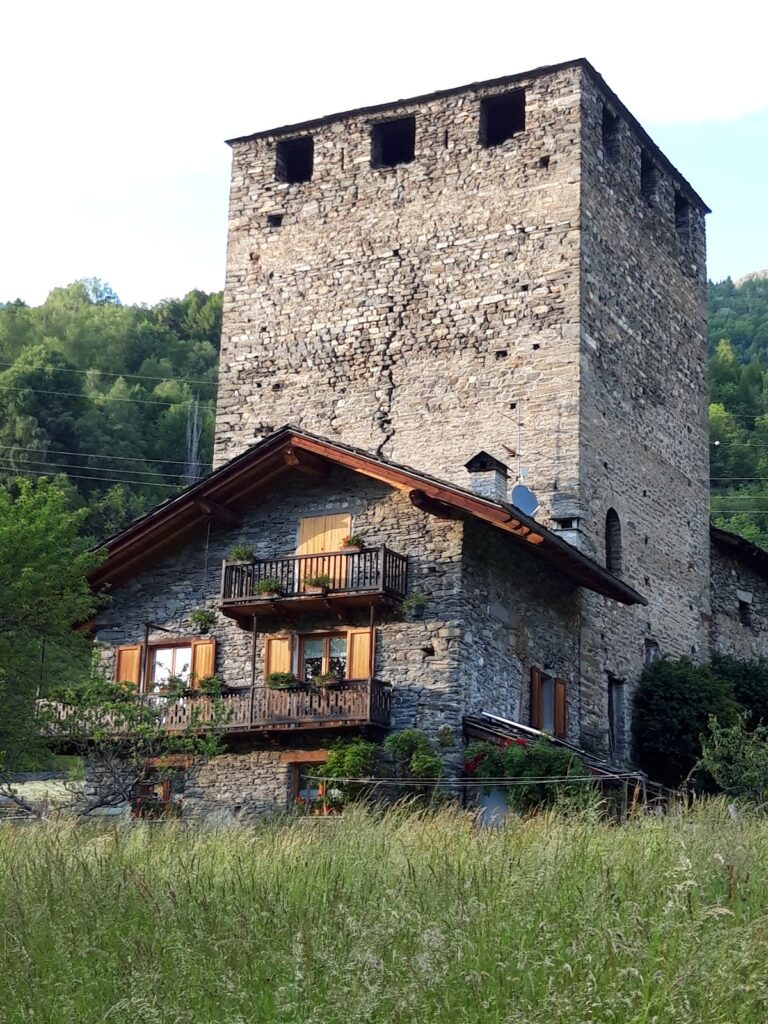
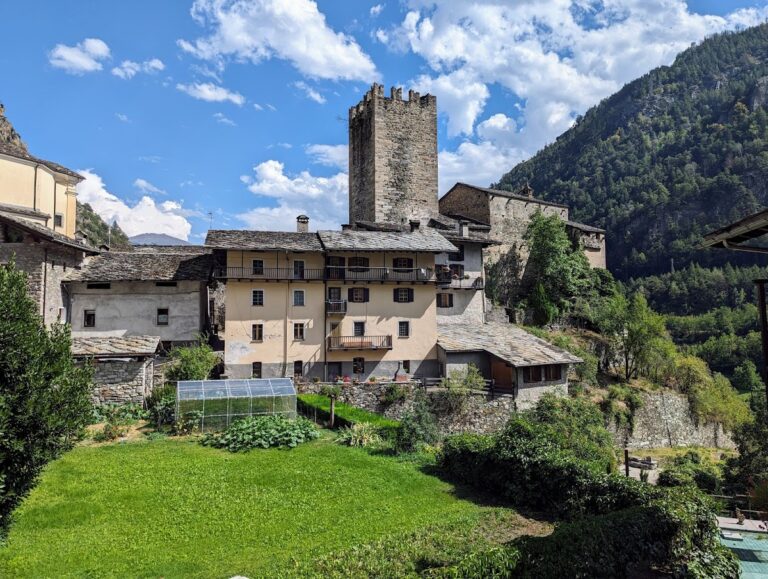
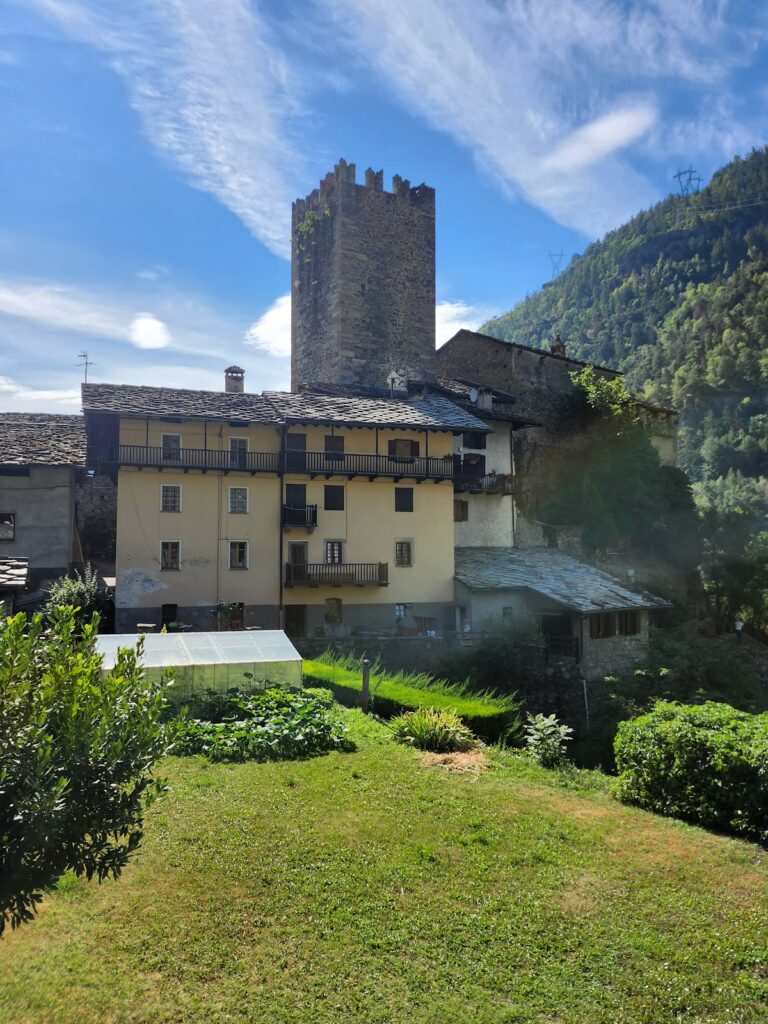
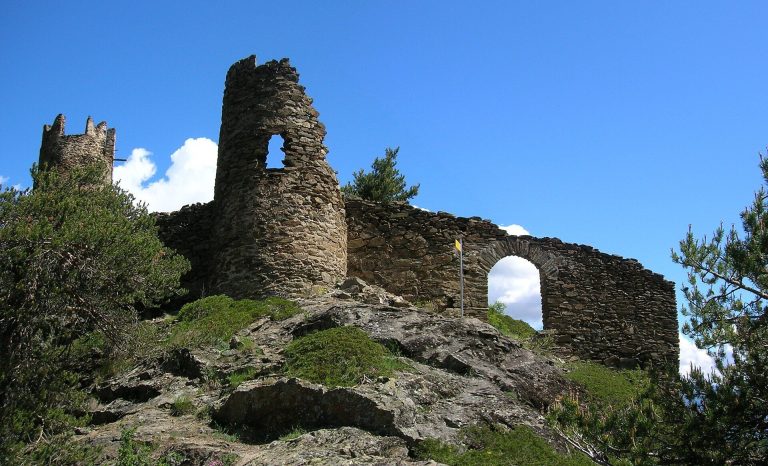
Châtelard Castle stands on a rocky spur in the Château locality of La Salle, at about 1,137 metres above sea level. Its elevated position overlooks the village and the Valdigne. The complex was arranged around a tall circular donjon, an adjoining square residential block, and an irregular enclosure wall shaped by the rocky terrain. Two lines of enclosing walls formed its outer defenses.
The circular donjon
The donjon, the principal fortified tower of a medieval castle, is about 18 metres high and slightly more than 5 metres in diameter. Its unusually narrow circular plan was associated with the fortification preferences of Peter II of Savoy. This design was used for a relatively short period around the middle of the thirteenth century before square towers became more common because they were easier to build. The tower entrance was placed about 10 metres above ground level, strengthening its defensive function. The donjon remains almost intact, while most of the other buildings and both enclosure walls have fallen into ruin.
Construction and surviving fabric
The builders hauled stone up inclined planes with ropes and the help of pack animals. The surviving walls are made of rubble masonry. Together, the intact tower and the fragmentary residential and enclosure structures preserve the main elements of a fortress adapted to a steep Alpine spur.