Château d’Escoire: A Neoclassical Historic Monument in France


Site at a Glance
- Rating
- 3.8
- Popularity
- Very Low
- Country
- France
- Primary era
- Early Modern
- External website
- Open
- Eras represented
- Early Modern
- Civilizations
- French
- Site type
- Domestic
- Remains
- Elite Residence
On this page6 sections
History
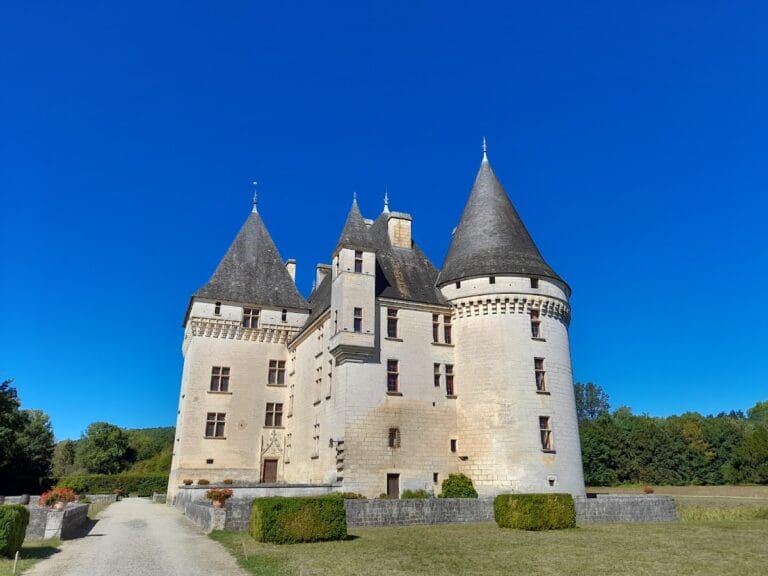
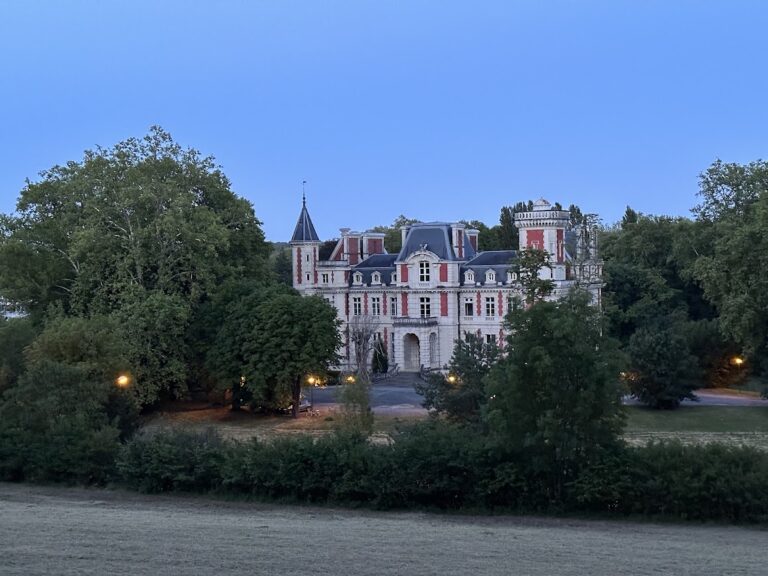
Château d’Escoire is an eighteenth-century Neoclassical château in Escoire, France. Built during the second half of the eighteenth century, it stands in the historic region of Périgord, in the Dordogne department of Nouvelle-Aquitaine. Its façades and roofs have been protected as a French historic monument since 1954.
The 1941 murders
Château d’Escoire became widely known because of an unresolved triple murder during the night of 24 to 25 October 1941. Henri Girard, aged twenty-four, found his father Georges Girard, the owner of the château, dead alongside his aunt Amélie and their domestic servant, Louise Marie Soudeix. The three victims had been killed with a billhook.
Henri had slept in another wing of the château and alerted the estate’s guardians after discovering the bodies. Investigators faced a case with no witnesses, no apparent motive, and no signs that the killer had forced entry. Henri Girard was arrested and imprisoned for nineteen months before his trial. Maurice Garçon defended him, and on 3 June 1943 the court acquitted him for lack of evidence.
The case attracted extensive contemporary newspaper coverage and later became the subject of books and television programs. Henri Girard subsequently wrote under the name Georges Arnaud. His 1950 novel Le Salaire de la peur sold two million copies and was adapted into a 1953 film directed by Henri-Georges Clouzot.
Later interpretations and changing use
The identity of the murderer has remained disputed. Maurice Garçon and, later, Philippe Jaenada considered René Taulu, the son of the estate’s tenant farmers and guardians, Romain and Victoria, a plausible perpetrator. In Jaenada’s novel La Serpe, which argues for Henri Girard’s innocence, Taulu appears under the name Fernand Doulet, while the guardians are renamed Saturnin and Yvonne. By contrast, La Serpe rouge, by Nan Aurousseau and Jean-François Miniac, presents a criminal account implicating Girard.
In 2025, Henri Girard’s daughter Catherine Girard said that her father had told her he was guilty. She developed that interpretation in her book In violentia veritas, and her testimony was presented as support for the accusation made in La Serpe rouge. The competing interpretations have kept the 1941 crime central to the château’s modern history.
After the Second World War, the property was sold at auction to Ferdinand Lagueyrie of La Rivière-de-Mansac in Corrèze. He operated it with his son-in-law, Antoine Peyramaure. From the 1950s until the late 1970s, the château served as a holiday center for children of LMT, a Parisian telephone-equipment company later acquired successively by Thomson and Thales.
After a period of abandonment, the château was owned in 2015 by Sylvie and Tase Kordalov, who had come from Macedonia and had previously worked as hoteliers in Gacé, Normandy. They lived in one wing, while another part of the property was temporarily used for guest accommodation.
Remains
The château
The surviving building is a Neoclassical château dating from the second half of the eighteenth century. Its design includes a rotunda, a rounded architectural space whose entrance lies to the right of the main staircase. The château and rotunda have been restored, while the protected façades and roofs preserve the principal external elements covered by the 1954 historic-monument listing.
The park
The property includes a nine-hectare park surrounding the château. Together, the restored residence, its rotunda, and the extensive grounds form the principal surviving physical components of the estate.