Château de Caussade: A Fortified Château in Trélissac, France


Site at a Glance
- Rating
- 3.5
- Popularity
- Very Low
- Country
- France
- Primary era
- Medieval
- Eras represented
- Medieval
- Civilizations
- French
- Site type
- Military
- Remains
- Castle
On this page9 sections
History
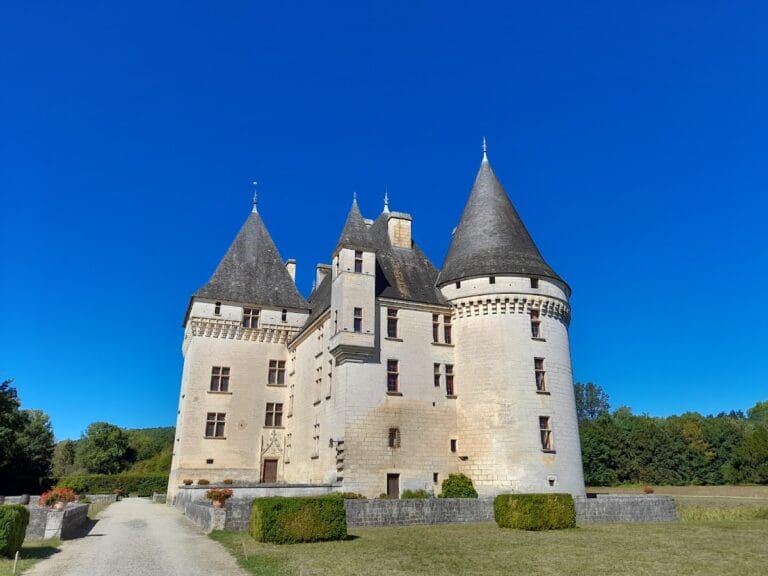
Château de Caussade is a fortified château in Trélissac, France, built by the Cugnac family in the fifteenth century after the Hundred Years’ War, the long conflict between the English and French crowns. Its origins reach back to the fief of Caussade, part of the defensive system established under Frotaire, bishop of Périgueux from 977 to 991. The fief took its name from Guillaume Cazaldo, while the present building belongs to a later period of regional reconstruction.
The early fief and the Vigier family
From the twelfth century, Caussade belonged to the Vigier family. The Vigiers supplied viguiers, medieval and early-modern judicial or administrative officers who represented higher authority in local affairs, at Puy-Saint-Front, the settlement that developed into Périgueux. The château archives once contained a document dated 1131 concerning Hélie I de Vigier. Himberge, the wife of the poet and lord Bertran de Born, also came from the Vigier family. The Vigiers retained the lordship of Caussade until the fourteenth century.
Jeanne de Vigier, daughter of Combeyran II de Vigier and Isabeau de Domme, first married Bertrand de Grésignac. He was killed in Spain, perhaps at the Battle of Nájera in 1367 or at Montiel in 1369. Jeanne remained a widow for more than ten years. During that period, Archambaud V, count of Périgord, tried to compel her to marry one of his supporters and attempted to take Caussade in 1386.
Caussade during the Anglo-French conflict
The Treaty of Brétigny transferred Guyenne to the English crown in 1360. Jeanne subsequently moved toward the English side and, before 22 November 1395, married Henri de Cugnac, a squire from Guyenne who had consistently supported the English. The French king granted pardons covering Henri’s earlier penalties, fines, and offenses. A royal letter issued on 22 November 1395 appears to have restored Jeanne’s enjoyment of her revenues, but the seneschal of Périgord placed Caussade under the control of Mondisson de la Chassaigne.
Mondisson assigned command of the garrison to Guillaume Mosnier of Thiviers. The garrison of Auberoche later attacked and captured Caussade. Its defenders were killed, while Mosnier, wounded during the fighting, was hanged at Auberoche. In 1398, the French king dispossessed the last counts of Périgord, and Caussade returned to the Cugnac family. Jeanne de Vigier died before 1 October 1409.
Henri de Cugnac made his will on 10 October 1416, naming his son Étienne de Cugnac as universal heir. Étienne held Caussade, Chabans, and Florimont and also served as viguier of Puy-Saint-Front. He married Louise de Rassials and died on 6 September 1456. The present château was built in the fifteenth century after the end of the war, during the period when the Cugnacs held Caussade.
The Cugnac lordship and Périgueux
Étienne’s son, Jean I de Cugnac, married Marguerite de Vigier de Paluel and died on 8 March 1502. Their son Jean II de Cugnac then inherited Caussade. Jean II married Philippe de Salignac de la Mothe-Fénelon in 1501 and died on 27 March 1527.
Between 1474 and 1514, the Cugnacs disputed with the bourgeois of Puy-Saint-Front over their right to exercise judicial authority in Périgueux as royal viguiers. Jean de Cugnac permanently transferred those rights to the mayors and consuls of Périgueux in an agreement dated 17 November 1509, receiving 500 livres tournois in return. Jean II issued the final receipt on 15 January 1514. The agreement placed Caussade under the superior feudal authority, or suzerainty, of Puy-Saint-Front.
The Wars of Religion and later Cugnac owners
Jean II’s son, Jean III de Cugnac, was born in 1509 and became a committed Huguenot, a French Protestant of the Reformed tradition. He helped Protestant forces capture Périgueux on 6 August 1575. His associates appointed him mayor, but he was forced to leave the city. Catholic forces captured Caussade during the campaign that ended with the Protestant defeat at the Battle of Sorges. Jean III later returned to Catholicism and died in 1585.
Caussade passed that year to Jean III’s son, Geoffroi de Cugnac. Geoffroi had married Jacquette du Bosc, lady of Vaux, in 1582 and died in 1629. In 1585 he sold the lordships of Florimont and Vimenières with a right of repurchase. Caussade subsequently passed to his son Charles I de Cugnac and then to Charles II de Cugnac.
Charles II’s daughter Suzanne de Cugnac first married François Dupuy, lord of Trigonan, and in 1643 married Arnaud, also called Armand, de La Marthonie. Suzanne and Arnaud acquired the lordship of Caussade from Charles II through an act of 30 April 1647. Their possession was contested by the lord of Taillefer and his wife, who seized the lordship on 3 January 1660. The dispute ended in a settlement.
The La Marthonie family and modern history
Arnaud and Suzanne’s son Charles de La Marthonie died in 1674, leaving Caussade to his son Jean de La Marthonie. Born in 1667, Jean was married to Aimée de David and died on 30 March 1740. His eldest son, Charles de La Marthonie, was born on 15 January 1710, became lord of Caussade, and died in Paris on 24 September 1760. He named his brother Jean-Louis de La Marthonie, bishop of Meaux, as his universal legatee. Caussade remained with the La Marthonie family during the French Revolution.
Ownership was sold around 1820 to M. Leroy, count of Barde and treasurer-general of Dordogne. The château later passed to M. Lagarrigue, mayor of Trélissac in 1870, then to M. Pécout and subsequently to Baron de Laire de Lanmary. It was unoccupied at the beginning of the twentieth century. During the First World War, it became a detention center for German officers, and during the Second World War it served as a gathering place for members of the Resistance.
M. Dagand later acquired the château, and his company undertook its restoration. The property was subsequently sold to American owners and then to a Spanish family. The building was damaged by the storm of 1999. The state had purchased it in 1930, and Château de Caussade was classified as a French historic monument by an order dated 17 August 1945. Since 29 January 2026, it has been privately owned by François Dumy.
Remains
Enclosure and defensive walls
The château occupies a polygonal fortified enclosure, or enceinte, whose four sides each carry a projecting square tower. These towers provided flanking defenses, allowing the sides of the enclosing walls to be protected from projecting positions. The stretches of wall between the towers are curtain walls, and their upper edges retain machicolations, projecting parapets with openings through which defenders could attack those below. A wall-top passage, or chemin de ronde, formerly extended around the entire enclosure, linking the defensive positions.
Residential building and moats
The principal residential building occupies one of the four towers. That tower stands on the site of the former keep, the chief strong tower of the earlier fortified complex, giving the residence a direct connection with the site’s medieval defensive core. Moats once surrounded the fortifications. They are now partly filled in, while the polygonal perimeter, projecting towers, curtain walls, machicolations, and surviving defensive arrangement continue to define the physical character of the château.
Nearby sites