Écours Castle: A Medieval Fortress in Italy


Site at a Glance
- Rating
- 4.3
- Popularity
- Very Low
- Country
- Italy
- Primary era
- Medieval
- Eras represented
- Medieval
- Civilizations
- Duchy of Savoy
- Site type
- Military
- Remains
- Castle
On this page5 sections
History
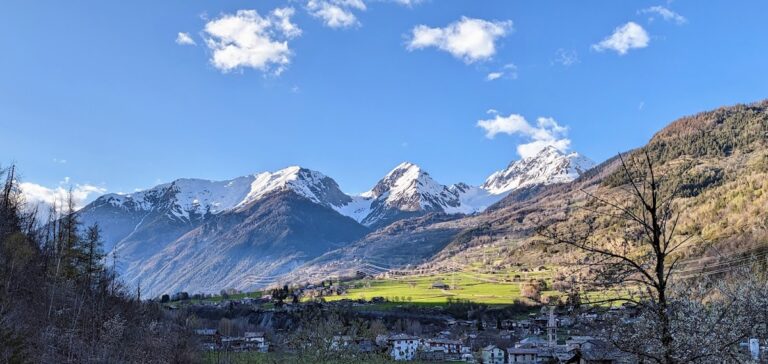
Écours Castle is a medieval fortress in Italy, located in the hamlet of Écours at La Salle in the Aosta Valley. Built in the late twelfth century, it was a Romanesque lowland fortress, meaning a castle constructed on relatively level ground rather than on a naturally elevated defensive site. The aristocratic Lescours family, also known as de Curiis or Les Cours, commissioned the complex.
The Lescours Family and Medieval Ownership
The Lescours family was of notarial origin and held the castle as part of its possessions. In 1430, the family enfeoffed part of its property, including Écours Castle, to the Châtelard family. To enfeoff property was to grant it under feudal tenure, generally in return for obligations or service.
A tradition connects the castle with Pierre de Tarentaise, who later became Pope Innocent V, a thirteenth-century pope of the Catholic Church. He was said to have descended from the Les Cours family and to have been born at the castle in 1224. The attribution remains disputed, however, and the historian Aimé-Pierre Frutaz was among those who did not confirm it.
Later Lords and Decline
The castle was definitively sold to the Bozel family in 1551. During the same century, authority over the property passed into joint lordship, meaning that it was shared by the Gal and Malliet families. In the seventeenth century, the entire property came into the hands of the Passerin family, which retained it until 1730.
By the time of the Aosta Valley historian Jean-Baptiste de Tillier, Écours Castle was partly ruined. De Tillier proposed that it had been destroyed as punishment for misconduct by its owners, as he believed had happened to other Aosta Valley manor houses. This explanation remains an interpretation rather than a confirmed account of the castle’s destruction. The surviving complex is recognized as Italian national heritage.
Remains
Tower and Enclosing Wall
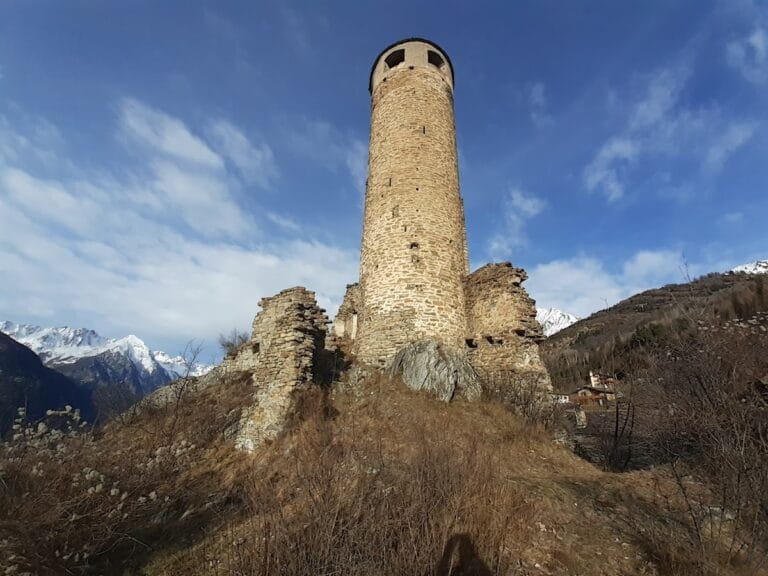
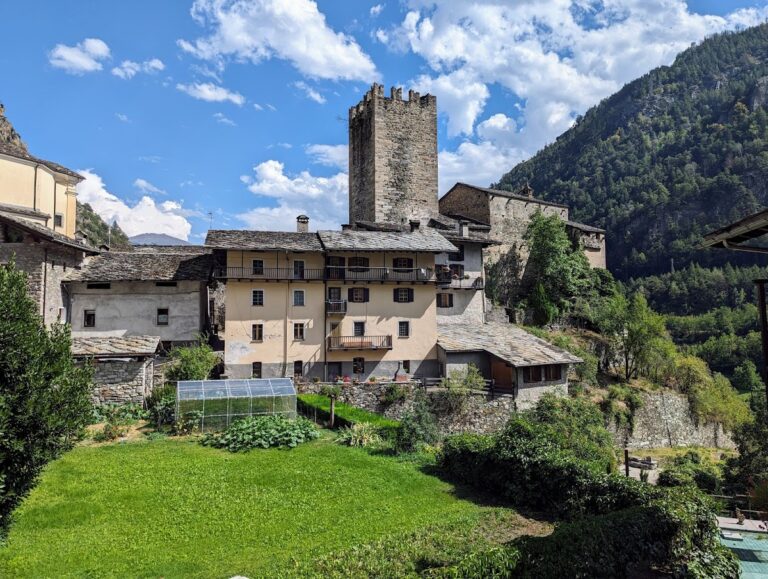
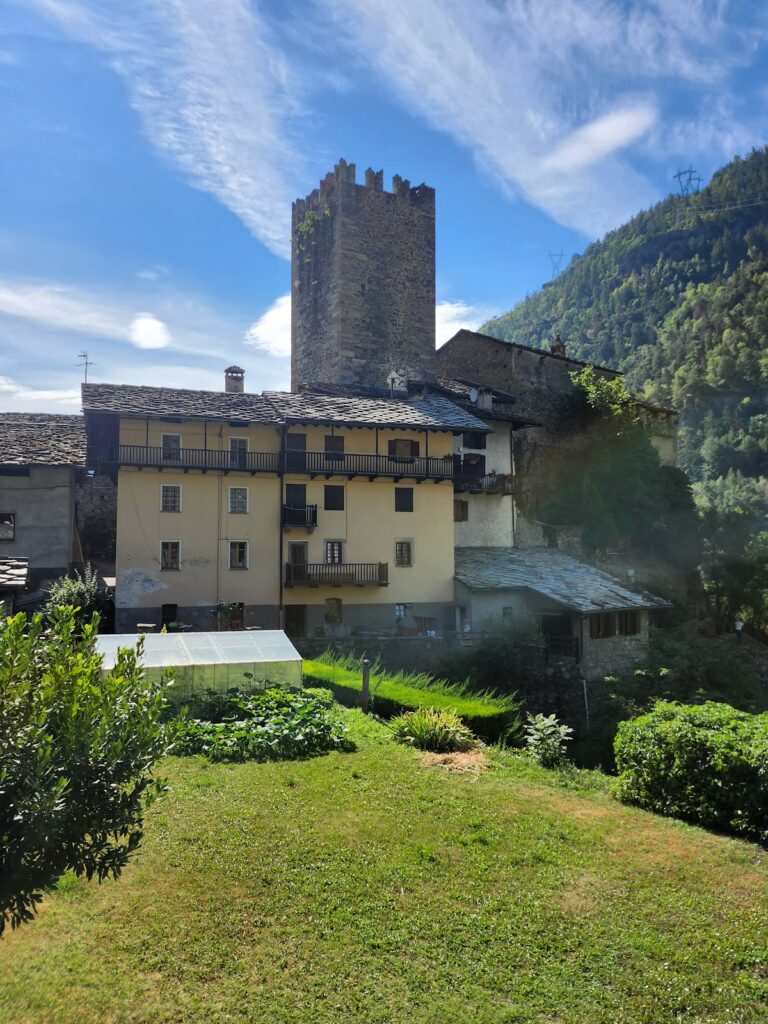
The original castle complex is represented by a principal square-plan tower and a short surviving section of the former enclosing wall. The tower stands in the Écours hamlet at approximately 1,090 to 1,096 metres above sea level, on the relatively open terrain associated with Aosta Valley lowland fortresses.
Its walls are about 2 metres thick at the base and narrow to approximately 0.8 metres beneath the roof. The interior is completely empty, and the structure is covered by a stone-slab roof. The tower’s construction has been compared with other Aosta Valley towers established on flat, open sites without natural defensive advantages.
Some frescoes remained in a room probably used as the castle’s internal chapel until recent years. These painted remnants formed part of the evidence for the complex’s religious and domestic functions within the medieval fortress.
Nearby sites