Château du Bartas: A Sixteenth-Century Gascon Seigneurial Residence
Site at a Glance
- Rating
- 4.9
- Popularity
- Very Low
- Country
- France
- Primary era
- Early Modern
- External website
- Open
- Eras represented
- Early Modern
- Civilizations
- French
- Site type
- Domestic
- Remains
- Castle
On this page7 sections
History
Château du Bartas is a sixteenth-century château in Saint-Georges, France, built as a seigneurial residence in the Gascon architectural tradition between 1567 and 1569. It became the home of Guillaume de Saluste du Bartas, one of the region’s leading poets, and has remained a private residence.
Origins and construction
In 1565, François de Saluste, a wealthy Gascon merchant, bought the land of Bartas from Bernard d’Ornézan, Bishop of Lombez. The property then comprised a farm and difficult woodland. Because it was church property, however, it formed a noble fief, meaning a landed estate held through a feudal relationship and associated with noble status.
On 11 September 1567, François de Saluste contracted for the construction of a seigneurial residence, the principal house of a lord. The château was completed about fifteen months later, at the end of 1569. François became lord of Bartas and passed the residence to his son Guillaume de Saluste du Bartas.
The estate of Guillaume de Saluste du Bartas
Guillaume de Saluste du Bartas, a sixteenth-century Gascon poet, lived at the château throughout his life. In La Semaine, his religious epic poem, he presented Bartas as his “Louvre” and described its woods, pond, and the Gimone and Sarrampion rivers. The poet Pierre de Brach also wrote verses about his friend Saluste du Bartas’s residence, evoking its woodland, shade, moats, and nightingales.
Guillaume’s will left the château and its dependencies to his eldest daughter, Anne de Saluste. The estate later passed through the du Frère and d’Astorg families before continuing through successive generations.
Later ownership and protection
The poet’s last descendants, the d’Estarac family, sold the château to Antonin Collongues at the end of the nineteenth century. It subsequently changed hands several times, including ownership by José de Carvalhaes and his wife and by the stylist Frédéric Castet. From 2001 to 2005, it belonged to Princess Margarita of Bourbon-Parma and her husband, Edwin De Roy van Zuydewijn. The château is now a private residence.
Château du Bartas was listed as a historic monument in France on 3 September 1934. It is also included in the Mérimée architectural-heritage database under reference PA00094914. The name comes from Gascon terms: barta or barto means “forest,” while bartas or barthas means “bad forest.”
Remains
Residential building and tower
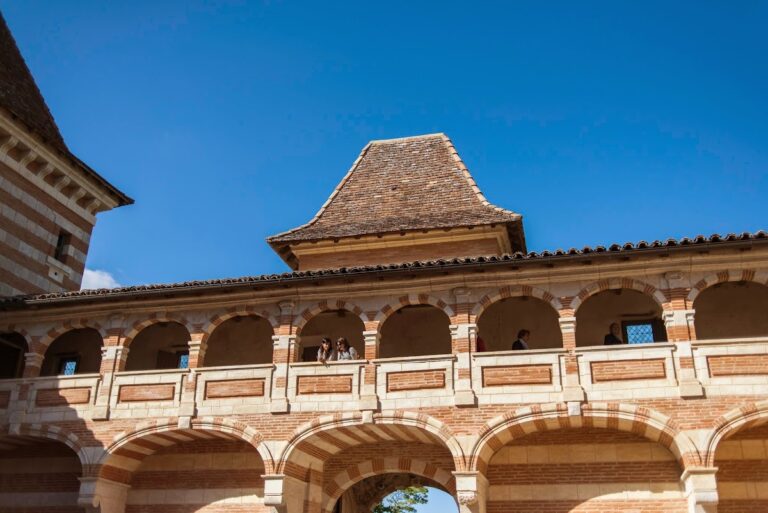
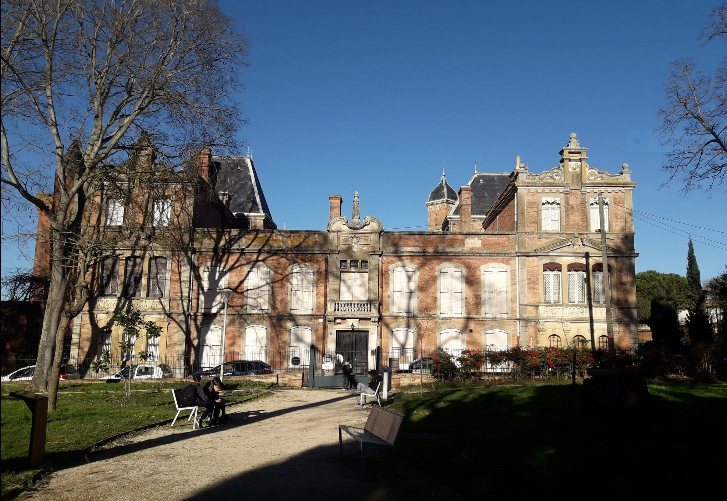
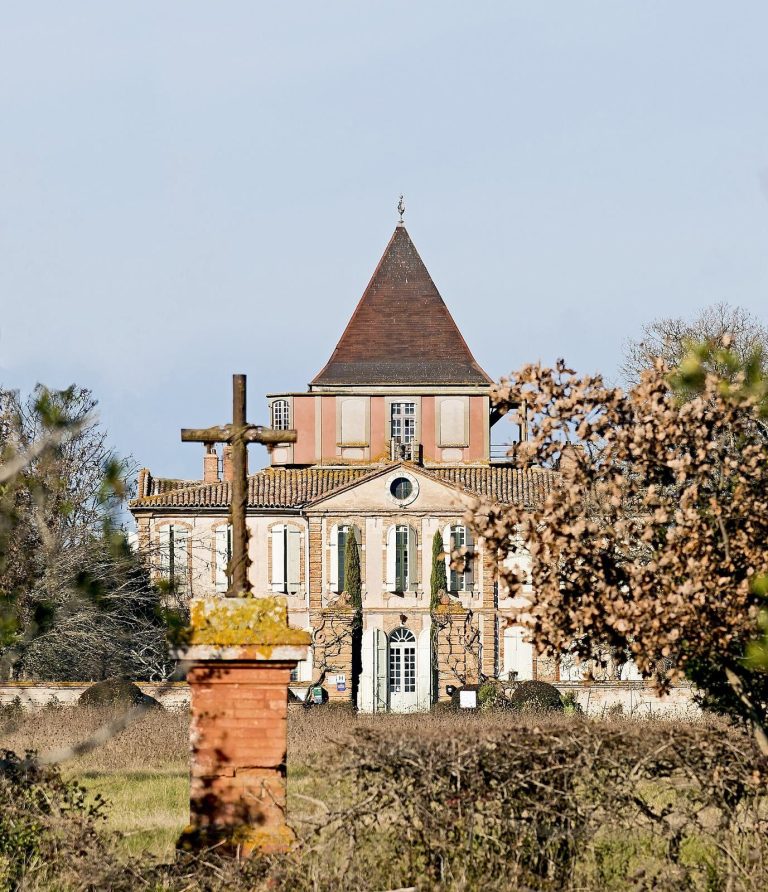
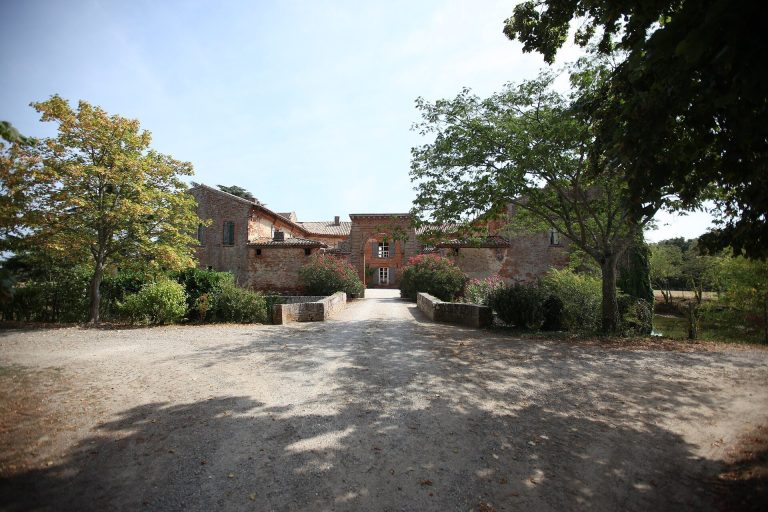
The original château is a compact, quadrangular residential building with two storeys. Its tightly compressed plan gives it an archaic appearance associated with mid-sixteenth-century Gascon architecture. Several mullioned windows survive, their openings divided by vertical stone members, while the rear façade is built in half-timbering, with a visible timber frame and infill.
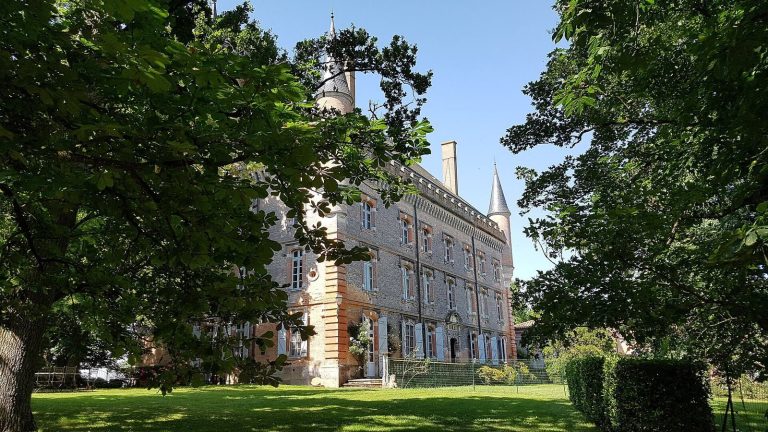
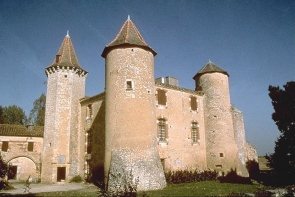
A polygonal tower is attached to the original building. Crowned by a crown of machicolations, projecting openings through which defenders could discharge material onto attackers, it still contains the spiral staircase serving the floors. Circular towers were added at two corners of the château during later centuries.
Service buildings and courtyard
The château’s service buildings enclose a square courtyard. This arrangement completes the physical organization of the residence around an enclosed internal space, alongside the original quadrangular house and its attached polygonal tower.