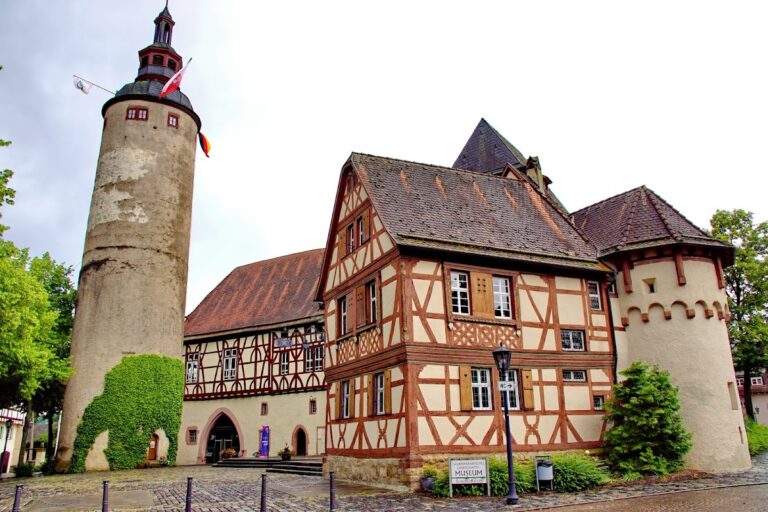
Burg Oberschüpf: A Medieval Hilltop Castle in Germany
Site at a Glance
- Rating
- 4.6
- Popularity
- Very Low
- Country
- Germany
- Primary era
- Medieval
- External website
- Open
- Eras represented
- Medieval
- Civilizations
- Holy Roman Empire
- Site type
- Military
- Remains
- Castle
On this page7 sections
History
Burg Oberschüpf is a ruined medieval castle in Germany, located above Oberschüpf in Boxberg and built at the end of the twelfth century. It first appears in records during the first half of the thirteenth century. Also known as Burg Schüpf and popularly as Old Castle Oberschüpf, it was distinguished from Schloss Oberschüpf, or New Castle Oberschüpf.
Early Lords and Hohenlohe Control
The castle initially belonged to the first Schenk of Schüpf. A Schenk was a cupbearer, an aristocratic office that could also form part of a noble title. In 1235, the Schenk’s descendants pledged the castle to the Counts of Hohenlohe, bringing it into the sphere of another powerful noble family.
Rosenberg and Tottenheim Ownership
During the fourteenth century, ownership passed from the Lords of Hohenlohe into joint possession of the Lords of Rosenberg. One branch of the Rosenbergs lived at Schüpf. The castle later came into the hands of the Lords of Tottenheim, whose family line ended in 1556.
Destruction and Investigation
Around 1470, the allied Elector Frederick I of the Palatinate, Prince-Bishop Rudolf of Würzburg, and Archbishop Adolf of Mainz almost completely destroyed the castle. Their titles identify territorial and ecclesiastical rulers who held major authority in the late medieval German political order.
Investigation of the complex began in 1888 with support from the Grand Duchy of Baden. Finds from the site included high-quality Romanesque architectural sculpture. Romanesque architecture was a medieval style characterized by massive masonry and rounded arches. The sculpture is now held by the Badisches Landesmuseum in Karlsruhe or forms part of the Boxberg local history museum collection.
Remains
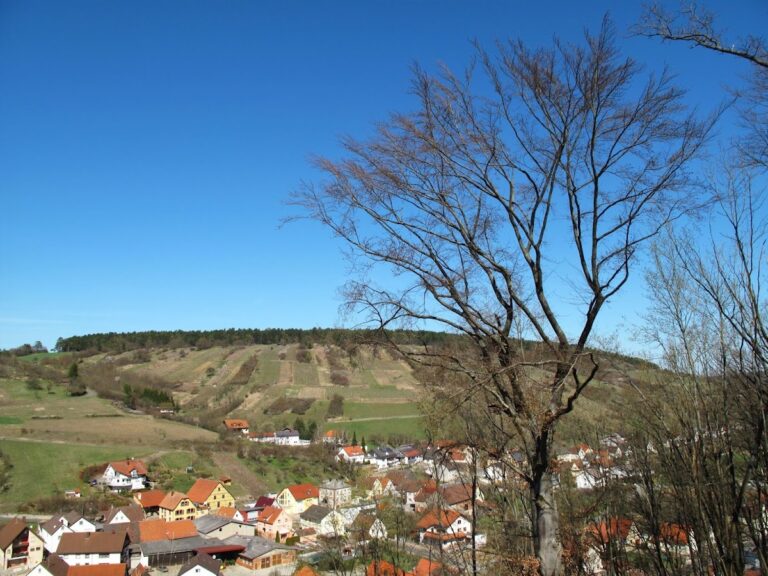
Burg Oberschüpf occupies a hilltop spur above the village, at the angle where a small tributary joins the Schüpfbach. The village stands at about 230 metres above sea level, while the castle site lies at approximately 304 metres. As a spur castle, it was built on a projecting ridge that used steep natural slopes for protection.
Defensive Setting and Layout
Two ditches cut deeply into the Muschelkalk, or shell limestone, separating the castle from the higher ground leading toward the Burgwald ridge to the west. A deep neck ditch also cuts across the connection between the spur and the mountain. The oval castle area has steep sides, and a path beside the upper southern slope of the neck ditch provides access while almost completely encircling the overgrown grounds.
Surviving Structures
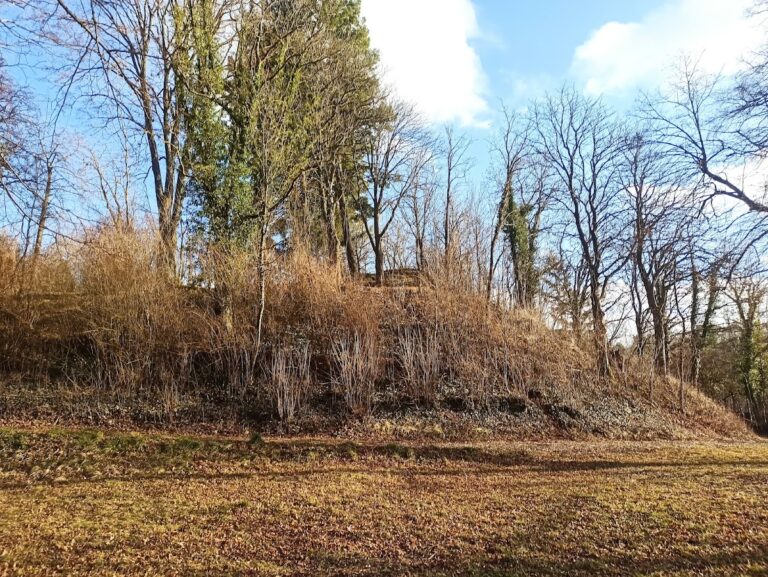
Only limited physical remains survive. They include excavated foundations, overgrown wall fragments, earthworks, and footpaths. Part of the foundation walls of an encased keep also remains. A keep was the principal fortified tower of a medieval castle. The ruins are heavily deteriorated and covered by vegetation.