Schloß Hantberg: A Historicist Castle in Austria
Site at a Glance
- Rating
- 5
- Popularity
- Very Low
- Country
- Austria
- Primary era
- Modern
- External website
- Open
- Eras represented
- Modern
- Civilizations
- Habsburg
- Site type
- Domestic
- Remains
- Castle
On this page6 sections
History
Construction and the de Renesse connection
Schloß Hantberg is a Historicist castle in Austria, located in Johnsdorf-Brunn within the municipality of Fehring in Styria. Historicism was a nineteenth-century architectural approach that revived and recombined forms associated with earlier historical styles. Construction began in 1897, placing the building in the final quarter of that century.
The castle was closely connected with the relationship between the Belgian count Clemente de Renesse and Josefa Herring, who owned Johnsdorf Castle. Around the turn of the nineteenth and twentieth centuries, de Renesse acquired numerous properties in the surrounding area so that he could remain close to her. After Herring’s husband died, de Renesse was permitted to marry her in 1909.
Later ownership and alteration
The couple became impoverished after the end of the First World War. Clemente de Renesse died in 1929, while Josefa Herring lived until 1952. The subsequent history of the building included a period of careful renovation after its acquisition by Paula Freiin von Hammer-Purgstall. Freiin was a German-language noble title for an unmarried woman of baronial rank, often rendered in English as baroness.
Elfriede Grete and Josef Franz Pscheidl acquired Schloß Hantberg in 1980 and undertook extensive additions over more than twelve years. A financial company acquired the building at the end of 2022.
Remains
Castle structure
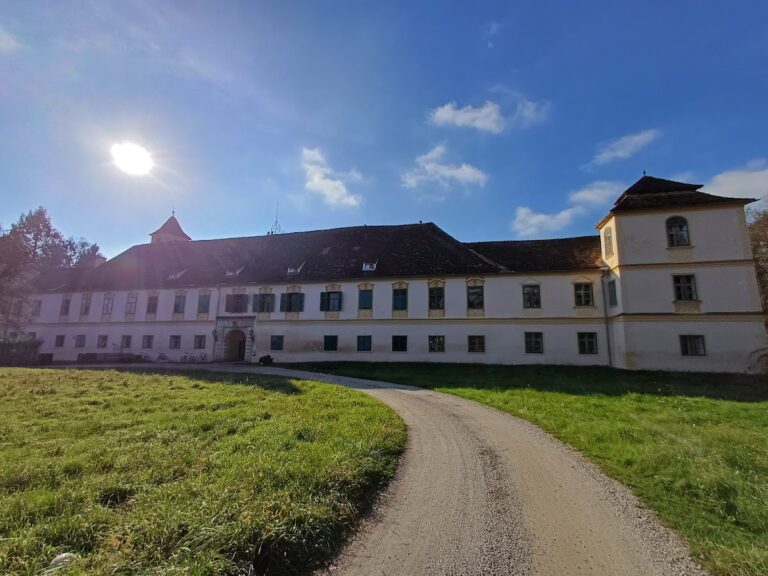
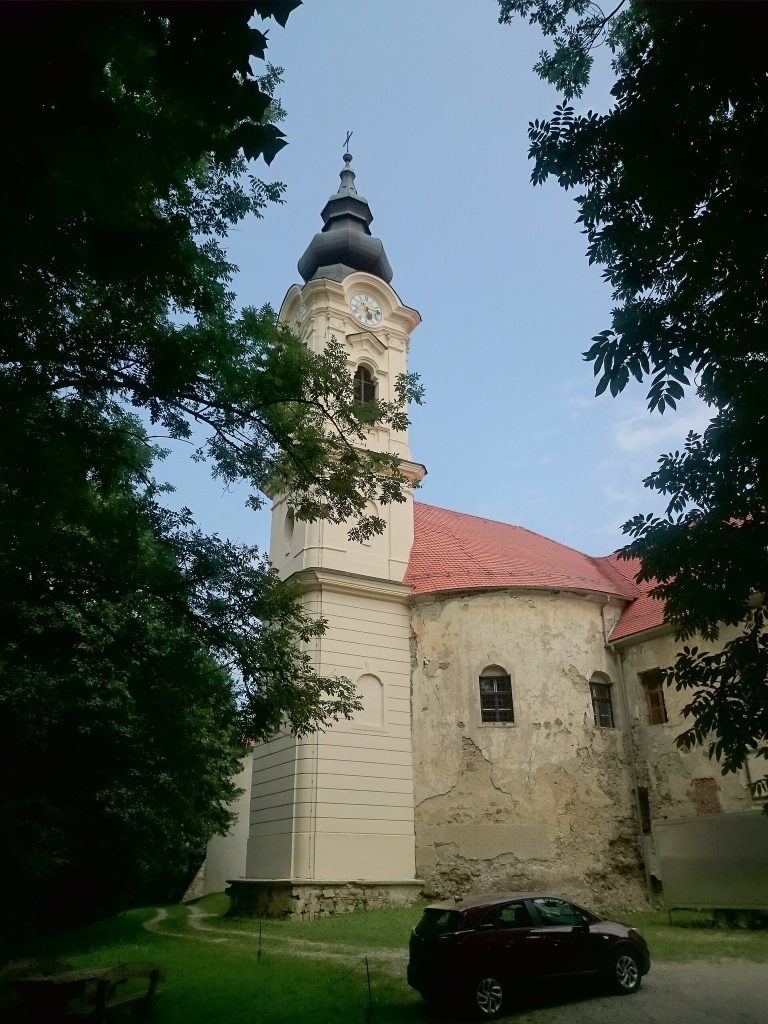
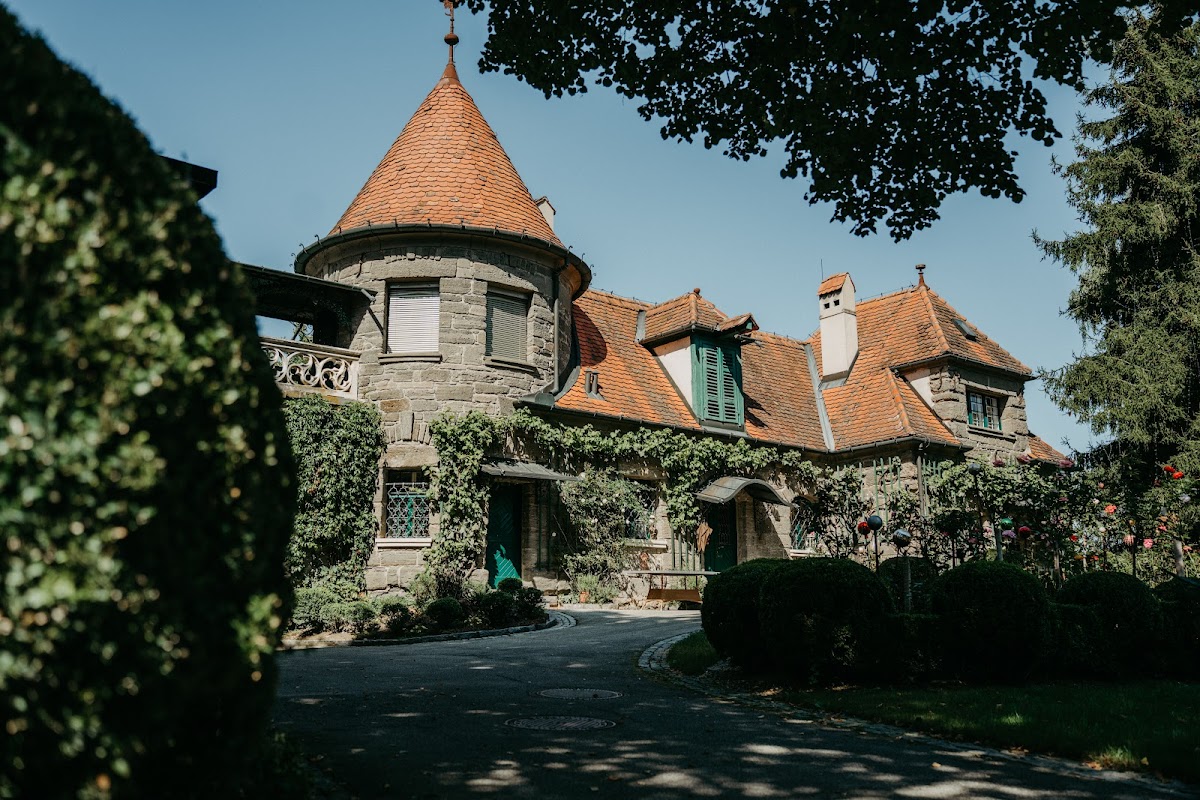
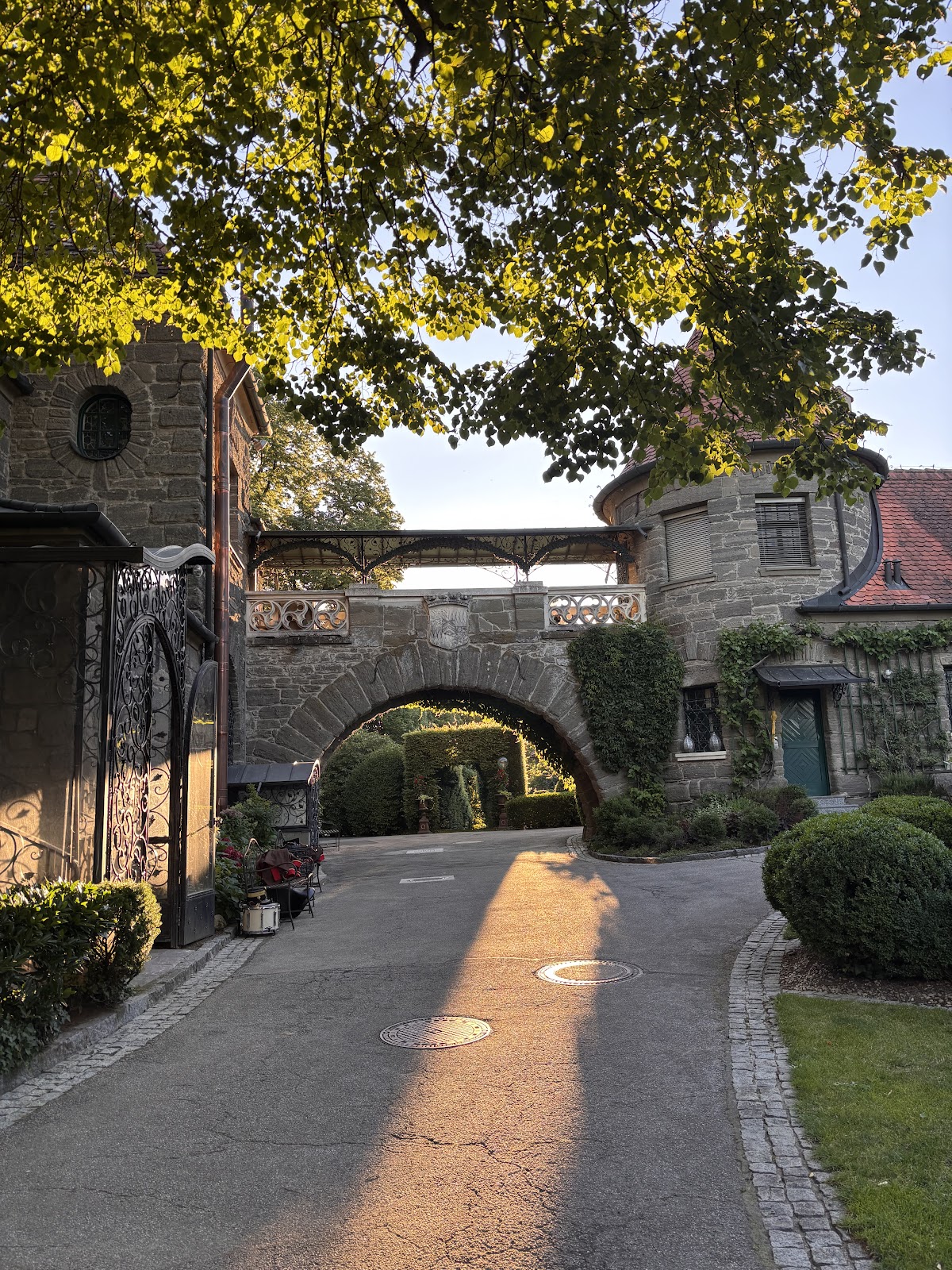
Schloß Hantberg consists of two wings joined by a bridge. Its exposed masonry was designed to give the building an impression of fortification and defensive strength, although the structure belongs to the Historicist architecture of the late nineteenth century. A chapel forms part of the castle, and a park surrounds the building.
Valley setting
The castle stands at approximately 266 metres above sea level in a valley. The nearby terrain is mostly flat, with hillier land to the southwest. The highest nearby point reaches about 359 metres above sea level roughly one kilometre north of the castle. The surrounding landscape is predominantly agricultural, while forests are relatively uncommon.