Johnsdorf Castle: A Medieval Stronghold in Styria
Site at a Glance
- Popularity
- Low
- Country
- Austria
- Primary era
- Early Modern
- Eras represented
- Early Modern
- Civilizations
- Duchy of Styria, Habsburg, Holy Roman Empire
- Site type
- Military
- Remains
- Castle
On this page8 sections
History
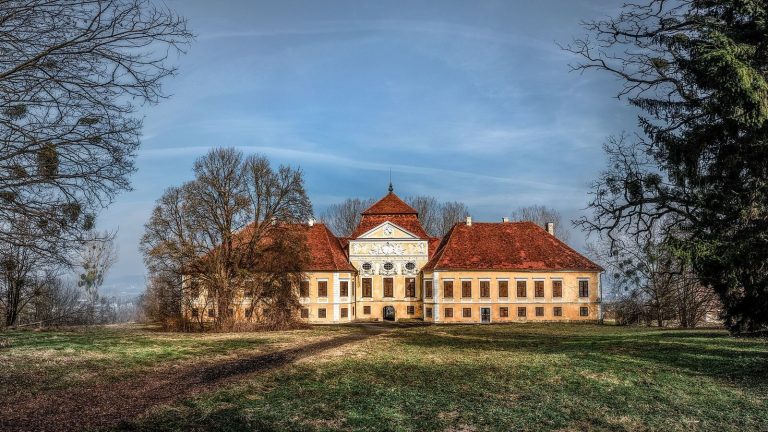
Johnsdorf Castle is a medieval stronghold in Johnsdorf, in the municipality of Fehring, Styria, Austria. The Aychenstauden family probably built it in the early Middle Ages, and it initially served chiefly as a defense against the Kurucs, Hungarian insurgents often opposed to Habsburg rule, and Ottoman forces.
Narringer ownership and the 1605 incursion
After several changes of ownership, Hans Adam Narringer took possession in 1587. During an unsuccessful Hungarian incursion in 1605, his wife and son Seyfried were killed.
After Hans Adam’s death, his son Georg Christoph inherited the castle. Georg Christoph’s extravagant spending brought debts and disputes with his mother, Elisabeth, and sister, Anna Margareta. The provincial governor, Friedrich, Baron von Herberstein, became involved, and the castle was auctioned in 1616.
Expansion and later owners
The purchaser, Katharina Elisabeth, Baroness von Galler, enlarged and altered the badly dilapidated castle. The extent of the work is uncertain; it may have included demolishing and rebuilding the entire castle.
Viktor, Baron von Herring, acquired the property in 1886. The Hungarian magnate Joszi Dory de Jakahaza, also known as Josef Baron Döry von Jobaháza, bought it in 1910. Döry had married Anne Hollingworth-Price, a well-known actress and the widowed Princess of Ardeck, in 1904. The couple furnished the castle with numerous art treasures. By 1910 it had electric lighting and a reputation as Styria’s second-richest castle.
Wartime destruction and Salesian use
The castle was almost completely destroyed during the Second World War. Through Baron Döry’s daughter, who had entered religious life, the Salesians of Don Bosco inherited the property. This Catholic congregation is known for educational and pastoral work.
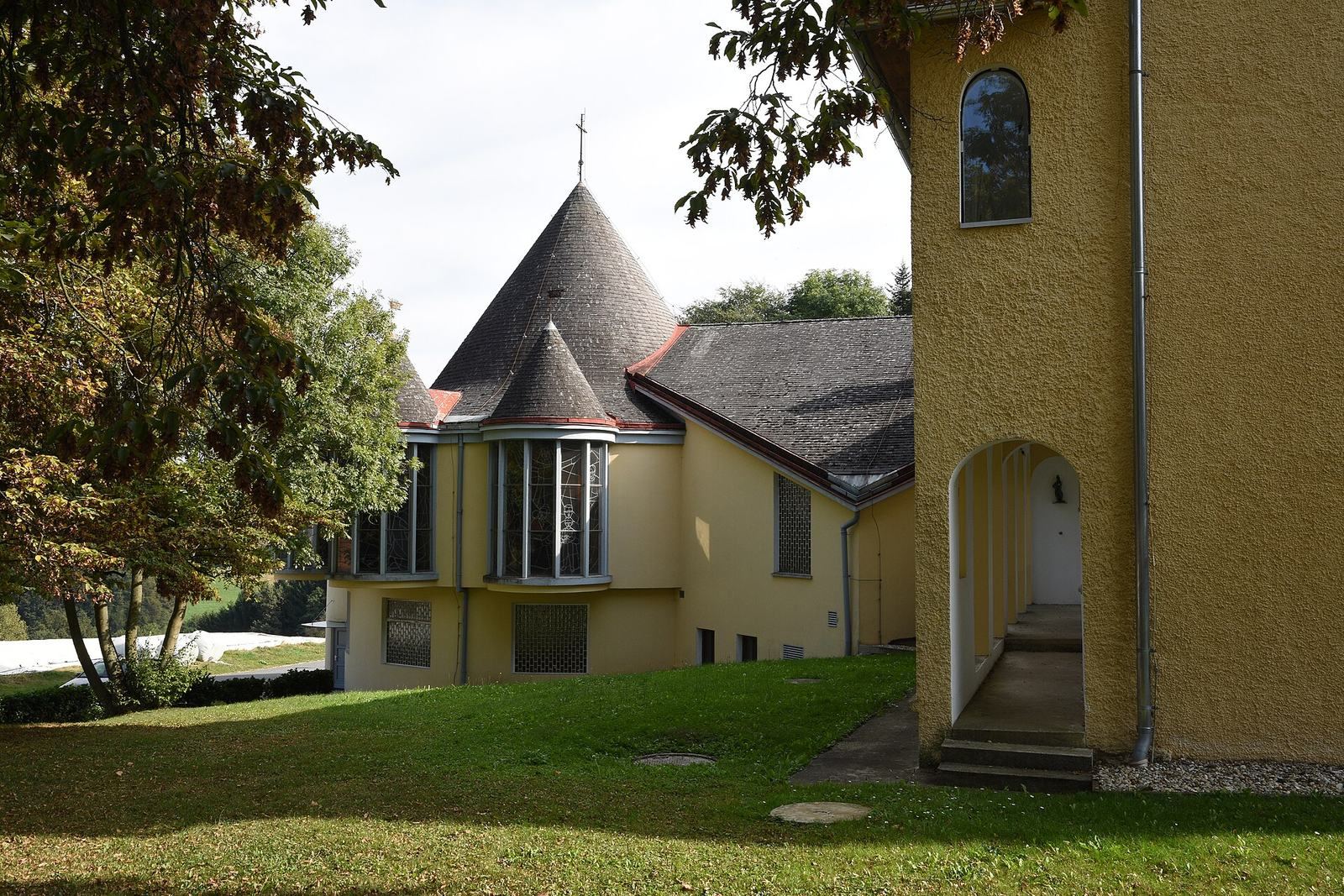
The Salesians made the property an educational center that drew people from around the world for spiritual retreats. For several decades, it also hosted cultural and religious events. The property was sold in 1999.
Remains
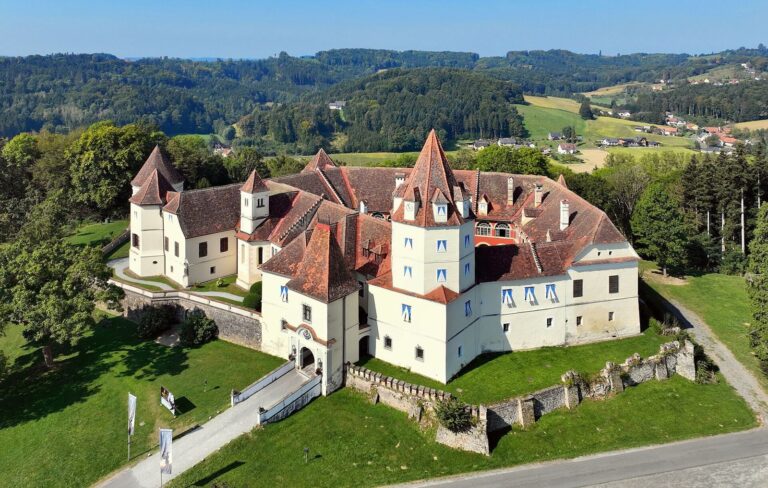
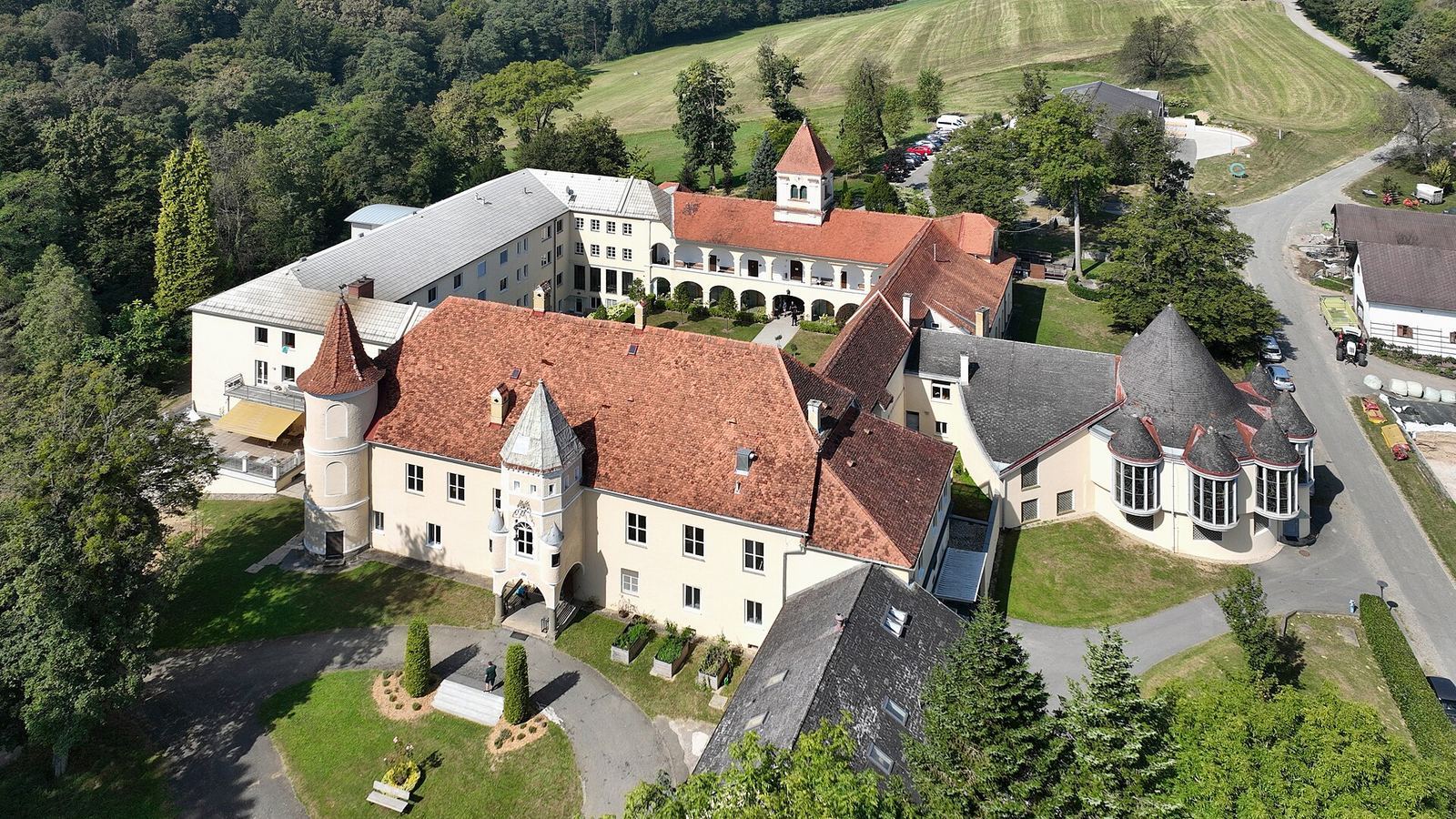
The castle complex
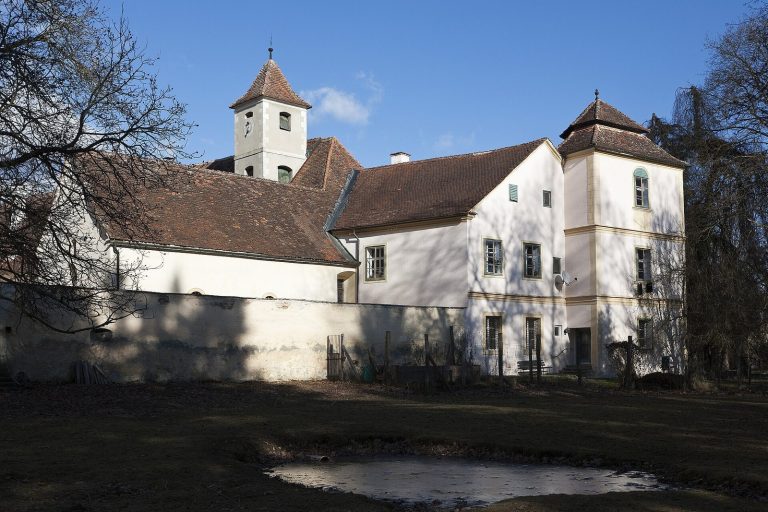
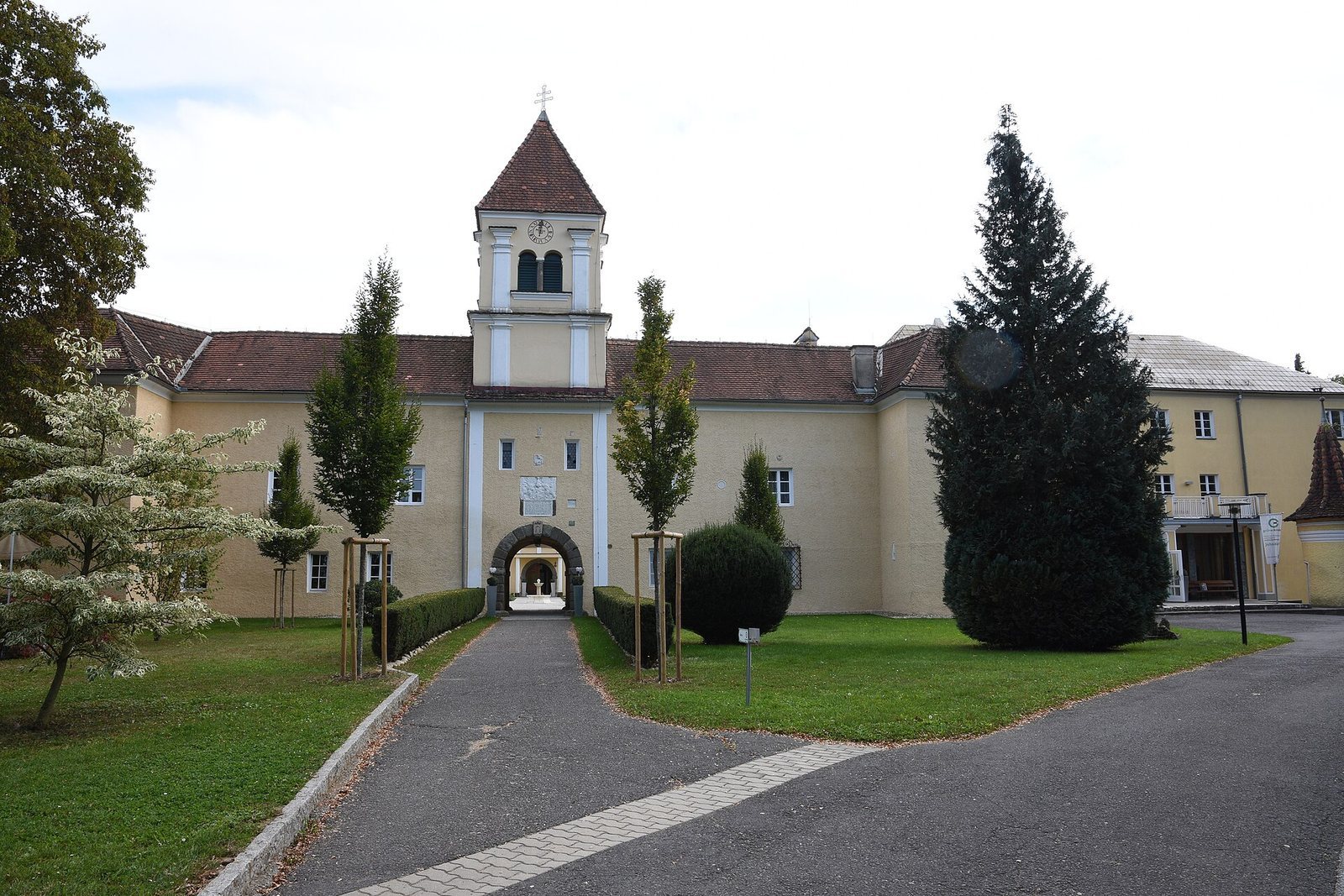
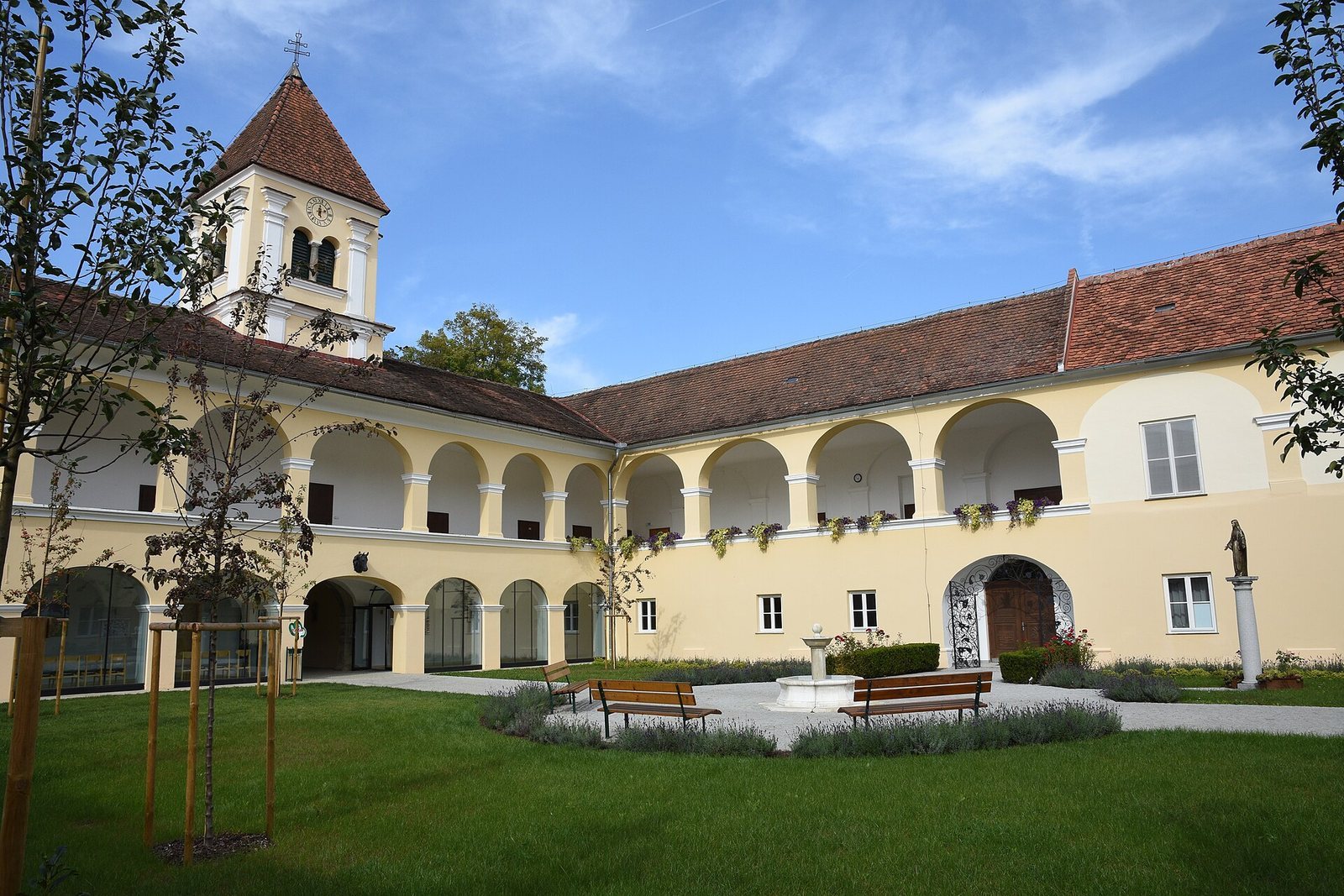
The complex includes a tower, an inner defensive wall, a courtyard, and a main building. Alterations under Katharina Elisabeth, Baroness von Galler, raised the inner wall and added guest rooms. Rows of arches and passageways were built in the courtyard, while the stair hall in the main building was converted into a dining hall. Italian plasterworkers and painters were brought in to work on the dining hall.
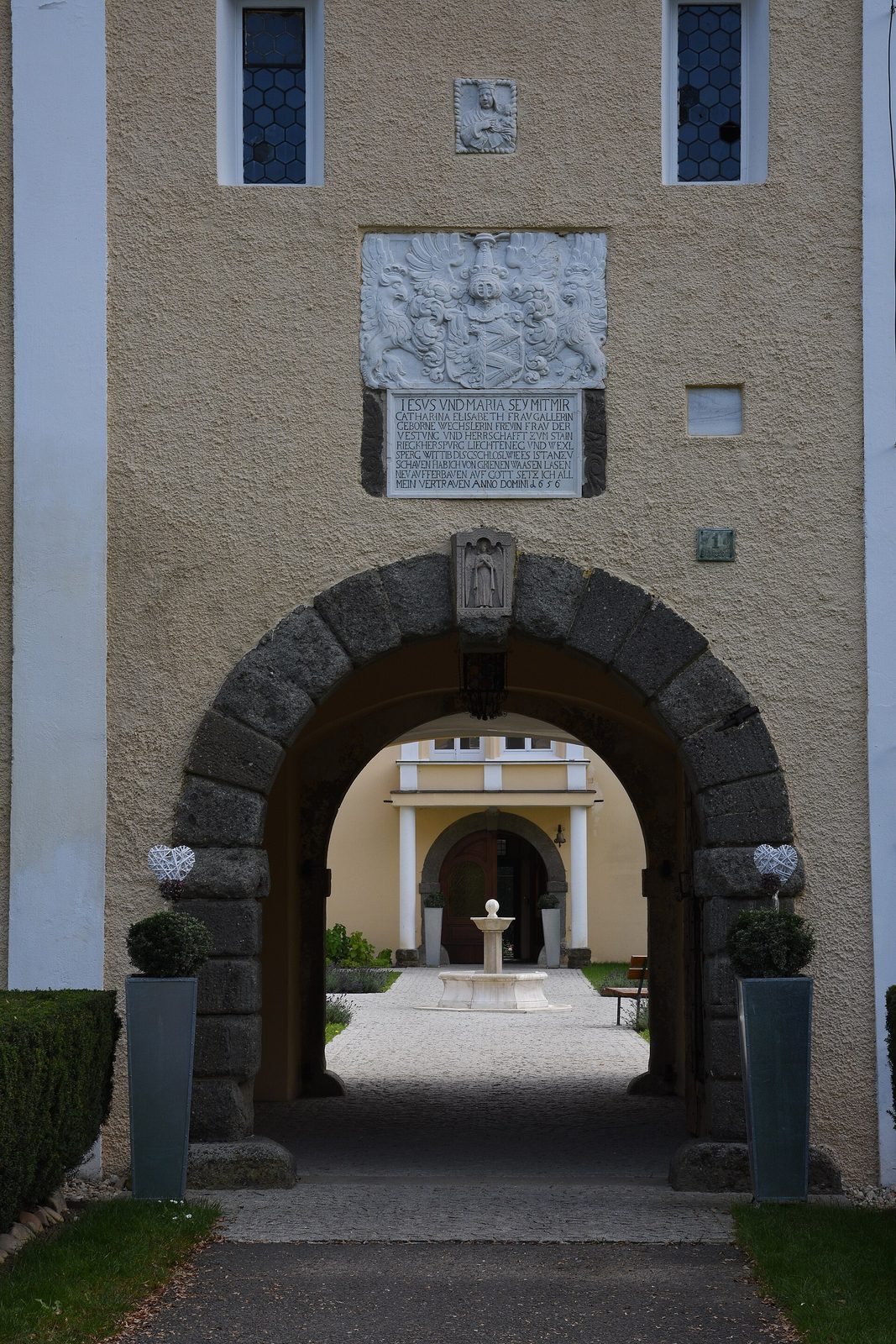
Portal inscription and drawing
An inscription stone survives above the main portal and commemorates Katharina Elisabeth, Baroness von Galler, as a powerful owner. A drawing of the castle by Mandl dates to 1830.
Reported underground passage
A tradition describes an underground passage from Johnsdorf Castle to Riegersburg, another castle in Styria. The passage remains unconfirmed.