Colwyn Castle: A Medieval Motte-and-Bailey Castle in Wales
Site at a Glance
- Rating
- 5
- Popularity
- Very Low
- Country
- United Kingdom
- Primary era
- Medieval
- Eras represented
- Classical, Medieval
- Civilizations
- English, Norman, Roman
- Site type
- Military
- Remains
- Castle
On this page8 sections
History
Colwyn Castle, also known as Maud’s Castle, is a medieval castle in Wales, United Kingdom, built by the Normans around 1093 in the motte-and-bailey tradition. The site, near Builth Wells in the former county of Radnorshire, had earlier served as a Roman fort and later became a contested stronghold between Welsh rulers and Norman lords.
Norman foundations and Welsh control
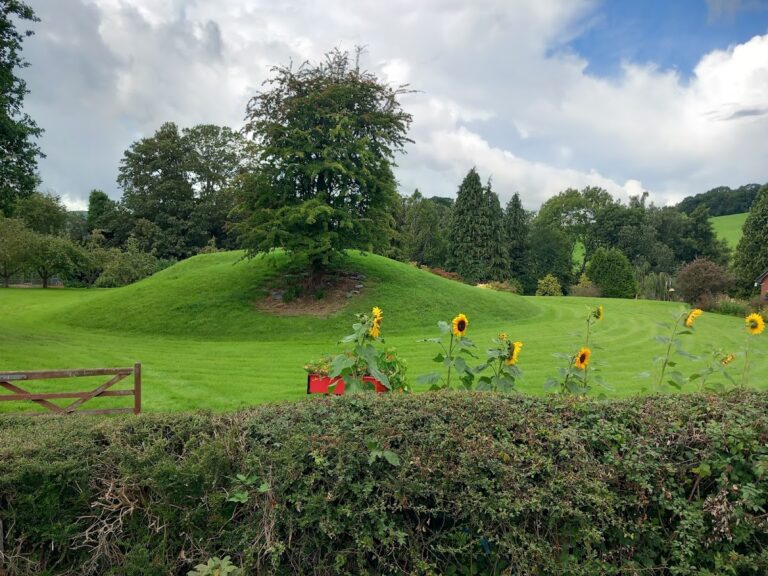
Raoul II of Tosny, a Norman nobleman also known as Ralph Tosny, built the first medieval castle over the Roman military installation. The new stronghold consisted of a raised mound and an adjoining enclosed yard, protected by earthworks and defensive barriers. Local ruler Madog ab Idnerth may have taken it around 1135, but by 1143 the castle was again under Norman control, and repairs were associated with Ranulf, Earl of Chester.
Colwyn Castle later passed into Welsh hands. In 1175, Rhys ap Gruffydd, ruler of Deheubarth, a medieval Welsh kingdom in southwestern Wales, gave it to his son-in-law Einion Clyd. Rhys was then allied with Henry II of England, who had recognized him as justiciar, a senior judicial and administrative official, in South Wales.
Rebuilding and renewed conflict
After Henry II died in 1183, Rhys rebelled against his successor, Richard I. The Normans probably regained Colwyn Castle, and William de Braose, the 4th Lord of Bramber, is thought to have rebuilt it in 1195. The following year, after a siege, Rhys captured the castle again during a campaign against the Normans. He also seized Carmarthen, Radnor, and Painscastle, defeated an army led by Roger de Mortimer and Hugh de Say, and destroyed the first castle.
Henry III spent the summer and autumn of 1231 at Colwyn Castle, directing its reconstruction while also working on the fortifications of nearby Painscastle Castle. By this time, the stronghold was also called Maud’s Castle, a name associated with Maud de Braose, William de Braose’s wife.
Later medieval changes
The castle changed hands repeatedly in the following decades as political alliances shifted. These changes involved Llywelyn ab Iorwerth, commonly known as Llywelyn the Great, and Roger Mortimer of Wigmore, an Anglo-Norman lord. Ralph de Mortimer rebuilt the castle in 1242 to protect the lordship of Maelienydd, a medieval lordship in the Welsh Marches, the frontier zone between English-held territories and Wales.
The Tosny family regained the surrounding area in the 1290s. Colwyn Castle was abandoned during the fourteenth century, ending its active role as a contested medieval stronghold.
Remains
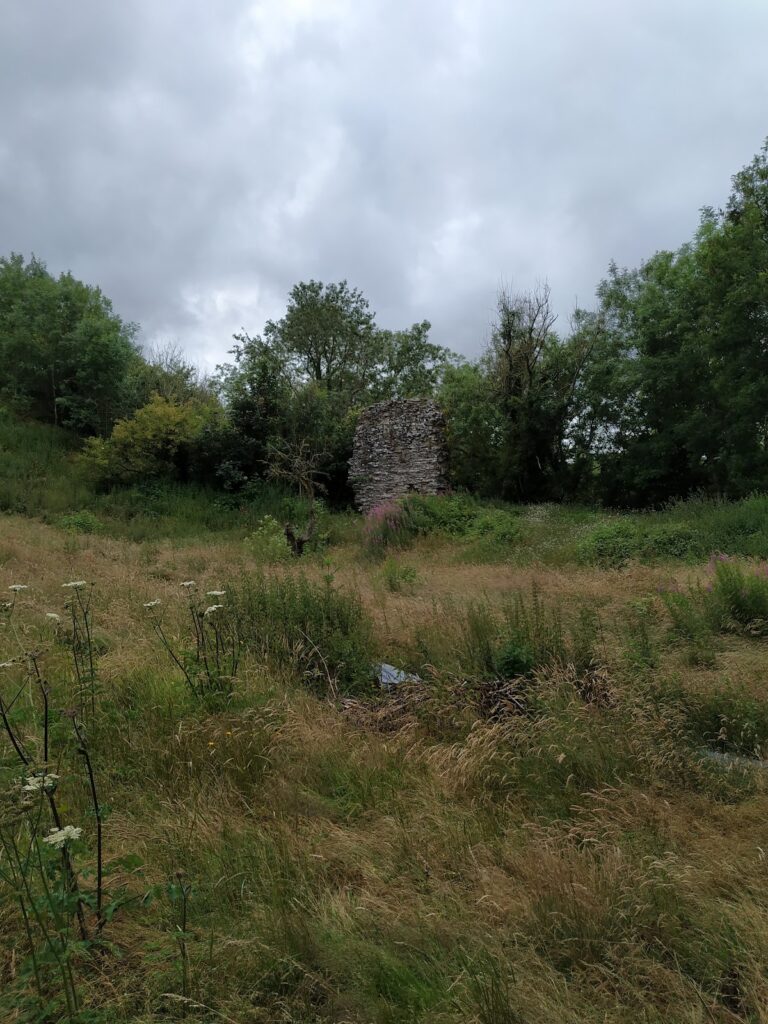
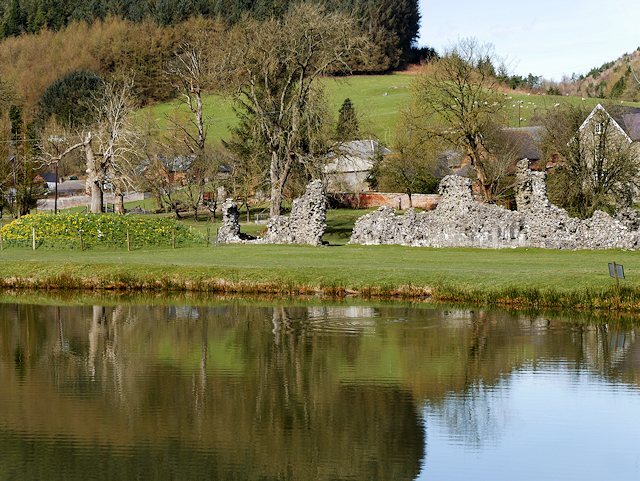
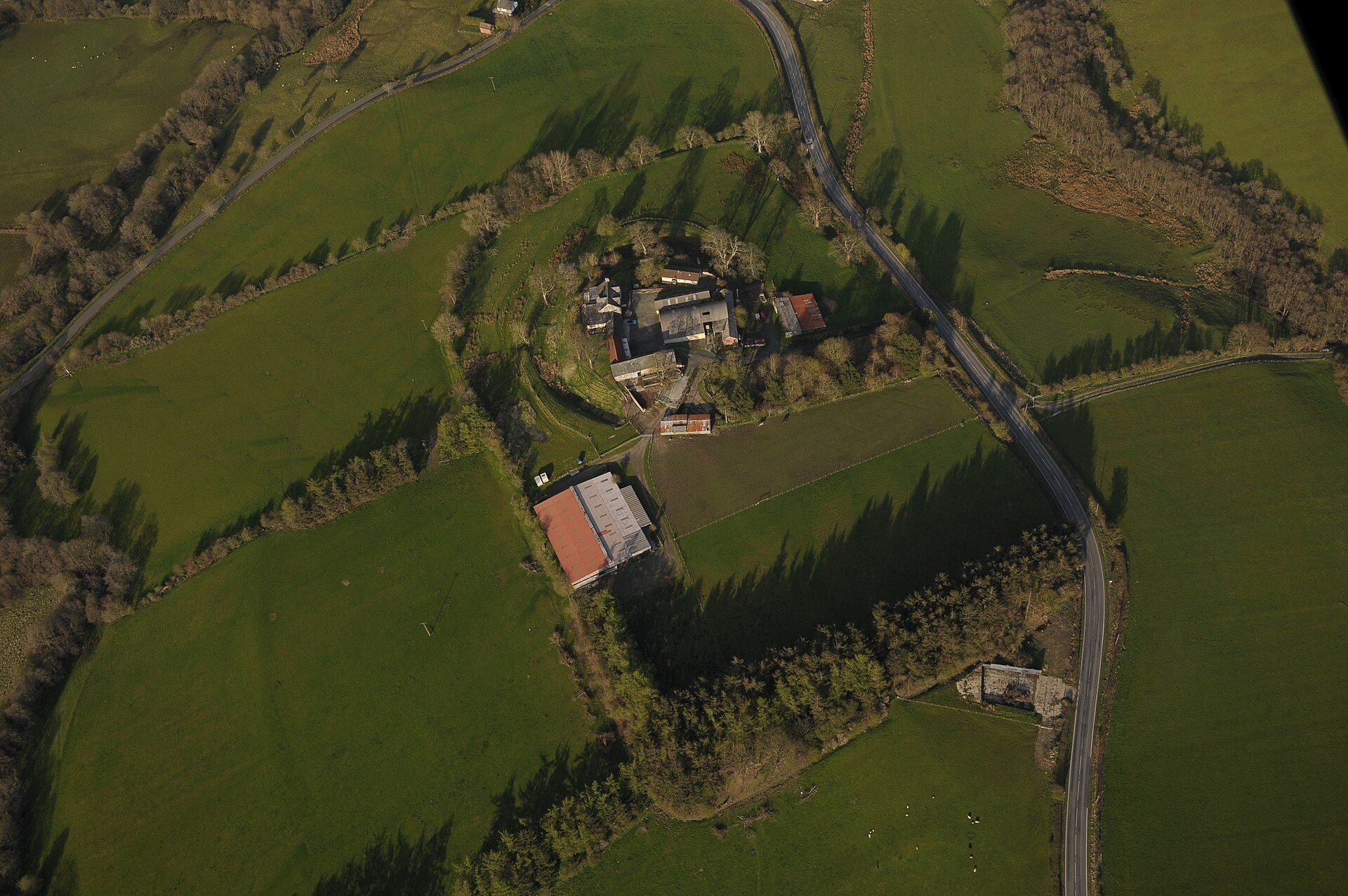
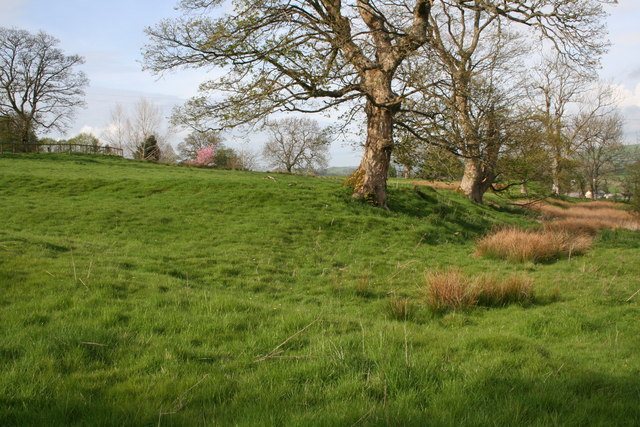
The surviving site occupies ground about 700 feet, or 210 metres, above sea level. It overlooks the River Edw to the north, while mountains lie to the south. The physical remains comprise the distinct earthworks of the earlier Roman fort and the later medieval castle, with the outer entrenchments still in place. A farmhouse now occupies the site.
Roman and medieval earthworks
Roman fort
The Roman fort formed the earliest known military installation at Colwyn. Its surviving remains remain visibly distinct from the earthworks of the medieval castle, allowing the earlier Roman occupation to be distinguished from the later defensive construction.
Motte-and-bailey castle
The first medieval castle was a motte-and-bailey, formed by a raised earth mound and an adjoining enclosed yard. Ditches, banks, or palisades protected these elements. The outer entrenchments survive as part of the present earthworks, although the later occupation of the site by a farmhouse has changed its physical use.