Castle of Ceppaloni: Norman Fortress and Feudal Residence

Site at a Glance
- Rating
- 4.3
- Popularity
- Very Low
- Country
- Italy
- Primary era
- Medieval
- External website
- Open
- Eras represented
- Medieval, Early Modern, Modern
- Civilizations
- Crown of Aragon, Norman
- Site type
- Military
- Remains
- Castle
On this page11 sections
History
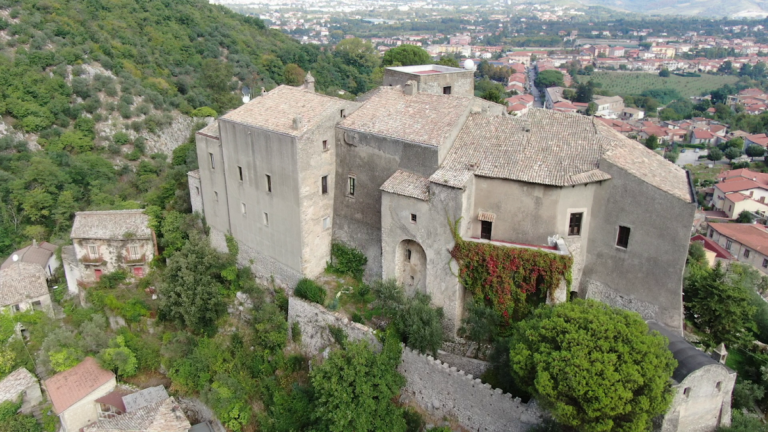
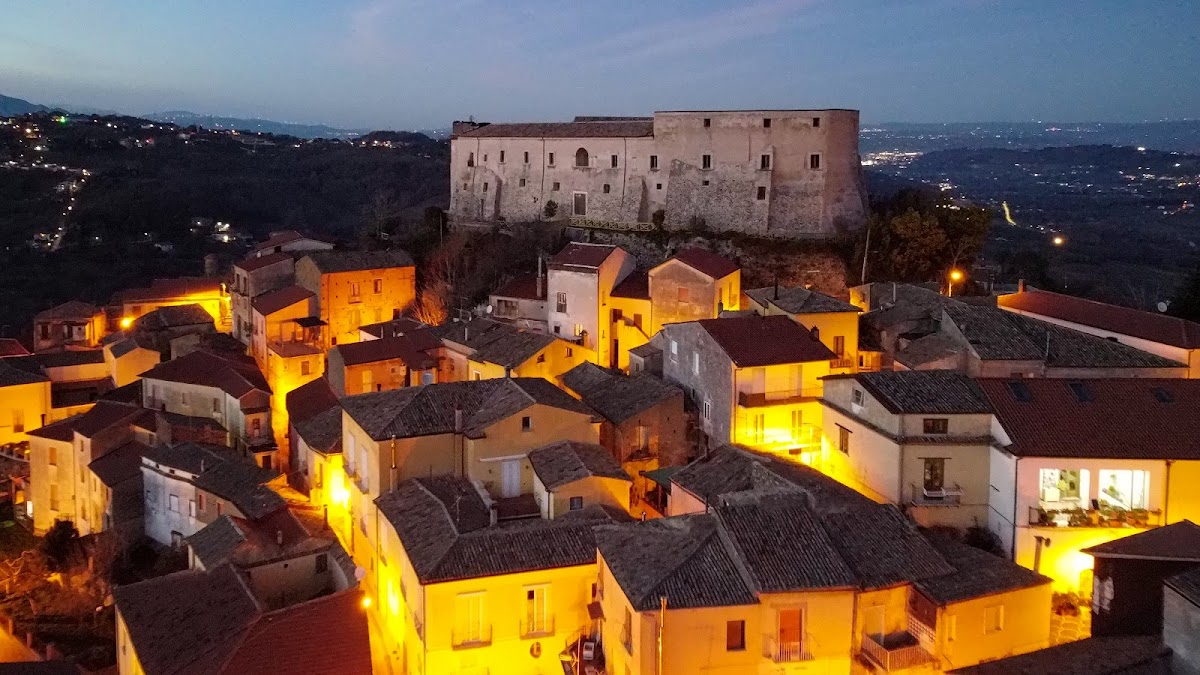
The Castle of Ceppaloni is a medieval fortress in Ceppaloni, Italy, built by the Normans during the second half of the eleventh century in the Norman architectural tradition. Positioned above the Sabato Valley, it controlled an approach to Benevento and later developed through Angevin and Aragonese phases into a feudal residence, court, and baronial palace. The visible complex reflects these successive changes over roughly nine centuries.
Norman foundation and twelfth-century conflicts
The Normans, Scandinavian groups who became a ruling military aristocracy in southern Italy, probably established the castle during the second half of the eleventh century. An earlier Roman or Lombard fortification on the same site has been proposed but remains unconfirmed. The earliest historical references belong to the beginning of the twelfth century, when Raone II of Fraineta, lord of Ceppaloni, held the castle.
During the conflicts between the papacy and the Normans, the fortress served as a base for raids against Benevento. Pope Honorius II stayed there in 1128 after reaching an agreement with Roger II of Sicily. From the castle, he ordered the sack of Benevento because its citizens had refused to surrender conspirators responsible for the murder of the rector Guglielmo the previous year.
The people of Benevento had also been angered by repeated attacks associated with Raone II, who had rebelled against Roger II. With Roger’s assistance, they demolished the castle. Roger subsequently rebuilt it and ordered the settlement of Cepparunum to receive stronger defenses and fortifications.
Frederick II and Angevin administration
Under Frederick II, the castle again became involved in the struggle between imperial authority and the papacy in southern Italy. During the regency of Queen Constance, Frederick’s mother, and until his return in 1220, Benevento occupied the fortress and kept a castellan there. A castellan was the officer responsible for commanding and administering a castle.
In 1229, while Frederick II was away on crusade, papal forces and Guelph troops from Benevento attacked Apice and Montefusco before burning the castle. After returning, Frederick forcibly recovered Ceppaloni and the other territories that had been occupied.
Under Angevin rule, the French-origin House of Anjou that governed southern Italy, the castle formed part of the regional defensive system. The king appointed its castellan, while administration combined royal authority with feudal control. The fief of Ceppaloni was granted to soldiers of French origin.
The Angevin-Aragonese struggle
The fortress played a role in the conflict between Angevin supporters and the Aragonese dynasty, which came from the Crown of Aragon and contested Angevin power in the region. In late February 1437, Alfonso V of Aragon reached Ceppaloni after crossing the Caudina Valley and Montesarchio. Heavy snow and bad weather had forced him to stop at Montefusco, and he remained at the castle for several days as the guest of the condottiere Francesco Orsini, a professional military commander supporting his faction.
Under Giacomo Antonio della Marra, Ceppaloni later became a stronghold of the Angevin faction that supported René of Anjou. In 1460 and again in December 1461, Aragonese royal troops commanded by the condottiere Alessandro Sforza established camps in the Sabato Valley, particularly in the territories of Chianche and Chianchetelle. Their position helped control the surrounding area and traffic along the Appian Way, the major Roman road that crossed the region.
From military fortress to feudal residence
In 1534, Emperor Charles V transferred the castle and the fief of Ceppaloni to Don Roderigo d’Avalos. He appears to have lived there on a more or less permanent basis, followed by his successors Alfonso and Roderigo, who resided there with their families. The castle therefore continued to function as a noble residence as well as a fortified site.
The fief passed in 1576 to the Cosso, or Coscia, family. They normally lived at their larger fief of Sant’Agata de’ Goti, but between 1605 and 1623 the castle served as the habitual residence of the feudal lord Giovan Tommaso Cosso, brother of the Duke of Sant’Agata.
Fabio de Lagonissa, also known as Fabio della Leonessa, purchased the castle and fief in 1634. He restored the building and lived there permanently. Fabio was archbishop of Conza and patriarch of Antioch. The della Leonessa family continued to occupy the castle, and Fabio’s nephew Don Vincenzo became the first to bear the title Duke of Ceppaloni. Geronimo, son of Prince Tiberio Carafa and Cristina Carafa, was also born there, reflecting the family connections between the Carafa and della Leonessa houses.
From the patriarch’s purchase onward, the castle served as the residence of the feudal lord and his court. It also housed the curia, or baronial court, which administered justice under the lord’s authority. The governor directed the court and acted as judge, and the complex consequently included the feudal prison.
Decline of the baronial residence
By 1688, the fortress had become a baronial palace. An earthquake then ended its use as a regular residence. The caretaker’s family remained there, while the serving governor occupied it only occasionally. In 1699, the property briefly changed hands and was occupied by Donna Maddalena Capece Piscicelli, Duchess of Apollosa and widow of Guindazzo.
After this short interval, the castle was generally used only intermittently by the governor, sometimes with his wife or with one or two servants. The della Leonessa family lived at the ducal palace of San Martino Valle Caudina or at Sepino, and around 1740 moved its habitual residence to Naples.
End of feudal functions and later changes
The abolition of feudalism in 1806 ended the castle’s judicial and prison functions. It consequently lost its remaining institutional role, and that condition continued through the nineteenth century and into the early twentieth century.
In the early twentieth century, Baroness Donna Maria Argentina Pignatelli della Leonessa in Carelli sold the castle to several people in Ceppaloni. Its rooms were divided into separate apartments. The castle is now municipal property, restoration works were nearing completion, and it is protected as cultural property under a ministerial decree dated 23 May 1955.
Remains
Setting and defensive enclosure
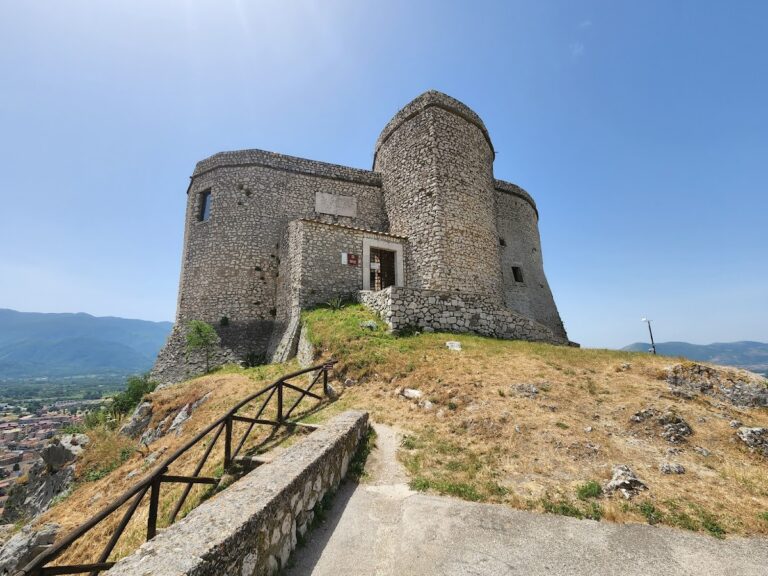
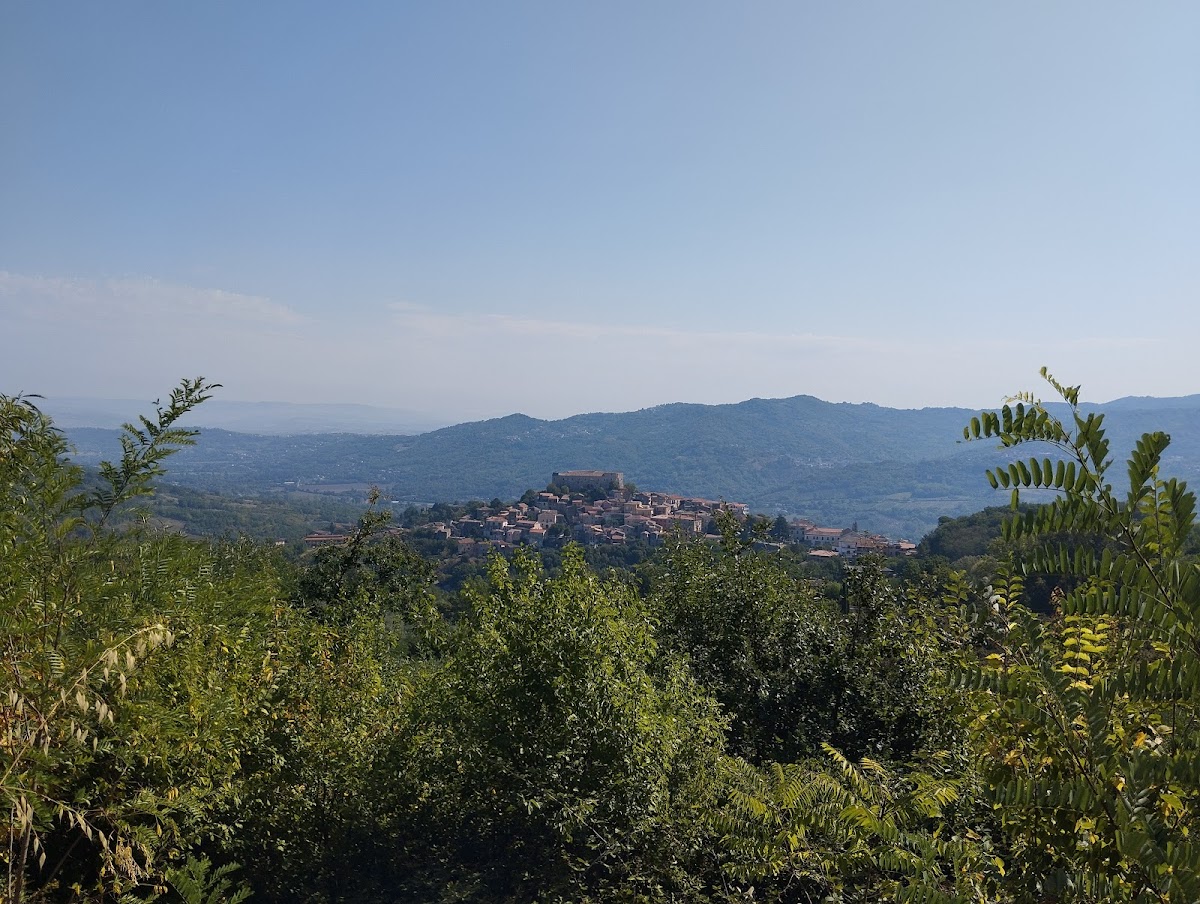
The castle stands at approximately 347 metres above sea level on a rocky spur above the Sabato River valley, at the summit of the ridge occupied by the settlement. Its position overlooked access to Benevento through the Sabato Valley, near the Stretto di Barba, where the ancient Via Antiqua Majore passed through a narrow gorge on the route between Benevento, Avellino, and Salerno.
An outer curtain wall, the continuous defensive wall linking a fortification’s strongpoints, follows the irregular edge of the cliff. The enclosure forms a roughly triangular plan with more or less rounded corners, and the inner court follows approximately the same outline. The building range fills the space between the perimeter and the court and extends over two levels. Later interventions are especially visible in the foundations and other basement structures.
Surviving tower and entrances
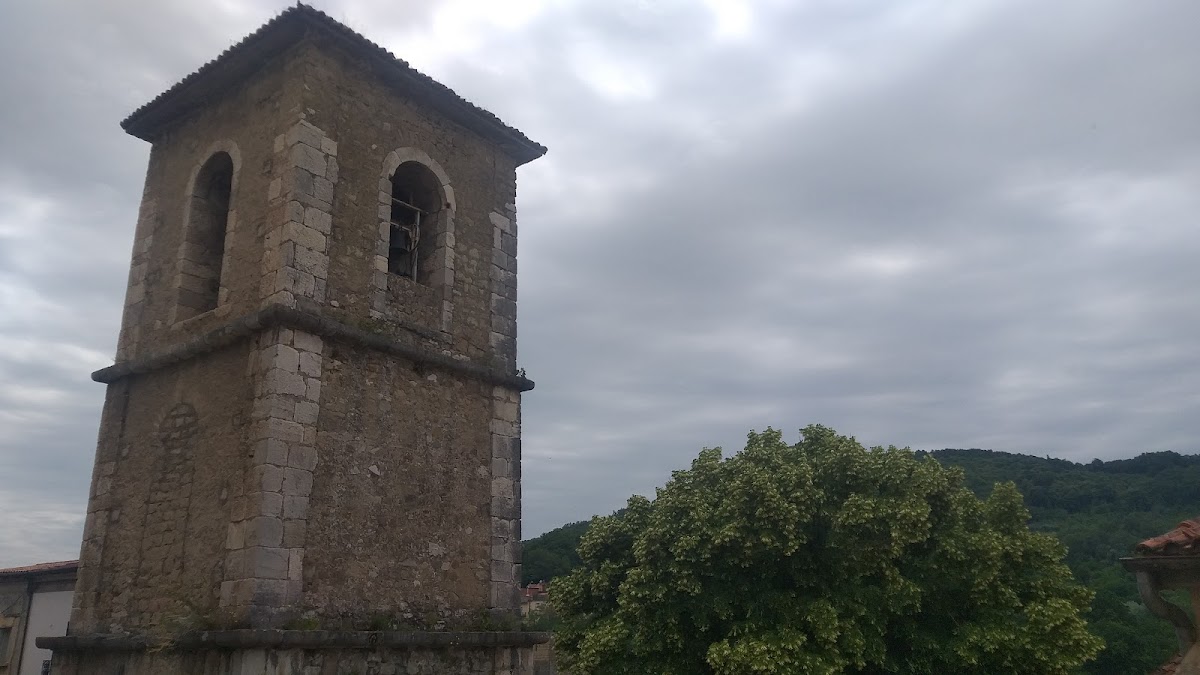
The principal plan appears to have remained broadly unchanged since the Norman period, although the buildings and defenses were substantially modified over time. The original fortification included circular towers, a characteristic feature of Norman castles of the eleventh and twelfth centuries. Only the tower at the northwestern corner survives.
The former entrance was located at the base of this northwestern tower, directly beside the precipice. Its position placed the approach behind a bend in the access road, a defensive arrangement that made the entrance less directly exposed. As military needs declined, the old entrance was blocked and a new one was opened on the southwestern side.
Residential ranges and later fabric
The castle was built in rubble masonry, and its surviving fabric incorporates the effects of repeated construction phases. From the sixteenth century onward, the complex increasingly assumed the character of a baronial palace rather than a military fortress. The two-level building range around the court reflects this changing use, while the foundations and basement structures preserve traces of later interventions.
Restoration has affected the surviving fabric, with further works nearing completion. The former rooms were subdivided into separate apartments during the early twentieth century, when ownership passed to several inhabitants of Ceppaloni. This subdivision forms part of the building’s later physical history, following its medieval defensive use and its long period as a feudal residence.