Schloss Burgtreswitz: A Medieval Castle and Administrative Center in Germany
Site at a Glance
- Rating
- 4.2
- Popularity
- Very Low
- Country
- Germany
- Primary era
- Early Modern
- External website
- Open
- Eras represented
- Medieval, Early Modern, Modern
- Civilizations
- Electoral Palatinate, Holy Roman Empire
- Site type
- Military
- Remains
- Castle
On this page14 sections
History
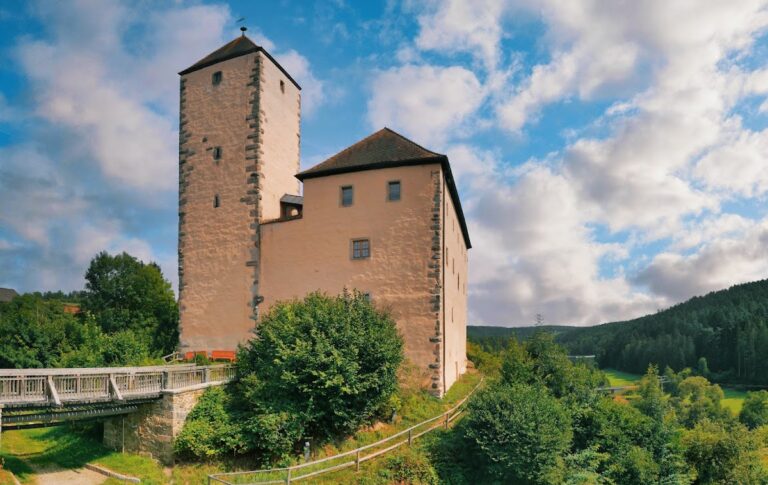
Schloss Burgtreswitz is a medieval castle complex in Germany, in Burgtreswitz, now part of the Upper Palatinate market town of Moosbach. The area appears to have been settled first by Slavs, while the Counts of Sulzbach may have founded the castle in the early twelfth century. Its later history reflects the changing control of the Upper Palatinate, as well as the development of a regional administrative center that served several ruling houses.
From the Sulzbachs to the Wittelsbachs
After the male line of the Sulzbach family ended with Count Gebhard III in 1188, the property passed by marriage to the Ortenburg family. Its local branch became known as Ortenburg-Murach. Members of the Treswitz family appear in written records during the thirteenth century. Pernold the Younger, son of Pernoldus of Draeswitz, served as an Ortenburg ministerial, a medieval official with administrative or military duties, in a document dated 8 March 1232. Siboto of Dreswitz appears in a document of 1255, and Pernold the Younger had died by 20 November 1256.
The Treswitz family first held its seat at Altentreswitz, where an eleventh-century castle site was later built over by the Church of St. Matthew. The family subsequently moved its residence to nearby Burgtreswitz. Around 1256, Bernold of Treswitz and his sons transferred their properties and their bailiwick jurisdiction over Böhmischbruck to several ecclesiastical institutions, including the Church of the Assumption at Böhmischbruck, Regensburg Cathedral Chapter, and St. Emmeram Abbey. After the property was sold to the Wittelsbachs, the family moved to Hohentreswitz while retaining land at Burgtreswitz. The family died out at Rothenstadt in the sixteenth century.
On 6 November 1272, Count Rapoto IV of Ortenburg-Murach sold his possessions between the Danube and the Bohemian Forest to Duke Ludwig II of the Wittelsbach dynasty. Treswitz was included in the ducal property listed around 1280. Late-thirteenth-century land registers of the Lengenfeld vice-dominal district, an administrative and fiscal division, placed the castle and its associated settlements within that district. The settlements included Moosbach, Ödpielmannsberg, Tröbes, Burgtreswitz, Gebhardsreuth, Ragenwies, and Waltenrieth.
Electoral Palatinate administration
Konrad II of Paulsdorf was recorded as the first custodian of Treswitz in 1304. A custodian, or Pfleger, represented the ruling authority locally, while the territory under his administration was a Pflegamt. The Treaty of Pavia in 1329 assigned the castle to the Electoral Palatinate, a major principality of the Holy Roman Empire whose counts palatine also held the electoral office used in choosing the emperor. In 1338, Emperor Charles IV confirmed a separate principality for Count Palatine Rupert II. Treswitz became part of it alongside Nabburg, Neunburg vorm Wald, and Murach, and an administrative district was formed from the revenue offices of Eslarn, Waidhaus, and Treswitz.
At the Diet of Passau on 17 July 1353, Burg Treswitz was pledged to Emperor Charles IV. Otto Zenger was recorded as its first judge that year. Following a later division of the Palatine territories, the Treswitz administrative district passed in 1410 to Count Palatine John. After John’s death in 1443, it went to his son Christopher III, who was also king of Sweden, Denmark, and Norway. Local custodians exercised lower jurisdiction over lesser cases, while high criminal jurisdiction belonged to the courts of Nabburg and, from 1441, Neunburg vorm Wald. Treswitz remained part of the Duchy of Palatinate-Neumarkt until 1499.
After Christopher III died suddenly, the Upper Palatinate passed to Otto I, who pledged the castle and administrative district to the former custodian Hans von Pleystein. Under Otto II, custodian Georg Zenger had to confirm in writing that he had paid the 800-gulden debt owed to Hans von Pleystein’s widow. Building accounts for the castle began under custodian Hans Degenreuter in 1520.
Military and judicial importance
The castle retained military and administrative importance during the sixteenth and early seventeenth centuries. Its wardenship was held by Kaspar Grunschilt in 1518, followed by the hammer master Hermann Eschenbegk and his five sons, and by Paul Ott from 1545. In 1543, Friedrich II granted the Treswitz administrative district a coat of arms that later became the coat of arms of Moosbach.
From 1585, Treswitz also exercised high criminal jurisdiction, meaning authority over serious offenses, including those punishable by death. The execution site lay northeast of Burgtreswitz at the Galgenfelder. In 1594, the administrative districts of Treswitz and Tännesberg were combined under an office based at Burgtreswitz. Christoph von Crailsheim was custodian in 1610, and on 1 July 1620 Georg Friedrich von Landersheim zu Eigelberg became captain of the Treswitz company.
War, destruction, and reconstruction
The Thirty Years’ War, fought from 1618 to 1648 amid religious, dynastic, and territorial struggles across the Holy Roman Empire, brought direct damage to the castle. In 1622, two companies of Spanish cavalry were quartered there. They damaged the complex, destroyed the administrative rooms, and set the archive on fire. In 1633, Protestant Union troops under Bernhard of Saxe-Weimar entered the Treswitz district. The following year, Count von Wahl, commandant of Amberg, ordered the castle largely burned and its stored supplies destroyed so that advancing enemy forces could not use it as winter quarters. Custodian Hans Jacob Schad could no longer use the castle and moved to Moosbach for several years.
Reconstruction took place in stages. On 16 April 1653, authorities approved the restoration of the surviving front building, assigning its ground floor to an archive, its middle level to administration and interrogation, and its upper level to tax-grain storage. In 1664, a 38-metre-long and 14-metre-high section of masonry collapsed. It was rebuilt by 1669 as the New Building. A bread oven was installed in 1674, and a roof measuring 54 metres long and 10 metres wide was completed in 1684 and 1685. The chapel held its first mass in 1690. Further work added a horse stable and vaulted spaces in 1698, followed by a completely rebuilt barn in 1701.
Eighteenth-century administration and later ownership
The complex deteriorated again in the early eighteenth century. Franz Christoph Reisner von Lichtenstern became custodian in 1708, followed by his son Franz Ferdinand in 1738. Franz Marquard von Lichtenstern held the office from 1772 to 1802. Treswitz reached a high point of administrative importance under the Lichtenstern custodians, particularly after a district court was created in 1799. Its jurisdiction extended over Vohenstrauss, Moosbach, Pleystein, Eslarn, Waidhaus, Tännesberg, Waldthurn, and Leuchtenberg.
Roof repairs were approved in 1732, with local inhabitants required to provide forced labor because funds were insufficient. Storm damage in 1756 and hail damage in 1767 led to further work. In 1786, the tower was demolished, a new vaulted gate passage was built, and 24 dormer windows and flat roof tiles were added. Storm damage in 1791 and 1792 contributed to the eventual transfer of the administrative seat to Friedrichsburg in Vohenstrauss in 1809.
The district court was reorganized in 1803, and a decree of 16 March 1809 transferred it to nearby Vohenstrauss. On 12 November 1810, the municipality of Burgtreswitz purchased the castle. In 1813, it sold the northwest wing and chapel to Magnus Singer, a prelate of the secularized St. Mang monastery in Regensburg. Singer later sold valuable church furnishings. Adam Ulrich acquired the eastern custodian’s residence and the prelate’s share in 1814, and transferred a communal brewery to the castle.
Agricultural, brewing, and cultural use
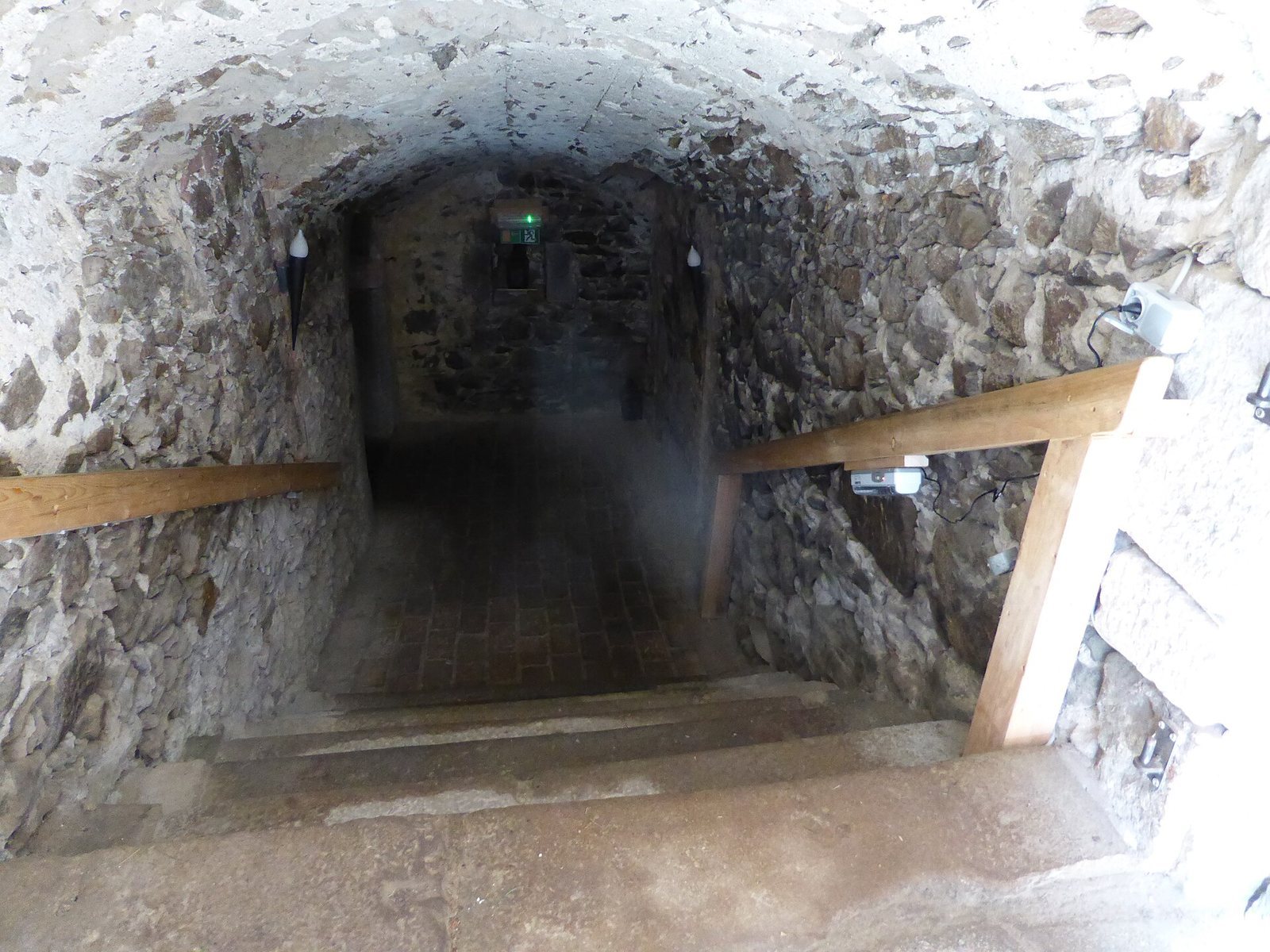
During the nineteenth and early twentieth centuries, the complex served as an agricultural enterprise, brewery, and inn. Wolfgang Schön acquired it in 1819 and established a brewery with a beer-storage cellar in the southern wing. The family brewery supplied about sixty inns in the surrounding area. An ice cellar was built beneath the former chapel in 1918. Brewing ceased in 1938, and Karl Alfred Krüger acquired the castle in 1942.
The market town of Burgtreswitz exercised its right of first refusal on 26 May 1983 to acquire the severely deteriorated building. A support association was founded in 1985 with help from the municipality of Moosbach, and extensive restoration began in 1986. The work made possible public cultural and local-historical use, including a museum in the gate building, and the restored castle functions as a cultural center of Moosbach. Schloss Burgtreswitz is protected as both an architectural and archaeological monument under Bavarian monument register entry D-3-6440-0048. The archaeological protection covers medieval and early-modern evidence and finds in the area of the present castle.
Remains
Layout and defensive setting
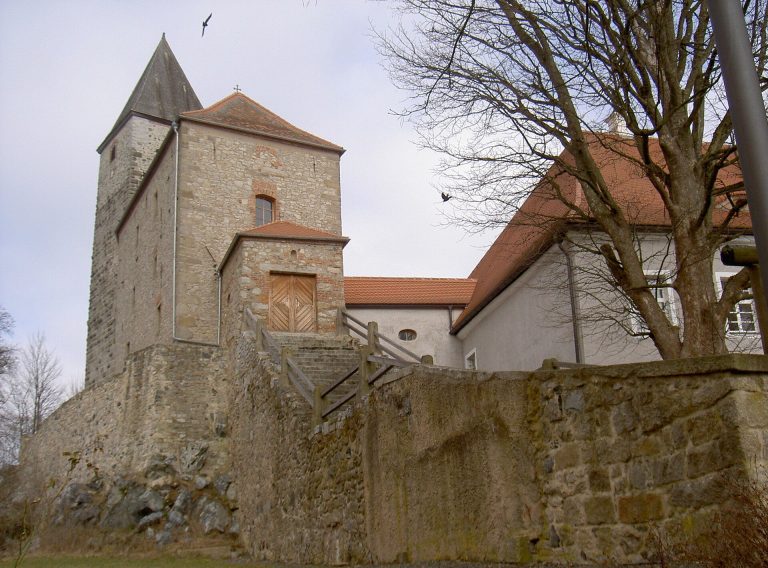
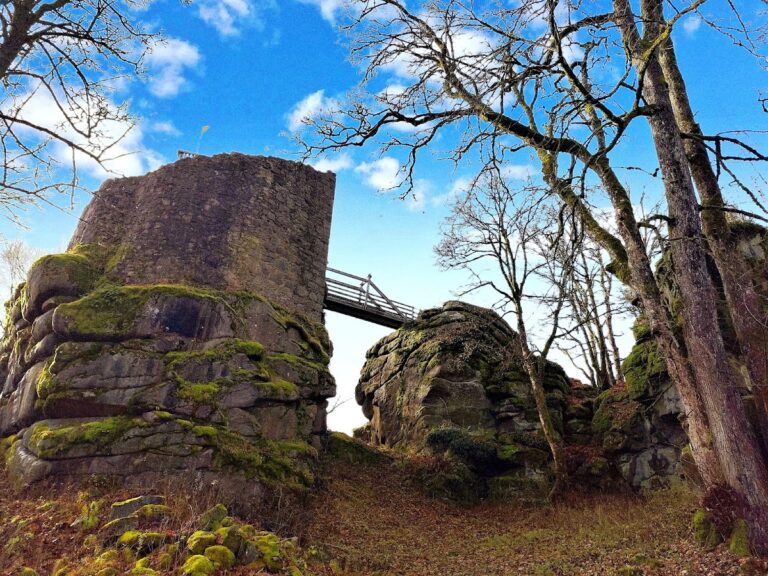
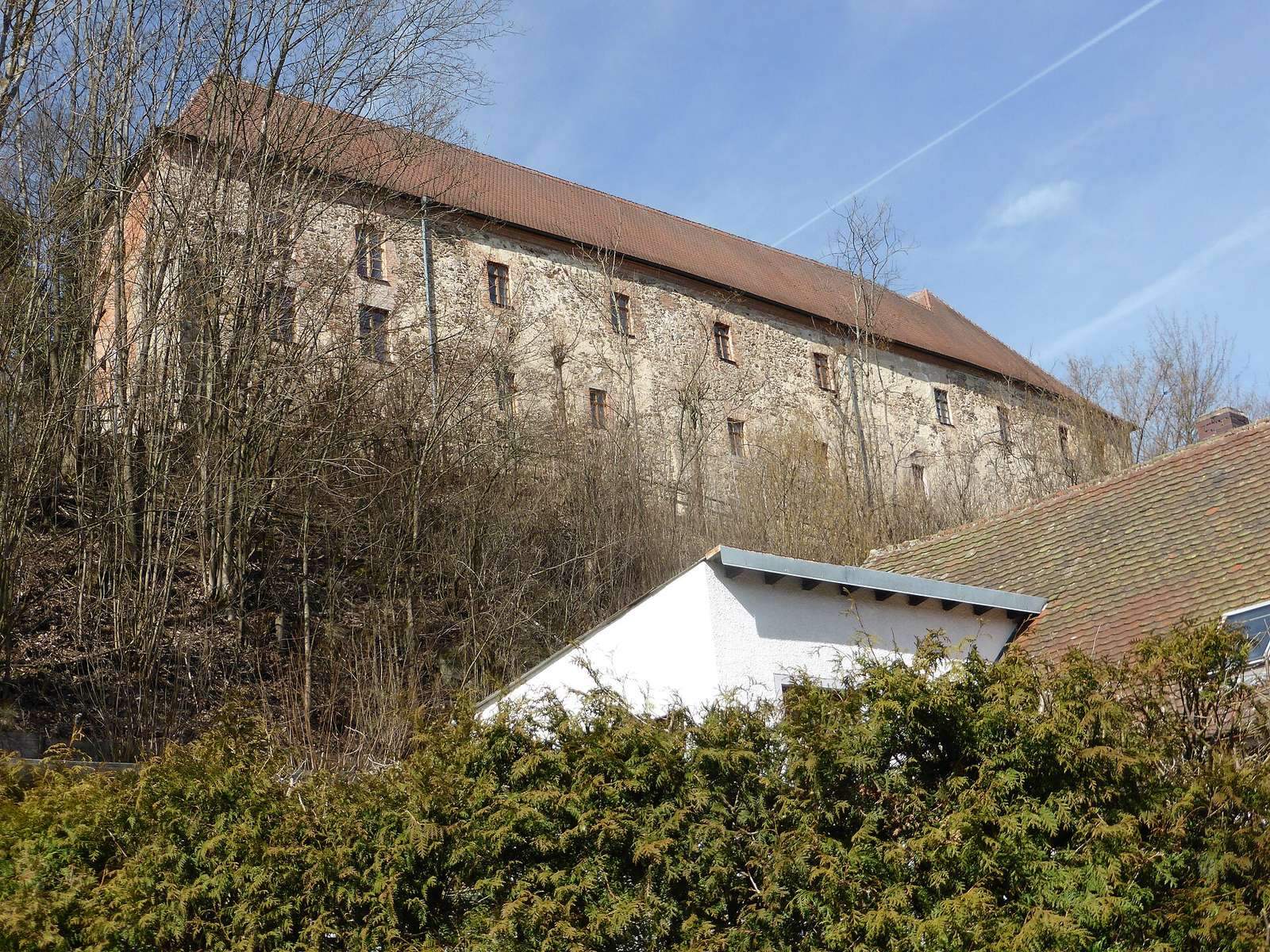
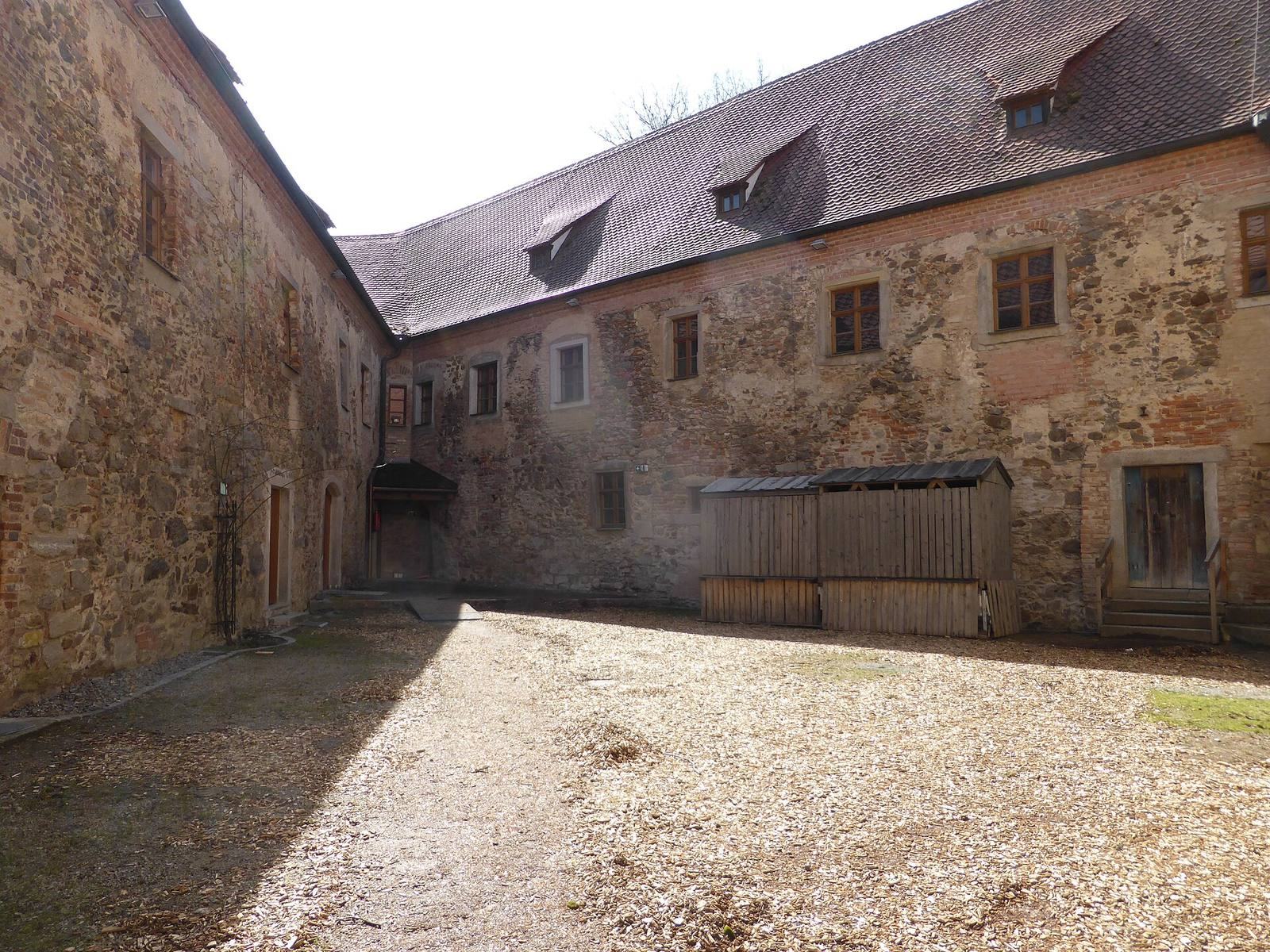
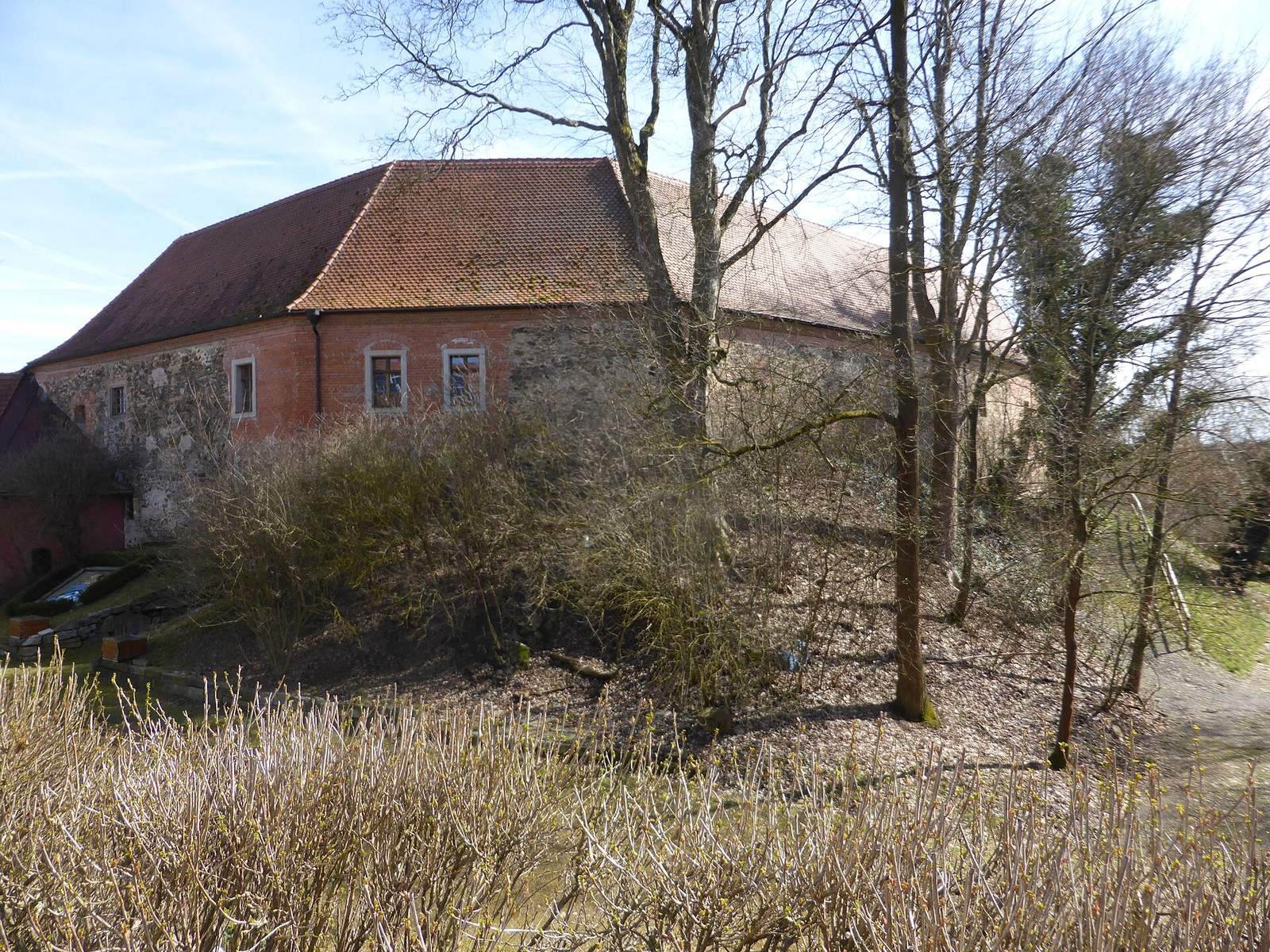
The surviving complex is a two-storey building of approximately three wings arranged around a closed inner courtyard. Its pitched roofs surround an irregular trapezoidal courtyard because the northern gatehouse interrupts and bends one side of the plan. A steep slope protected the castle to the south, while a ditch defended its western and northwestern sides. The former keep stood at the southern tip of the complex.
The western wall belongs to the original construction period. The eastern wall was built during the Baroque rebuilding phase around 1650. The sixteenth-century works included repairs to the main castle, stables, forecourt, drawbridge, and moat, combining the older defensive arrangement with improved administrative and domestic facilities.
Gatehouse and entrance
Gate passage
The northern gatehouse projects about three metres beyond the wall line and has a hipped roof. Its entrance contains a wooden star-shaped gate bearing the initials of the Lichtenstern family. Above the gate arch is a Gothic Electoral Palatinate heraldic relief dating to about 1340. The arch and the surviving vaulted gate passage date from the rebuilding of 1786, when the earlier tower was demolished.
Former inn and chapel area
To the left of the entrance is the former inn, whose rooms contain groin vaults and a Lichtenstern keystone marked with a six-pointed star. This part of the complex housed the castle chapel before its destruction during the Thirty Years’ War. The chapel was moved to the southern part of the castle at the end of the seventeenth century and dedicated to the Immaculate Conception. In the nineteenth century, the chapel known as Our Lady was converted for brewery use.
Sixteenth-century defenses and administration
The gate received oak thresholds, a portcullis, a new drawbridge chain, and new door hinges in 1520. An outer gate was added in 1525. A high tower mentioned in 1524 carried a small field cannon, with iron for its cannonballs supplied by the hammer mill at Altentreswitz. A battlement walk existed by 1529, while a castle prison and a loophole were documented in 1523. The windows were glazed with Venetian panes.
Fire safety shaped the treatment of the administrative rooms. The record office was vaulted in 1529 and fitted with window bars and stronger doors. Later rebuilding provided the front building with rooms for administration, interrogation, and grain storage. The surviving complex also preserves the results of later work, including vaulted spaces, horse stabling, a bread oven, and the rebuilt castle barn.
Later fabric and present cultural spaces
A section at the southwest corner collapsed in 1930 and was rebuilt in brick. A fragment of Gothic masonry survives in the base of the rebuilt section, preserving a visible part of the earlier structure within the later repair.
The gate building contains a publicly accessible museum. The courtyard and the interior hall, or Fletz, provide spaces for cultural use within the restored complex.