Castle of Los Fayos: A Medieval Cave Fortress in Spain


Site at a Glance
- Rating
- 4.4
- Popularity
- Very Low
- Country
- Spain
- Primary era
- Medieval
- Eras represented
- Iron Age, Medieval
- Civilizations
- Celtiberian, Crown of Aragon
- Site type
- Military
- Remains
- Castle
On this page14 sections
History
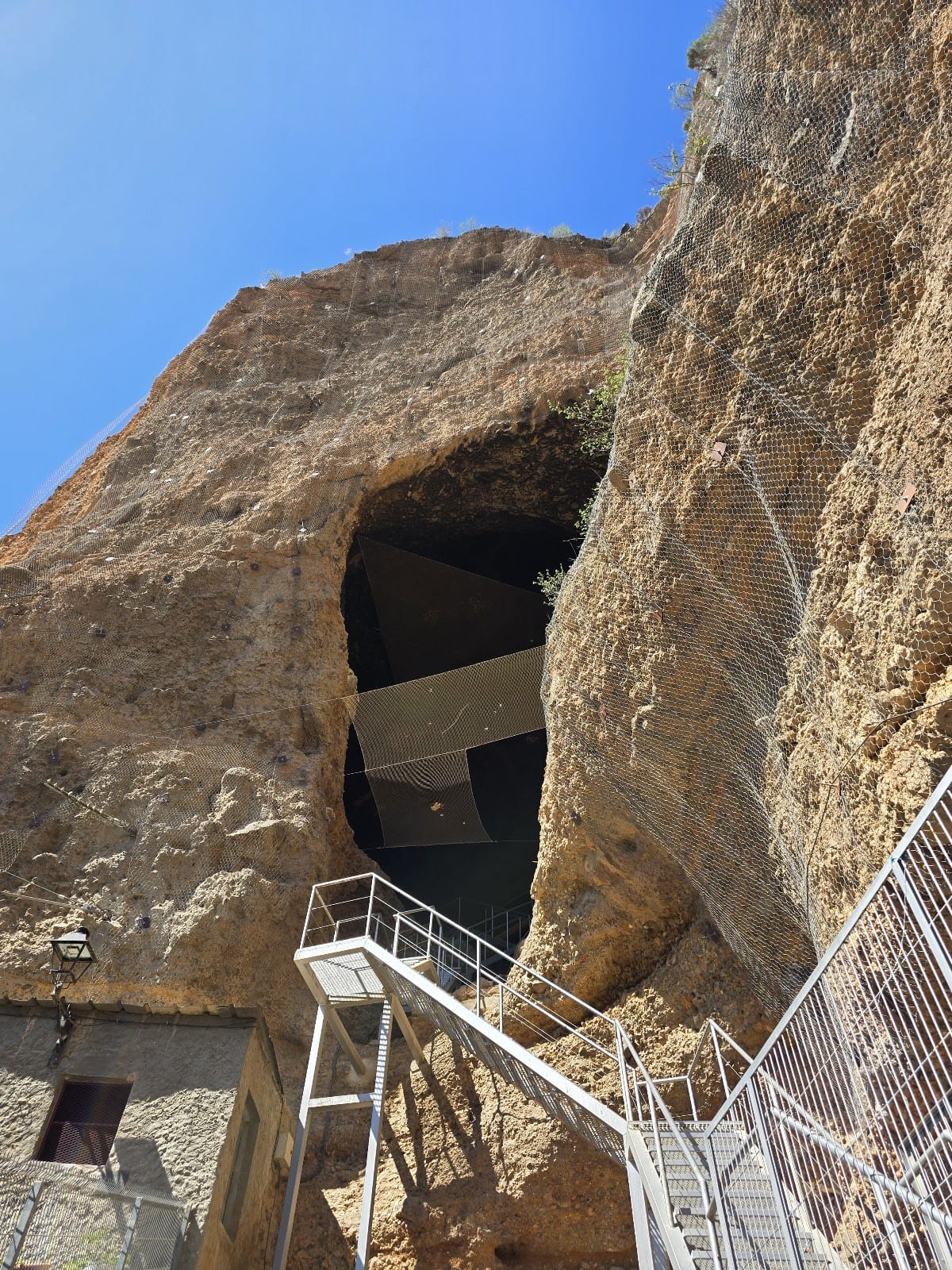
Castle of Los Fayos is a medieval cave fortress in Spain, located at Los Fayos in the Queiles Valley. Its first recorded existence dates to 1128, when it formed part of the Aragonese defensive system after the reconquest of the region. Built within natural caves and controlling a route between the Meseta and the Ebro Valley, it later guarded movement between Castilian territory and Tarazona in Aragon.
Prehistoric and pre-Roman occupation
The caves at Los Fayos were inhabited from the Late Bronze Age. A settlement dating to the Late Bronze Age or Iron Age occupied the upper part of the cave area, and pottery from both periods has been recovered near the upper tower. The location is consequently classified as an archaeological site as well as a medieval fortress.
The heights above the caves preserve pre-Roman fortification remains. They include a water-capture installation that supplied nearby Turiasu and was probably used until the second century. One of the earliest iron mines in the area was also identified at the nearby Plana del Cerro. These remains reflect the strategic and practical value of the site before the medieval castle took shape.
Aragonese frontier stronghold
Alfonso I of Aragon, known as the Battler, reconquered the area after the fall of Tudela in 1119. The strengthening of Aragonese fortifications during the 1120s produced the first written reference to Los Fayos in 1128, when Sequin was its tenente, a medieval official responsible for administering and defending a castle or district. Sequin still held the position in 1131.
After Alfonso I died in 1134, Los Fayos became an important frontier stronghold during the formation of the borders between Aragon and Navarre and the westward expansion of León and Castile. Medieval records name García Sangiz and Lope Sangiz among its later tenentes.
In 1148, García Ramírez, king of Pamplona, captured Los Fayos during an offensive against Aragon, along with Tauste, Petilla, and Pradilla. Ramón Berenguer IV, the count of Barcelona and prince of Aragon, negotiated for the castles’ return. A proposed marriage between Ramón Berenguer and García Ramírez’s daughter Blanca Garcés was never celebrated, however, and Los Fayos remained under Navarrese control in 1150. It probably returned to Aragon after García Ramírez’s death and the Treaty of Tudilén in 1151.
Contested frontier and royal control
Los Fayos remained a frequently contested frontier position during the thirteenth century. Sancho VII of Navarre used it as security for loans during a period of weakness for the Aragonese monarchy. In 1221 he granted it to the lords of Cameros on the condition that the castle remain neutral toward Castile.
A Castilian attack took place in 1275. Around 1277, the Aragonese king entrusted the castle to Martín Romeu de Vera, an influential nobleman from Calatayud. Martín was later succeeded by his son Gonzalo de Vera. The fortress had both military and economic value, since it helped control incursions from Castile and enabled the collection of tolls and customs duties along the route.
Jaime II of Aragon recovered Los Fayos for the crown in 1297 by acquiring it from Pedro Jordán de Alcolea and Martín Ximeno de Vera. It was soon ceded to Lope Ferrench de Luna, but the crown recovered it again in 1301. Pedro Lográn de Monezas served as its alcaide, the commandant or governor of a fortress, in 1311, while Juan Pérez de Alcolea held the office from 1334.
Income from the route helped pay for the fortification. The castle received an allowance of 1,000 sueldos for maintenance in 1311 and between 500 and 800 sueldos in 1327. Toll revenue normally supported its upkeep, although exceptional repairs were ordered in 1350 when renewed military escalation was expected. Los Fayos was also used as a marriage guarantee in 1333 and 1340.
The War of the Two Peters
The War of the Two Peters was a fourteenth-century conflict between the crowns of Aragon and Castile. It repeatedly altered the military control and defensive arrangements of Los Fayos. During the war, the Castilian infante Henry of Trastámara, who was allied with Aragon, sent Martín Abarca to reinforce the castle. Its garrison consisted of fifty infantrymen, while additional Aragonese forces were commanded by Diego Zapata. Juan Pérez de Alcolea continued as the lifetime Aragonese alcaide.
Martín Abarca’s assistance saved Los Fayos from an initial Castilian attack, but Castilian forces captured it during the campaign of 1357. Juan Pérez de Alcolea and his son were accused of treason for surrendering the fortress. A truce mediated by the papacy provided for its return to Aragon, but the Castilians did not comply. Although Pedro IV of Aragon retook Tarazona during renewed fighting, Los Fayos remained in Castilian hands in 1360, when the king sought funding from the Aragonese cortes to recover it.
The Aragonese regained the castle sometime between 1360 and 1361 and placed it under Men Rodríguez de Berna. In 1361, it was included among the fortresses commanded by Pedro Jiménez de Samper, and royal subsidies were raised to 3,000 sueldos, payable by the bailiff of Tarazona. Pedro IV ordered the castle’s towers strengthened, including alterations intended to withstand siege weapons.
The surviving architectural evidence indicates that those alterations were not carried out. Delayed payment threatened Jiménez de Samper’s departure in 1362, while wartime devastation at Los Fayos probably reduced the tax income available for the castle. Supplementary payments therefore came from Magallón and from the General Bailiff of Aragon. The frontier was reorganized in 1366, placing Los Fayos under Jimeno López de Iranzo. In 1367, the inhabitants of Los Fayos took refuge inside the castle.
Decline after the frontier era
On 17 September 1393, Juan I of Aragon sold the castle and the locality of Los Fayos to Juan de Moncayo for 3,500 sueldos. Juan de Moncayo later left them to his sister Aldonza de Moncayo, who was married to Pedro López de Gurrea, lord of nearby Torrellas. The castle consequently became part of that barony. Through their daughter Aldonza de Gurrea, it later passed to Martín de Torrellas, governor of Aragon in 1436.
The marriage of the Catholic Monarchs created a dynastic union between Castile and Aragon during the fifteenth century, ending Los Fayos’s frontier importance. The cave offered poor conditions for habitation, so the castle was abandoned after its military purpose disappeared rather than being converted into a residential palace.
At the beginning of the sixteenth century, Los Fayos and its castle passed to the House of Villahermosa through the marriage of María López de Gurrea and Juan II of Ribagorza. By then the castle was already in advanced decline, and the dukes of Villahermosa preferred a palace in the locality as the center of their seigneurial power. Enrique Cock described the castle as already ruined during Philip II’s journey to the Cortes of Tarazona in 1592.
Later traditions connected the caves with the mythological figure Caco and with hermitages dedicated to saints such as Saint Atilianus. These associations are not historically documented before the sixteenth century and rest on traditions of doubtful reliability.
Archaeology and protection
The Centre for Turiason Studies began archaeological work at Los Fayos in the late twentieth century. Excavations in 1986 recovered pottery during the preparation of an archaeological inventory of Moncayo. Further excavations carried out from 1992 to 1994 during surveys associated with hydraulic works produced the first specific publication on the castle site in 1994 and dated the area’s remains broadly from the Late Bronze Age to the Iron Age.
In 2009, the upper tower was consolidated and restored. The work included archaeological study of its surroundings and architectural analysis of its medieval base. Late Bronze Age pottery indicated a settlement near the tower, while only scant medieval material was found inside it, reflecting the long abandonment of the fortress. Archaeological investigations in July 2017 identified ceramic pieces and the surroundings of an Iron Age settlement approximately 2,600 years old.
Castle of Los Fayos and its archaeological remains are protected as an Asset of Cultural Interest in the archaeological-zone category under Aragon’s cultural-heritage legislation. The inclusion was published on 22 May 2006.
Remains
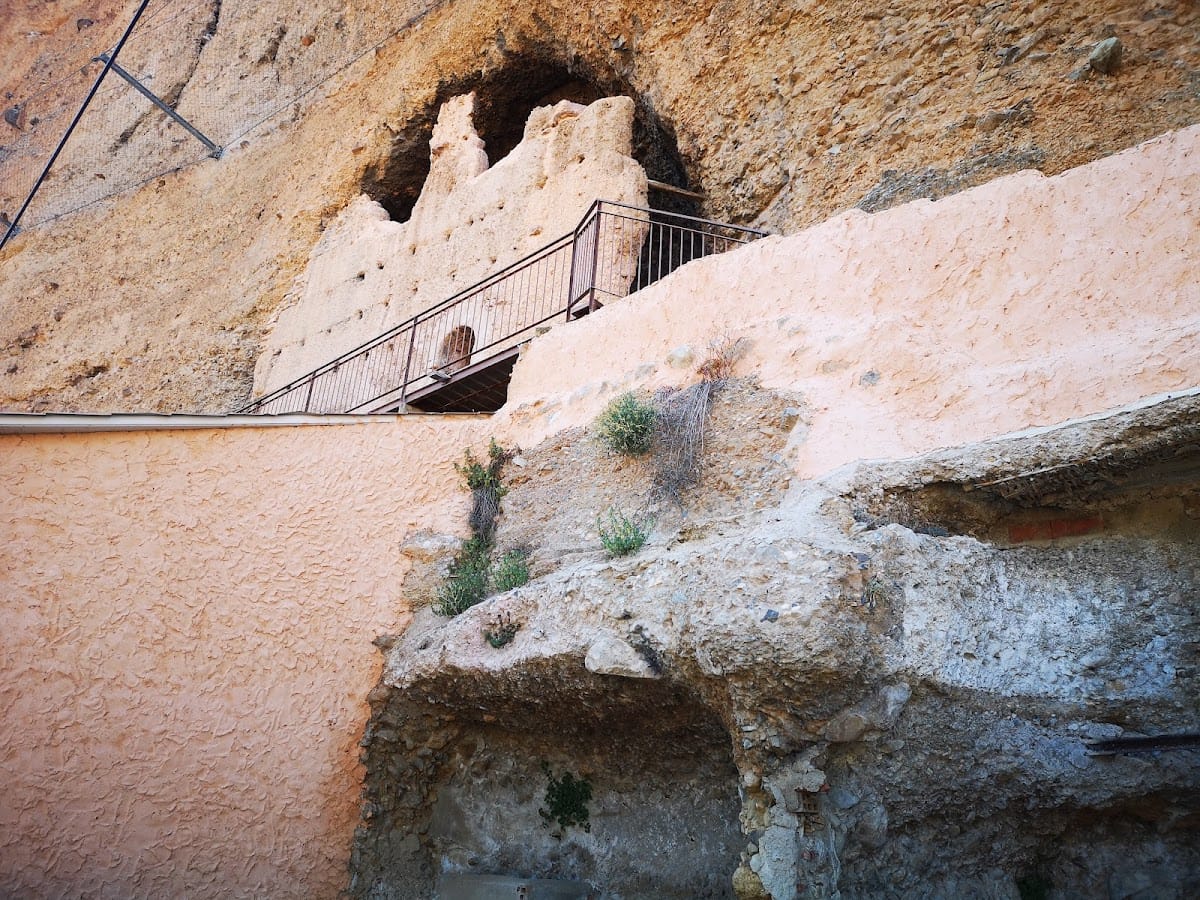
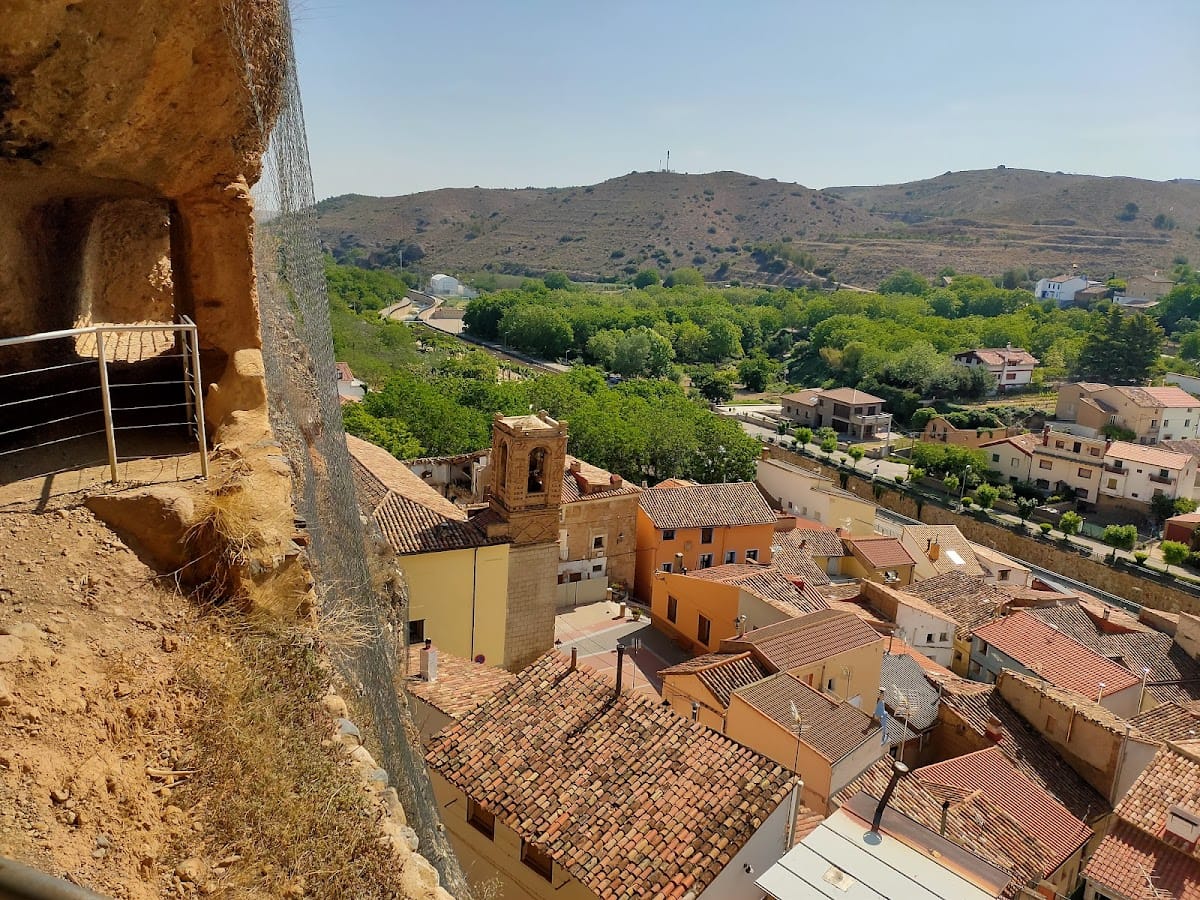
The surviving fortress occupies a group of natural caves beneath a rocky summit. Its unusual cave-fortress arrangement combines a main defensive complex inside the caves with an upper settlement area and a tower on the outcrop above. A rock-cut path connected the cave complex with the hilltop, while defensive positions on the heights controlled the Queiles Valley.
Cave fortress
Water storage and interior structures
A medieval cistern, a built reservoir for storing water, was excavated inside the cave. It supplied the defenders and is one of the few preserved elements of the fortress. Wooden structures were installed within the cave, and the opening toward the exterior was closed by a rammed-earth wall formed by compacting earth inside temporary frames. Openings in this wall served as arrow slits, allowing defenders to shoot from protected positions.
Upper settlement evidence
The upper part of the cave area contains archaeological evidence of a Late Bronze Age or Iron Age settlement. Pottery from the Late Bronze Age and Iron Age has been found near the tower, linking the upper area with the prehistoric occupation of the caves and summit. The surviving medieval remains are chiefly associated with the cave fortress and the tower.
Summit tower and defenses
Upper tower
The main complex was crowned by a 17-metre tower built on the summit of a rocky outcrop. It served as a keep, or final defensive refuge, and as an observation post over the valley. Its elevated position also allowed communication with other fortifications in the region. Two ditches cut into the rock protected the tower.
The tower has circular foundations. They show no evidence of the doubling or reinforcement ordered during the War of the Two Peters to protect the structure against undermining by siege engines. The lack of an entrance at ground level indicates that access was through the first floor, probably by a removable ladder that could be withdrawn during an attack.
The upper tower was consolidated and restored in 2009. Archaeological examination accompanied the work, concentrating on the tower base and its immediate surroundings. The visible remains are principally represented by this solitary tower, together with the associated cave, defensive, and archaeological features.
Additional watchtowers
Two additional watchtowers complemented the castle and were used to observe the valley. One was probably the structure known in medieval records as the Brown Tower. Its demolition was ordered during the War of the Two Peters. Together with the summit tower, these elevated positions formed the observation system associated with the cave fortress.