Äußeres Burgtor: Vienna’s Historic City Gate and Memorial
Site at a Glance
- Rating
- 4.6
- Popularity
- Low
- Country
- Austria
- Primary era
- Modern
- External website
- Open
- Eras represented
- Modern
- Civilizations
- Austrian Empire, Habsburg
- Site type
- Military
- Remains
- Gate
On this page11 sections
History
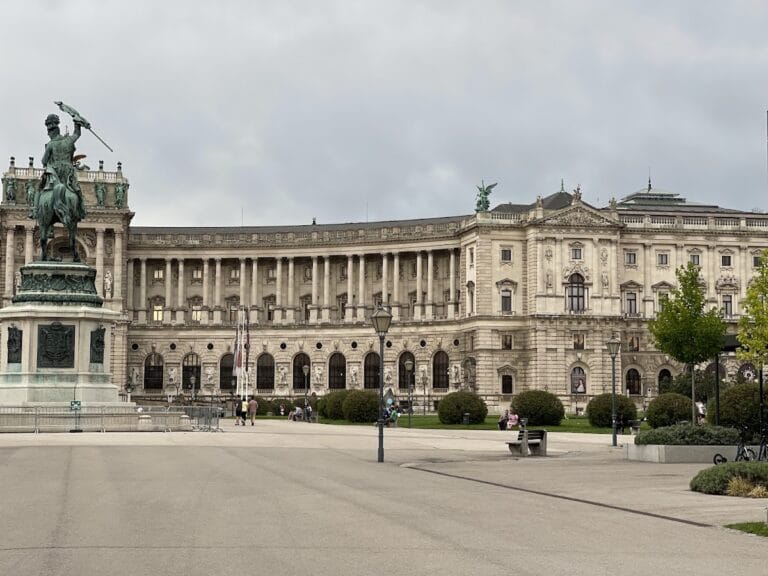
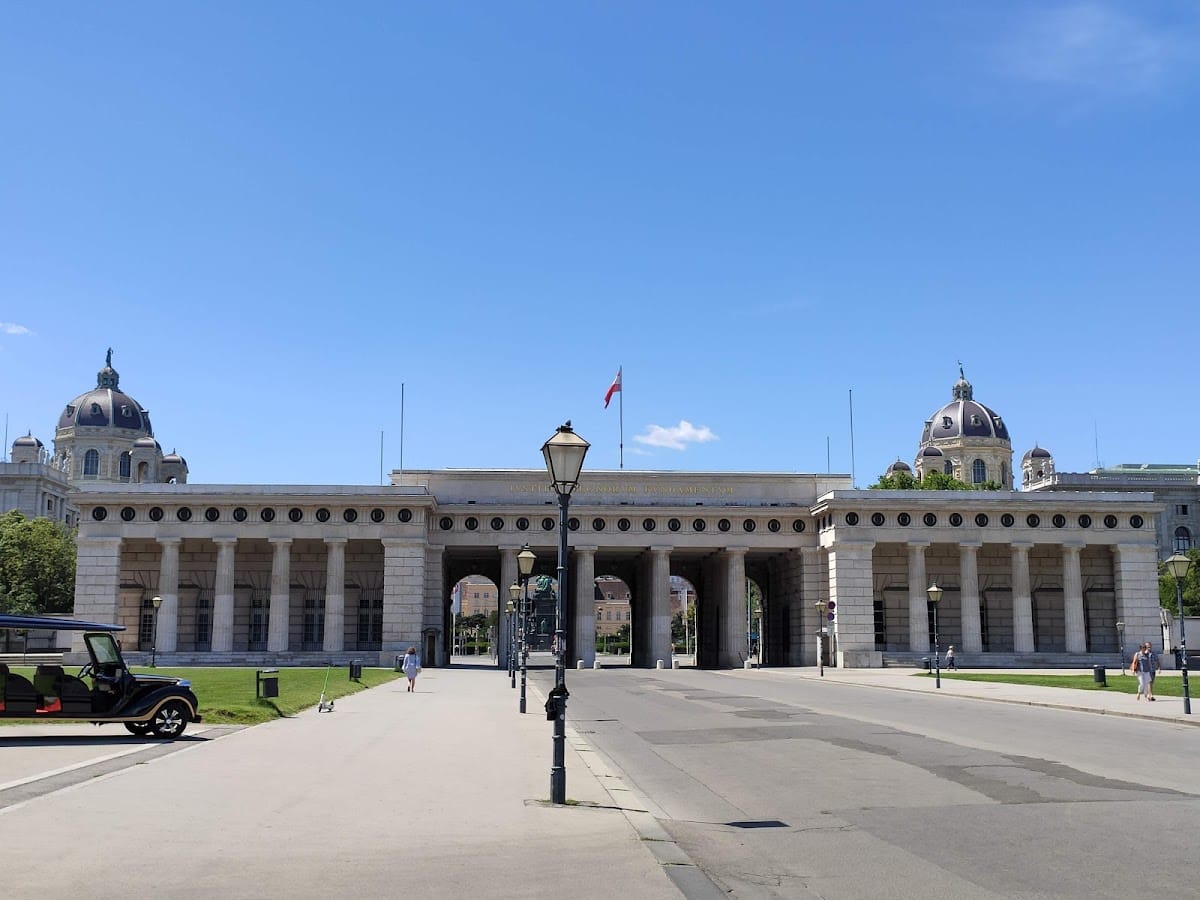
Äußeres Burgtor, also known as the Heldentor, is a historic city gate in Vienna, Austria, built between 1821 and 1824 in the aftermath of the Napoleonic Wars. It stood in the former city walls between Heldenplatz and the Ringstraße and was intended to evoke the Austrian army’s struggle against Napoleon.
From the older fortifications to the present gate
An earlier gate was built in 1660 as part of Vienna’s defenses, somewhat closer to the Hofburg. It was heavily contested during the Second Siege of Vienna in 1683, when Ottoman forces attacked the city. Napoleon’s troops blew it up in 1809 during the War of the Fifth Coalition, the conflict in which Austria fought Napoleonic France and its allies. By that time, Vienna’s fortifications had largely lost their military value, making the destruction of a gate near the imperial residence particularly humiliating.
The present Äußeres Burgtor was built on foundations prepared for a project begun by Luigi Cagnola in 1818. Emperor Francis I rejected the proposed height, after which Peter Nobile, an architect and imperial building official, prepared revised plans. Soldiers of the Austrian imperial army carried out the construction, reinforcing the gate’s intended association with military service. Francis I attended the laying of the foundation stone on 22 September 1821.
The gate opened ceremonially on 16 October 1824, the eleventh anniversary of the Battle of Leipzig, a major coalition victory over Napoleon in 1813. A proclamation announced that passage through the gate would be free from 18 October. The building was originally joined to newly constructed sections of the city wall, but those walls were demolished during the construction of the Ringstraße. Äußeres Burgtor consequently became a freestanding structure.
Plans for alteration and commemoration
From 1869, plans for the Kaiserforum, a proposed imperial complex linking the Hofburg with Vienna’s court museums, considered either changing or demolishing the gate. Otto Wagner later proposed removing it to Grinzing and replacing it with a monumental memorial to Emperor Francis Joseph I. Ludwig Baumann also supported its removal to open Heldenplatz toward the Ringstraße. None of these proposals was carried out.
The gate increasingly served as a place of military commemoration. In 1915, the campaign called “Laurel for Our Heroes 1914–1916” raised donations for gilded laurel wreaths dedicated to soldiers. Donors could have their names engraved on leaves or dedicate leaves to soldiers at the front. The proceeds supported the military widows’ and orphans’ fund and the War Welfare Office. Emperor Francis Joseph I, Kaiser Wilhelm II, Sultan Mehmed V, and King Ferdinand I of Bulgaria were commemorated by four gilded laurel branches on the gate.
From late February 1934, an architectural competition led to the conversion of the gate into a memorial to those who had fallen in the First World War. Rudolf Wondracek directed the work, while the external form of the building was required to remain unchanged. The memorial was inaugurated during a patriotic ceremony on 9 and 10 September 1934, although its cenotaph, a symbolic tomb or memorial, was not yet complete.
Nazi-era use and later reinterpretation
On 15 March 1938, Adolf Hitler laid a wreath in the crypt, and Hermann Göring visited the memorial on 27 March. These events incorporated the crypt into the commemorative culture of the Nazi period. A separate memorial to the Nazi paramilitary SA was later installed in the gate’s central passage and removed after the end of the war in 1945.
During the Nazi period, plans to redesign Heldenplatz proposed turning its principal axis by 90 degrees. The balcony of the Hofburg, from which Hitler had proclaimed Austria’s annexation, was intended to become the focal point for major military parades. The equestrian monuments of Archduke Charles and Prince Eugene of Savoy were also to be moved, but the scheme was not realized.
The crypt was used for Sunday Mass until 2012. Ten honor books listing Austrian soldiers who had died in the First World War were displayed in cases until their removal after renovation. On 30 November 2012, the books were transferred to the Austrian State Archives. That year, the name of Josef Vallaster was found among those listed. Defense Minister Norbert Darabos ordered its removal, and experts investigated whether other war criminals appeared in the books.
In 1965, the Austrian federal government established a memorial room for victims of Austria’s struggle for freedom as a counterpoint to the military crypt. It was formally dedicated on 27 May 1965. Investigations also confirmed that Wilhelm Frass had secretly placed a pro-Nazi text inside the reclining soldier sculpture in 1935. At the same time, a previously little-known pacifist text by his assistant Alfons Riedel was found. Both documents were transferred to the Heeresgeschichtliches Museum on 9 July 2013.
Remains
Gate structure and inscriptions
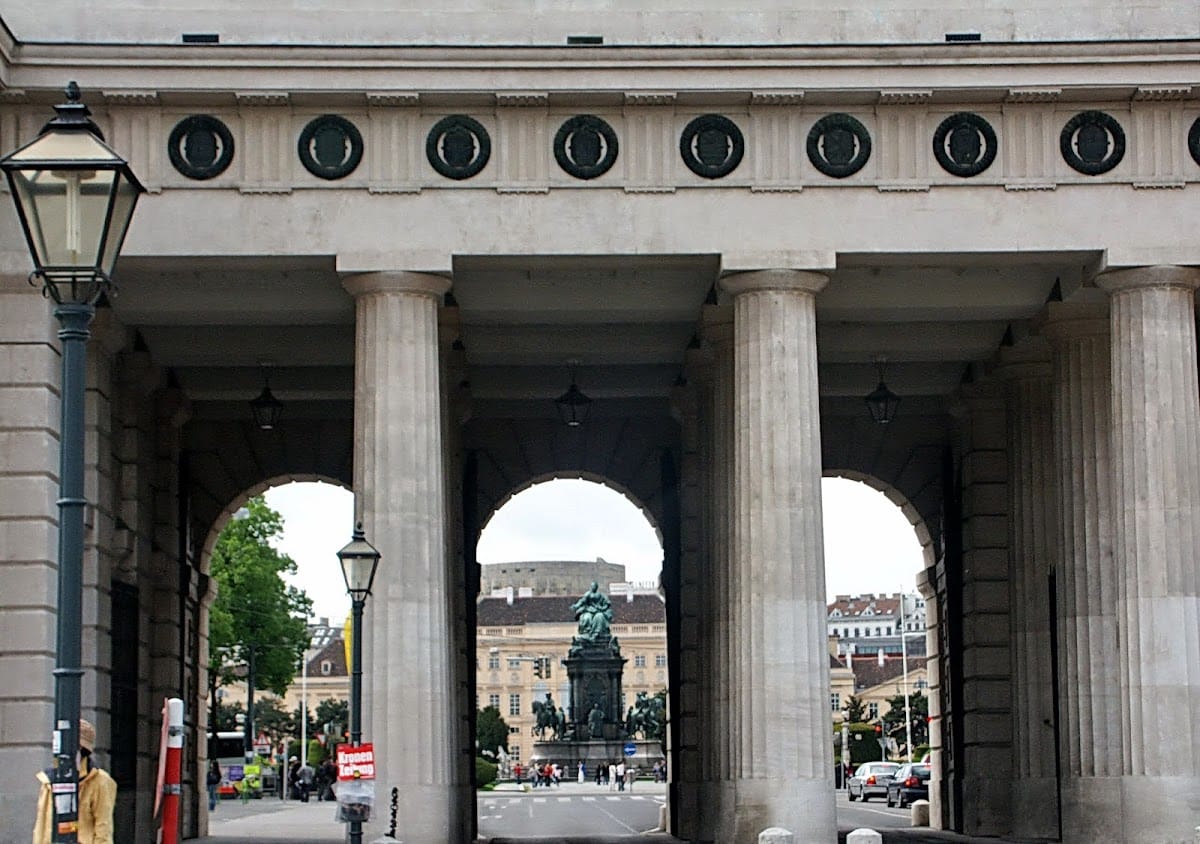
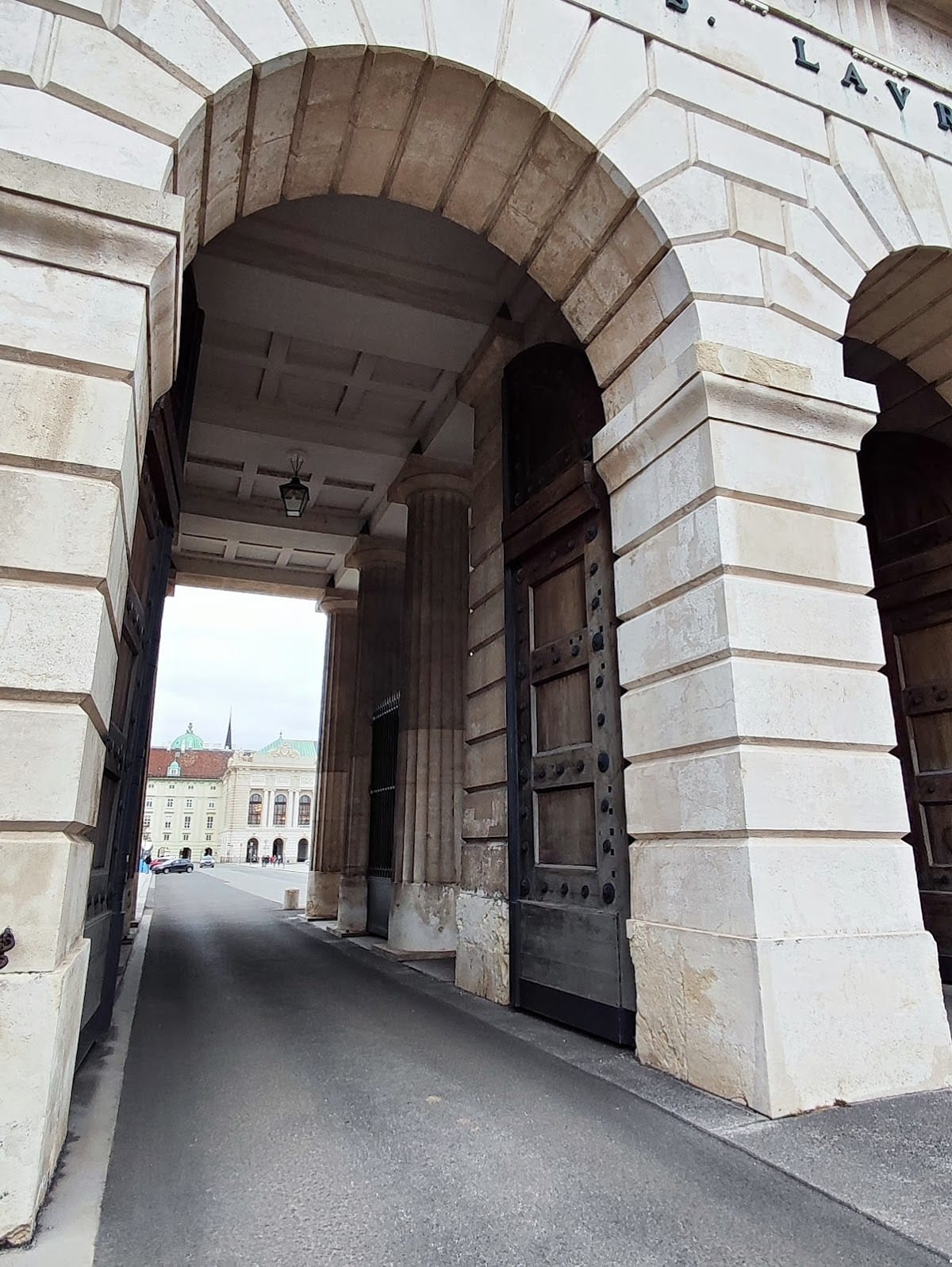
Äußeres Burgtor is a monumental passage structure standing between Heldenplatz and the Ringstraße. Its five round-arched openings are built in ashlar masonry, with carefully cut stone blocks forming the main fabric. Hard stone from Wöllersdorf and Kaisersteinbruch was used for heavily loaded parts, while St. Margarethen sandstone served for elements under less structural stress.
The Ringstraße-facing side carries the gilded inscription “FRANCISCUS I. IMPERATOR AUSTRIAE MDCCCXXIV,” meaning “Francis I, Emperor of Austria, 1824.” Beneath it is “LAURUM MILITIBUS LAURO DIGNIS MDCCCCXVI,” translated as “Laurel to soldiers worthy of the laurel, 1916.” Four gilded laurel branches appear between the laurel wreaths and the coats of arms representing Austria’s lands and cities. The Heldenplatz-facing front bears “IUSTITIA REGNORUM FUNDAMENTUM,” the motto of Francis I, meaning “Justice is the foundation of rule.”
Memorial spaces
First World War crypt
The crypt for the First World War dead lies north of the roadway. It contains a red-marble cenotaph of a dead soldier by Wilhelm Frass and a plain altar. The memorial complex formerly displayed the ten honor books in cases. Their transfer to the Austrian State Archives followed the later examination of the names and of the crypt’s commemorative history.
Honor hall
The 1934 conversion added ceremonial stairways at both narrow sides of the gate. They lead to a roofless honor hall, whose open design was intended to commemorate soldiers who had fallen under the open sky. The building’s external form remained unchanged during the conversion.
Memorial room for the struggle for freedom
South of the passage is the memorial room dedicated to victims of Austria’s struggle for freedom. It contains a black marble block with the Austrian federal coat of arms on its upper surface. Its front bears the inscription “IN MEMORY OF THE VICTIMS IN THE STRUGGLE FOR AUSTRIA’S FREEDOM.” A display case in the entrance hall holds documents concerning the re-establishment of the Republic of Austria.
Hidden texts and surviving interpretation
The documents placed inside the reclining-soldier sculpture in 1935 were enclosed in a brass sleeve. Facsimiles are displayed in the Heeresgeschichtliches Museum above a model of the gate. Together with the crypt, the memorial room, and the inscriptions on the exterior, these features preserve the building’s successive layers of military, political, and civic remembrance.
Nearby sites