Calshot Castle: A Tudor Artillery Fort on the Solent


Site at a Glance
- Rating
- 4.4
- Popularity
- Low
- Country
- United Kingdom
- Primary era
- Early Modern
- External website
- Open
- Eras represented
- Early Modern, Modern
- Civilizations
- British, English
- Site type
- Military
- Remains
- Castle
On this page16 sections
History
Calshot Castle is a Tudor artillery fort in the United Kingdom, built for Henry VIII between 1539 and 1540 to protect Southampton Water where it meets the Solent. It formed part of the King’s Device, Henry VIII’s programme of coastal fortification created in response to invasion threats, particularly from France and the Holy Roman Empire, a central European political union ruled at the time by Emperor Charles V. The castle guarded the deep-water channel leading towards Southampton, an important port connected through the Solent with the English Channel and Portsmouth.
The Tudor coastal-defence programme
Calshot was one of four forts planned by William Fitzwilliam, Lord High Admiral, and William Paulet to strengthen the Solent. East Cowes Castle, West Cowes Castle, and Hurst Castle formed the other three works. Temporary earthworks and gun batteries came first, followed by the rapidly completed permanent fort at Calshot. Its position on the narrow spit gave the fort control over the waterway approaching Southampton.
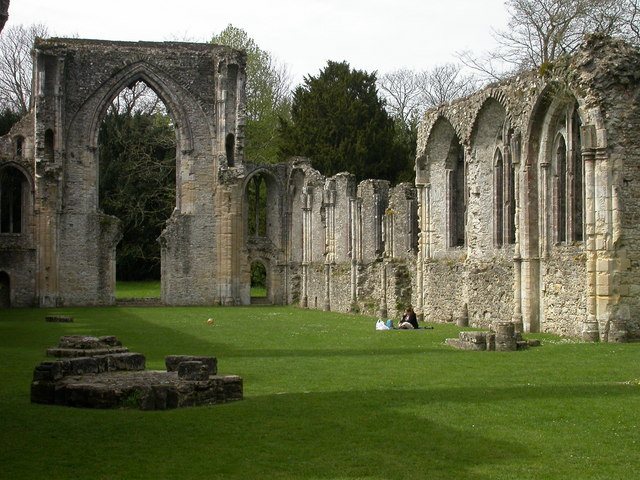
The first garrison comprised a captain, a lieutenant, eight gunners, and five soldiers. By the late 1540s, the fort carried 36 artillery pieces. Materials for the building probably included stone and lead roofing reused from Beaulieu and Netley abbeys after their closure during the Dissolution of the Monasteries, the suppression of England’s religious houses under Henry VIII.
Fire, reduced garrisons, and the Civil War
A fire affected Calshot in the 1580s, and repairs were completed in 1584 with 127 trees sent from the New Forest. By that time the garrison had declined to eight men, although fears of a Spanish invasion encouraged renewed work on the fort. During the early seventeenth century, peace with France and Spain reduced official attention to coastal fortifications.
Calshot regained military importance during the English Civil War of the 1640s, the conflict between supporters of Parliament and Charles I. Parliamentary forces held the castle against the king’s troops with a 15-man garrison that cost £107 a year. Parliament supplied ammunition and kept the fort operational because it remained essential to the defence of Southampton Water.
Eighteenth- and early nineteenth-century changes
During the early eighteenth-century War of the Spanish Succession, Calshot was equipped with up to 25 guns. The castle was substantially modernised in the 1770s and probably received further improvements at the beginning of the French Revolutionary Wars. By 1809, however, James Playfair described it as little more than a blockhouse with a garrison.
In 1804, the castle stored ammunition for the Sea Fencibles, volunteer coastal forces that used fishing boats for naval and defensive duties during the threat of French invasion. Seven guns were added to the arsenal. After the Napoleonic Wars ended in 1815, the Coast Guard took control of Calshot and used it as a base for anti-smuggling operations. By the middle of the nineteenth century, two officers and 42 men were stationed there.
Coast defence in the late nineteenth century
Proposals made in the 1850s to redevelop Calshot for up to 32 guns were abandoned because the sixteenth-century stone keep might produce dangerous splinters under enemy fire. The Castle Yacht Club was established beside the fort in 1887.
Renewed fears of attack by French torpedo boats led the War Office to reclaim the castle from the Coast Guard in 1894. A boom, a barrier designed to obstruct or control vessels, was installed across Southampton Water and operated with three gunboats. These defences required the Castle Yacht Club to move to the southern end of the spit.
A new coastal battery was built south of the old castle in 1895 because the sixteenth-century fort was too small for the necessary guns. The battery carried two 120-millimetre guns and four 12-pounder quick-firing guns, which were designed to reload and fire rapidly. Searchlights were installed on the older castle walls, while two towers known as dolphins managed the water boom.
From coastal fort to seaplane station
Calshot remained a defensive installation in the early twentieth century. In 1907, the keep was adapted to carry two quick-firing guns, and a lighter ladder boom was installed across Southampton Water. By 1909, plans had shifted towards blocking the waterway with floating hulks. A wartime plan drawn up in 1910 allowed for a garrison of 10 officers and 154 men, with 75 men housed outside the fort, as well as additional naval personnel for vessels supporting the boom.
A Royal Naval Air Station was built beside the castle in 1913 for 12 experimental seaplanes supporting fleet operations in the English Channel. During the First World War, the boom was removed and replaced by anti-submarine nets farther along the coast, and two guns were transferred to protect the nets. The air station initially served as a training centre, then began anti-submarine patrols over the English Channel in 1916.
Aircraft based at Calshot flew almost 3,500 hours in 1916, more than 3,500 in 1917, and more than 9,000 during the first three months of 1918. The castle’s remaining guns were removed, probably for use on the Western Front in France.
RAF Calshot and the Second World War
During the inter-war period, the Royal Air Force took over the air station, which became RAF Calshot. The School for Naval Co-operation and Aerial Navigation was based there from 1918, followed by the Seaplane Training Squadron in 1931. The Solent also hosted the Schneider Trophy air races twice from Calshot, encouraging the development of high-speed aircraft.
In the Second World War, troops of the Hampshire Regiment defended the castle. A barge carried two 3-inch anti-aircraft guns and a 40-millimetre Bofors gun, while air-raid shelters were built in the moat. Five aircraft-base boats took part in the Dunkirk evacuation. In 1940, two 12-pounder quick-firing guns and searchlights were added to the keep’s defences, and subsidiary batteries were built at Bungalow and Stonepoint the following year.
The castle escaped wartime damage. In 1943, it was placed on a care-and-maintenance basis and used as a way station for passing aircraft.
Post-war use and heritage management
After 1945, the air base housed two Sunderland flying-boat squadrons. These large military seaplanes were used for maritime patrol, transport, and reconnaissance, and the squadrons took part in the 1948 Berlin Airlift. The base passed to RAF Maintenance Command in 1953. A coastguard lookout tower was built in 1952, and a radar-and-radio signal station opened on the keep in 1958.
Military seaplanes had become obsolete by 1961, when the RAF station closed. Hampshire County Council leased the wider site from the Crown Estates in 1964, while the castle itself entered state guardianship. The former hangars became an activity centre and later a recreation centre. A Royal National Lifeboat Institution station opened beside the castle in 1971, and a 40-metre replacement coastguard tower was built in 1973.
English Heritage took over management in 1983 and removed twentieth-century additions, including the signal-station tower, to present the castle in a form intended to represent its pre-1914 appearance. Calshot Castle is protected as a Grade II* listed building and a scheduled monument. The listing recognises a building of more than special architectural or historic interest, while scheduled-monument protection applies to nationally important archaeological or historic sites under United Kingdom law. Coastal erosion and changing sea levels associated with climate change threaten the position of the site. The former air-station hangars continue to serve as a recreation centre operated by Hampshire County Council.
Remains
The fortified enclosure
Calshot Castle is a three-storey circular fortification formed by a central keep, a gatehouse, and an outer curtain wall. The castle is predominantly built from ashlar Portland stone, meaning finely dressed blocks laid in regular courses. A water-filled, 16-sided moat surrounds the enclosure and measures approximately 8.8 metres across. Access now passes over a twentieth-century bridge into the gatehouse.
Gatehouse and courtyard
The present gatehouse dates from the eighteenth century and is based on a simpler sixteenth-century predecessor. Brick-built rooms were added to its southern end in 1896, probably to provide extra accommodation for the garrison. Beyond the entrance lies an originally 16-sided courtyard. Fifteen gun embrasures, openings through which artillery could fire, are arranged around the curtain wall. The wall was lowered to its present height during the 1770s.
Searchlight building
A concrete searchlight building dating from 1896 extends along the southern side of the castle. It formed part of the later defences connected with the Southampton Water boom. The structure belongs to the period when the older fort was incorporated into a wider system of guns, searchlights, gunboats, and barriers intended to control the waterway.
The central keep
The keep, the principal fortified tower, has an external diameter of 16 metres. Its lower storey is octagonal, while the upper levels have circular walls. The tower originally provided accommodation for the captain and garrison, but its interior was extensively redeveloped during the nineteenth and twentieth centuries. The original design created two artillery tiers in the keep, one on the second floor and another on the roof. Additional guns could be placed on the first floor and on the gatehouse roof.
Lower storey and ammunition recesses
Eight recesses at ground level in the keep’s exterior walls were originally used to store ammunition. The basement was remodelled during the 1890s for electrical generators and received a thicker concrete ceiling. It may originally have contained a stone vault comparable to the one at nearby Hurst Castle.
Barracks rooms
The first floor has been restored as an early twentieth-century barracks room. The second floor was redeveloped in the late nineteenth century as another barracks room. Early twentieth-century girders and concrete reinforced its ceiling to support the gun battery above.
Roof battery
The roof contains two 12-pounder gun mounts with their original gun-lockers. A 12-pounder gun displayed there originally served aboard a Royal Navy vessel. The roof originally formed a flat artillery platform with crenellations, but both the platform and its crenellations were removed during the 1770s.