Qasr Al Muwaiji: A Historic Fort and Museum in Al Ain, UAE
Visitor Information
Google Rating: 4.6
Popularity: Medium
Official Website: abudhabiculture.ae
Country: United Arab Emirates
Civilization: Modern
Site type: Military
Remains: Fort
History
Qasr Al Muwaiji is located in the municipality of Al Ain, within the United Arab Emirates. It was constructed in the early 20th century by the Al Nahyan family, a ruling dynasty that has shaped the history of the region. The fortress was built near the Muwaiji oasis, an area with evidence of human presence dating back several centuries.
The fort’s origins date to sometime after 1897, as archaeological evidence, including copper coins from that year, suggests the construction began in the early 20th century during the time when Sheikh Khalifa bin Zayed bin Khalifa Al Nahyan was active, under the reign of his father, Sheikh Zayed bin Khalifa (Zayed I). Initially, the structure served as a diwan, a council or ruling place, acting as a central meeting point for governance and social interaction among the local community.
Throughout the mid-20th century, Qasr Al Muwaiji became home to successive generations of the Al Nahyan family. A significant resident was Sheikh Zayed bin Sultan Al Nahyan, who lived at the fort from 1946 while he served as the Ruler’s Representative of the Eastern Region. His son, Sheikh Khalifa bin Zayed Al Nahyan, was born there in 1948. Under Sheikh Zayed’s occupancy, the fort underwent important expansions, reflecting its increasing social and political role. The diwan was doubled in size, kitchens and guest rooms were enlarged, and a mosque was added inside the complex.
In 1966, after Sheikh Zayed ascended to the rulership of Abu Dhabi and relocated to the city, Qasr Al Muwaiji was vacated as a residence. Over the subsequent years, the building fell into neglect and was repurposed for agricultural use, primarily as a palm tree farm. Archaeological work beginning in the late 20th century combined with restoration projects from 2009 onwards uncovered and preserved the fort’s historical fabric. Finally, in 2015, the site was reopened as a museum that chronicles both the history of the Al Nahyan family and the fort’s role within the wider narrative of the United Arab Emirates.
Remains
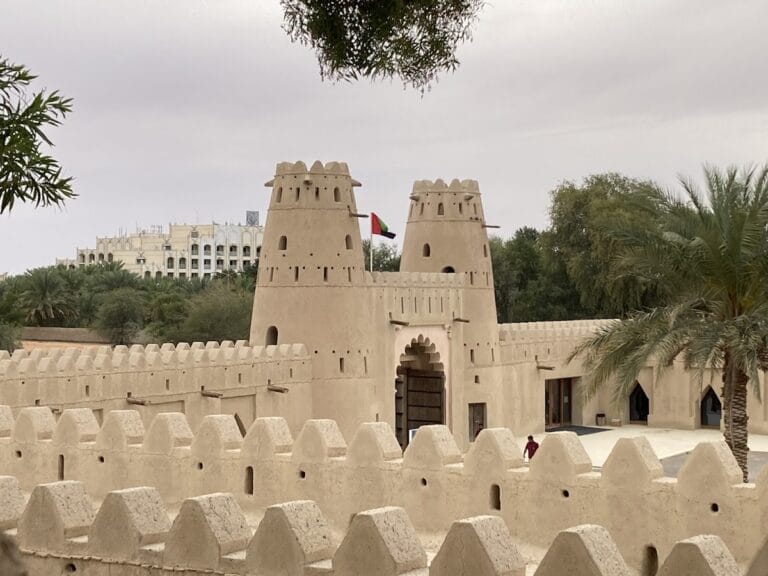
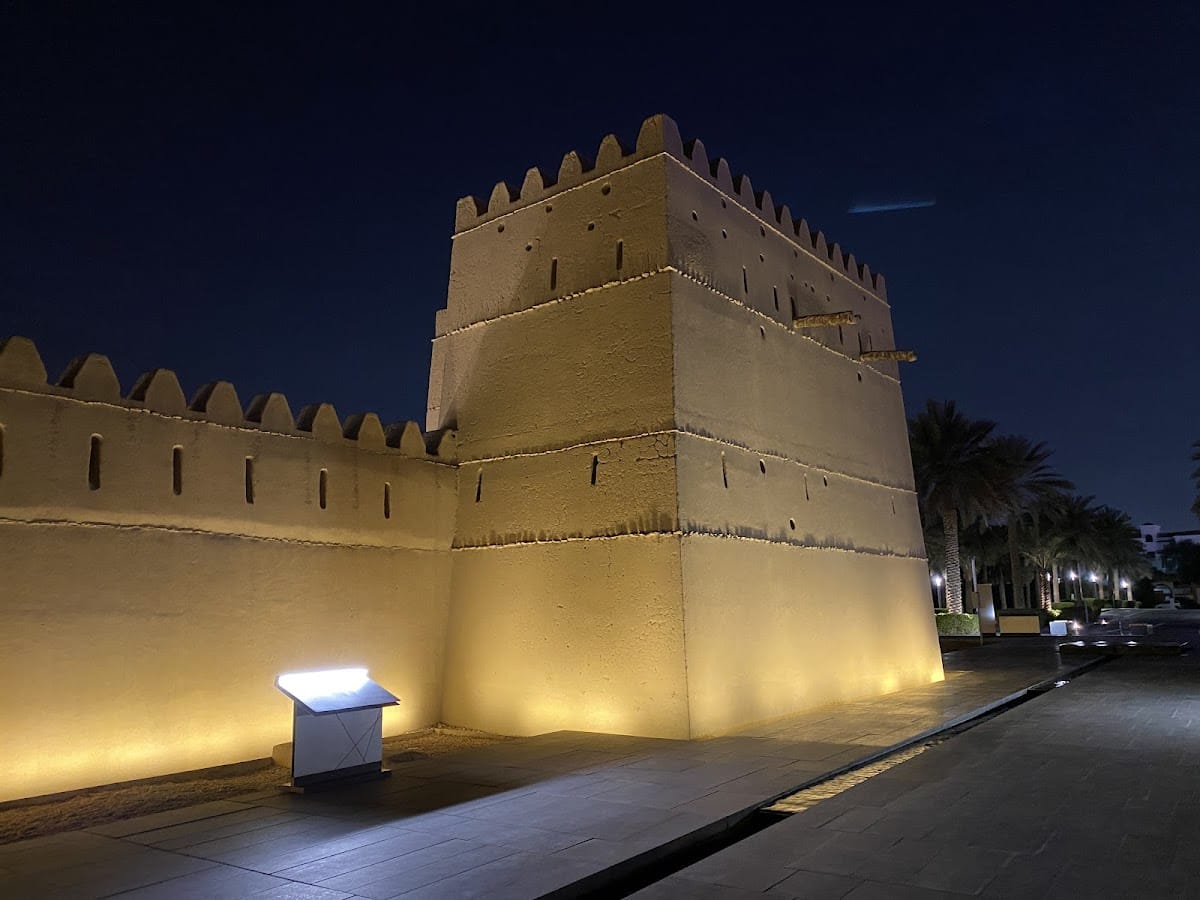
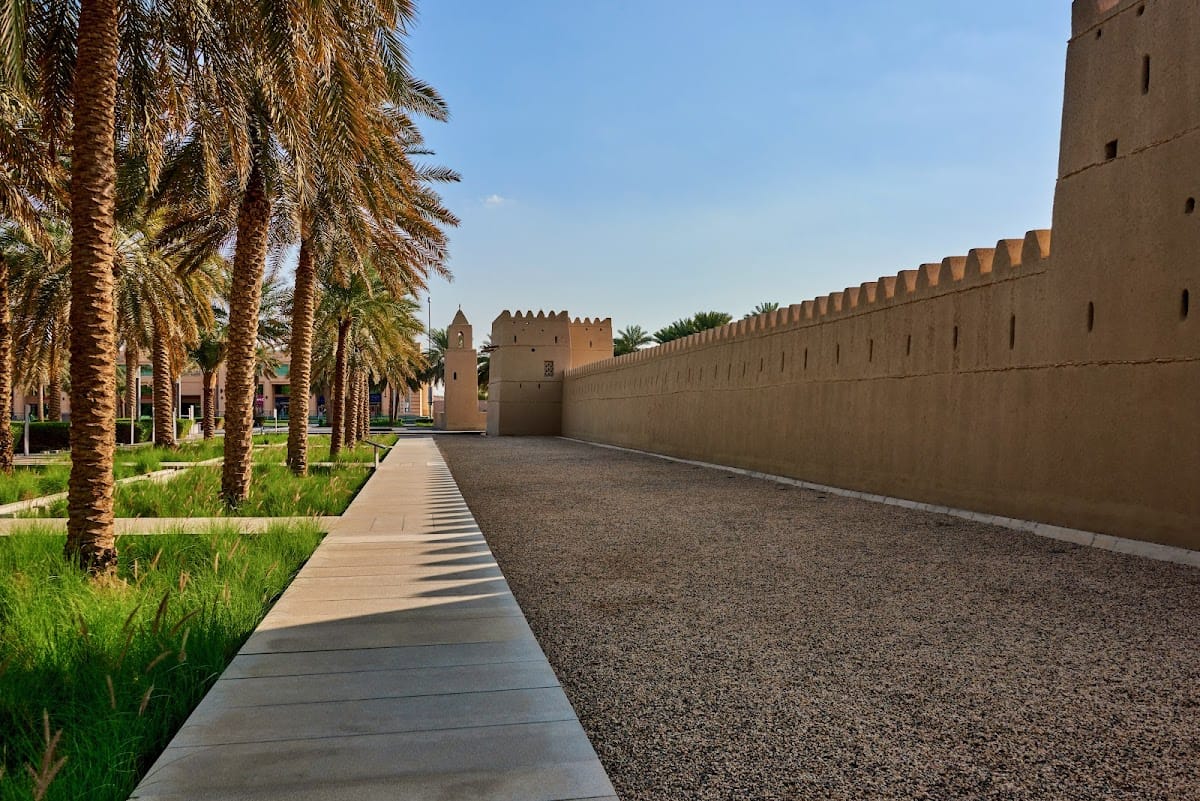
Qasr Al Muwaiji presents a square layout marked by sturdy corner towers and a large main entrance gate, exemplifying a straightforward yet imposing architectural style. The fort’s walls and structures are built using traditional mudbrick, a common local material, adhering to historic regional construction methods. This approach was carefully maintained during restoration to preserve the building’s authentic character.
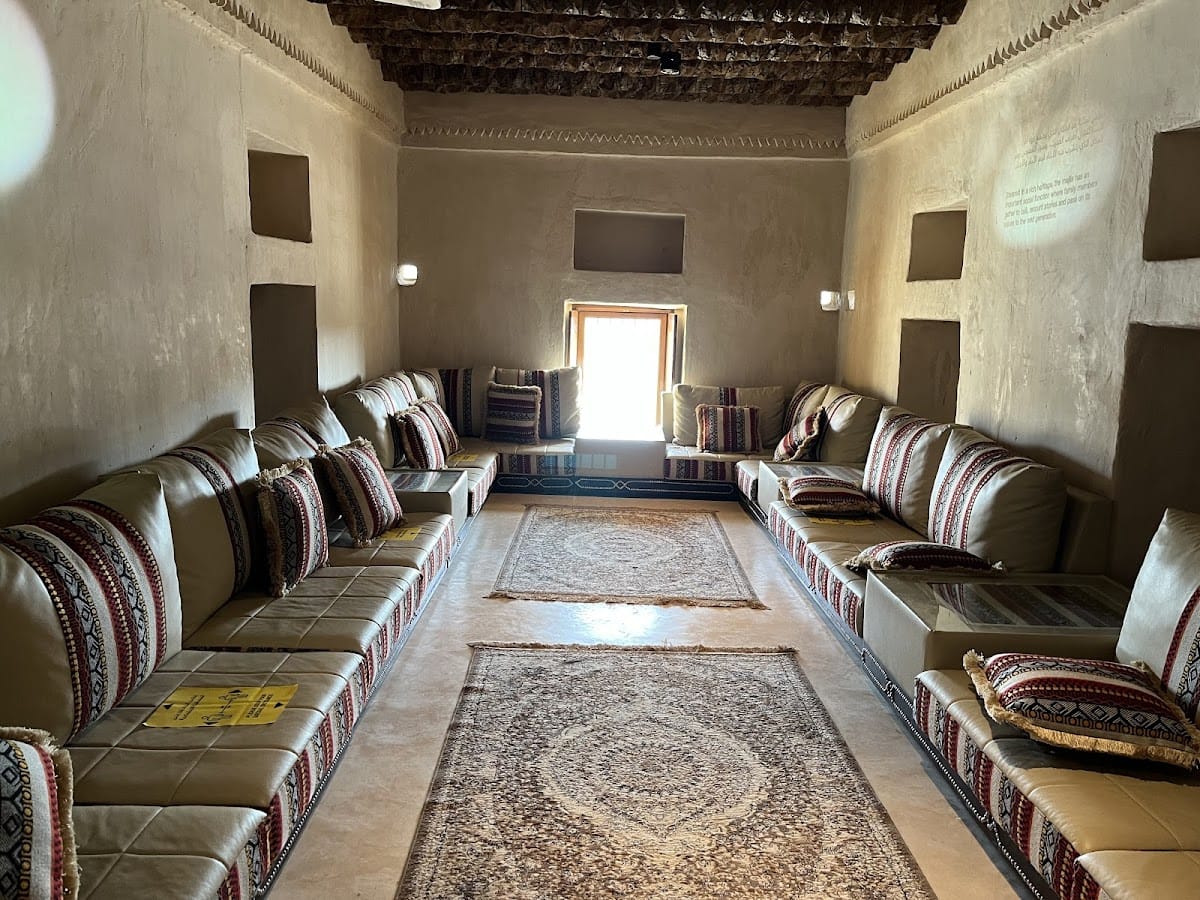
Inside, the fort’s internal spaces reveal phases of expansion attributed to Sheikh Zayed’s improvements in the mid-20th century. The original diwan was enlarged to accommodate growing numbers of visitors for political discussions and social events. Alongside this, kitchens and guest rooms were also extended, adapting the site to serve both public functions and hospitality requirements. The addition of a mosque within the complex further reflects the fort’s religious and cultural significance during this period.
Archaeological excavations around the fort unearthed multiple layers of construction and human activity. These revealed not only the evolving structure itself but also the agricultural practices sustained in the surrounding Muwaiji oasis, which is the smallest among the Al Ain oases. Evidence of farming dating back to the 18th century highlights the continuous occupation and cultivation of this area long before the fort’s establishment.
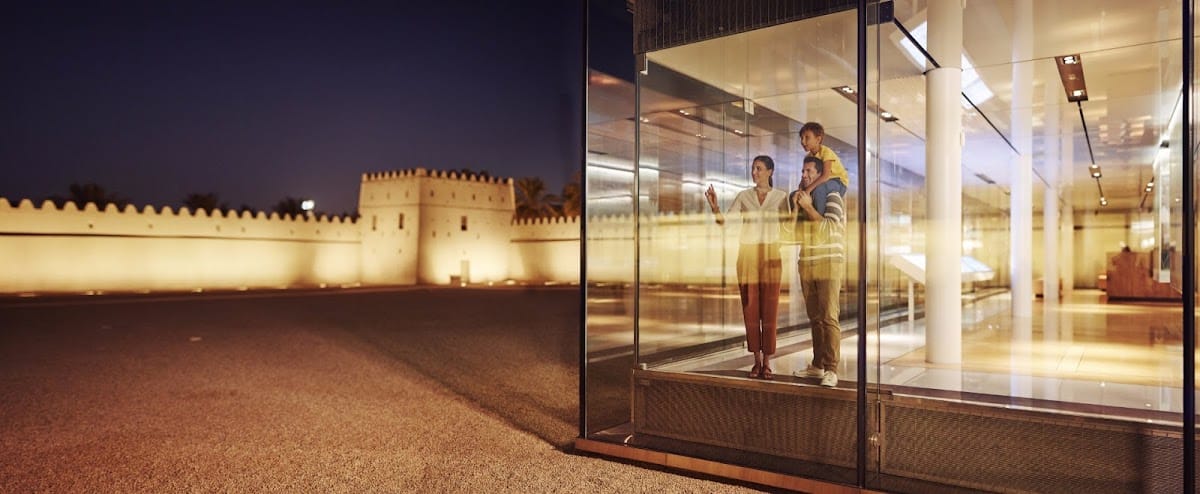
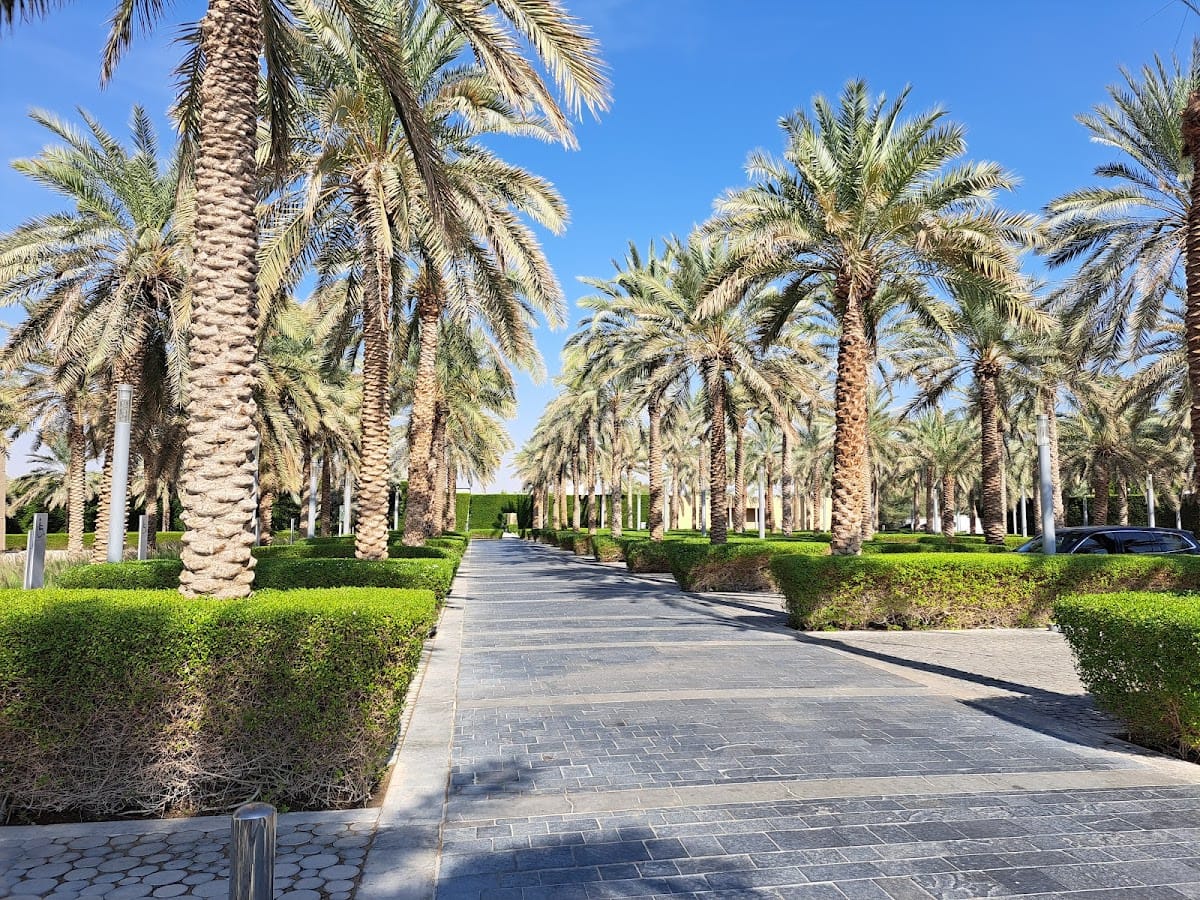
Situated strategically on the western edge of the Muwaiji oasis, the fort overlooked key routes leading to Abu Dhabi, providing both defensive and administrative advantages. Together with the traditional fort building, the museum complex now includes a modern exhibition courtyard designed by architects Machado and Silvetti. This newly constructed space complements the historic fort with a refined simplicity, linking the heritage site to its surrounding green environment.