Şanlıurfa Castle: A Hilltop Fortress of Edessa

Site at a Glance
- Rating
- 4.5
- Popularity
- Medium
- Country
- Turkey
- Primary era
- Medieval
- External website
- Open
- Eras represented
- Classical, Medieval
- Civilizations
- Abbasid, Byzantine, County of Edessa, Crusader, Roman
- Site type
- Military
- Remains
- Castle
On this page10 sections
History
Şanlıurfa Castle is a ruined hilltop fortress in Türkiye, with initial construction dated to the 3rd century AD. It occupies an older fortified complex at Şanlıurfa, the city known in antiquity as Edessa, and is especially associated with the Byzantine and Crusader periods.
Edessa and the Early Fortress
Edessa was the capital of Osroene, a small kingdom centered on the city in northern Mesopotamia. By the 3rd century AD, the city already possessed a circuit of walls, and the first construction of the fortress is dated to the same century.
Flooding shaped the development of the castle hill. After floods inundated the lower parts of Edessa, Abgar VIII, the ruler of Osroene in the late 2nd and early 3rd centuries, built a winter palace in AD 201 at the southwestern corner of the city-wall circuit. The summer palace stood in the flood-prone area occupied by the present ponds.
Further floods struck in AD 303, 413, and 525. During the reign of Justinian I, the Byzantine emperor from AD 527 to 565, his governor diverted the Daisan River, ancient Skirtos, into a new channel that ran east and north around the city. Rebuilding followed, with sections of the castle incorporated into the city walls and additional ditches excavated along the southern and western sides.
Byzantine, Muslim, and Crusader Rule
Strong defenses did not prevent repeated changes of control. Persians, Byzantines, and Muslim rulers successively held the city and castle, and Muslim control was established in AD 638. In AD 814, an Abbasid phase added another layer to the fortress’s long development.
In AD 1031, Georgios Maniakes, a Byzantine military commander and governor, recovered Edessa for the Byzantine Empire and enlarged its fortifications. The attacks led by Ibn Waṯṯāb of Harran in AD 1036 and by Alp Arslan, the Seljuk sultan, in AD 1071 were repelled.
The Byzantine commander Philaretos Brachamios, who held the high court title of curopalates, briefly captured the city in AD 1083. The Armenian ruler Thoros then took power and expanded the castle. After Thoros was assassinated during urban unrest in AD 1098, the Crusader Baudouin of Boulogne replaced him.
Baudouin and the Crusaders, Latin Christian forces and settlers who established states in the eastern Mediterranean and Near East, held Edessa until the Seljuks conquered and destroyed the city in AD 1147. The Crusaders had expanded the fortifications during their period of control, leaving the castle with an important medieval phase.
Excavation, Damage, and Present Status
Restoration work has continued since 2007. On 19 April 2013, heavy rain undermined the ground and caused part of the fortification wall to collapse, although nobody was injured. The castle now functions as an open-air museum.
Remains
Hilltop Layout and Defensive Works
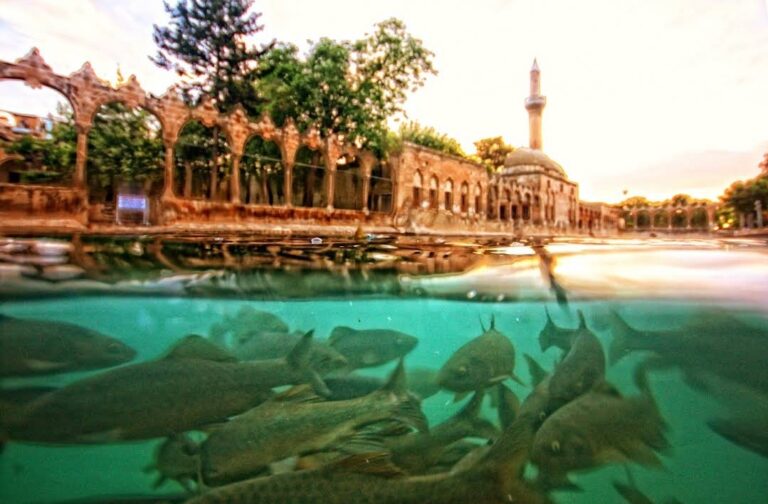
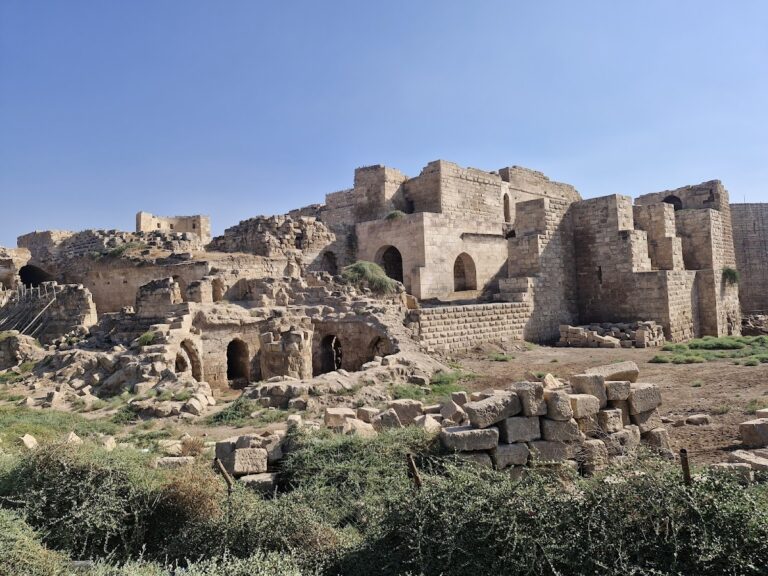
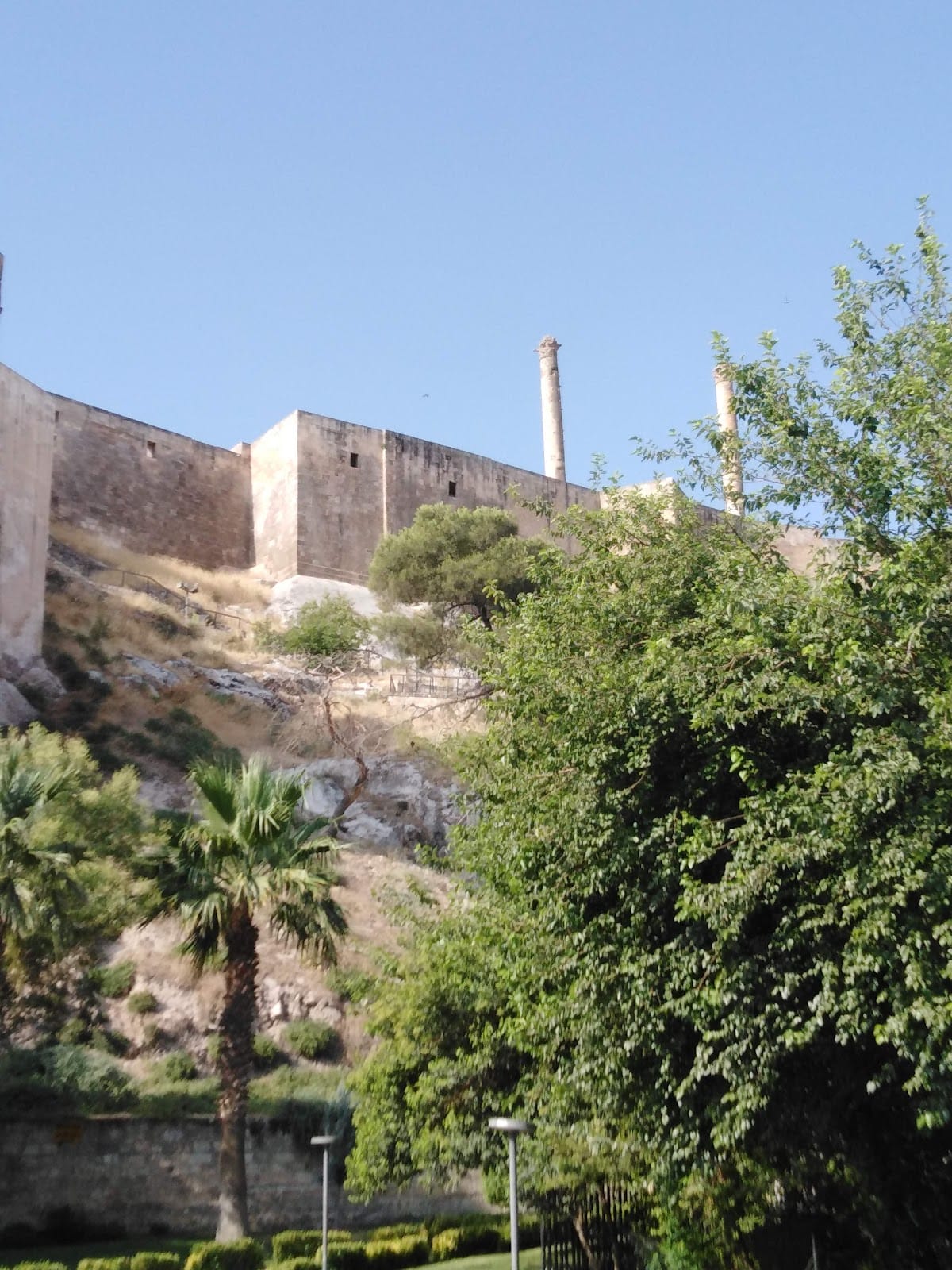
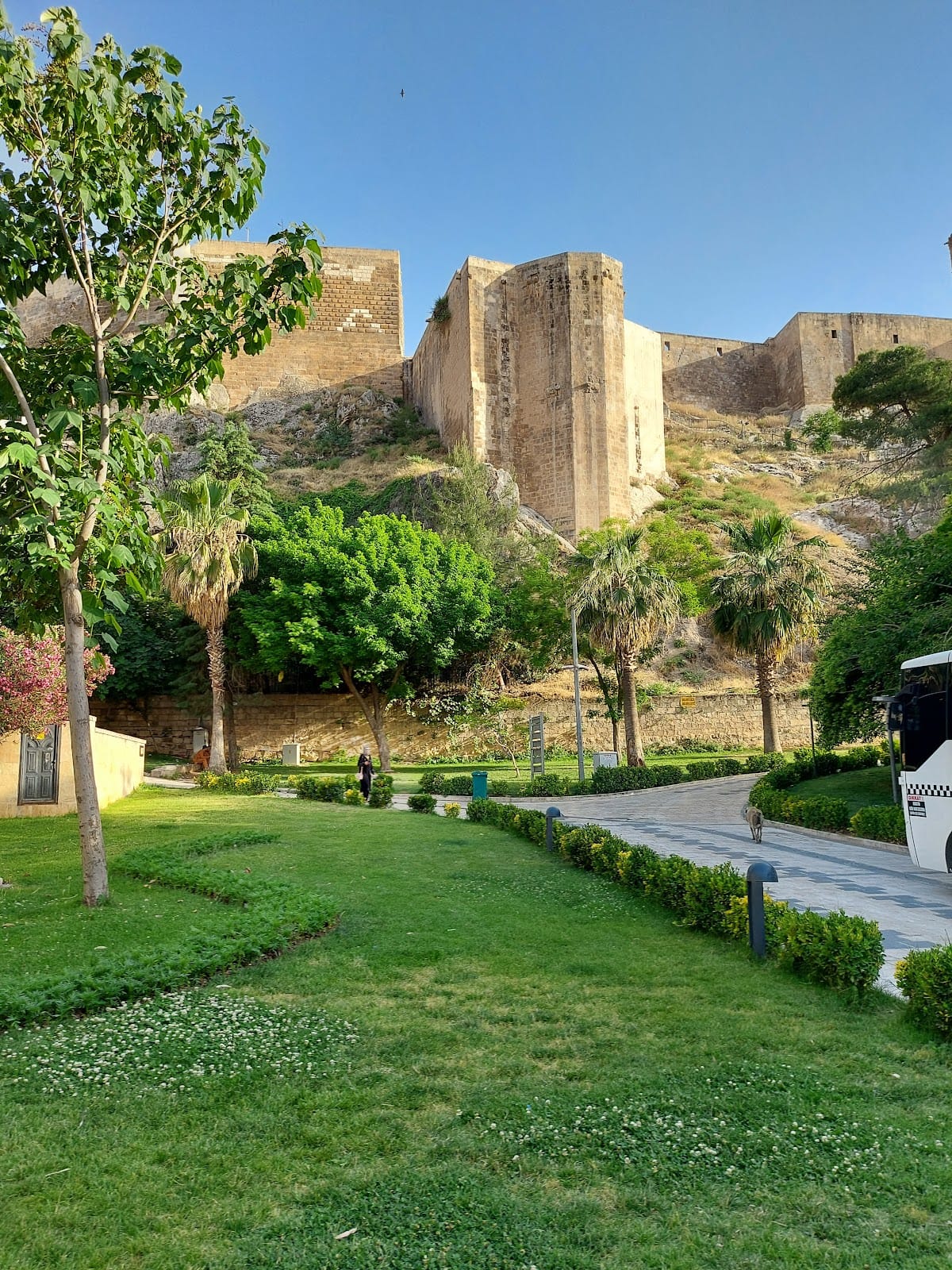
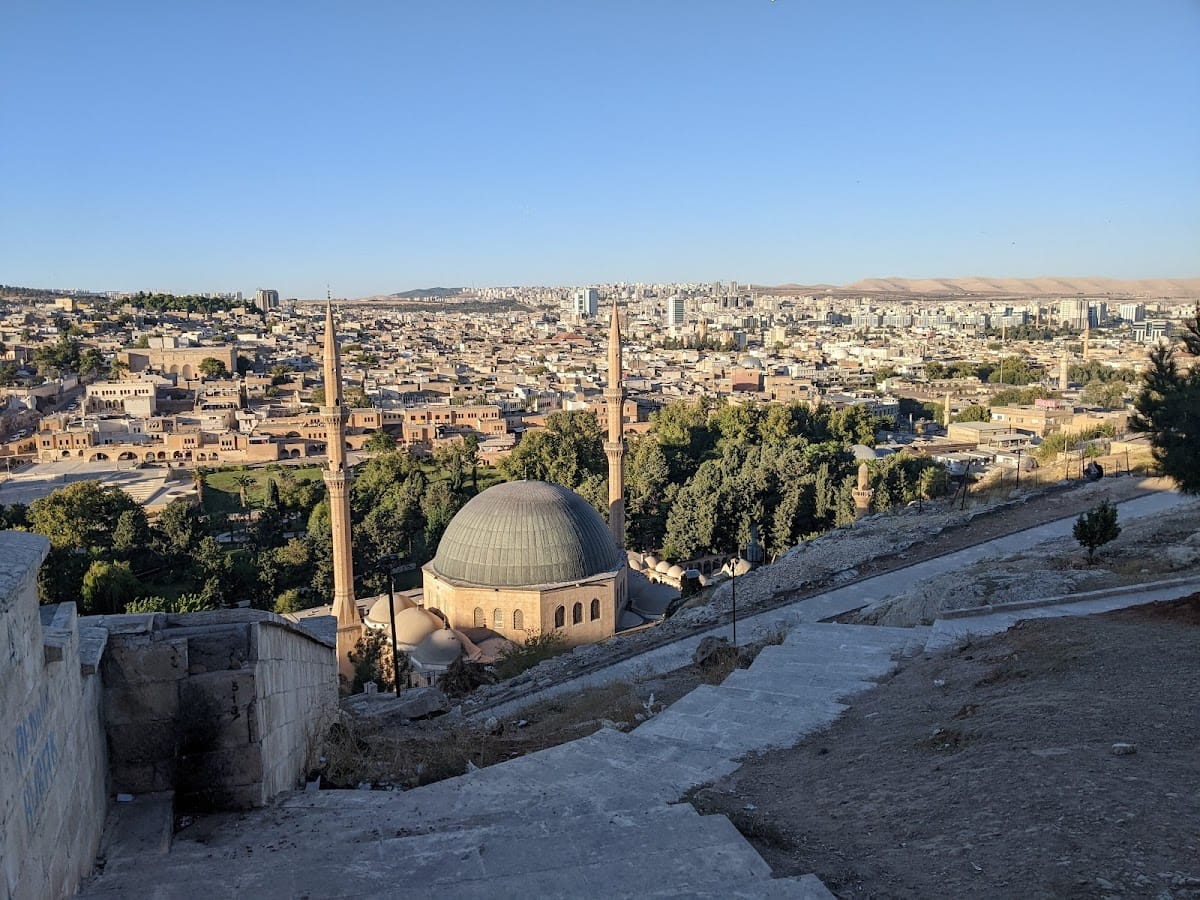
The fortress stands south of present-day Şanlıurfa on a spur of Top Dağı, also called Nemrud Dağı. It lies directly south of the later complex around the sacred pool of Balıklıgöl, with Gölbaşı Park and a bazaar to the east. The castle hill rises approximately 30 metres above the park. The ruined fortress extends about 300 metres from east to west and has an internal north-south width of roughly 80 metres. Its surviving fabric includes ashlar and bossage masonry, in which stone blocks retain projecting, roughly dressed faces.
Walls, Ditch, and Gates
Outer terrace walls define the surviving defensive structure. Along the southern, mountain-facing side, a ditch reaches approximately 12 metres in depth. It almost certainly represents a Crusader enlargement of earlier ditch systems associated with the rebuilding under Justinian and the later fortification work of Georgios Maniakes. Gates probably connected the fortress both with the city and with the countryside, while the modern entrance on the north probably corresponds to the medieval main gate.
Palace and Medieval Tower Remains
Syro-Roman Palace Columns
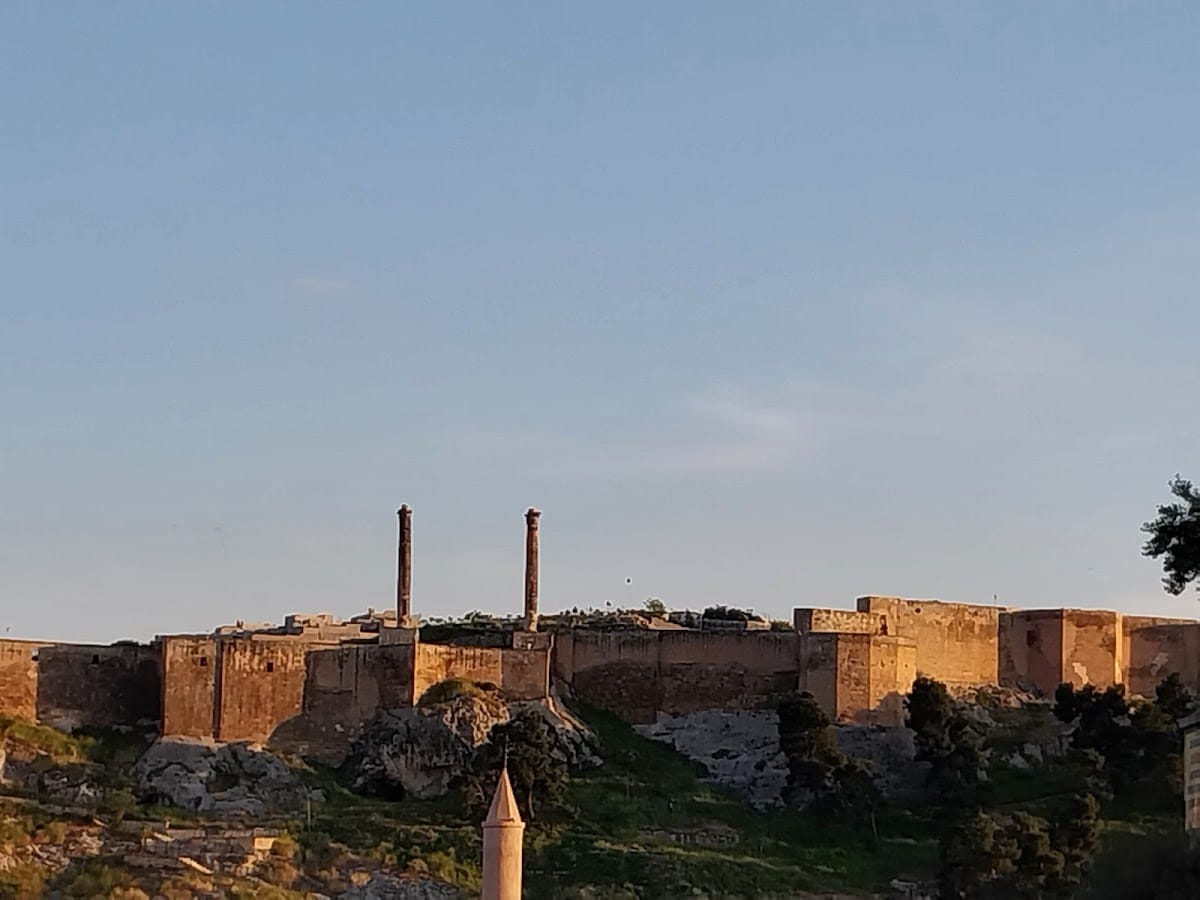
Two columns from the palace survive on the castle hill. They are approximately 15 metres high and have Corinthian capitals, the elaborately carved upper sections of columns characterized by acanthus-leaf decoration. The columns are popularly called the Throne of Nimrod, referring to Nimrod, a biblical figure traditionally portrayed as a powerful ruler and hunter. The surviving remains are identified as part of a Syro-Roman palace, meaning the cultural and architectural milieu of Roman Syria and nearby regions.
Crusader Donjon
Remains of the Crusader donjon are visible south of the palace columns. A donjon was the principal fortified tower of a medieval castle. This tower was destroyed by Ala ad-Din Kai Kobad I, sultan of the Seljuks of Rum, a medieval Turkish dynasty that ruled much of Anatolia. A mosque is also documented as having stood within the fortress’s historical interior. The possible contributions of the Seljuks, Artuqids, and Mamluks to the surviving building fabric remain unclear pending detailed investigation.