Nakhal Fort: A Historic Fortification in Oman
Site at a Glance
- Rating
- 4.4
- Popularity
- Medium
- Country
- Oman
- Primary era
- Classical
- Eras represented
- Classical, Modern
- Civilizations
- Omani, Sassanid
- Site type
- Military
- Remains
- Fort
On this page8 sections
History
Nakhal Fort, also known as Husn Al Heem, is a historic fortification in Oman, located at the entrance to Nakhal beside the old village and market. Its earliest construction dates to the pre-Islamic period and is attributed to the Sassanids, the ruling dynasty of the Sassanian Empire before the Islamic conquests. Built as a stronghold against incursions by Arab tribes, it protected an oasis, nearby date plantations, and commercial routes leading through Nizwa.
Early Fortification and Kharusi Rule
The fort served as a residence for the imams of Wadi Bani Kharous. An imam in Oman was a religious and political leader who could also exercise governmental authority. Imam Al-Salt bin Malik Al-Kharusi restored and strengthened Nakhal Fort in 170 AH, reinforcing its role in guarding the surrounding palm plantations. Further improvements took place during the third and tenth Islamic centuries under the imams of Bani Kharous and later the Ya’arubah dynasty, an Omani ruling house whose period of power included the seventeenth century.
Seventeenth- and Nineteenth-Century Changes
Omani architects reconstructed and improved the fort during the seventeenth century. Members of the Ya’arubah dynasty also resided there, continuing its use as both a fortified residence and a place of government. The present outer gate, enclosing wall, and towers were built during the rule of Imam Said bin Sultan in 1834. These works gave the fort much of the outer defensive arrangement visible today.
Restoration and Continued Use
Nakhal Fort underwent complete restoration in 1990. Traditional handicrafts and historical objects were placed within the restored rooms, and the fort’s museum was established with exhibits including historical weapons. The grounds also host a weekly goat market, linking the restored monument with an ongoing local use.
Remains
Rocky Setting and Defensive Layout
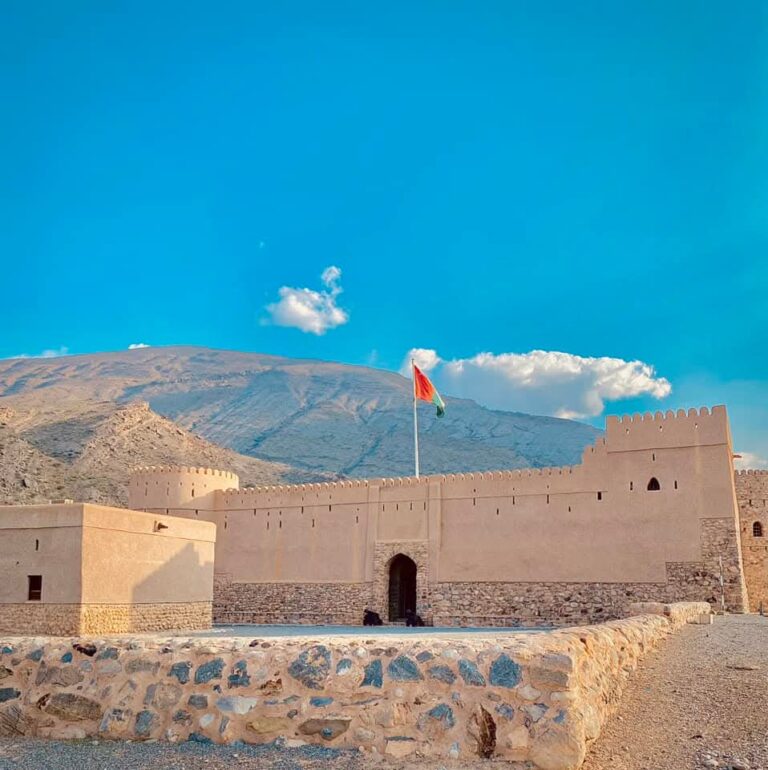
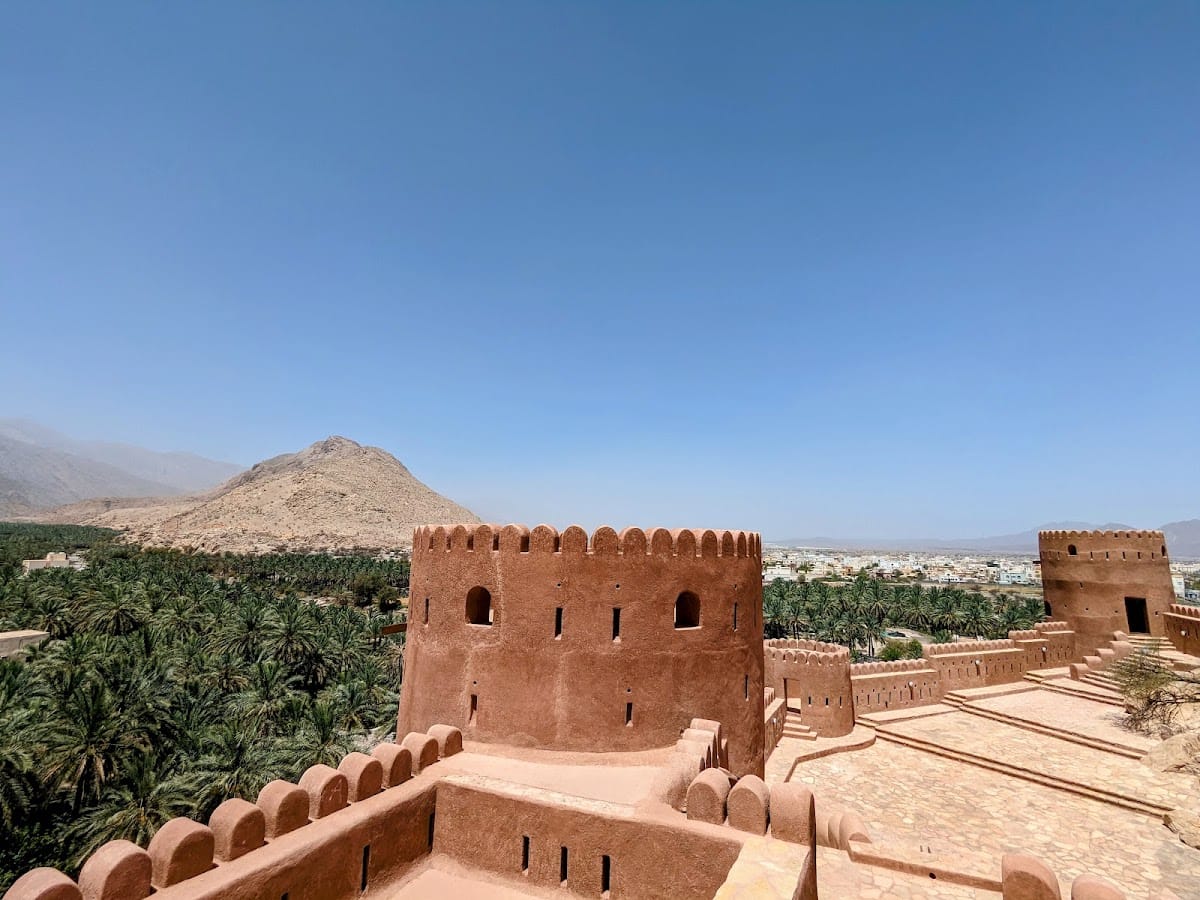
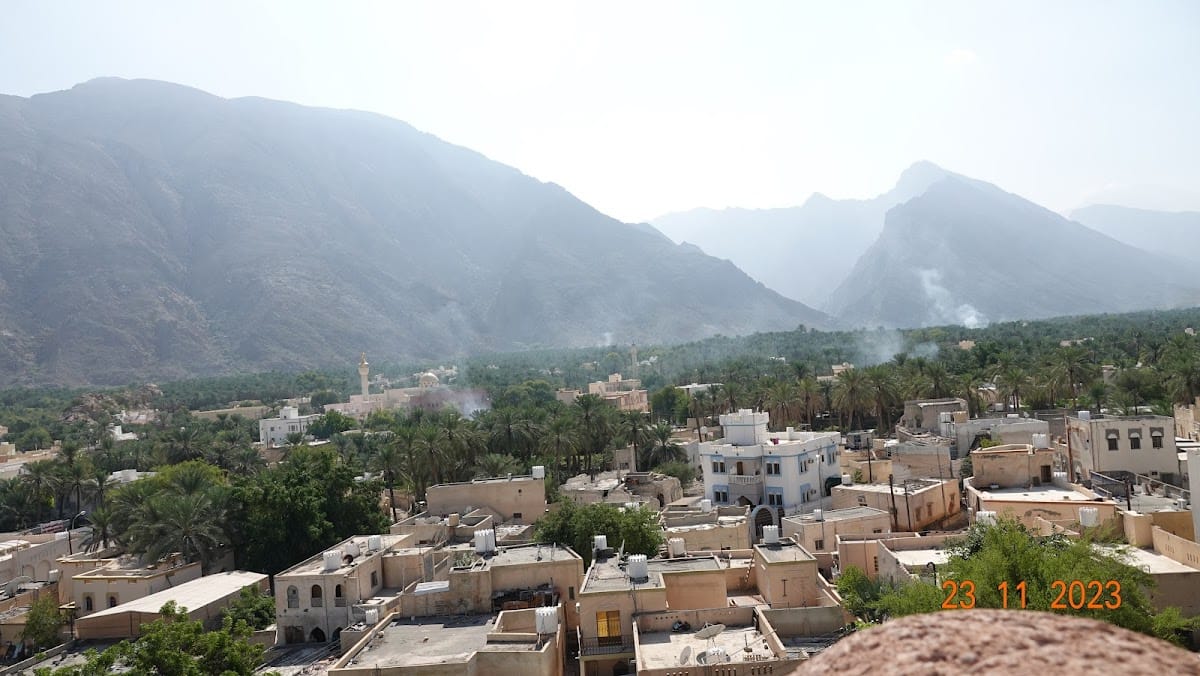
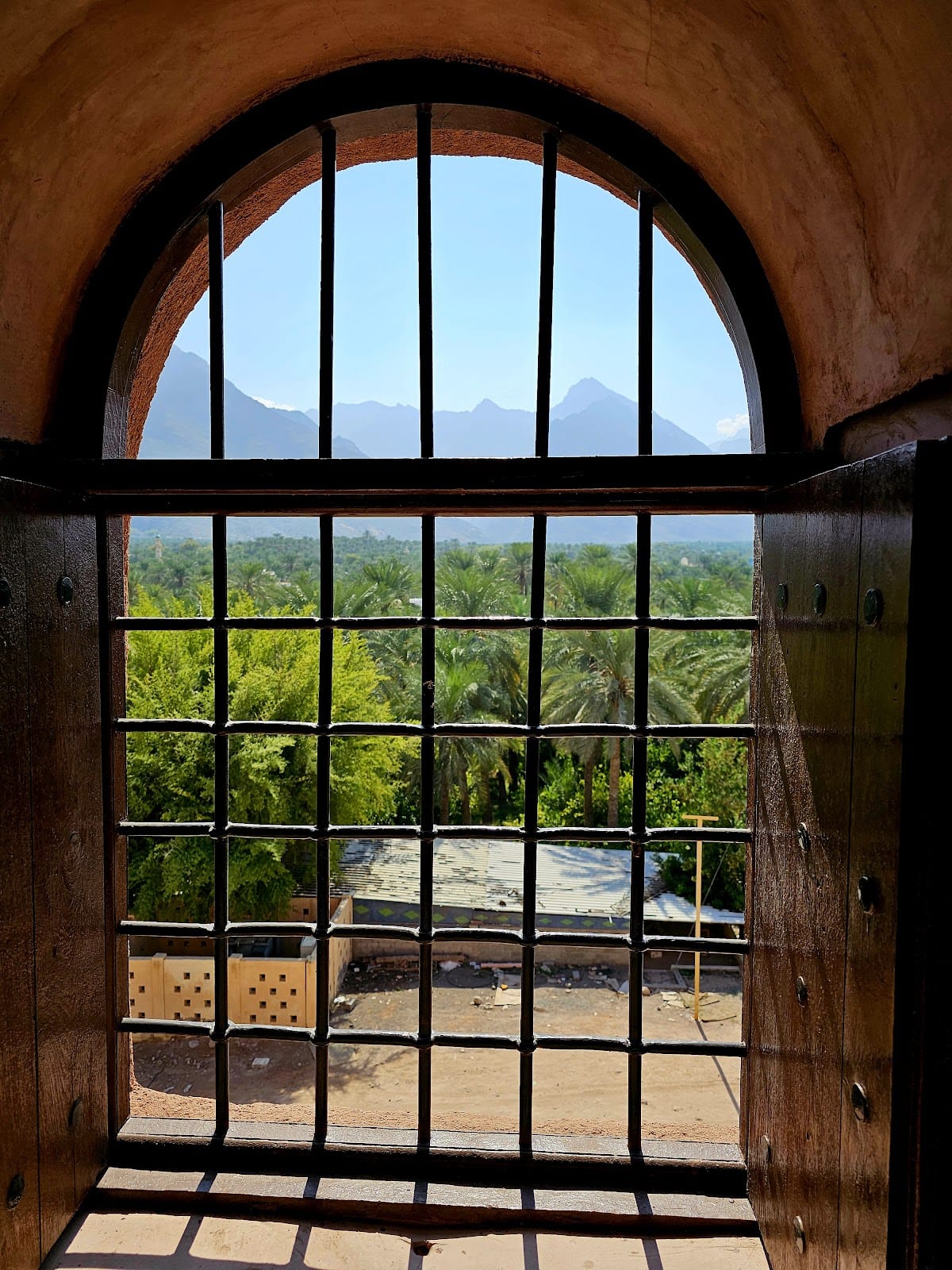
The fort stands on an irregular rocky prominence at the foot of Jebel Nakhal, a spur of the Western Hajar Mountains. The rock rises about 200 feet, while the interior of the fort covers approximately 3,400 square metres. Date-palm orchards surround the site, and Wadi Al-Sabbat flows behind it from Wadi Al-Hamam. The nearby hot springs of Ain A’Thawwarah form part of the mountain landscape around the fort.
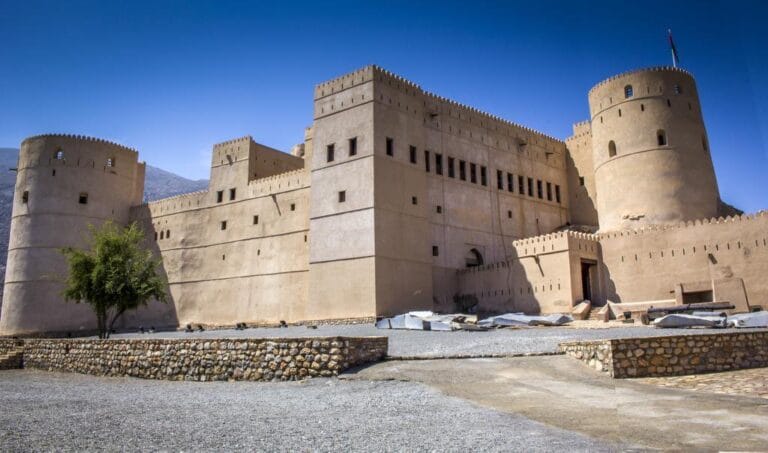
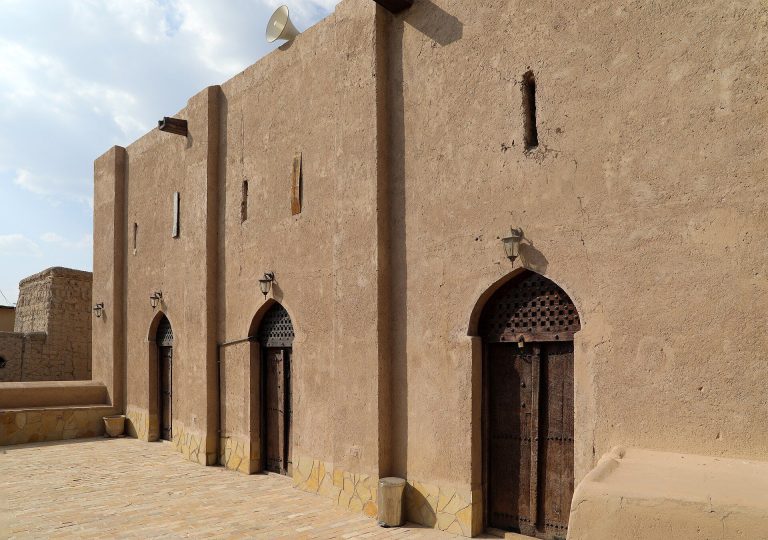
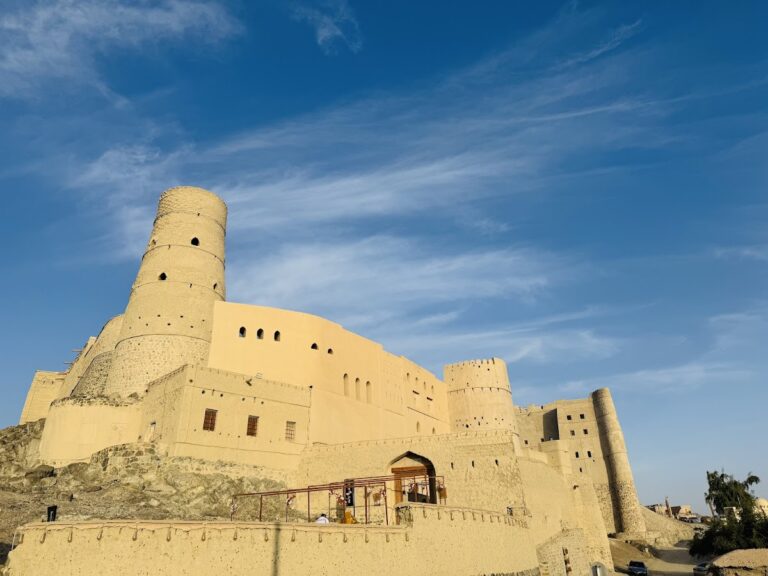
Nakhal Fort has no regular geometric plan. Its buildings were fitted around the natural shape of the rock, with sections of stone rising into the construction, particularly along the western side. Exposed rock also projects into some interior spaces, making the geological formation part of the fort’s defensive system. The structure uses plaster, gravel, sand, mud, and large stones, and its battlements, a parapet with raised protective sections, overlook the Al Batinah region.
Towers, Walls, and Entrances
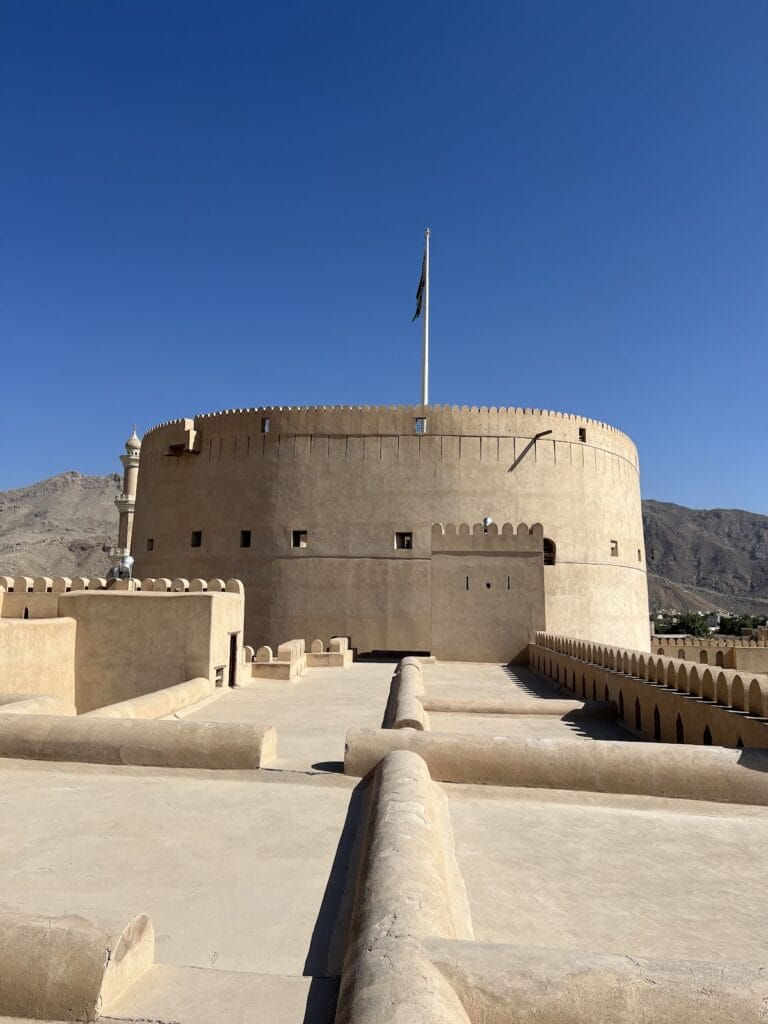
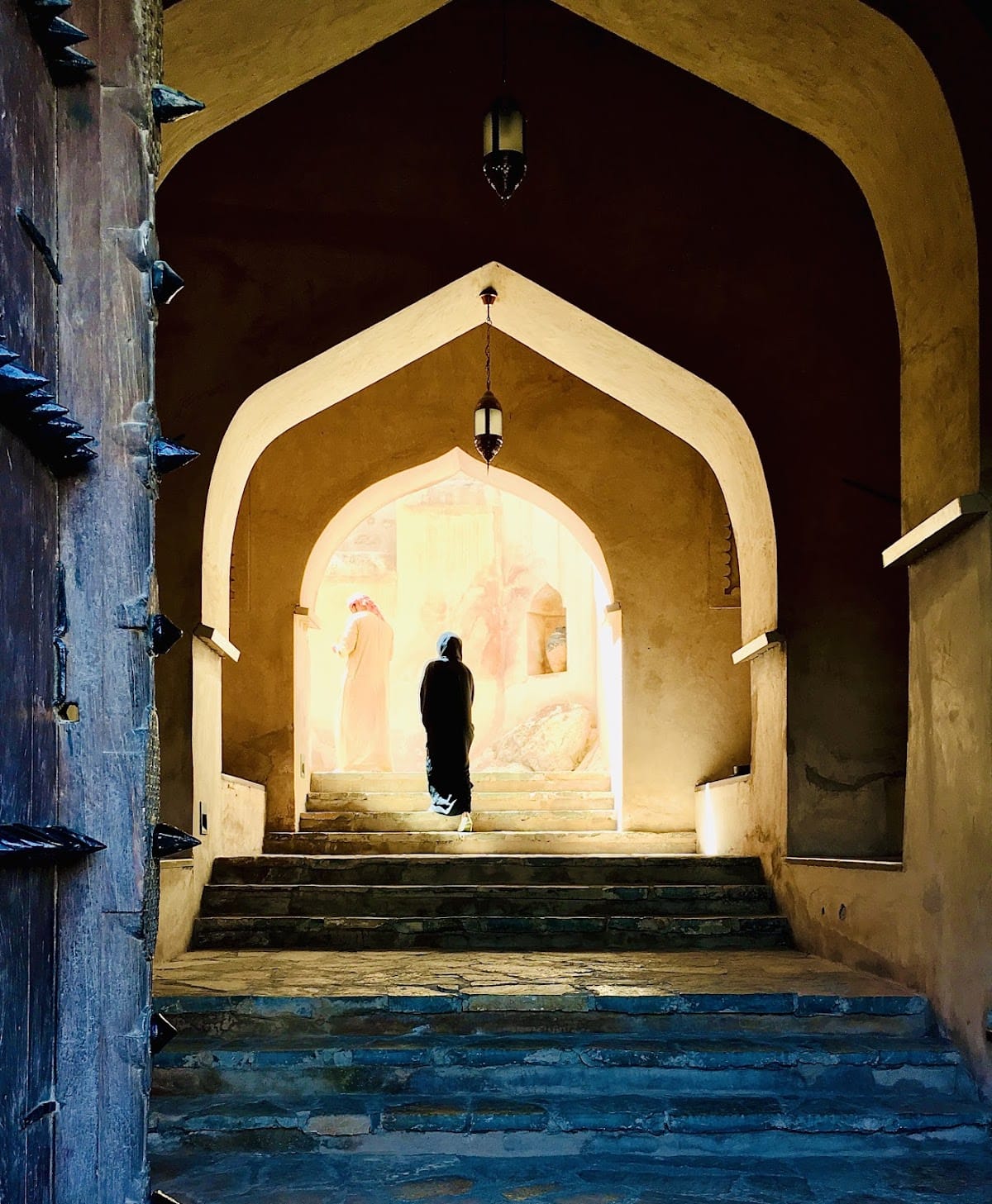
The fort is arranged on rock platforms around three principal cylindrical towers, positioned to the east, west, and centre. Connected to the main building, these towers served guard and observation functions. About twenty additional external towers were distributed through different parts of the surrounding wilayat, an administrative district of Oman, forming an outer line of defence. The fort itself retains a high enclosing wall, fortified entrances, arched openings, and gun openings in the roofs and upper parts of the buildings.
Rooms and Interior Features
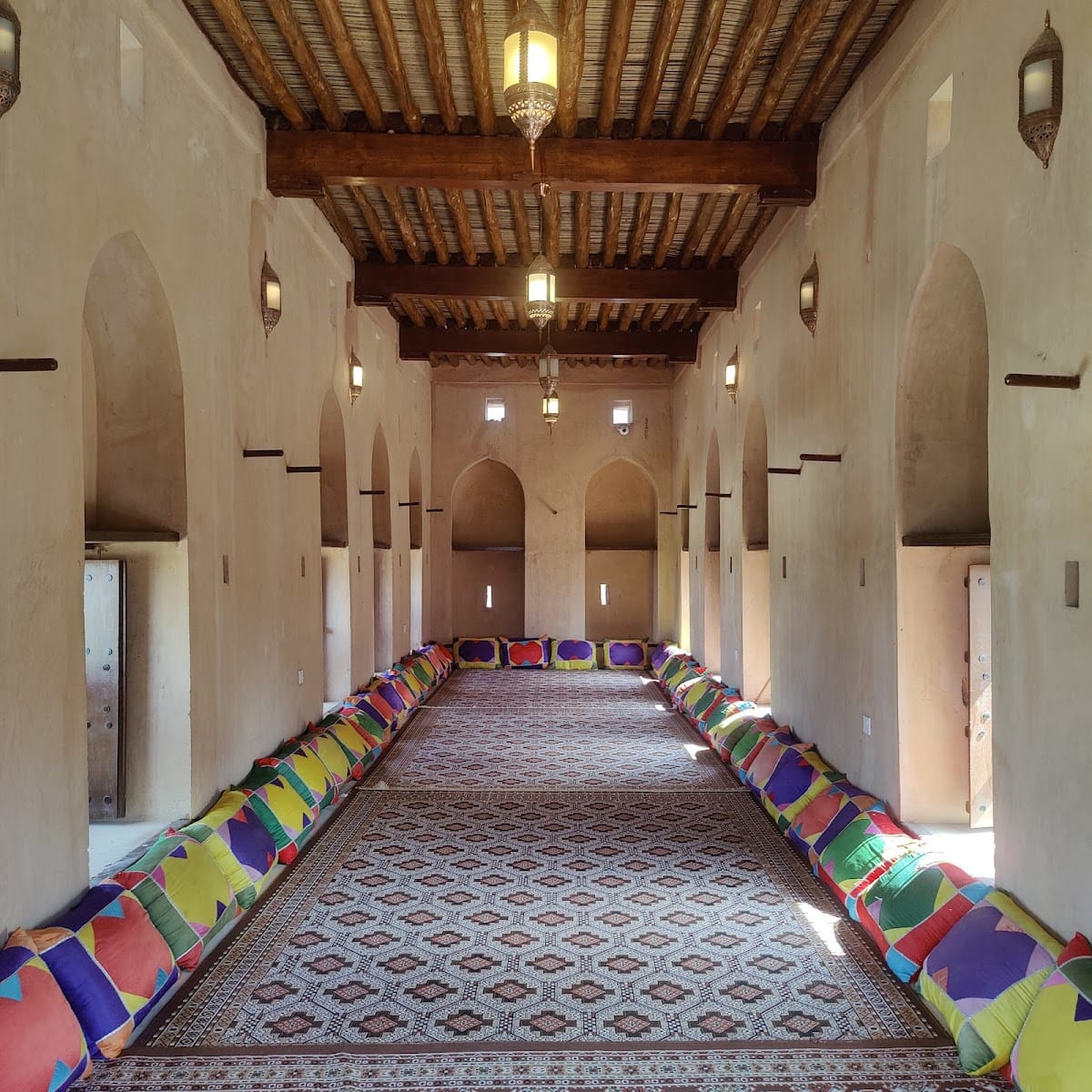
The first principal section includes the main gate, a guardroom, a water well, a judge’s room, and a mosque. A second section contains the high outer wall, towers, an entrance with arched openings, and separate winter and summer barza reception areas. A barza is a reception or meeting space used for formal gatherings.
The principal inner building has two floors. On the first floor are two storerooms, including a date store and a provisions store, together with a mediation and reconciliation room, a prison, another water well, and smaller rooms. The upper floor contains rooms for the governor and his family, a women’s rest area, guest rooms, and old furnishings. Omani wooden ceilings with traditional colours and designs remain among the fort’s notable decorative features.
Old swords and cannon formerly used to defend the fort and the surrounding agricultural areas are preserved with traditional furniture, handicrafts, and other historical artifacts added during the modern restoration. These objects occupy the restored fort alongside its surviving rooms, walls, towers, and defensive openings.