Castell d’Escornalbou: A Fortified Monastic and Seigneurial Complex in Spain


Site at a Glance
- Rating
- 4.4
- Popularity
- Medium
- Country
- Spain
- Primary era
- Medieval
- External website
- Open
- Eras represented
- Classical, Medieval, Early Modern, Modern
- Civilizations
- Crown of Aragon, French, Roman
- Site type
- Domestic
- Remains
- Castle
On this page16 sections
History
Castell d’Escornalbou is a fortified monastic and seigneurial complex in Spain, near Riudecanyes in Tarragona. Built and developed under Christian rule from the twelfth century, it combined the castle of Escornalbou with the monastery of Sant Miquel d’Escornalbou and became the centre of the Barony of Escornalbou. The complex occupied a strategic mountain position near the former boundary between Christian and Muslim territories, giving it both religious and military importance.
Earlier Fortifications and Christian Conquest
Human activity in the mountain and its surroundings reaches back to the Middle Paleolithic, followed by Neolithic, Iberian, Iron Age, and Roman activity. A Roman fortress, probably dating from the third century, stood before the medieval castle. Muslim forces occupied the site in the eighth century and called it Zalòquia, meaning “watchtower.” The fortress belonged to the Muslim district of Siurana and was administered by its wali, a provincial governor.
Christian forces conquered the area in 1162 under Arbert de Castellvell, lord of Siurana. In the mid-1160s, Alfonso II of Aragon granted the place and its ruined, uninhabited castle to Joan de Sant Boi, a canon. The grant required him to restore the fortress, establish a chapel or church, and create a community of Augustinian canons under the authority of the archbishopric of Tarragona. Augustinian canons followed a religious rule associated with Saint Augustine while serving in a clerical and institutional community.
Joan de Sant Boi organized six canons, who began building the church and monastery. High walls gave the complex a defensive role as well as a religious one, since the surrounding forests offered refuge to Muslim fugitives and other displaced people. In 1197 Arbert de Castellvell transferred Colldejou to Escornalbou, and a fortified Augustinian convent and church were built near the summit, incorporating Roman remains.
The Barony and the Augustinian Canonry
The grant developed into the Barony of Escornalbou, a territorial lordship linked by the Crown to the archbishops of Tarragona and dependent on the archbishopric. At its greatest documented extent, the barony covered 101.32 square kilometres and included Colldejou, Vilanova d’Escornalbou, Riudecanyes, Duesaigües, Pradell de la Teixeta, La Torre de Fontaubella, L’Argentera, Rifà de Peu, La Torre de Rafellí, and L’Arbocet. A general bailiff administered the territory with the assistance of local deputy bailiffs.
Joan de Sant Boi also promoted repopulation. The settlement of Segura was founded in 1178, although it failed to take root and still existed in the seventeenth century. Pradell, now known as Pradell de la Teixeta, was founded in 1195. In 1198 Archbishop Ramon de Castellterçol confirmed the grant and established that the prior of Escornalbou would be a canon of the chapter of Tarragona, with the right to speak and vote. In 1219 the canons appointed Archbishop Aspàreg de la Barca and his successors as perpetual priors, tying the office and the barony to the archiepiscopal see.
The Augustinian canonry declined during the fourteenth century. A reform attempt in 1387 did not prevent its abandonment, and the canonry was suppressed in 1574, when only one canon remained. That year Archbishop Gaspar Cervantes de Gaeta offered the monastery to the Franciscans and transferred the barony’s revenues to the University of Tarragona.
Franciscan Occupation and Political Conflict
Franciscan Recollects occupied Escornalbou from 1580 to 1686. From 1686, the Franciscans maintained a seminary for American missions, and the complex became an important centre for distributing popular religious literature in Catalan. Their missionary activity included the long service of Marià Badia in Peru.
The barony also experienced repeated violence and political conflict. Jews in the barony were mistreated in 1391, and a royal pardon had to be purchased in 1393. During the war against John II, the barony remained loyal to the king. In 1462 the militia of Cambrils was assigned to defend the castle, while the surrounding walls, which had collapsed by 1461, were rebuilt.
During the Reapers’ War, a conflict between Catalan forces and the Spanish monarchy that began in 1640, Castilian troops occupied the barony in 1646. Catalan and French forces took it in 1647 and enlarged the fortifications, while French forces occupied it again in 1651 and expanded them further. In 1654 the vicar of the Camp of Tarragona ordered seventy men from several nearby towns to demolish the fortifications. The barony later supported the Austrian cause during the War of the Spanish Succession. A locust plague affected the castle and surrounding region in 1687, leading Vilanova d’Escornalbou to make a vow to Saint Augustine in 1688.
War, Secularization, and Ruin
During the Peninsular War, the conflict in which Spain and its allies resisted Napoleon’s occupation, the Franciscans participated in resistance to French forces. The castle-monastery was looted in January 1811. After Ferdinand VII was restored, its occupants became strong supporters of absolutism. Around 1818, the Buxó family of Reus financed the creation of the Passeig dels Frares, both to obtain stone for convent extensions and to provide the monks with a recreational route.
A constitutional government closed the convent in 1822, but the friars returned in 1823 after absolutism was restored. On 25 July 1835 they abandoned Escornalbou permanently during the confiscation and secularization associated with Mendizábal. The church and remaining convent buildings were burned and later partly blown up with gunpowder. Liberal and Carlist forces subsequently occupied the complex during the Carlist Wars.
By the mid-nineteenth century, Escornalbou had become a desolate ruin. John Bridgman, the British vice-consul in Tarragona, bought it from the government in 1843 for 29,930 reales to exploit its barite mines. The mines produced little and closed in 1920. Bridgman converted the church into a livestock pen and the castle into a shepherd’s house. Civil conflicts, the removal of building materials, Carlist occupation, and the destruction of part of the church after earthquake damage further damaged the complex. The Reus industrialist Macià Vila, known as Sisos and a close friend of General Prim, also established a facility there for producing counterfeit six-reales coins, contributing to later legends about hidden treasure.
Eduard Toda and Modern Custody
Eduard Toda acquired the complex in the early twentieth century and carried out a major reconstruction that continued until 1924. He reshaped the former monastery and castle as a historicist seigneurial residence, demolishing some buildings and adding towers in an invented medievalizing style. Toda transferred the property to the Diocese of Tarragona in 1926 while retaining usufruct. The bishop sold it to the Llopis family in 1941, the family sold it to Banco Urquijo in 1979, and the bank transferred it to the Government of Catalonia and the Provincial Council of Tarragona in 1983.
The Government of Catalonia and the Provincial Council of Tarragona are the joint owners, and the Museu d’Història de Catalunya manages the complex. Castell d’Escornalbou is protected as a Cultural Asset of National Interest in Catalonia and as a Spanish Asset of Cultural Interest, with the monument designation recorded in 1988. The people of Riudecanyes traditionally made an annual pilgrimage to the monastery and castle on Saint George’s Day, and a communal gathering is now held there in June.
The name Escornalbou is traditionally interpreted as an old expression meaning “the horn of the ox,” referring to the pointed form of the mountain. Other explanations connect it with sandstone suitable for sharpening tools or removing horns, while local tradition tells of a hornless ox. The historic arms showed an ox’s head with one broken horn and one missing horn.
Remains
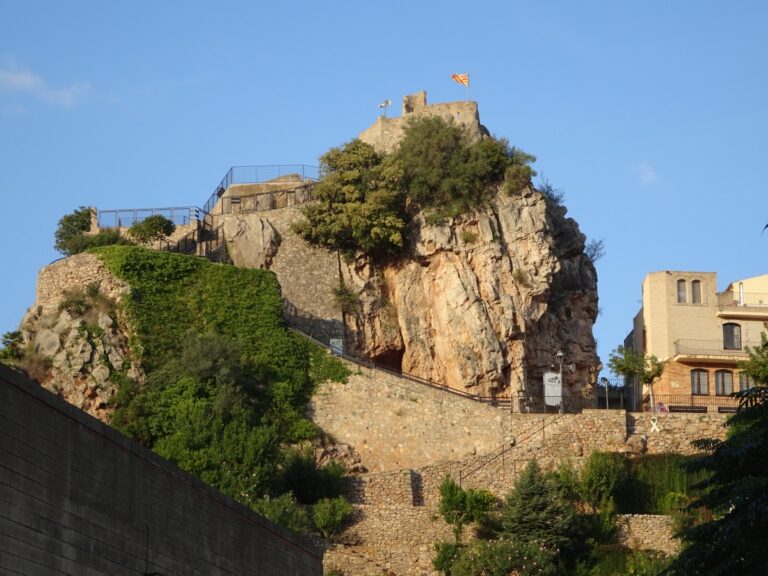
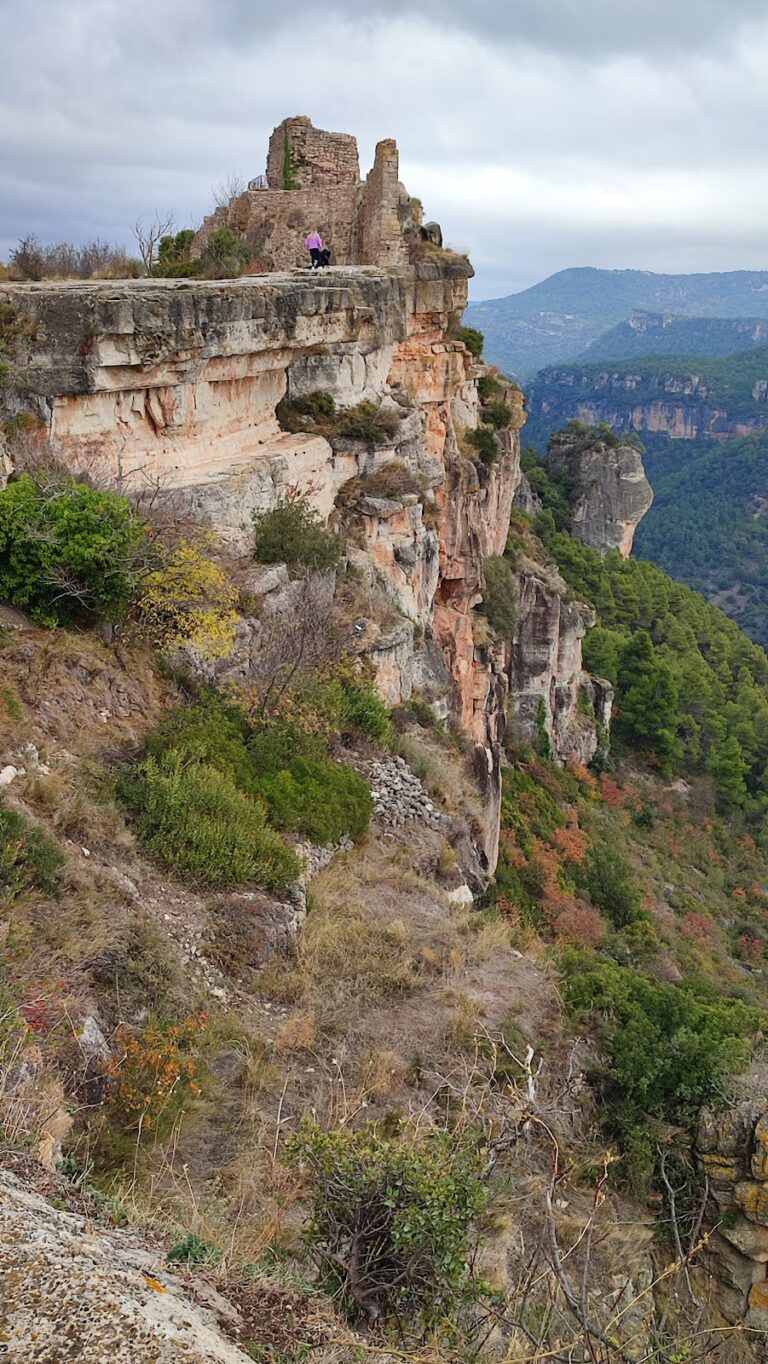
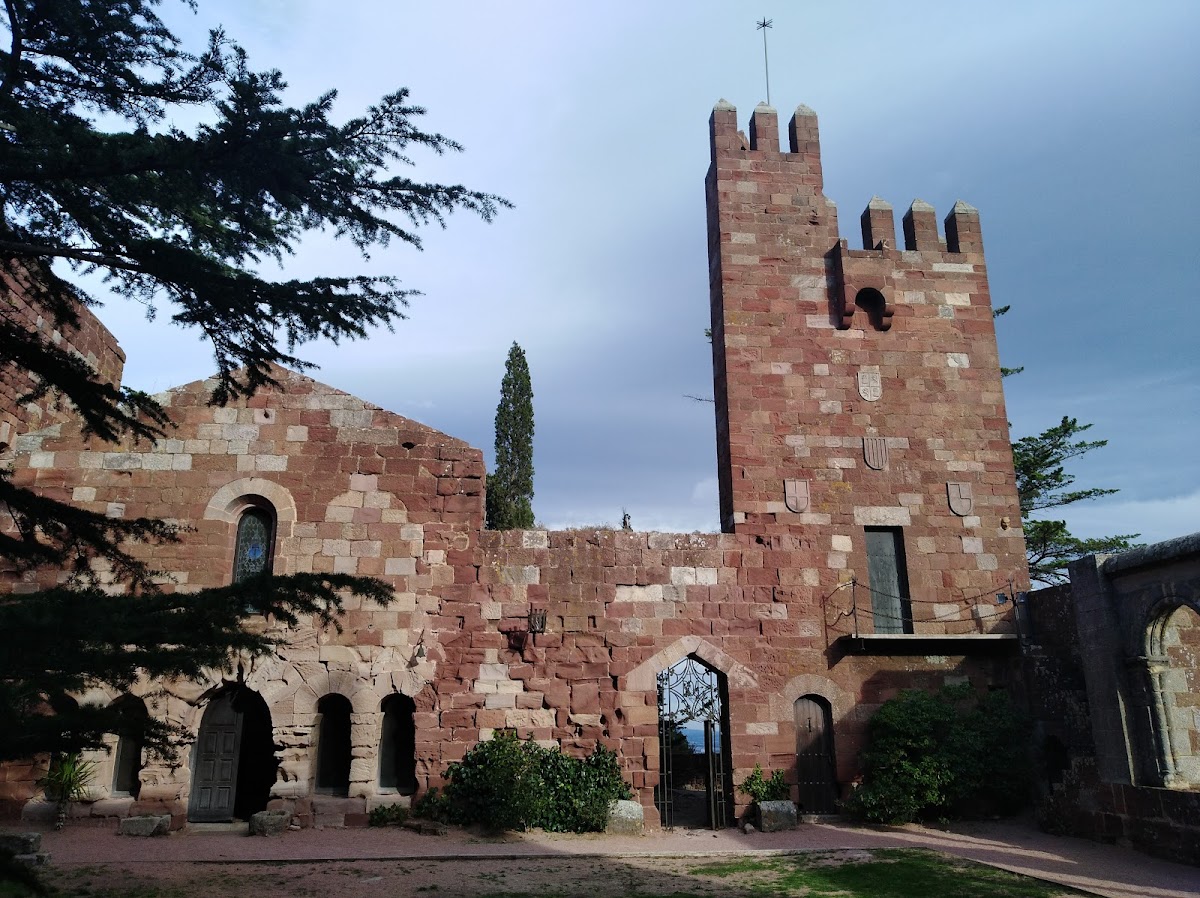
The complex stands on an elevated shelf of the Triassic Santa Bàrbara hill, popularly called the mountain of Escornalbou, at approximately 649 to 650 metres above sea level. The hill forms part of the eastern foothills of the Argentera range and lies mainly within Riudecanyes, near Vilanova d’Escornalbou and L’Argentera. Red sandstone is the principal building material. The surviving complex incorporates earlier Roman fortifications, including a wall fragment approximately one kilometre long, and retains an ox-head sculpture.
Castle and Summit Defences
Castle Entrance
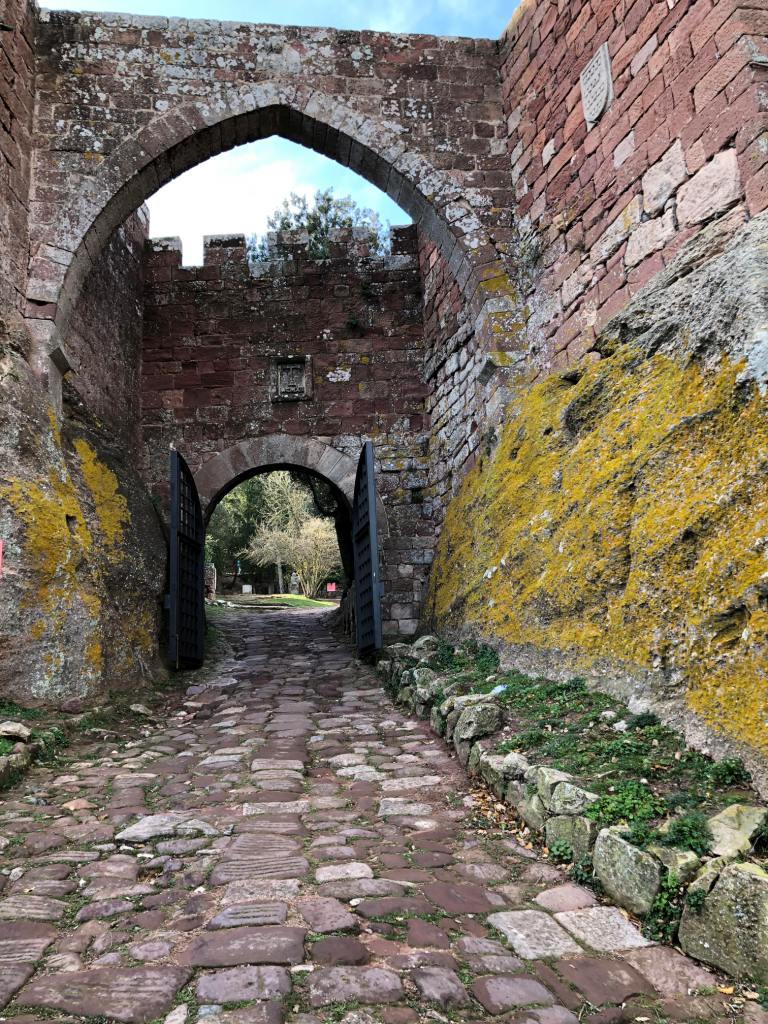
The oldest surviving castle remains date from the twelfth century. Its entrance arch is Gothic, while the relief above it is probably older. Another entrance relief frames a large tau-shaped letter T, a symbol of the archbishopric of Tarragona associated with Saint Thecla and the Greek term for God. Eduard Toda commissioned this feature, which does not represent the initial of his name.
Santa Bàrbara Chapel
The Roman fortress occupied the summit, where the Muslims later used its tower as a watchpoint. The chapel of Santa Bàrbara was built on the highest part of the castle-convent enclosure at the beginning of the nineteenth century over the remains of that Roman tower. The summit therefore preserves the location of the earliest fortress within the later castle-monastery complex.
Church and Monastic Buildings
Church of Sant Miquel
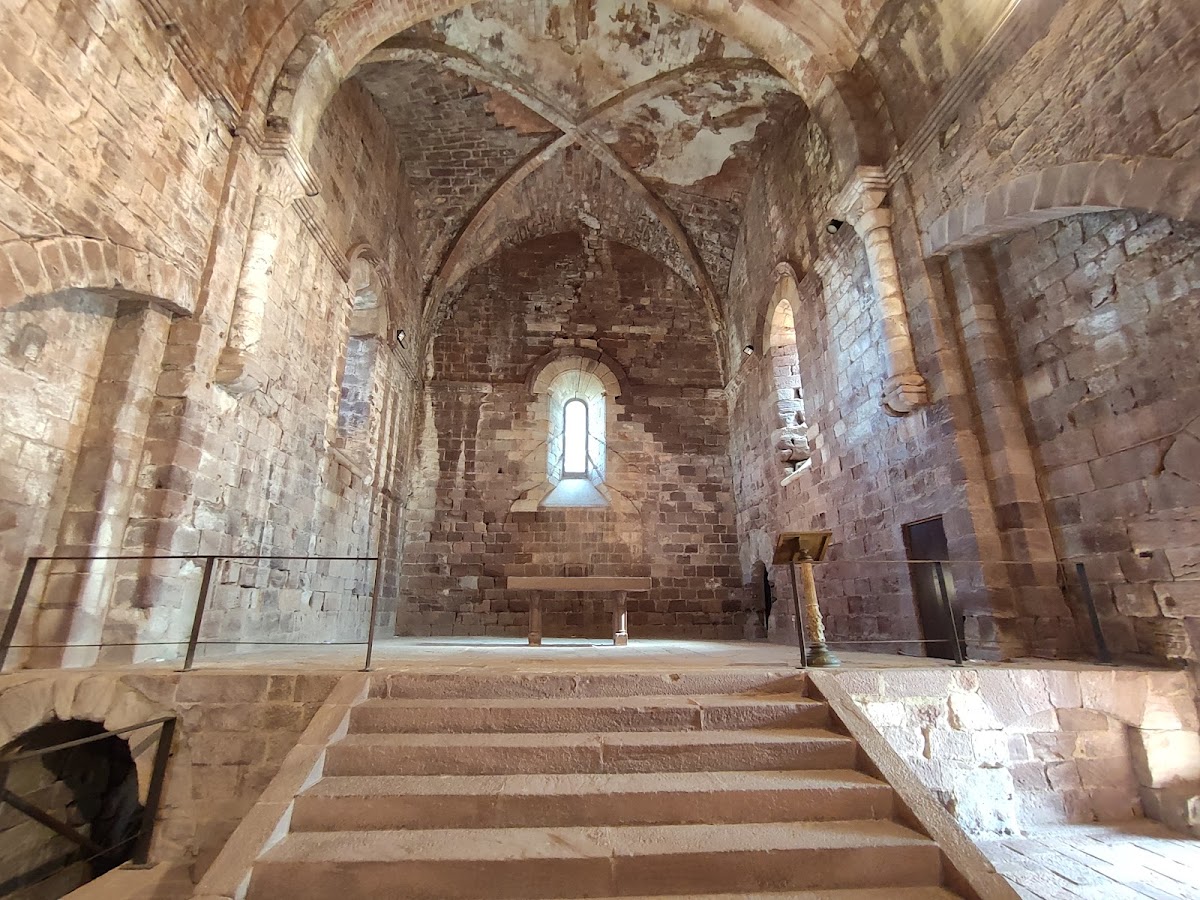
The Romanesque church of Sant Miquel has a single nave, a barrel vault, a straight-ended apse, and two later side chapels. Roman masonry was incorporated into the presbytery. A rose window and two small windows illuminate the interior, while the entrance porch and the side chapels remain part of the church complex. An inscription on the entrance voussoirs states that Archbishop Pere d’Albalat consecrated the church on 5 July 1240; the inscription itself was carved in 1700. Toda removed the bell tower during his reconstruction. A rectangular crypt lies beneath the presbytery and has been sealed.
Chapter House and Cloister
The former chapter house is a Romanesque room that has been converted into a chapel. A chapter house was where the religious community met for administrative and disciplinary business. Toda found the former cloister dismantled, then reassembled and adapted it as a gallery and lookout towards the Camp of Tarragona plain. Its surviving capitals stand near the mountain’s edge.
Seigneurial Residence and Grounds
Eduard Toda’s Residence
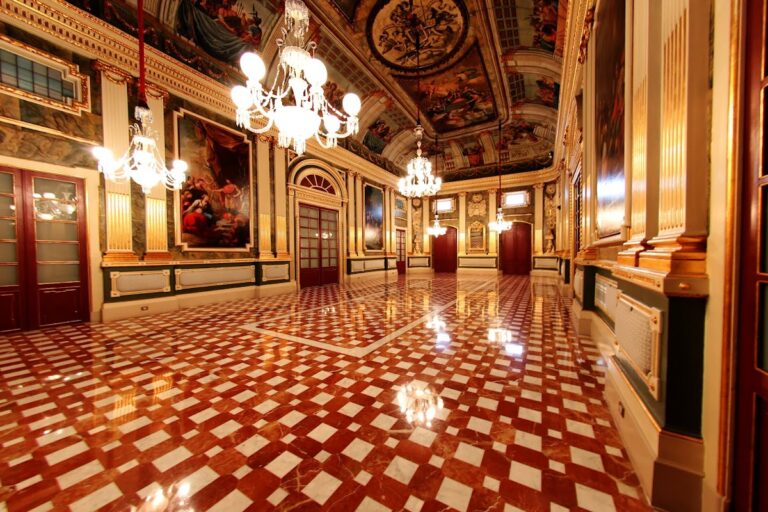
The former monks’ living quarters became Toda’s seigneurial residence. The house retains furnishings, Catalan ceramics, prints, other collections, and a notable library. Its interiors were restored to represent an early twentieth-century seigneurial house, and some of the work used old stones brought from different parts of the surrounding comarca. Toda also added faces at strategic points in the fortifications as supposed protective guardians. One remains beside the entrance to the residence, and the faces may have been imported from China.
Passeig dels Frares
The Passeig dels Frares runs through the grounds and was created around 1818. The chapel of the Three Virgins stands partway along the route and may have been built at the same time. Around the complex, extensive Mediterranean woodland includes a notable population of cork oaks, unusual in the coastal foothills. Acidic soil may have favoured these trees, and the monks may also have cared for them for cork production. Black pine, including Pinus nigra, dominates the woodland alongside oak, shrubs, and occasional strawberry trees.